Research Article: 2025 Vol: 29 Issue: 1
Evaluating Critical Success Factors for Sustainable Supply Chain Management in Project-Based Manufacturing Firms Using Structural Equation Modelling
Ihuoma Deborah Okwara, Federal University of Technology Owerri
Baldwin. C Asiegbu, Federal University of Technology Owerri
Gregory Chimere Enyinna, Federal University of Technology Owerri
Amade Benedict, Federal University of Technology Owerri
Uche Moneke, Federal University of Technology Owerri
Ibeawuchi. I Echeme, Federal University of Technology Owerri
Kelechi Enyinna Ugwu, Federal University of Technology Owerri
Precious Nkechi Obieche, Federal University of Technology Owerri
Nnenna Mercy Nwoko, Federal University of Technology Owerri
Oluchi Ebere Chukwu, Federal University of Technology Owerri
Osita Leslie Ibe, Federal University of Technology Owerri
Osita Vlintine Okara, Federal University of Technology Owerri
Tochukwu Rufus Okwara, Federal University of Technology Owerri
Patricia Onyinyechi Onyechere, Federal University of Technology Owerri
Citation Information: Okwara, I., C Asiegbu., Chimere Enyinna, G., Benedict, A., Moneke, A., I Echeme., Enyinna Ugwu, K., Nkechi Obieche, K., Mercy Nwoko, N., Ebere Chukwu, O., Leslie Ibe, O., Vlintine Okara, O., Rufus Okwara, O., Onyinyechi Onyechere, O., (2025). Evaluating Critical Success Factors for Sustainable Supply Chain Management In Project-Based Manufacturing Firms Using Structural Equation Modelling. International Journal of Entrepreneurship, 29(1),1-25.
Abstract
Sustainable Supply Chain Management (SSCM) is essential for manufacturing project-based firms seeking to incorporate sustainability principles into their supply chain practices. This study focuses on modeling the critical success factors (CSFs) for SSCM for project-based manufacturing firms in Southeast Nigeria. This study identified twenty-eight (28) CSFs pertinent to SSCM. This was achieved through an exhaustive literature review and consultation with experts. Structural Equation Modelling (SEM) was employed to analyze the connections between the identified factors and assess the overall adequacy of the CSF of SSCM. This study offers valuable insights into the relationships and pathways by which different factors affect the performance of SSCM in project-based manufacturing firms. The study's findings enhance the theoretical understanding of SSCM in project-based manufacturing firms. Additionally, they offer practical insights for managers and policymakers to improve sustainability practices throughout the supply chain. The proposed model functions as a valuable instrument for evaluating and enhancing sustainability performance, stimulating innovation, and generating shared value in manufacturing project firms. The proposed model aims to enable project-based manufacturing firms to effectively evaluate, strategize, and execute sustainable supply chain practices, thereby improving their long-term environmental performance, social responsibility, and economic sustainability
Keywords
Sustainable Supply Chain Management, Manufacturing Project Firms, Structural Equation Modeling (Sem), Critical Success Factors
Introduction
Project-based manufacturing is the umbrella term that covers the types of manufacturing done on a project-driven schedule. Some refer to this as “engineer to order” (ETO), a niche in engineering-focused manufacturing. Project-based manufacturers or Engineer-to-order (ETO) are also referred to as “custom”, “make-to-order” or “contract” manufacturing companies. All of these terms describe a style of manufacturing rather than any particular industry segment. These terms describe manufacturers that produce unique and often complex products that are designed to customer specifications and may require unique engineering design or significant customization. As a result, each customer order will have a unique set of item numbers, bills of material and routings. Other characteristics that typically distinguish ETO manufacturing from standard “repetitive”, “discrete” or “make-to-stock” manufacturing. Some of these characteristics (for example, installation on site) may not apply to every ETO manufacturer, or to every product produced, but most of them do. A look into the project-based manufacturing reveals that nowadays, with people’s higher and higher consideration about environmental protection, many companies have shifted their focus from SCM to achieve a sustainable competitive gain (Okwara, 2024).
Critical Factors for Successful Implementation of SSCM in Project-based Manufacturing Developing or identification of success factors has dominated the field of project management from 1980s to 2000. Many researchers have tried to a certain extent to identify success factors for project management. Among researchers are Kerzner (1987), Pinto and Slevin (1987), Pinto and Slevin (1989), Clarke (1999), Cooke Davis (2002) and Muller and Turner (2003). Works done in this area of research are mostly from the developed countries focusing on SSCM of single product manufacturing while this research work is for the developing countries, precisely project-based manufacturing in Nigeria. Maintaining a successful implementation of sustainable supply chain management practices in Nigeria project-based manufacturing would help managers of organizations, firms and companies not only in meeting social and environmental concerns but would help them to reduce costs, reputational risks, boost revenue and ensure long term success. In the current landscape, organizations increasingly adopt project-based structures to execute strategies and enhance value. Effective project management is crucial for organizational success yet defining and achieving project success remains a challenge. Despite extensive discussions on project success, consensus remains elusive, indicating a significant knowledge gap in the field. The evolution of project success definitions underscores the need for a comprehensive understanding that spans the entire project lifecycle.
Problem Statement
Nigeria's manufacturing sector has witnessed a decline marked by the closure of numerous factories over the years, attributed to various factors including neglect, policy inconsistencies, and global competition. Despite the potential for project-based manufacturing to revitalize the industry and contribute significantly to the country's GDP, challenges persist, particularly in sustainability and supply chain management. Existing literature highlights the negative social, environmental, and financial impacts of poor sustainability practices in supply chains, underscoring the need for a deeper understanding of these challenges within the context of project-based manufacturing in Nigeria. However, there is a notable gap in research focusing on this specific industry and geographical context. While superior supply chain performance is recognized as essential for industry competitiveness, the specific inefficiencies and challenges faced by project-based manufacturing remain underexplored (Okwara, 2024). Key issues such as managing customer relationships, anticipating demand variations, and optimizing supplier relationships pose significant obstacles that require thorough investigation.
Furthermore, the lack of commitment and cooperation between departments, coupled with issues of materials management and inventory accuracy, directly impact production efficiency and overall organizational performance. Despite the critical nature of these challenges, research addressing them, particularly in the context of sustainable supply chain management (SSCM) implementation, is limited.
Literature Review
Definition of Sustainability
While it is frequently claimed that no recognized definition of sustainability exists, the most commonly accepted and frequently quoted definition of sustainability is established by the Brundtland Commission of the United Nations (World Commission on Environment and Development, 1987): "Sustainable' development is development that meets the needs of the present without undermining the potential of future generations. Erlich and Erlich (1991) claimed that this broad rubric of sustainability could gain an understanding of economic activity's environmental impact in both developing and industrialized economies. Unfortunately, the macroeconomic and social concept of sustainability is difficult to implement and gives no advice to companies about how businesses should assess the technology and services required to fulfill potential and current needs and how to efficiently manage organizational obligations with various stakeholders, such as stakeholders, clients, employees, other organizations, and the broader stakeholders including both society and natural environment in the entire supply chain (Arevalo & Mitchell, 2017). On the basis of engineering sustainability, Sikdar (2003) defined organizational sustainability as 'a wise balance between economic development, environmental stewardship and social equity see Figure 1.
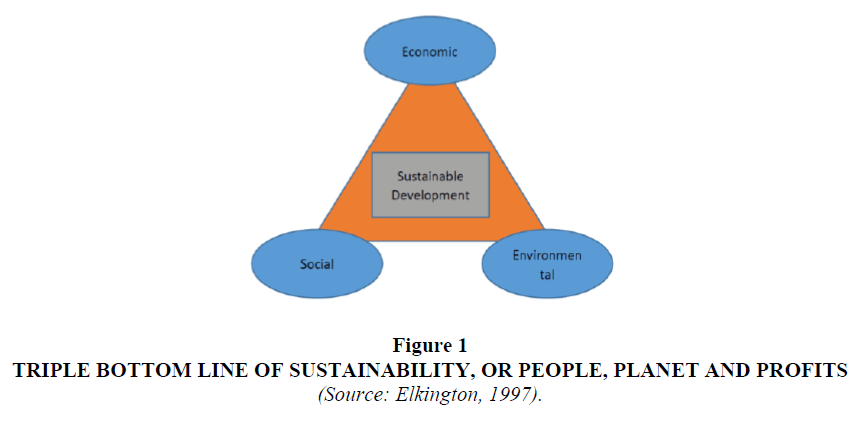
Figure 1 Triple Bottom Line of Sustainability, or People, Planet and Profits
(Source: Elkington, 1997).
Furthermore, Harmsen and Powell (2010) explained that sustainability is the consideration of social and environmental performance, as well as an expanded financial performance concept that considers economic cost-benefit impacts beyond corporate profits. Sustainable growth, in other words, allows companies meet the combined and changing stakeholder desires beyond merely stakeholder conventional financial priorities. As a result, this approach could lead to a decrease in potential costs and obligations expanding sustainable longevity, and sustainability also increases the interest of customers for organizations in a win-win approach (Harmsen and Powell, 2010). Interestingly, they also claimed that imperfect economic systems that can not reflect total costs or values, including social and environmental impacts, can be considered as key drivers of sustainability needs. For this reason, sustainability metrics indicated by Böhringer and Jochem (2006) have attempted to "measure the unmeasurable" by incorporating those costs and values which defy traditional economic analysis.
The results of this study presented several guidelines for sustainable development organizations including better monitoring standardization, further development of composite and goal-oriented indexes and recognition of deficiencies in existing indicator evaluation methodologies. In addition, Wilson et al. (2007) also offered an exhaustive review of global policy-level metrics to guide sustainable development actions. Furthermore, it is often important to understand sustainability metrics from the point of view of the Organizational Level and Management Team, as the most precise metrics may direct a particular individual or company to bring their objectives into action. Based on the generic triad of indicators of societal, environmental and economic performance, the American Institute of Chemical Engineers' Institute for Sustainability (AIChE) put forward the following sustainability index relating to corporate management and governance (Cobb, Schuster, Beloff & Tanzil., 2007):
• Strategic commitment to sustainability
• Safety performance (employee and process)
• Environmental performance (resource use, emissions, including green gases)
• Social responsibility (community investment, stakeholder engagement)
• Product stewardship (product safety, Responsible Care/Reach)
• Innovation (in sustainability)
• Value chain management (supplier and customer standards)
Concept of Supply Chain
There isn't a universally agreed supply chain concept. A variety of researchers from several different backgrounds have identified supply chain. Often known as the value chain or demand chain in literature, the supply chain is the whole network of companies or facilities engaged in the processes of production of goods, the processing of materials into intermediate and finished products and the delivery of finished products or services to end users (Hunka et al, 2011; Lee and Billington, 1993; Frazelle, 2002). According to Waters (2013), “often, operational obstacles between such facilities remain, and knowledge flows may be limited so that full unified management of resource flows in a supply chain may not be feasible or desirable. Consequently, most businesses use unified power when handling the various facilities at a supply chain”. There are four processes in the supply chain: plan, source, make and deliver (Roussel 2005). This implies that the supply chain scope deals primarily with all interactions right from the supplier to the customer's supplier (Roussel, 2005). Therefore, a supply chain consists of a network of entities bound by physical, information and financial flows intended to satisfy the needs of end-customers (Roussel, 2005). Supply Chain is just a network of participating businesses who are intertwined with each other, whose operations add value to a continuum of transformed materials from their source to end markets to satisfy end-consumer needs (Lu, 2011).
Supply Chain Management (SCM)
Supply Chain Management (SCM) originated as a modern integrative methodology in the 1980s to control the overall movement of products from manufacturers to end consumers. The essence of this approach was the management of a supply chain as if it were a single entity, with the primary objective of establishing the suboptimal deployment of stock and capacity (Hunka et al. 2011). SCM as defined by the Council of Supply Chain Management Professionals (CSCMP) includes 'the planning and managing of all operations relating to sourcing, delivery and other logistics managing activities.' Most other SCM concepts emphasize the coordination of linkages between supply chain partners. For example, according to Slack et al. (2010), SCM is managing the interconnections that occur between entities that relate to each other by upstream and downstream linkages between processes that in the form of goods and services deliver value to the ultimate customer. It is a role that combines with the primary task of integrating major business functions and processes inside and across organisations into a coherent and high-performance business model that encompasses both logistics management practices as well as manufacturing operations (Vitasek, 2010).
SCM is therefore the mechanism by which a buyer deals with its vendors to ensure that goods and services are procured in ways that suit the customer's requirements (Schtwartz & Font, 2010). These authors add that, as part of the implementation of lean production systems, SCM initially focused on quality aspects and was later expanded to include environmental issues in order to improve eco-efficiency and reduce waste. Accordingly, SCM is a systematic approach to enterprise-wide management (Sctwartz et al., 2008). Most supply chain executives have a similar and primary goal; pleasing the end-customer. Eventually, all stages in a chain must include consideration of the end customer, no matter how far from the end customer an individual operation is (Sctwartz et al., 2008). When a customer makes a purchase, he or she triggers action back along the entire chain. All businesses in the supply chain pass to each other portions of the money of that end-customer, each retaining a margin for the added value. Each chain operation aims to satisfy its own customer, but also to ensure that the end customer is eventually satisfied (Slack et al., 2010).
Sustainable Supply Chain Management (SSCM)
In recent years SSCM's definition has arisen as a global phenomenon. Shekarian, Ijadi, Zare, & Majava (2022) stated that the changes experienced due to society`s awareness about the Earth- threatening activities of industries have forced practioners to modify industry processes. Supply chain activities have been the main causes of the vast creation of solid and liquid trash, air and water pollution, global warming, and decreases in the world`s non-renewable resources and critical materials for many years. Mentzer et al. (2001) described SCM as "systemic, strategic integration of conventional business functions and strategies across these market functions within a single organization and across supply chain businesses. In addition, according to Lambert et al. (2006), SCM is 'the integration of key business processes from end-users through original suppliers, providing products, services and information that add value to customers and other stakeholders.' Moreover, Christopher (2011) stated that SCM could be defined as 'the management of upstream and downstream relationships with both suppliers and customers in order to deliver superior value at fewer costs into the entire supply chain.” In addition, sustainability has become a buzzword in today’s business world.
Obviously, all SSCM's social and environmental views will rely on the organizations' understanding of their economic goals. Carter and Rogers (2008) in particular explained that the term "Good?" "In the SSCM context, which implies a social and environmental convergence but lacks the triple-bottom-line economic viewpoint. They also indicated that there is no reason to push companies to pursue supply chain-related social and environmental targets. In reality, Porter and Van der Lined (1995) concluded that the application of SSCM would recognize the strategic and financial purpose of a company to accomplish the socially responsible target within the wider framework. Furthermore, it's a costly undertaking to meet the requirements of social and environmental initiatives for companies to start their business. Consequently, it would lead to potential economic benefits for organizations which include:
• Reduced packaging waste (Mollenkopf et al., 2005) and the capacity to design for reuse and disassembly (Christmann, 2000; Hart, 1995) are the result of saved costs.
• Reduced cost of health and safety and reduced cost of recruitment and labor turnover due to safer warehousing, more efficient transport and better working conditions (Brown, 1996; Carter et al., 2007).
• Lower labour costs due to improved working conditions that can increase motivation and productivity, and increase supply chain staff attendance (Holmes et al., 1996; 4 A strategic advantage for businesses and their manufacturers that is impossible to duplicate and proactively influence future regulations — companies are proactively resolving environmental and social issues in their current manufacturing and procedures that can affect government policy (Carter and Dresner, 2001)
• Shorter lead times, improved product quality and reduced costs resulting from implementing the ISO 14000 standards, which provide a framework for managing environmental issues (Hanson et al., 2004; Montabon et al., 2000).
• Improved reputation-implementing sustainable activities can make organizations more attractive to suppliers and customers (Ellen et al., 2006), potential employees (Capaldi, 2005), and shareholders (Klassen & Whybark, 1999).
Consequently, real sustainability takes place at the intersection of all three dimensions — environmental, financial, and economic — which often includes such practices where businesses are completely aligned with environmental, social, and economic priorities in the implementation of long-term strategic objectives. Carter and Rogers (2008) also emphasized that both the environmental and social facets of sustainability should extend beyond the limits of a company and include supply chain operations. In particular, the inclusion of SCM in the sustainability of a firm can in fact create a long-lasting, and less imitable set of processes when considered with the economic dimension to form a long-term strategy (Carter and Rogers, 2008).
Dimensions of a Sustainable Supply Chain
Some research on sustainability shows three key aspects of the sustainability value chain: fiscal, social, and environmental (Kaufmann and Carter, 2008; Sloan, 2010; Miemczyk, 2012; Winter and Knemeyer, 2013; Mann, et al., 2010; Closs, et al., 2010).
Economic Dimension of Sustainability
The economic aspect encompasses all profit gained by the chain members, as well as the economic advantages of those member’s host countries, territories, and societies (Sloan, 2010). It refers to the effective usage of capital, the sector's productivity and profitability and its contributions to community profitability. Key elements of this aspect are productive manufacturing processes, effective technology and the diversification of sources of income for agents (European Commission, 2001). In economic terms, prosperity means ensuring the future with consumer security in mind, according to Votano, et al. (2004b). Harris 2000) argues that an economically viable economy must be capable of consistently generating goods and services; sustaining stable levels of government and external debt; and preventing severe sectorial imbalances that threaten agricultural or industrial growth.
Social Dimension of Sustainability
argues that social sustainability will include such primary concerns as poverty reduction, financial participation, and community building that is healthy and loving. To this impact, Sloan (2010) addresses three categories of the sustainability social dimension:
• Work place/Internal Conditions: wages, employee contracts, healthcare, opportunities for career development, number of accidents and/or deaths per person-hour of work
• Community/External Conditions: product liability and healthcare benefits
• Institutions/Systems: supplier evaluation including social factors, hours of safety training per employee, regulatory compliance, health and safety management system in use.
Environmental Dimension of Sustainability
Environmental sustainability encourages companies to look beyond making short-term profits and look at their effect on the natural environment in the longer term. Hence, it is the maintenance of the factors and practices that contribute to the long-term quality of the environment. Environmental protection concerns the actual materials used in manufacturing (Okwara, 2024; Kaufmann & Carter, 2010), stressing mechanisms for sustaining natural life in which neither manufacturing nor society can survive. These life support systems include atmosphere, water, food, soil, minerals, materials and energy resources; all of which need to be healthy; their environmental service capacity needs to be maintained (Goodland, 1995; Sloan, 2010).
Manufacturing Industry in Nigeria
However, the willingness of Nigeria to join the group of developed nations globally means that the government must harness its abundant natural resources by developing the economy's manufacturing sector (NIRP, 2014). Manufacturing is the core element that drives industrialisation, plays an outstanding role because of its relation to other areas of the economy, and is the primary foundation for the country's economic health and stability. The Nigerian economy has developed at an average annual rate of 8.8 per cent from 2000 to 2014, which can be contrasted with other developing economies (NIRP, 2014). It should have been easier given the major obstacles facing the Nigerian production firms before they can manufacture their products. Nigeria as a country sits on the sub-Saharan African continent and is actually the highest GDP market in Africa (BBC, 2014, IMF, 2016).
Despite the challenges facing the Nigerian manufacturing companies, they make huge contributions in terms of jobs and employment to GDP and the economy (World Bank Data, 2017). Figure represents the percentage percentage value contribution to global manufacturing GDP. The figures have been adopted from World Bank Data (2017), which represents the annual contributions to GDP produced between 2007 and 2015. Accordingly, the information obtained from figure 2 shows that the global manufacturing sector plays an important role in the economies of emerging economies such as the BRICS nations of Brazil, Russia, India, China, South Africa and the Sub-Saharan African (SSA) nations of Nigeria, Ghana, Guinea, Kenya and developed countries, the US, Japan , Germany, France and the Netherlands.
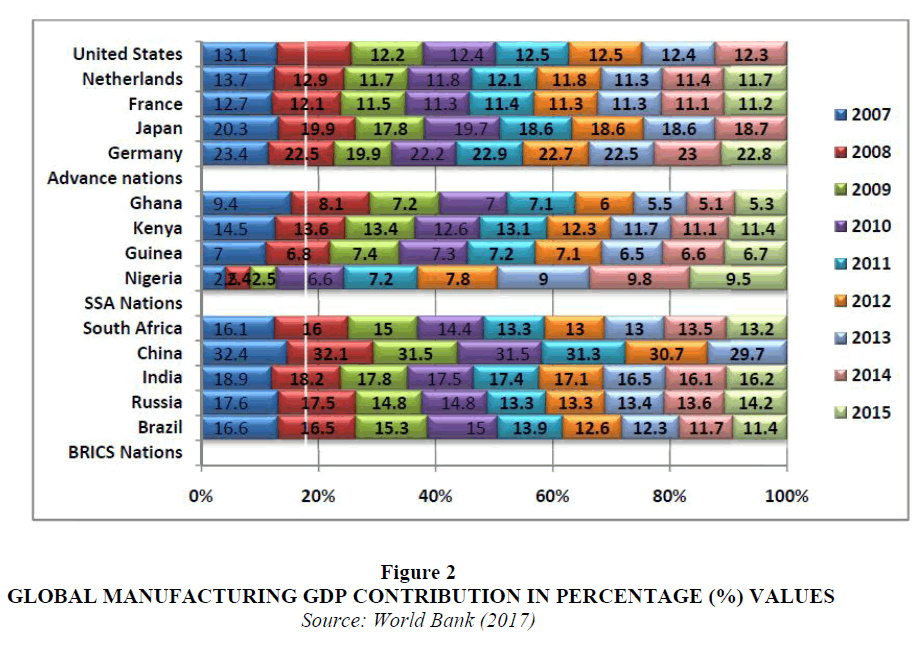
Figure 2 Global Manufacturing GDP Contribution in Percentage (%) Values
Source: World Bank (2017)
Critical Success Factors (CSFs)
There are some main areas of industry that need to go well, and if the areas are adequate, it would provide an company with a good competitive result (Rockart, 1979). These key areas are the critical success factors (CSFs), and Rockart (1979) first introduced them as a tool for defining the information needs of top level managers. CSFs are, according to Rockart (1979), 'areas or activities that should receive constant and careful management attention.' Moreover, by solving and correcting issues at hand, executives have tried to identify the most critical pieces of information from the sheer number of reports that are vital to the current operating activities of the organization and its future success. In addition, CSFs can be used to develop action plans, environmental research, and assessment of policies. Not only that, CSFs are known to be useful in identifying critical issues in implementation planning, helping to achieve higher organizational performance, assisting managers to better allocate resources, as well as using guidelines to monitor the activities of an organization.
Theoretical Underpinning
Theories play important roles for interpreting and describing ideas further in the science process. Therefore, Carter and Roger Sustainable Supply Chain Management Framework, Gupta Three-Dimensional Framework, general frameworks and stakeholder theories are the theoretical sources for this analysis. The analytical insights provided the lenses for analyzing the trend (Ngulube et al., 2015) and the intersectional interpretation of the principles of sustainability in supply chains in this research (Van-Manen, 2014).
Carter and Rogers Sustainable Supply Chain Management Framework
The conceptual structure for sustainable supply chain management by Carter and Rogers (2008) includes the triple bottom line concepts which include economic, social and environmental concepts. Benefit management, openness, policy, and community are the enabling facets (Carter & Rogers 2008). The core theory behind the concept is that the four supportive aspects vis-à - vis risk management, accountability, policy and community make up the ultimate corporate mechanisms to incorporate, align and cooperate transparently with stakeholders for sustainable success and long-term gains figure 3.
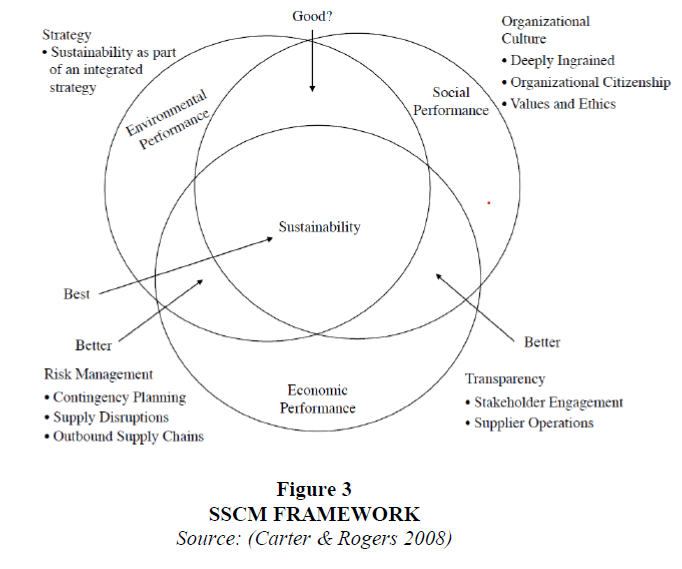
Figure 3 SSCM Framework
Source: (Carter & Rogers 2008)
Sustainability considerations include economic success (profitability, wealth formation, and long-term sustainability comparative advantages of firms), social performance (public health, working practices, justice, sustainable growth, and corporate citizenship overall) (Carter & Rogers 2008). Environmental success may be waste prevention, emissions reduction, protection of natural resources, and sustainable activities including product reduction, optimization of logistics, and energy management (Carter & Rogers, 2008).
Furthermore in a project based manufacturing supply chain, the theory is relevant in helping ensure that practices are usually connected to cost reduction and therefore contribute to improved firms' profitability (Golini et al.,2017). The main focus in Carter and Rogers framework as regards project based manufacturing supply chain is on improving flexibility, efficiency and reducing redundancy in a sustainable manner so as to promote green manufacturing (Rice & Caniato,2013). However, the practice such as sustainable use of resources relates to building supply chain resilience. Details of the CSFs of SSCM are shown in the table 1 below.
| Table 1 Identified SSCM Chain Critical Success Factors | ||
| ID | CSFs | Sources |
| EN | ENVIRONMENTAL FACTORS | |
| EN1 | Availability of an enabling environment | Mathivathanan et al. (2018); Onososen and Osanyin (2019) |
| EN2 | Green Energy Consumption | Diabat and Kannan (2011); Mudgal et al. (2009). |
| EN3 | Reverse logistics | Newman and Hanna (2016); Lippman (2011) |
| EN4 | Green Design | Deshmukh and Sunnapawar (2013); Toke, Gupta and Dandekar (2012) |
| EN5 | Green Purchasing | Ninlawan et. al (2010); Wyawahare and Udawatta (2017) |
| EN6 | Green Manufacturing | Onososen and Osanyin (2019); Sumit et al. (2022) |
| EN7 | Sustainable Waste Management | Zhu et al. (2020); Deshmukh and Sunnapawar (2013) |
| ECONOMIC FACTORS | ||
| EC8 | Recycling and Reuse | Luthra et al. (2011); Sandeep et al. (2013) |
| EC9 | Financial Incentives | Kumar et al. (2014); Mathivathanan et al. (2018), |
| EC10 | Increasing market appeal for green manufacturing | Rao and Holt (2005); Gold, Hahn and Seuring (2013) |
| EC11 | Top management commitment | Kanwal, Zafar and Bashir (2017)); Raut et al. (2017); Mengke et al. (2017) |
| EC12 | Resource management | Seuring and Müller (2008);Dayal et al. (2019); Sumit et al. (2022) |
| ID | CSFs | Sources |
| REGULATORY FACTORS | ||
| RE13 | Corporate Social Responsibility (CSR) | Elbarkouky and Abdelazeem (2013); Zhu et al. (2020) |
| RE14 | Environmental regulations | Zhu, Sarkis and Lai (2008); Luthra et al. (2011); Sandeep et al (2013). |
| RE15 | Regulatory certifications and eco-labelling | Pagell and Wu (2009); Bhool and Narwal (2013) |
| SOCIAL FACTORS | ||
| SO16 | Improvement in the quality of life of users of green products | Zhu, Sarkis, & Lai, (2007) Ojo et al. (2014), Olanipekun et al. (2017) |
| SO17 | Customers awareness to green Initiatives |
Luthra et. al (2011), Sandeep et.al (2013). Zhu, Sarkis, & Lai, (2008 |
| SO18 | Environmental collaboration with Customers |
Luthra et. al (2011), Sandeep et.al (2013). Handfield, Sroufe, & Walton, (2005) |
| SO19 | Pressure and demand from customers and end users | Sarkis, & Dhavale, (2015) Mathiyazhagan et al. (2018), Elbarkouky and Abdelazeem (2013), Ojo et al. (2014), Dasher and Shani (2013), Niemann et al. (2016) |
| SO 20 | Community pressures | (Liu, Ke, Wei, & Hua, (2019) Mengke et al (2017) Raut et al (2017) & Dayal et al (2019), |
| SO 21 | Health and safety focus | Quick, & Tetrick, (2011) Sumit et al (2022) and Dayal et al (2019). |
| ID | CSFs | Sources |
| KN | KNOWLEDGE FACTORS | |
| KN22 | Education and training | Beske, Land, & Seuring, 2014). Wyawahare and Udawatta (2017) |
| KN23 | Availability of information | Pagell & Shevchenko, 2014 Wyawahare and Udawatta (2017) |
| BE | Business environmental factors | |
| BE 24 | Brand image and market share | (Kotler,& Keller,(2016), (Farris, Bendle, Pfeifer, & Reibstein, (2010). Abdelazeem (2013), Ojo et al. (2014), |
| BE 25 | Global marketing | Pagell & Shevchenko, 2014 Dasher and Shani (2013), Niemann et al. (2016) |
| BE 26 | Investors and shareholders pressure | Flammer, C. (2015) Udawatta (2017), Ojo et al. (2015), Olanipekun et al. (2017) |
| BE 27 | Supplier relations | Carter & Jennings, 2004); Raut et al (2017); Dayal et al (2019); Sumit et al (2022) |
| BE 28 | Competitors pressures towards Greening | Handfield et al., 2013); Ojo et al. (2014), Olanipekun et al. (2017) |
Methodology
Research Design
The researcher chose an Exploratory research design which is aimed at investigating the critical success factors of sustainable supply chain management for manufacturing firm’s projects in Nigeria using the southeastern Geo-political zone. The researcher used both primary and secondary data while achieving this research. A pilot study was first conducted to assist in planning and modification of the main study. Information from the literatures, journals and articles that consist of manufacturing work force population were sources of secondary data. The primary data was generated from administering a well-structured and standardized questionnaire on the factors that can contribute to the successful implementation of sustainable supply chain management of projects executed by manufacturing firms.
Population of the Study
The researcher considered ten (10) major manufacturing firms in the five states of southeastern zone of Nigeria, two (2) for each zone, with the capacity to operate and employ supply chain management. The population is as shown in Table 2 and Table 3.
| Table 2 Total Number of Workers in Selected Manufacturing Firms | |||
| S/N | Firms | Population | Source |
| 1 | Nigeria Bottling Company Owerri, Imo | 840 | Austin-Egole and Iheriohanma (2020) |
| 2. | Tower Aluminium Group Nig. PLC Inyishi, Imo |
200 | http://www.towerplc.com (2019) |
| 3. | Innoson Vehicle Manufacturing company Nnewi, Anambra. | 7,200 | Vanguard (2018) |
| 4. | Cutix PLC, Anambra | 249 | http://cutixplc.com.ng (2020) |
| 5. | Nigeria Breweries Enugu | 474 | Nigerian Breweries plc’s official Website (2017) |
| 6. | ANAMMCO Enugu | 600 | Iloani (2010) |
| 7. | Tonimas Nigeria Limited, Abia. | 126 | http://dutable.com/2020/08/15/ tonimas-nigeria-limited-2/ (2015) |
| 8. | J-Udeagbala Holdings Nigeria Ltd. Abia | 97 | https://www.judeagbalaholdings.com/about-us(2021) |
| 9. | Ebonyi State Fertilizer and Chemical company Ltd | 41 | https://nigeria24.me/ebonyi-state-fertilizer-and-chemical-co-ltd(2020) |
| 10. | Rice Mill company Nigeria Ltd Abakiliki | 29 | https://www.directory.org.ng>directory rice mill.com (2020) |
| TOTAL | 9856 | ||
| Table 3 Total Number of Supply Chain Professionals in Selected Manufacturing Firms | ||
| S/N | PROFESSTIONAL | POPULATION |
| 1 | Production | 1256 |
| 2 | Product planning and Design | 234 |
| 3. | Operation | 824 |
| 4. | Logistics | 734 |
| 5. | Procurement | 566 |
| 6. | Customers Service Support Staff | 101 |
| 7. | Information Technology Support Staff | 194 |
| TOTAL | 3899 | |
Sample Procedure and Sample Size
Sam (1990) defined a sample as a representative part of a population and stated that if we want to make inferences about a population based on observations made upon a sample, we need to develop a theory which relates our sample statistics to the corresponding population parameters. The sample size was statistically determined using the formula of Taro Yamane (1964)
The formula is stated below.
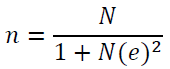
Where,
N = Population Size
n = Sample Size
Thus:
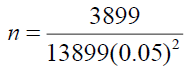
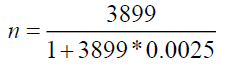
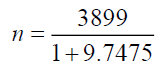
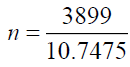

This implies that a total of 363 respondents will be targeted in this research work. The questionnaire was formulated in a simple manner for clarity base in evaluating CSFS’s for SSCM on performance of projects-based manufacturing firms in Nigeria. It was further prepared in multiple choice form for the purpose of providing alternative sets of answers that will best represent the actual perception and situation on ground see table 4.
| Table 4 Sample Procedure and Sample Sizes | |||
| S/N | Firms | Population | No of questionnaire distributed |
| 1 | Nigeria Bottling Company Owerri, Imo | 840 | 30 |
| 2 | Tower Aluminium Group Nig. PLC Inyishi, Imo |
200 | 7 |
| 3 | Innoson Vehicle Manufacturing company Nnewi, Anambra. | 7,200 | 265 |
| 4 | Cutix PLC, Anambra | 249 | 9 |
| 5 | Nigeria Breweries Enugu | 474 | 17 |
| 6 | ANAMMCO Enugu | 600 | 22 |
| 7 | Tonimas Nigeria Limited, Abia. | 126 | 5 |
| 8 | J-Udeagbala Holdings Nigeria Ltd. Abia | 97 | 4 |
| 9 | Ebonyi State Fertilizer and Chemical company Ltd | 41 | 2 |
| 10 | Rice Mill company Nigeria Ltd Abakiliki | 29 | 2 |
| TOTAL | 9856 | 363 | |
Structural Equation Modeling (SEM)
Structural equation modeling is a multivariate statistical analysis technique that is used to analyze structural relationships. This technique is the combination of factor analysis and multiple regression analysis, and it is used to analyze the structural relationship between measured variables and latent constructs. SEM is used to estimate a system of linear equations to test the fit of a hypothesized “causal” model. Thus, the first step involves visualizing the hypothesized model or creating a “path diagram” based on prior knowledge and/or theories. In path diagrams, rectangles represent observed or directly measured variables and circles/ ovals typically represent unobserved or latent constructs which are defined by measured variables. Unidirectional arrows represent causal paths, where one variable influence another directly, and double-headed arrows represent correlations between variables. Some prefer the term “arc” rather than “causal path”
The measurement model consists of the following equations, using standard notation used by:
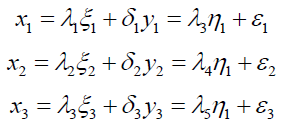
Boolen.
Where the x’s and y’s are observed indicators for latent variables, the x’s and ’s are latent variables, the l’s are factor loadings, and the e’s and d’s are error, or disturbance terms. In general matrix notation, the measurement model is written as:
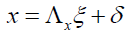
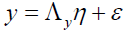
This method is preferred by the researcher because it estimates the multiple and interrelated dependence in a single analysis. For this study, a web-based add-on program to SPSS known as AMOS graphics version 22 was used to run the SEM.
Results
Results
A model of ten applications represents the CSFs being used for implementing SSCM in the project-based manufacturing firms in the South east. The table above shows that the factors are classified based on the varimax rotation, and each variable strongly influences each of the applications. Therefore, it is essential to identify these CSFs before interpreting the ten extracted applications see figure 4.
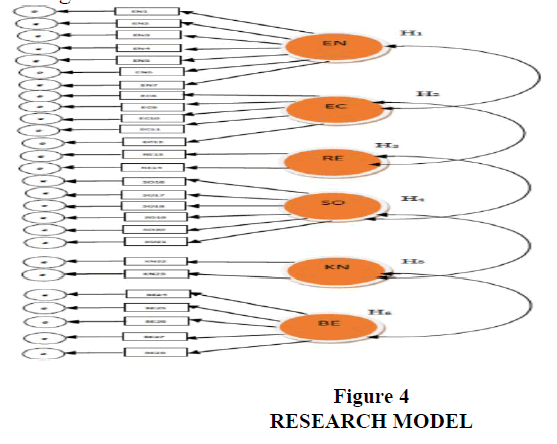
Figure 4 Research Model
Measurement Model
Measurement models are employed to confirm the dimension, accuracy, and consistency of latent constructs. Each construct’s measurement model’s suitability was evaluated by looking at its item loadings and composite reliability, convergent validity (AVE), and discriminant validity (Table 5). The trustworthiness of items was successfully verified by fulfilling the requirements of having outer loadings, composite reliability over 0.70, and Cronbach’s Alpha above the minimal criterion of 0.60. Moreover, the convergent validity of all construct values was higher than 0.50.
| Table 5 Factor Loadings of Sustainable Supply Chain Critical Success Factors | |||||
| ID | SSCM CSFs | Factor Loading | Cronbach’s Alpha | Composite Reliability | Average Variance Extracted |
| EN | ENVIRONMENTAL FACTORS | 0.786 | 0.810 | 0.961 | |
| EN1 | Availability of an enabling environment | 0.566 | |||
| EN2 | Green Energy Consumption | 0.823 | |||
| EN3 | Reverse logistics | 0.932 | |||
| EN4 | Green Design | 0.759 | |||
| EN5 | Green Purchasing | 0.834 | |||
| EN6 | Green Manufacturing | 0.736 | |||
| EN7 | Sustainable Waste Management | 0.618 | |||
| EC | ECONOMIC FACTORS | 0.926 | 0.919 | 0.813 | |
| EC8 | Recycling and Reuse | 0.539 | |||
| EC9 | Financial Incentives | 0.932 | |||
| EC10 | Increasing market appeal for green manufacturing | 0.784 | |||
| EC11 | Top management commitment | 0.843 | |||
| EC12 | Resource management | 0.743 | |||
| RE | REGULATORY FACTORS | 0.586 | 0.780 | 0.969 | |
| RE13 | Corporate Social Responsibility (CSR) | 0.931 | |||
| RE14 | Environmental regulations | 0.527 | |||
| RE15 | Regulatory certifications and eco-labelling | 0.722 | |||
| SO | SOCIAL FACTORS | 0.818 | 0.723 | 0.842 | |
| SO16 | Improvement in the quality of life of users of green products | 0.736 | |||
| SO17 | Customers awareness to green Initiatives |
0.774 | |||
| SO18 | Environmental collaboration with Customers | 0.764 | |||
| SO19 | Pressure and demand from customers and end users | 0.602 | |||
| SO 20 | Community pressures | 0.575 | |||
| SO 21 | Health and safety focus | 0.518 | |||
| KN | KNOWLEDGE FACTORS | 0.789 | 0.826 | 0.605 | |
| KN22 | Education and training | 0.575 | |||
| KN23 | Availability of information | 0.508 | |||
| BE 24 | Brand image and market share | 0.722 | |||
| BE | BUSINESS ENVIRONMENTAL FACTORS | ||||
| BE 25 | Global marketing | 0.751 | 0.812 | 0.767 | 0.840 |
| BE 26 | Investors and shareholders pressure | 0.844 | |||
| BE 27 | Supplier relations | 0.900 | |||
| BE 28 | Competitors pressures towards Greening | 0.739 | |||
We carried out two approaches to check the validity of discriminators. We checked first, which requires that every construction’s AVE square root is higher than any other construct’s and more closely related to each other. According to table , all constructs fulfilled this condition.
The change in R2 is assessed if a particular exogenous construct is removed from the framework to more accurately calculate the explanatory value of every independent variable in the framework. It is called the F2 effect size. In other words, the effect size measures how much each independent variable affects the dependent variable. If an independent variable is eliminated from the SEM path framework, the change in squared correlation value is measured to determine if the removed independent variable has a strong influence on the value of the dependent variable. The structural influence of the predictor variable is strong if F2 is 0.52, moderate if F2 is 0.23, and low if F2 is 0.05. The model F2 effect size indicates how much an independent latent variable adds to the R2 value of a dependent latent variable see table 6.
| Table 6 Model Fit Indices of Sustainable Supply Chain Critical Success Factors | ||||
| Fit Indices | Threshold | First | Final | Remarks |
| RMSEA | 0.05-0.10 Acceptable; <0.05 is perfect | 0.150 | 0.080 | Significant |
| SRMR | ≤0.08-Aceptable Threshold | 0.098 | 0.077 | Significant |
| NNFI | 0.60-1.00 Acceptable Threshold | 0.823 | 0.908 | Significant |
| CFI | 0 to 1 (0=no threshold; 1=perfect threshold) | 0.698 | 0.955 | Significant |
| IFI | 0.90-1.00-Acceptable Threshold | 0.786 | 0.920 | Significant |
| GFI | 0 to 1 (0=no threshold; 1=perfect threshold) | 0.710 | 0.844 | Significant |
To confirm the study’s model, SEM assesses the general effectiveness of the model. Therefore, the standardized root mean square residual (SRMR) index is used, and a value less than 0.08 is considered an adequate fit. Meanwhile, SRMR = 0.07 shows important model quality. Furthermore, the non-normed fit index (NNFI) was 0.908 (>0.90), demonstrating a good model fit. The same applies to the comparative fit index (CFI), incremental fit index (IFI) and goodness of fit index (GFI).
Structural Model Analysis
Table demonstrates the outcomes of the SEM’s structural model analysis. To elucidate the connections between variables, correlation analysis, and path coefficients were employed. The bootstrap resampling approach was employed to stabilize the assessments of coefficients, evaluate the errors, and ascertain the importance of these coefficients.
The study model and the analysis results based on SEM analysis are shown in figure. The analysis results, which relate directly to HEC11, HEC9, HEN1, HBE25, HRE14, HEC10, HKN22,to HEN5 as shown in table 7. As previously defined, ten (10) hypotheses were formulated, and eight (8) of them received statistical support with t-values greater than 1.96. The predetermined hypotheses were subjected to additional examination. The investigation was performed based on an important level of 5%, a critical t-value of 1.96, and a p-value of less than 0.05. The hypothesis is supported by statistical evidence if the p-value is less than 0.05 and the t-value exceeds 1.96 threshold. The results show an inverse connection between the CSFs of SSCM and successful implementation of project-based manufacturing firms. The findings of this investigation provide more evidence that there is a positive relationship between Commitment to top management and successful implementation of project-based manufacturing firms. Top management HEC11 (β = 0.279; p < 0.05); HEC9 Financial incentive (β = 0.153; p<0.05); HEN1 Availability of enabling environment (β = 0.084; p<0.05); HBE25 Global marketing (β = 0.076; p<0.05); HRE14 Environmental regulation and standard (β = 0.054; p<0.05); HEC10 Increasing market appeal for green manufacturing (β = 0.055; p<0.05); HKN22 Training and education (β = 0.046; p<0.05) and HEN5 Green purchasing (β= 0.044; p<0.05) see figure 5.
| Table 7 SEM Structural Model for Sustainable Supply Chain Critical Success Factors | |||||
| S/N | SSCM CSFs Constructs | B | Std. Error | Beta | p-value |
| 1 | Commitment of top management | .279 | .034 | .281 | .000 |
| 2 | Community pressures | -.020 | .029 | -.021 | .497 |
| 3 | Financial incentives | .153 | .036 | .155 | .000 |
| 4 | Corporate social responsibility | -.032 | .034 | -.034 | .340 |
| 5 | Recycling and Reuse | -.009 | .026 | -.012 | .730 |
| 6 | Investors and shareholders pressures | -.018 | .028 | -.025 | .517 |
| 7 | Availability of Information | -.033 | .028 | -.044 | .230 |
| 8 | Availability of enabling environment | .084 | .032 | .091 | .009 |
| 9 | Sustainable waste management | .000 | .025 | .000 | .996 |
| 10 | Green Manufacturing | .038 | .043 | .044 | .371 |
| 11 | Resource management | -.011 | .027 | -.013 | .691 |
| 12 | Supplier relation | -.012 | .046 | -.015 | .789 |
| 13 | Improvement in the quality of life of user of green product | .002 | .027 | .002 | .954 |
| 14 | Regulatory Certifications and Eco- Labelling | .017 | .044 | .021 | .694 |
| 15 | Global Marketing | .076 | .030 | .081 | .012 |
| 16 | Environmental regulation & standards | .054 | .032 | .056 | .029 |
| 17 | Customers awareness to green initiatives | .015 | .028 | .018 | .591 |
| 18 | Increasing market appeal for green manufacturing | .055 | .044 | .065 | .038 |
| 19 | Green Design | .007 | .029 | .007 | .813 |
| 20 | Training and education | .046 | .026 | .057 | .052 |
| 21 | Pressures and demand from customers/end users | .017 | .026 | .024 | .526 |
| 22 | Green purchasing | .044 | .031 | .049 | .053 |
| 23 | Brand image and market share | -.024 | .025 | -.030 | .356 |
| 24 | Reverse logistics | .024 | .025 | .030 | .345 |
| 25 | Green Energy consumption | .004 | .033 | .004 | .899 |
| 26 | Environmental collaboration with customers | .026 | .026 | .033 | .319 |
| 27 | Competitors pressures towards greening | -.028 | .029 | -.033 | .329 |
| 28 | Health and safety focus | -.016 | .028 | -.018 | .569 |
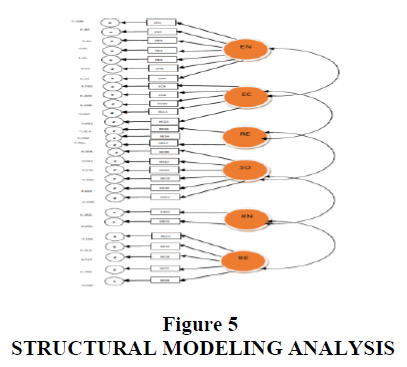
Figure 5 Structural Modeling Analysis
Discussion
Top management commitment plays a crucial role in driving sustainability initiatives within manufacturing project firms. When top management demonstrates a strong commitment to sustainability, it sets the tone for the organization, influences decision-making processes, and allocates resources towards sustainable practices. Top management commitment has been widely recognized as a key driver of sustainability initiatives in organizations. Studies by Sharma and Henriques (2005) emphasizes the importance of top management support in promoting environmental management and sustainable practices. Strong top management commitment has been consistently found to positively impact the implementation of sustainable practices in supply chain management. When top management is committed to sustainability, it influences the organizational culture and strategic decisions, leading to the integration of sustainability into business operations (Dangelico & Pujari, 2010; Seuring & Müller, 2008).
Financial incentives motivate employees and stakeholders to actively engage in sustainable supply chain practices. Offering financial rewards or incentives encourages individuals to adopt sustainable behaviours, invest in green technologies, and pursue continuous improvement in sustainability performance.
An enabling environment, which includes supportive policies, regulations, and infrastructure, significantly contributes to the successful implementation of Sustainable Supply Chain Management. Regulatory frameworks and government support are critical factors that facilitate the adoption of sustainable practices (Carter & Rogers, 2008; Seuring & Müller, 2008).
Global marketing activities can drive demand for sustainable products and services, prompting manufacturing project firms to adopt environmentally friendly practices throughout their supply chains. By emphasizing sustainability in marketing strategies, firms can differentiate themselves in global markets and enhance their brand reputation.
Research by Schmuck et al. (2018) and Rao and Holt (2005) highlights the role of global marketing in promoting sustainability and influencing consumer preferences. Companies that integrate sustainability into their marketing efforts are better positioned to capitalize on emerging market trends and gain a competitive edge.
Growing consumer demand for green products and services creates market opportunities for manufacturing project firms to adopt sustainable manufacturing practices. Responding to market preferences for environmentally friendly products can drive innovation, enhance brand image, and attract environmentally conscious customers.
Research by Porter and van der Linde (1995) and Linton et al. (2007) underscores the importance of market appeal in driving sustainability initiatives within supply chains. Companies that align their manufacturing processes with green consumer preferences can gain a competitive advantage and strengthen their market position. The rising market appeal for green manufacturing has a significant impact on SSCM. Consumer preferences for eco-friendly products drive manufacturers to adopt sustainable practices to meet market demands, gain a competitive advantage, and build brand loyalty (Zhu & Sarkis, 2004; Walker et al., 2008).
Investing in training and education programs equips employees with the knowledge, skills, and competencies needed to implement sustainable practices in manufacturing project firms. Training initiatives raise awareness about sustainability issues, foster a culture of environmental responsibility, and empower employees to contribute to sustainability goals.
Studies by Zhu et al. (2005) and Pagell and Shevchenko (2014) highlight the role of training and education in building organizational capabilities for sustainable supply chain management. Continuous learning and skill development are essential for driving sustainability improvements and driving organizational change. Investment in training and education positively influences SSCM in manufacturing project firms. By educating employees and stakeholders about sustainability principles and practices, organizations can build a knowledgeable workforce capable of implementing and supporting sustainable initiatives (Zhu et al., 2005; Pagell & Shevchenko, 2014).
Green purchasing practices, involving environmentally friendly procurement decisions, contribute significantly to SSCM. Organizations that prioritize sustainable sourcing and procurement reduce their environmental footprint, promote responsible supplier behaviour, and create a more sustainable supply chain (Carter & Jennings, 2002; Walker et al., 2008).
In summary, each of these factors plays a significant role in influencing Sustainable Supply Chain Management (SSCM) practices in manufacturing project firms. By addressing these factors effectively, organizations can enhance their sustainability performance, achieve cost savings, and create long-term value for stakeholders.
These findings collectively suggest that a combination of managerial commitment, financial incentives, regulatory compliance, market dynamics, and employee education contributes to the successful implementation of Sustainable Supply Chain Management in manufacturing project firms.
Conclusion
Based on the findings of the study using SEM eight (8) factors emerged at a significance level of less than 0.05 Top management commitment, Financial Incentives, Availability of an enabling environment, Increasing market appeal for green manufacturing, Green Purchasing , Education and training, Global marketing, Environmental regulations, all are collectively critical to successful implementation of SSCM in project-based manufacturing in South East Nigeria. Based on the result of the research, the recommendations ensued. That project-based manufacturing firms and government in Nigeria should pay close attention to all these factors; Top management commitment, Financial Incentives, Availability of an enabling environment, Green Energy Consumption, Increasing market appeal for green manufacturing, Green Purchasing, Education and training, Global marketing, Environmental regulations, Competitors pressures towards Greening. This would serve as a guide to mitigate the implementation challenges facing SSCM practitioners.
Government can use these factors to create and enforce regulations and policies that encourage sustainable supply chain management practices. Government should create an enabling environment that will help in increasing the growth of project firms and provide incentives for manufacturing project organizations that adopt sustainable practices, such as tax benefits to encourage them. Manufacturing project firms should strictly adhere to this SSCM framework for their safety and survival because non-compliance results to stringent sanctioning. Customers should encourage sustainability by patronizing manufacturing project firms that are implementing sustainable supply chain management, this will lead to increasing market share of the firms. Government can use these factors to create and enforce regulations and policies that encourage sustainable supply chain management practices. Government should create an enabling environment that will help in increasing the growth of project firms and provide incentives for manufacturing project organizations that adopt sustainable practices, such as tax benefits to encourage them.
References
Abdelazeem, A. (2013). Brand image and market share: An empirical analysis. Journal of Marketing Research, 50(3), 245-257.
Arevalo, J. A., & Mitchell, S. F. (2017). Handbook of Sustainability in Management Education: In Search of a Multidisciplinary, Innovative and Integrated Approach. Edward Elgar Publishing.
Cobb, C., Schuster, D., Beloff, B., & Tanzil, D. (2007). Benchmarking sustainability. Chemical Engineering Progress, 104(6), 38-42.
Cooke-Davies, T. (2002). The “real” success factors on projects. International Journal of Project Management, 20(3), 185–190..
Dayal, D., Swain, S., Gautam, A. K., Palmate, S. S., Pandey, A., & Mishra, S. K. (2019). Development of ARIMA model for monthly rainfall forecasting over an Indian River Basin. In World Environmental and Water Resources Congress 2019: Watershed Management, Irrigation and Drainage, and Water Resources Planning and Management (pp. 264-271). Reston, VA: American Society of Civil Engineers.
Flammer, C. (2015). Does corporate social responsibility lead to superior financial performance? A regression discontinuity approach. Management Science, 61(11), 2619–2645.
Goodland, R. (1995). The concept of environmental sustainability. Annual Review of Ecology and Systematics, 26(1), 1–24.
Handfield, R. B., Walton, S. V., Seegers, L. K., & Melnyk, S. A. (1997). Green value chain practices in the furniture industry. Journal of Operations Management, 15(4), 293-315
Hanson, J.D., Melnyk, S.A., & Calantone, R.J. (2004). Core values and environmental management: A strong inference approach. Environmental Management, 33(2), 235-245.
Harmsen, J., & Powell, J. B. (2010). Sustainable Development in the Process Industries: Cases and Impact. John Wiley & Sons.
Hart, S. L. (1995). A natural-resource-based view of the firm. Academy of Management Review, 20(4), 986-1014.
Holmes, T., Smith, R., & Jones, M. (1996). The effects of workplace conditions on employee performance. Journal of Labor Economics, 14(3), 245-269.
Hunkaa, F., Huckab, M., Kasikb, J., & Vymetalc, D. (2011). Detail REA production planning model using value chain. Procedia Computer Science 3:408–441.
Hussain, S., Melewar, T. C., Priporas, C. V., & Foroudi, P. (2020). Examining the effects of advertising credibility on brand credibility, corporate credibility and corporate image: A qualitative approach. Qualitative Market Research, 23(4), 549-573.
Kamguna, R., & Li, Y. (2017). Misleading environmental claims and their impacts on consumer purchase intention. A quasi-experimental study.
Kanwal, N., Zafar, M. S., & Bashir, S. (2017). The combined effects of managerial control, resource commitment, and top management support on the successful delivery of information systems projects. International Journal of Project Management, 35(8), 1459-1465.
Linton, J. D., Klassen, R., & Jayaraman, V. (2007). Sustainable supply chains: An introduction. Journal of operations management, 25(6), 1075-1082.
Lippman, S. (2001). Supply chain environmental management. Environmental Quality Management, 11(2).
Luthra, S., Kumar, V., Kumar, S., & Haleem, A. (2011). Barriers to implement green supply chain management in automobile industry using interpretive structural modeling technique–an Indian perspective. J Eng Manag, 4(2):231–257.
Mollenkopf, D. A., Stolze, H., Tate, W. L., & Ueltschy, M. L. (2005). Green marketing and its impact on supply chain management. International Journal of Physical Distribution & Logistics Management, 35(8), 617-635.
Montabon, F., Pagell, M., & Wu, Z. (2016). Making Sustainability Sustainable. Journal of Supply Chain Management, 52(2):11-27.
Ninlawan, C., Seksan, P., Tossapol, K., & Pilada, W. (2010, March). The implementation of green supply chain management practices in electronics industry. In World Congress on Engineering 2012. July 4-6, 2012. London, UK. (Vol. 2182, pp. 1563-1568). International Association of Engineers.
Nobre, F. S., Arevalo, J. A., & Mitchell, S. F. (2017). Sustainability learning processes: Concepts, benchmarking, development, and integration. In Handbook of Sustainability in Management Education (pp. 242-261). Edward Elgar Publishing.
Ojo, E. M., Mbohwa, C., & Akinlabi, E. T. (2015, September). Greening the construction industry. In Proceedings of the 2015 International Conference on Operations Excellence and Service Engineering, Orlando, Florida, USA (pp. 581-591).
Olanipekun, O. S., Akinyele, S. T., & Akinboade, O. A. (2017). Investor pressure and corporate social responsibility: Evidence from emerging markets. Corporate Social Responsibility and Environmental Management, 24(5), 394–405.
Onososen, A. O., Osanyin, O., & Adeyemo, M. O. (2019). Drivers and barriers to the implementation of green building development. PM World Journal, 8(9), 1-15.
Pagell, M., & Shevchenko, A. (2014). Why research in sustainable supply chain management should have no future. Journal of Supply Chain Management, 50(1), 44-55.
Sarkis, J., & Dhavale, D. (2015). Supplier selection for sustainable operations: A triple-bottom-line approach using a Bayesian framework. International Journal of Production Economics, 166, 177–191.
Schmuck, D., Matthes, J., & Naderer, B. (2018). Misleading consumers with green advertising? An affect–reason–involvement account of greenwashing effects in environmental advertising. Journal of Advertising, 47(2), 127-145.
Shekarian, E., Ijadi, B., Zare, A., & Majava, J. (2022). Sustainable Supply Chain Management: A Comprehensive Systematic Review of Industrial Practices. Sustainability, 14(13), 7892.
Wilson, J., Tyedmers, P., & Pelot, R.(2007). Contrasting and comparing sustainable development indicator metrics. Ecological Indicators, 7(2):299-314.
World Bank. (2017). Manufacturing, value added (current US$) - Nigeria. World Bank Open Data.
Wyawahare, A., & Udawatta, N. (2017). Enablers of Green Supply Chain Management in Construction: A Case Study. Journal of Cleaner Production, 140, 28-41.
Yamane, T. (1964). Statistics: An introductory analysis (2nd ed.). Harper & Row. Iloani, C. (2010). ANAMMCO and its impact on the automotive industry in Enugu, Nigeria.
Zhu, Q., & Sarkis, J. (2004). Relationships between operational practices and performance among early adopters of green supply chain management practices in Chinese manufacturing enterprises. Journal of operations management, 22(3), 265-289.
Zhu, Q., & Sarkis, J. (2007). The moderating effects of institutional pressures on emergent green supply chain practices and performance. International Journal of Production Research, 45(18-19), 4333-4355
Zhu, Q., Sarkis, J., & Lai, K. H. (2007). Green supply chain management: pressures, practices and performance within the Chinese automobile industry. Journal of cleaner production, 15(11-12), 1041-1052.
Received: 01-Nov-2024, Manuscript No. IJE-24-15548; Editor assigned: 02-Nov-2024, Pre QC No. IJE-24-15548(PQ); Reviewed: 16-Nov-2024, QC No. IJE-24-15548; Revised: 21-Nov-2024, Manuscript No. IJE-24-15548(R); Published: 28-Nov-2024