Research Article: 2025 Vol: 29 Issue: 1
Navigating “Brain Rot” and Its Revolution: How Can Brands Define Their Purpose in a Chaotic Space?
Jaafar hamza, Brand strategist
Citation Information: Hamza, Z., (2025). Navigating “Brain Rot” and its Revolution: How Can Brands Define their Purpose in a Chaotic Space?. International Journal of Entrepreneurship, 29(1),1-5
Introduction
The “Rabbit Hole” has been meticulously designed—a concept symbolizing the endless spiral of content and interactions on the internet, freely accessible to all of us. It thrives on our constant engagement and presence on social media platforms, drawing us into an infinite loop of swift scrolling, shifting, and jumping from one piece of content to another in the blink of an eye—or faster see figure 1.
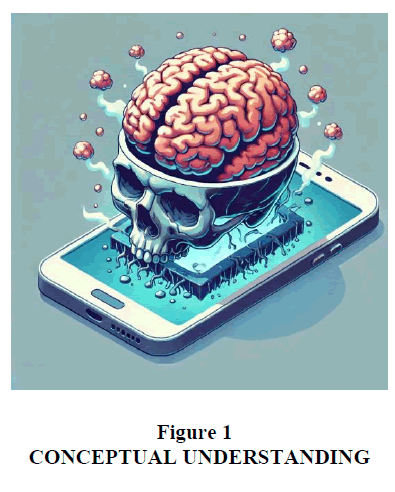
Figure 1 Conceptual Understanding
We have transitioned from a slower, contemplative gaze to an exhausting, rapid movement that overwhelms both the eye and the mind. This shift leaves us with an accumulation of predominantly superficial content, quickly consumed visually but with little substantive benefit. (Bayighomog, 2020), The brain, ever keen on conserving energy, gravitates toward this type of content—a dopamine-inducing mechanism that keeps users engaged and metaphorically trapped in a “Skinner box.”* This approach has proven to be an effective tool for capturing attention and keeping audiences skimming the surface see figure 2.
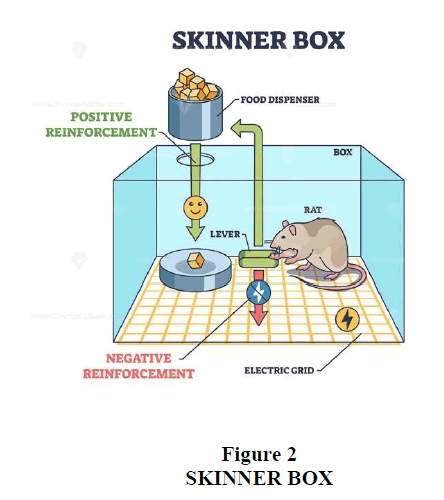
Figure 2 Skinner Box
In this era of rapid, high-volume content creation and presentation, the question arises:
how can brands preserve their message, values, and identity while navigating a battlefield dominated by attention-grabbing tactics, quick flashes, and often shallow content? (Berthon, 1999).
The Debate: Should Brands Join or Resist?
It seems that our growing attraction to and descent into the “Rabbit Hole” will only intensify with the rapid advancement of technology, driven by breakthroughs in behavioral psychology on one hand and the relentless evolution of technology—whether through quantum computing or the simulation of human behavior using hyper-advanced processing systems. Added to this is the fierce race between AI advancements and tools for interaction in virtual worlds, such as augmented reality (AR) and virtual reality (VR) (Herstein, 2011).
Amid this accelerating momentum, the space for “Brain Rot” appears to be expanding. So, what should brands do? Should they conform to this reality and adopt the same attention-seeking techniques, following the competition deeper into the “Rabbit Hole”? Or should they counter this tidal wave by holding firmly to their values and messages, steering away from the frantic race in advanced communication technologies?
The answer might lie in balance. The situation is neither black nor white. Brands must embrace flexibility—leveraging cutting-edge tools and technologies while maintaining a deep technical and behavioral understanding of audience engagement. The challenge lies in capturing attention without compromising core values and messages. (Louro, 2001) This is where brands that aim to create meaningful impact can distinguish themselves—by developing plans that balance innovation with authenticity, ensuring they preserve their unique identity in the market see figure 3.
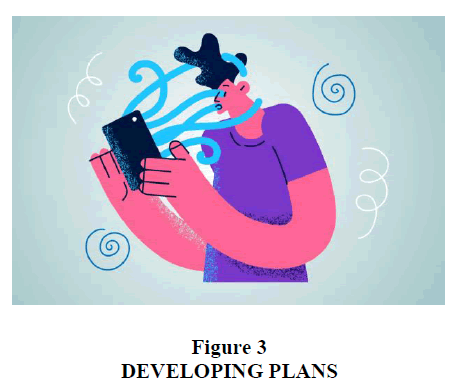
Figure 3 Developing Plans
Collaboration for Impact: Brand Strategy Meets Marketing
The challenge of creating balance places a significant burden on brand strategy and marketing teams. Together, they must craft a presence that not only resonates with the target audience but also reinforces the brand’s values. These values are akin to the soul—enduring and foundational—while products and services serve as expressions of this soul that can grow, adapt, or even mature (Mogaji, 2011).
Achieving this goal requires strategic collaboration between brand strategy and innovative content creation. The objective is to ensure that the message is both captivating and inspiring, creating a deeper emotional connection with the audience. The goal is not merely visibility, but purposeful impact, aligned with the brand’s message and values see figure 4.
Figure 4 Brands Message
A Challenge and an Opportunity
Will “Brain Rot” force brands to change how they communicate? Absolutely. We now engage on platforms that have become parallel worlds to our own reality, influencing and even shaping human behavior in unprecedented ways. These platforms have drawn us into a new arena where survival demands acceptance of their terms—a scene reminiscent of the Roman Colosseum. In ancient Rome, this arena was a stage for entertainment: gladiatorial combat, wild animal hunts, and spectacles that showcased the empire’s power.
Today, the digital arena mirrors this purpose. Platforms harness data to shape audience behavior, forcing brands, service providers, and content creators to compete under new rules. In this digital Colosseum, brands must accept the challenge but focus on substance over noise. Success lies in standing out not through chaos but by offering value-driven, meaningful communication (Shocker, 1994).
This is no simple task. By understanding audience behavior, enhancing brand messaging, and innovating content delivery, brands can rise to the occasion. They can emerge as modern “warriors”—disrupting the conventional patterns in this new digital arena and showcasing a fresh, positive, and impactful example of leadership and inspiration see figure 5.
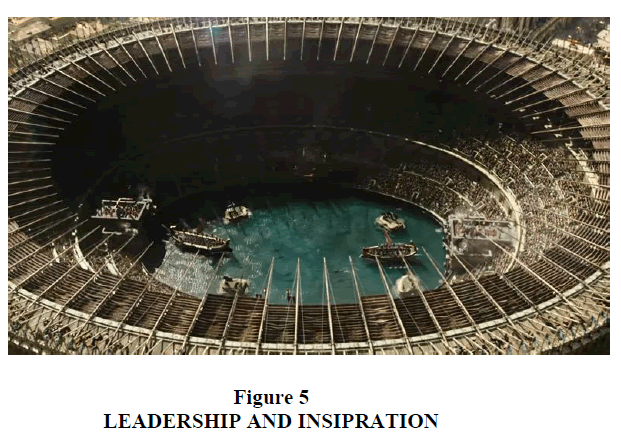
Figure 5 Leadership and Insipration
Overcoming Brain Rot
To counteract “Brain Rot,” brands must rethink their approach to content creation. The formula for success lies in this simple equation:
Attention + Brand’s Value + Consistency = Brand Impact.
By focusing on capturing attention, staying true to core values, and maintaining consistency across all touchpoints, (Veloutsou, 2018) brands can cut through the noise and build meaningful connections with their audiences. Here’s how to apply this formula effectively:
• Purpose-Driven Messaging: Develop content that aligns with the brand’s core values and delivers a clear, purposeful message.
• Snackable, Yet Meaningful Content: While quick and digestible content performs best in today’s distracted landscape, it must provide genuine value—whether through insights, inspiration, or solutions.
• Consistency Across Platforms: Build a coherent narrative across social media channels that reinforces the brand’s identity without overwhelming the audience.
• Encouraging Interaction and Reflection: Shift the focus from passive consumption to active engagement. Pose questions, share stories, and spark meaningful conversations with the audience. In an era of distraction and noise, brands must navigate the fine line between attention-grabbing tactics and purposeful engagement. By resisting the pull of the “Rabbit Hole” and advocating for a mindful content revolution, brands can not only overcome the challenges of “Brain Rot” but also establish themselves as leaders in an overcrowded digital landscape see figure 6.

Figure 6 Attention Grabbing Tactics
Conclusion
A Skinner Box is a controlled environment used in behavioral psychology to study operant conditioning, where an animal learns to perform behaviors through rewards (e.g., food) or punishments (e.g., mild shock), demonstrating how behavior is shaped by consequences.
References
Bayighomog Likoum, S. W., Shamout, M. D., Harazneh, I., & Abubakar, A. M. (2020). Market-sensing capability, innovativeness, brand management systems, market dynamism, competitive intensity, and performance: an integrative review. Journal of the Knowledge Economy, 11, 593-613.
Berthon, P., Hulbert, J. M., & Pitt, L. F. (1999). Brand management prognostications. MIT Sloan Management Review.
Herstein, R., & Zvilling, M. (2011). Brand management perspectives in the twenty‐first century. Qualitative Market Research: An International Journal, 14(2), 188-206.
Louro, M. J., & Cunha, P. V. (2001). Brand management paradigms. Journal of marketing management, 17(7-8), 849-875.
Mogaji, E. (2021). Brand management. Springer International Publishing.
Shocker, A. D., Srivastava, R. K., & Ruekert, R. W. (1994). Challenges and opportunities facing brand management: An introduction to the special issue. Journal of marketing research, 31(2), 149-158.
Veloutsou, C., & Delgado-Ballester, E. (2018). New challenges in brand management. Spanish Journal of Marketing-ESIC, 22(3), 254-271.
Received: 01-Nov-2024, Manuscript No. IJE-24-15560; Editor assigned: 02-Nov-2024, Pre QC No. IJE-24-15560(PQ); Reviewed: 16-Nov-2024, QC No. IJE-24-15560; Revised: 21-Nov-2024, Manuscript No. IJE-24-15560(R); Published: 28-Nov-2024