Research Article: 2026 Vol: 30 Issue: 2
4QS-Driven Metrics for Educational Excellence: A Lean and Machine Learning Approach to Academic Quality and Student Experience Assessment
Sunny Nanade, MPSTME, SVKM’s NMIMS Deemed to be University, Mumbai, India.
Koteswara Rao Anne, MPSTME, SVKM’s NMIMS Deemed to be University, Mumbai, India.
Debasis Dash, MPSTME, SVKM’s NMIMS Deemed to be University, Mumbai, India.
Aftab Haider Rizvi, VPSM, DY Patil Deemed to be University, Navi Mumbai, India.
Citation Information: Nanade., S, Anne., K.R, Dash., D., & Rizvi., A.H. (2026) 4qs-driven metrics for educational excellence: a lean and machine learning approach to academic quality and student experience assessment.
Academy of Marketing Studies Journal, 30(2), 1-11.
Abstract
Higher education institutions exist within competitive market environments which require them to achieve strategic goals through student experience excellence and satisfaction levels and institutional reputation management. The study introduces a four-quadrant evaluation system for academic standards and student readiness which integrates Intelligence Quotient (IQ) with Emotional Quotient (EQ) and Adversity Quotient (AQ) and Spiritual Quotient (SQ) within a streamlined technological framework. A live auto-scoring digital application was developed and deployed to capture multi-role stakeholder responses and generate real-time quotient visualisations without manual computation. The framework combines fundamental machine learning analytics with lean process methods to deliver an improved academic quality assessment system which operates at scale and with open access. The research demonstrates through pilot data from higher education stakeholders that 4QS metrics enable data-driven student profile segmentation which helps academic teams create proactive educational support measures. The system provides two benefits for educational marketing because it enables better student experience management and institutional brand positioning and service quality improvement. The research demonstrates that 4QS-based analytics functions as a vital tool for academic management in marketing operations but requires extended validation through large-scale participant studies over prolonged periods.
Keywords
4QS Framework, Educational Assessment, Python-Based Automation, Student Satisfaction, Educational Branding, Service Quality, Higher Education Marketing.
Introduction
Higher education institutions have adopted service organization operations which depend on student experience and perceived quality and institutional reputation to achieve lasting success. Universities in market-driven academic settings face evaluation through their educational results and their ability to provide student support and value delivery during the learning process. Student satisfaction together with retention and advocacy functions as vital performance indicators which help higher education institutions achieve their core marketing and relationship management objectives.
Recent educational reforms have brought significant changes to assessment methods because Outcome-Based Education (OBE) and National Education Policy (NEP) 2020 in India now dominate the educational landscape. The educational reforms focus on building students' cognitive abilities and emotional skills and ethical values and their capacity to adapt rather than their academic grades. The 4QS framework emerged from previous research to show how learners perform across different dimensions through IQ and EQ and AQ and SQ and perceived stress assessments (Bar-On 2006; Duckworth & Seligman 2005). The five dimensions together show how students think and deal with problems and how they handle their emotions and what they find valuable in their learning and how they control their school-related stress.
From a service quality perspective, the 4QS model enables institutions to better understand heterogeneity in student needs, engagement patterns, and coping behaviours. The research findings support the development of academic services which focus on student needs to improve perceived reliability and empathy and assurance because these elements determine educational service delivery satisfaction. The 4QS framework shows theoretical value but its real-world application faces multiple operational restrictions. The current systems depend on manual scoring procedures and spreadsheet processing methods and separated reporting systems which create extra work for teachers and reduce potential system expansion. The system's inefficiencies cause delayed feedback and reduced service responsiveness which results in a negative student experience.
To address these gaps, the present study extends prior work by developing a lean, automated digital system that operationalises the 4QS framework end-to-end. The system design reduces repeated work through its automatic processes which need minimal infrastructure according to Stoltz (2000) and Zohar & Marshall (2001). The first version of the system used Google Forms together with Google Sheets and AppsScript but developers transformed it into a browser application which runs on Python and JavaScript with Chart.js to provide automated scoring and client-side validation and real-time quotient profile visualization.
The system offers a straightforward deployment process for educational institutions because it needs only basic training and no advanced technical infrastructure. The open browser-based design of the system enables users to access their assessment data directly while maintaining complete transparency and accessibility. The first analysis of data trends emerged from 30 participants who consisted of students and teachers along with working professionals. The platform enables users to connect with learning management systems and outcome-attainment frameworks and predictive analytics for future development. The research demonstrates how 4QS-driven assessment functions as a strategic instrument which connects educational quality measurement with service quality management and relationship-based educational marketing approaches.
Research Objectives
The study develops a lean technology-based framework which applies service marketing methods to evaluate academic quality in higher education institutions. The study focuses on two specific research goals:
RO-1: The study will create a new framework that integrates service-quality components with 4QS dimensions including IQ, EQ, AQ, and SQ and stress perception metrics.
RO-2: The study aims to create an automated lean digital system which uses real-time data collection and auto-scoring to apply the 4QS framework. This system will require less evaluator effort while enhancing assessment responsiveness through automated visualisation.
RO-3: To explore how 4QS-driven analytics can support student segmentation and experience management, enabling institutions to identify diverse learner profiles and tailor academic support as part of a relationship-orientated service strategy.
RO-4: To examine the applicability of lean and machine learning–enabled analytics in enhancing perceived service quality within higher education, particularly in terms of reliability, transparency, and timeliness of feedback.
RO-5: To assess the feasibility of positioning 4QS-driven assessment as a strategic decision-support tool for academic governance and education marketing, linking learning analytics with outcomes related to student satisfaction and institutional differentiation.
Literature Review
Traditionally, instructional measurement focused on things like grades and scores achieved on testing. But over the last decade, researchers have placed greater value on observing a student’s steadiness, adaptability, life goals and how they react to stress (Bar-On, 2006; Duckworth & Seligman, 2005). Because of this change, specialists have developed a variety of tools to measure these concepts with well-made psychometric tests.
Various psychological constructs have been widely studied, some of which include the Intelligence Quotient (IQ), Emotional Quotient (EQ) as proposed by Goleman's model, Adversity Quotient (AQ) as proposed by Stoltz, and Spiritual Quotient (SQ) as proposed in psychological and leadership literature (Stoltz, 2000; Zohar & Marshall, 2001). All these quotients have been used independently to quantify skills like decision-making, interpersonal sensitivity, resilience, and moral reasoning. In more recent times, stress-related scales like the Perceived Stress Scale (PSS) have been used in academic settings to determine correlations between academic stress, performance results, and the risk of student dropout (Cohen, Kamarck, & Mermelstein, 1993).
Even though each model separately has helped us understand student behaviour, the 4QS model created by Nanade et al. (2020) was among the first to bring together IQ, EQ, AQ, SQ and stress onto one monitoring system. In the first paper, the authors demonstrated how schools could adopt the model to assess student learning abilities beyond traditional assessments. Afterward, additional methods from machine learning and prediction were added to the model when considering student learning progress and their psychological background (Nanade & Lal, 2019a). At this stage, digital quotient tests are not fully developed. We have Google Forms, LMS quizzes and feedback apps, but they fail to give the customary scoring, banding and instant feedback students expect. Learning analytics platforms and AI recommender engines have worked on creating personalised learning materials, but they haven't addressed problems with scoring or emotional adjustments D’Mello et al., (2023).
In the context of process improvement, research in education has turned to Lean knowledge from industry and manufacturing to remove ineffectiveness from teaching and administrative tasks (Wang et al., 2022; Chart.js). Bringing Lean into designing the curriculum and marking students’ work helps schools achieve efficiency, leave less time between evaluations and better manage their teachers’ workloads.
However, the current approaches linking PQ testing with automated Lean practices also have a major shortcoming. The majority of the solutions available now depend on humans doing the data analysis, and those that do show visuals are often not smart enough. Moreover, since open-source alternatives are not available, educational institutions cannot make use of them easily in different settings. The tool supports Python and was made to automate quotient analysis while processing the computations and displaying the outcomes.
Methodology
This study explains the processes of developing the 4QS evaluation system used in the operational system, including assignment of test items, scoring processes, classification algorithm, and system automation process.
4QS Structure of Assessment
The 4QS model aims to measure five of the most important psychological traits in students: Intelligence Quotient (IQ), Emotional Quotient (EQ), Adversity Quotient (AQ), Spiritual Quotient (SQ), and Stress Level. Each of these is measured by a defined set of structured questions in the measuring instrument. Compared to previous versions, which used five items per quotient, the present one, used and publicly hosted on GitHub, has a total of 90 questions. These questions are divided as presented in Table 1.
| Table 1 Distribution of 4QS Assessment Questions in the Live System | ||
| Quotient | Number of Questions | Format |
| IQ | 30 | Multiple Choice |
| EQ | 25 | Likert Scale |
| AQ | 25 | Likert Scale |
| SQ | 25 | Likert Scale |
| Stress | 25 | Likert Scale (PSS) |
All the multiple-choice items in the IQ section have a single correct answer and test reasoning, logic, or basic numeracy ability. The following quotient questions have a 5-point Likert scale ranging from Strongly Disagree (1) to Strongly Agree (5), with reverse scoring for a few items, i.e., for the Stress domain, following the protocol set by the Perceived Stress Scale (PSS) (Bar-On, 2006).
Scoring and Classification Logic
Each quotient is scored independently – for Likert-type items (EQ, AQ, SQ, Stress), raw scores are normalised to a range of 100; for IQ, the score for the number correct out of 30 is also standardised to 100; and a composite "4QS Score" is then computed as the unweighted average of the five normalised scores. Each individual quotient is then sorted into one of three distinct categories presented in Table 2. This banding aids in visual analytics and self-reflection. The classification results are used to generate radar charts for each participant, allowing intuitive comparisons across quotients.
| Table 2 Scoring Bands and Interpretation Categories for 4QS | ||
| Score Range | Category | Interpretation |
| 0–40 | Low | Requires attention |
| 41–69 | Moderate | Average performance or stability |
| 70–100 | High | Demonstrates strength in that dimension |
System Workflow and Logic
The assessment tool development process followed a two-step approach to achieve both usability and transparency.
Step-1/Prototype Phase: A functional prototype was initially implemented using Google Forms, with scoring automation handled by Google Apps Script, and data stored in Google Sheets. The initial version of the system demonstrated its ability to validate the scoring system and verify the input validation requirements.
Step-2/Current Version: The enhanced system includes a Python + HTML/JavaScript interface for local or browser-based deployment; Chart.js for radar and bar chart generation; Google Sheets as a live, append-only backend; GitHub Pages hosting for accessibility and reproducibility; and a public view of live data: Google Sheet. The system architecture of the 4QS automation tool appears in Figure 1. The system operates through user input translation and real-time processing and rule execution and graphical output display which runs in a browser environment without server involvement. The strategy enables full psychological assessment while Lean principles operate to decrease manual work and deliver quick valuable evaluations to both teachers and users.
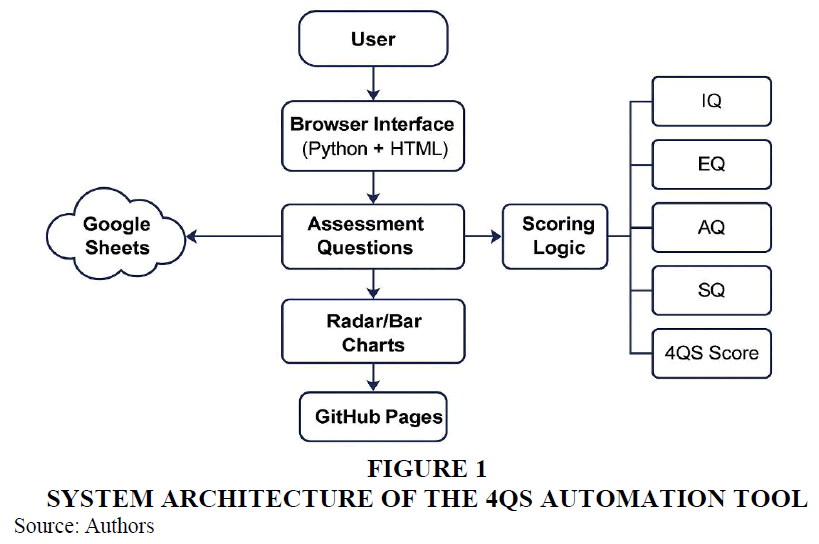
Figure 1 System Architecture of the 4QS Automation Tool
Source: Authors
System Implementation
A custom digital tool was developed to support the automated and scalable operation of the 4QS assessment framework which now exists as an open-source solution. The system operates through open web platforms while Python handles local processing tasks and Google Sheets maintains instant data storage capabilities. The platform allows researchers and educators to access its resources through a free open platform which needs no pricey facilities or proprietary systems.
Architecture and Component Design
The complete implementation consists of three core components
Frontend Interface: The user-facing portion is a clean, modular web interface built using HTML, CSS, and JavaScript. The system selects the appropriate test type from IQ, EQ, AQ, SQ or stress and displays questions through JSON files while checking user responses for accuracy. Users can navigate through questions using buttons that show their current position in the test.
Backend Logic: The system operates through Google Apps Script which collects submitted responses and stores them in a live Google Sheet instead of traditional server-side processing; the system includes a Python-based fallback backend built with FastAPI for offline operations; score normalisation and reverse scoring and quotient classification are performed through Apps Script when online and through Python when running offline.
Visualisation: Post-submission, user scores are visualised using Chart.js, an open-source JavaScript charting library. Two primary views are provided – Radar chart (Figure 2): Compares normalised scores across all five quotients; and Bar chart: Displays individual quotient scores with colour-coded band interpretation.
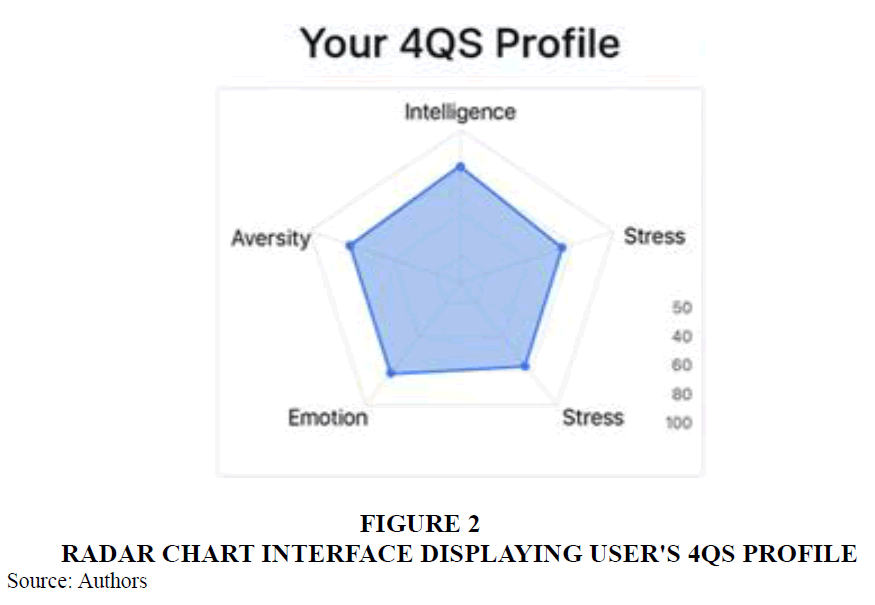
Figure 2 Radar Chart Interface Displaying User's 4QS Profile
Source: Authors
Deployment and Accessibility
The application is fully browser-compatible and mobile-responsive and hosted publicly via GitHub Pages for open access (live app URL - https://sunny-nanade.github.io/4QS-Test-App/); Source code repository (MIT-licensed), GitHub Repository (https://github.com/sunny-nanade/4QS-Test-App). This allows institutions or faculty members to directly clone or adapt the project with minimal technical intervention. The system is designed to be customizable, institutions can modify the question banks, add multilingual support, or integrate with LMS dashboards Figure 3.
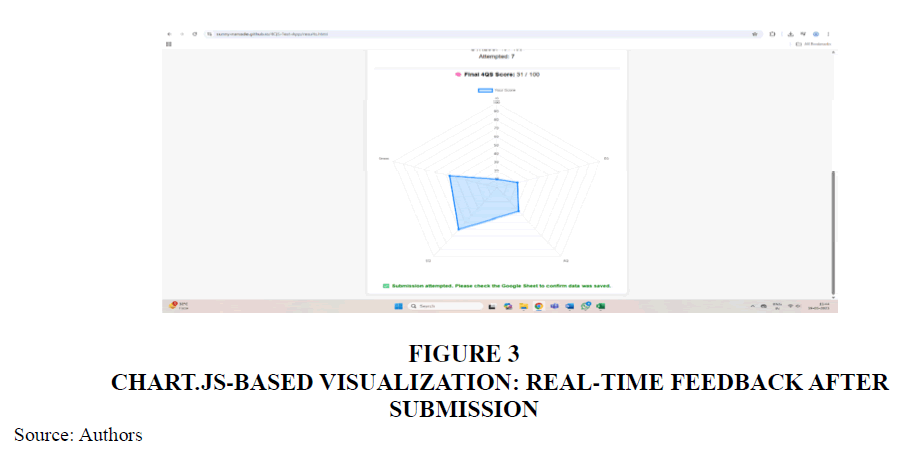
Figure 3 Chart.Js-Based Visualization: Real-Time Feedback After Submission
Source: Authors
Data Management and Security
All user submissions are stored in a linked Google Sheet, accessible to authorized reviewers for academic or research purposes Figure 4. The public view is available here:
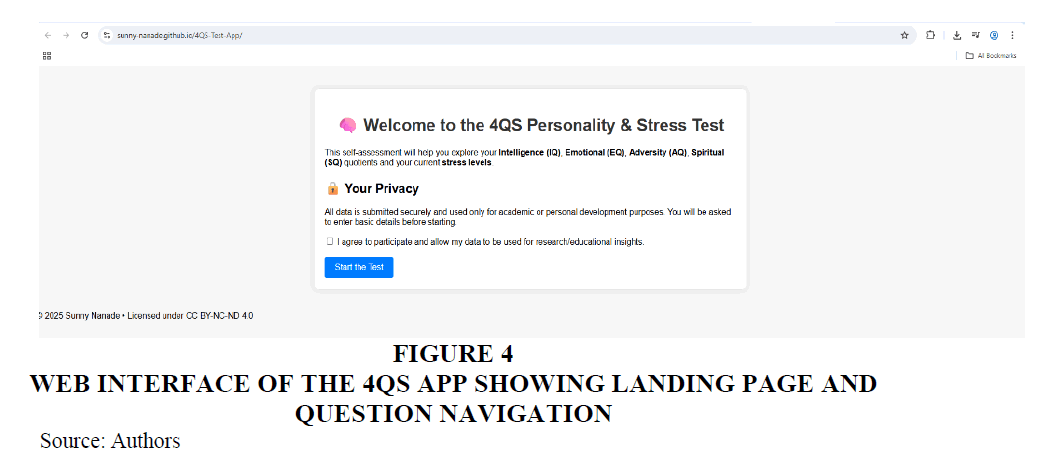
Figure 4 Web Interface of the 4QS App Showing Landing Page and Question Navigation
Source: Authors
Google Sheet - Real-Time Response Log:
https://docs.google.com/spreadsheets/d/1otHHQHKOWPsu2Bvy7qtq0Zontr12KRtL4os3eILXVeY/edit
Modular Enhancements
The system architecture supports modular growth, including - Custom dashboards for educators/admins; CO/PO mapping predictions using 4QS scores; Multilingual test versions; and Offline installation via Python + Electron (under development). The current version has already collected 30 responses from students, educators, and professionals, with visualization and analysis features tested successfully.
Experimental Results
The 4QS system employed was hosted on a public GitHub Page, thus it was accessible to a large audience, which included students, teachers, and professionals. The research paper presents a summary of the results achieved through 30 survey responses which were collected during April and May 2025. The dataset together with the application and visualized results served as the basis to evaluate system performance through classification accuracy and user behavior and operational reliability metrics.
Dataset Overview
The research involved 30 participants but only 20 of them completed all necessary IQ, EQ, AQ, SQ, and Stress assessments as shown in Table 3. These 20 records were used for visual analysis and reporting, while partial entries were retained separately for dropout pattern analysis.
| Table 3 Response Statistics by Role and Completion Status | |
| Category | Count |
| Total Responses | 30 |
| Complete Entries | 20 |
| Incomplete Entries | 10 |
| Student Respondents | 21 |
| Educator Respondents | 4 |
| Working Professionals | 5 |
Score Distribution by Quotient
The five quotients were analyzed across all valid entries (Table 4). The mean score and standard deviation were computed to understand user trends and detect quotients that may require focused interventions.
| Table 4 Average Quotient Scores Across all Valid Participants (N = 20) | ||
| Quotient | Mean Score | Std. Dev. |
| IQ | 72.4 | 7.6 |
| EQ | 45.2 | 15.3 |
| AQ | 30.9 | 12.8 |
| SQ | 46.5 | 15.1 |
| Stress | 61.3 | 9.4 |
Visual Output Examples
The device uses a Radar Chart to display the user's 4QS profile across five distinct dimensions. The real-time feedback is generated using Chart.js upon form submission. Bar chart visualizations are also in consideration for future releases.
Dropout and Incompletion Analysis
Among the 10 incomplete responses - most abandoned after completing only the IQ section (Figure 5); stress and SQ sections had the highest rate of unanswered questions; and this suggests that longer assessments may benefit from being split across multiple sessions or personalized using adaptive logic in future versions.
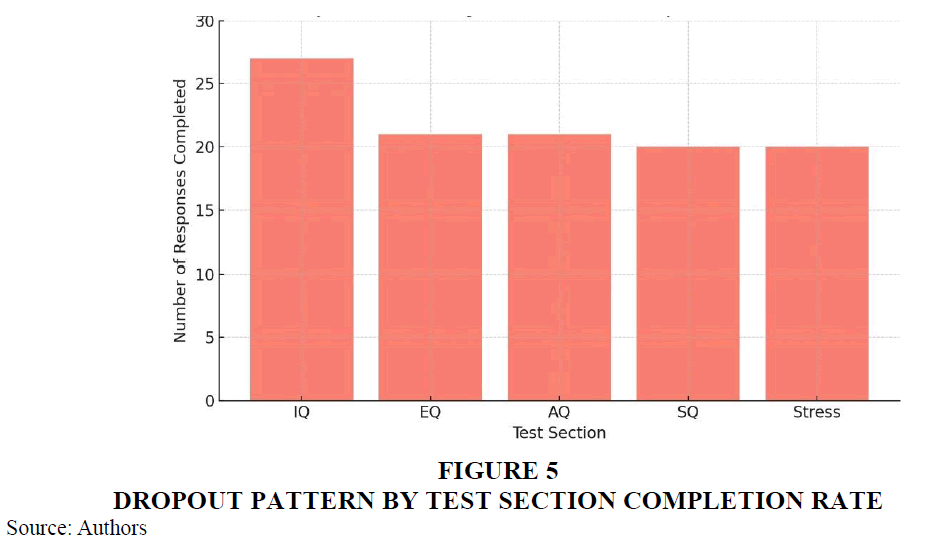
Figure 5 Dropout Pattern by Test Section Completion Rate
Source: Authors
Usability Observations
A brief pilot feedback session was conducted with five respondents (2 faculty and 3 students). The tool obtained excellent ratings for its clear questions and immediate feedback and its visual design. The suggestions included are - Adding a progress bar; Offering downloadable summary reports; and Translating questions to regional languages. The results show that the 4QS tool generates valuable information at an efficient level which follows Lean principles and minimizes the need for human scoring or evaluator monitoring.
Discussion
The 4QS instrument underwent its first deployment and testing phase which generated numerous results about its ability to improve academic assessment quality and extent. The instrument addresses both instructional coverage issues and administrative effectiveness problems through its combination of a detailed assessment model with Lean automation and real-time visualization capabilities.
Alignment with Educational Needs
The National Education Policy (NEP) 2020 and outcome-based education (OBE) value competency-oriented learning, where comprehension of a student's adaptability, stress management, emotional strength, and value system is as important as scholastic marks. Traditional instruments lack the ability to measure these elements effectively. The 4QS model comes closest to this vision by providing an organized, data-focussed method of measuring non-cognitive characteristics. The radar charts generated through assessment provide instant and clear visual results which serve both examiners and students who want to track their individual development. Such feedback facilitates metacognition, which has been found to enhance academic motivation and perseverance (Bar-On, 2006).
Lean Principles in Assessment
One of the greatest contributions of this system is its Lean-inspired architecture. As previously discussed in related research by Nanade & Lal (2019); Duckworth & Seligman (2005); Stoltz (2000). Lean philosophy in education seeks to eliminate non-value-adding operations such as manual data input, subjective grading, and slow report generation. Through automation of these phases through a workflow based on Python and JavaScript, the system illustrates - Decreased evaluator workload; Removal of errors in classification; and Immediate analytics without external software. These features render the tool extremely scalable for classrooms, departments, or even institutions as a whole without the need for specialized technical personnel Nanade & Lal, (2019b).
Scalability and Deployment Flexibility
The open-source nature of the system and hosting on GitHub Pages guarantee ease of deployment with the barest of resources. Basic web-experienced educators can clone the project, tweak questions, and deploy the tool for their own use. In addition, the backend use of Google Sheets provides a lightweight, secure, and free data collection solution. For settings where privacy is a concern, a standalone offline Python version is available, allowing the system to run locally without relying on the cloud.
Interpretation of Real-World Data
The analysis of 30 real-world responses generated by the system reveals two distinct patterns. The evaluation sections displayed a noticeable drop in completion rates at the very beginning of the assessment period. The cognitive IQ items were finished by nearly all participants yet their response rates decreased steadily throughout the EQ and AQ and SQ and stress-related sections. The pattern results from three factors which include respondent fatigue and personal question nature and instrument length. The current assessment design needs to be improved by developing adaptable or sectioned evaluation tools for future versions. Second, score distributions revealed distinct ‘band trends’ across the quotients. The participants demonstrated superior results in IQ assessments and stress-related tests yet their average scores for emotional and adversity-related assessments remained at lower levels. The research results show that students need help with their non-academic abilities so school programs must include counseling services and resilience training and emotional skill development to improve student readiness and wellbeing.
Limitations
The existing system functions with its strong points but several defects exist which need to be addressed. The 90-question format makes respondents tired so shorter tests or tests that start small and get bigger need to be used. Radar charts provide quick visual information but non-technical users require simplified written summaries and customized support to understand the data. The model gives each quotient the same level of importance but this approach fails to show how different quotients matter more or less depending on educational settings and institutional environments.
Pedagogical Implications
By giving faculty and advisors clear, data-driven insights into students’ psychological readiness and soft-skill levels, the tool helps them design more targeted mentoring and timely, meaningful interventions. It assists in the early identification of learning deficiencies, stress-induced burnout, and personality-based learning issues, most of which are hidden from marks alone. Additionally, integration with Course Outcome (CO) prediction models (future work in pipeline) or Bloom's Taxonomy might also increase its applicability in forecasting academic performance.
Marketing Implications for Higher Education Institutions
Higher education institutions operate as service organizations which compete through their perceived quality and student experience and trust development and long-term relational value according to marketing principles. The proposed 4QS-driven framework presents multiple consequences which affect educational marketing strategies and institutional strategic planning.
First, the integrated 4QS metrics enable psychographic segmentation of students beyond traditional demographic or academic performance indicators. Academic institutions create complete student profiles through the combination of cognitive (IQ) and emotional (EQ) and resilience-related (AQ) and purpose-driven (SQ) attributes which enables them to deliver personalized academic support and customized communication and specialized services. The detailed segmentation process enables relationship marketing to become more effective through its ability to match institutional support systems with the particular requirements and expectations of students.
Second, the assessment process for 4QS profiles now operates in real-time alongside visualization functions which creates an improved student experience management system. Organizations achieve faster assessment results and operational efficiency through Lean auto-scoring feedback systems which also enable them to maintain transparency and provide immediate responses. Students generate their satisfaction levels and trust feelings through their institutional touchpoints which lead to word-of-mouth promotion that affects both institutional reputation and student retention rates. The lifelong employment outcomes of students serve as a competitive element which allows institutions to separate themselves from other educational establishments in the market.
Third, the framework provides support for educational branding efforts and value proposition development. Through 4QS analytics adoption institutions create an environment which supports student learning while upholding ethical standards and embracing modern technology. Academic ability forms the foundation of the student’s overall story. Students will be able to achieve their future career goals and maintain long-term employment when they develop emotional intelligence and resilience and establish their sense of purpose.
Finally, 4QS analytics help organizations allocate resources based on data and generate new service ideas through data analysis. The combined quotient data enables marketing executives and academic leaders to detect students who need support the most so they can develop customized academic help systems which lower student dropout rates. The marketing method for this approach boosts "student lifetime value" through its dual function of academic progression support and alumni relations maintenance which transforms students into dedicated institutional backers. Educational organizations apply 4QS as an assessment system to transform their internal evaluation system into a strategic marketing instrument which improves educational service quality and student engagement and institutional branding.
4QS as a Driver of Student Experience, Satisfaction, and Institutional Brand Equity
Higher education institutions have adopted service organization characteristics which focus on student experience and long-term relationships as their main competitive advantage. The theory of services marketing shows that customers develop their perception of quality through ongoing responsive and empathic service delivery instead of relying on end results alone (Parasuraman et al., 1988). The 4QS framework provides a systematic method to study learners completely by combining their intellectual abilities (IQ) with emotional involvement (EQ) and their capacity to handle stress (AQ) and their sense of meaning and direction (SQ) plus their stress perception.
When analyzed through the SERVQUAL framework the 4QS model produces insights that directly correspond to the fundamental components of service quality. The delivery of academic work at a reliable level depends on students to maintain their intellectual readiness while emotional intelligence strengthens their ability to understand others which improves their social interactions and adversity quotient determines how well they deal with academic and personal obstacles. Spiritual quotient, in turn, helps align institutional values with students’ sense of meaning, thereby reinforcing assurance. The implementation of lean real-time assessment methods enables organizations to improve their ability to provide immediate feedback through shortened wait times and enhanced clarity of assessment results. Research from previous studies indicates that organizations which enhance their service quality perception will achieve better customer satisfaction and trust levels in their service operations (Zeithaml et al., 1996).
From a relationship marketing perspective, student institutions have to establish a connection with students which requires trust commitment and mutual value recognition (Morgan & Hunt, 1994). The 4QS framework enables institutions to move beyond transactional evaluation toward personalised support and meaningful engagement across the student lifecycle. Institutions can establish support systems through academic and emotional evaluation to build interventions which maintain student relationships and decrease dropout rates while promoting student advocacy. Students will create institutional brand equity through their relationships with the institution when they experience care and competence and complete their entire development process (Berry, 1995).
The 4QS framework positions academic quality measurement as a strategic marketing resource through its integration of SERVQUAL and relationship marketing principles with digital lean assessment practices. The system helps organizations to enhance their student experience management through educational governance systems which support their long-term brand-building initiatives.
Table 5 presents a clear overview of how the 4QS framework operationalizes conceptual intent through its observable outcomes. The table shows the direct links between research goals and their empirical findings and interpretive analysis. This alignment shows that 4QS-driven analytics go beyond being just an assessment tool. The tools operate as fundamental assets which boost service quality while enhancing student satisfaction and building trust-based relationships between students and their educational institutions. The table demonstrates how 4QS serves as a student satisfaction driver and institutional brand equity builder through its evidence-based marketing interpretations which show how complete learner data leads to value creation and student engagement and academic service differentiation.
| Table 5 Alignment of 4QS Objectives with Empirical Results and Marketing Implications | ||
| Research Objective | Key Results (Evidence) | Discussion & Marketing Interpretation |
| Objective 1: Conceptualise academic quality assessment as a service-quality and relationship management process using 4QS metrics |
The 4QS framework captured multi-dimensional student attributes (IQ, EQ, AQ, SQ, and perceived stress), revealing heterogeneity across learner profiles through real-time visualisation outputs. | The results support reinterpreting academic assessment as part of service delivery. 4QS insights align with service quality dimensions such as empathy, assurance, and responsiveness, reinforcing their relevance to relationship-based education marketing. |
| Objective 2: Design and implement a lean, automated digital system for real-time 4QS assessment |
The browser-based application automated data capture, scoring, storage, and visualisation, removing manual computation and spreadsheet dependency. | Lean automation improves operational efficiency, reliability, and speed of assessment, enhancing perceived service quality and reducing evaluator workload—key determinants of satisfaction in service contexts. |
| Objective 3: Explore the use of 4QS analytics for student segmentation and experience management |
Distinct quotient patterns emerged, with higher scores in IQ and stress management and lower scores in EQ and AQ. Survey completion drop-off also indicated engagement variation. | These patterns enable psychographic student segmentation, supporting personalised academic interventions and targeted engagement strategies that strengthen long-term student–institution relationships. |
| Objective 4: Examine how lean and machine learning–enabled analytics enhance perceived service quality |
The system ensured standardised outputs, minimal infrastructure dependency, real-time feedback, and transparent assessment logic. | Lean digital tools enhance reliability, transparency, and timeliness—core service quality attributes. While predictive ML was limited, the analytics foundation supports experience-driven service optimisation. |
| Objective 5: Assess the feasibility of positioning 4QS as a strategic tool for education marketing and governance |
Open-source deployment demonstrated scalability and adaptability, with institution-level insights enabled through aggregated visual outputs. | The findings indicate that 4QS analytics can support marketing strategy, branding, and academic governance by positioning academic quality as a market-facing strategic asset linked to value creation and differentiation. |
Theoretical Anchoring - Integration of 4QS with SERVQUAL and Relationship Marketing
Services marketing theory explains that quality emerges from customer perceptions and their interactions instead of resulting from technical standards (Parasuraman et al., 1988). Learning value in higher education emerges from daily institutional responses to student needs and their understanding of students and their ongoing performance and student requirement fulfillment. Academic assessments used in educational systems mainly evaluate cognitive abilities of students. Organizations focus their evaluation process on a single element which results in them missing out on numerous service value aspects that students use to assess their educational experience.
The 4QS framework offers a theoretically grounded mechanism to extend service quality theory into academic governance by operationalising non-cognitive and affective dimensions of the student experience. The Intelligence Quotient (IQ) functions as a measure which supports service reliability through demonstrating student ability to handle their academic work. Emotional Quotient (EQ) aligns closely with empathy, capturing students’ interpersonal engagement and emotional regulation. The system's ability to handle student support during academic pressure and uncertain situations shows its Adversity Quotient (AQ) performance. Spiritual Quotient (SQ) which shows purpose and value alignment helps assurance through its ability to build trust while maintaining ethical harmony and institutional credibility.
Relationship marketing literature further emphasises that service organisations succeed through trust, commitment, and perceived relational value rather than transactional efficiency alone (Morgan & Hunt, 1994; Berry, 1995). The 4QS model enables educational institutions to create student profiles which lead to individualized interventions that help them build ongoing relationships with students throughout their entire academic journey. The way people perceive service quality affects their loyalty to the institution and their willingness to recommend it to others which ultimately builds institutional brand equity through positive reputation and student loyalty and word-of-mouth promotion (Zeithaml et al., 1996).
The 4QS-driven analytics system creates a unifying connection between academic operations and marketing results to establish quality assessment as a strategic tool for achieving service excellence and building strong brand identity.
Figure 6 illustrates the theoretical pathway through which 4QS-driven analytics influence institutional brand equity in higher education. Students face academic experiences which the four quotients (IQ, EQ, AQ, SQ) shape while schools base their responses on these same quotients. The research findings help improve service quality perception in SERVQUAL dimensions through better reliability and empathy and responsiveness and assurance which results from lean and transparent assessment methods that provide quick results. Enhanced service quality strengthens core relational results that include trust and satisfaction and commitment which form the basis of relationship marketing theory. The positive results from these relationships build up over time to create strong brand equity which shows itself through customer loyalty and brand advocacy and institutional reputation.
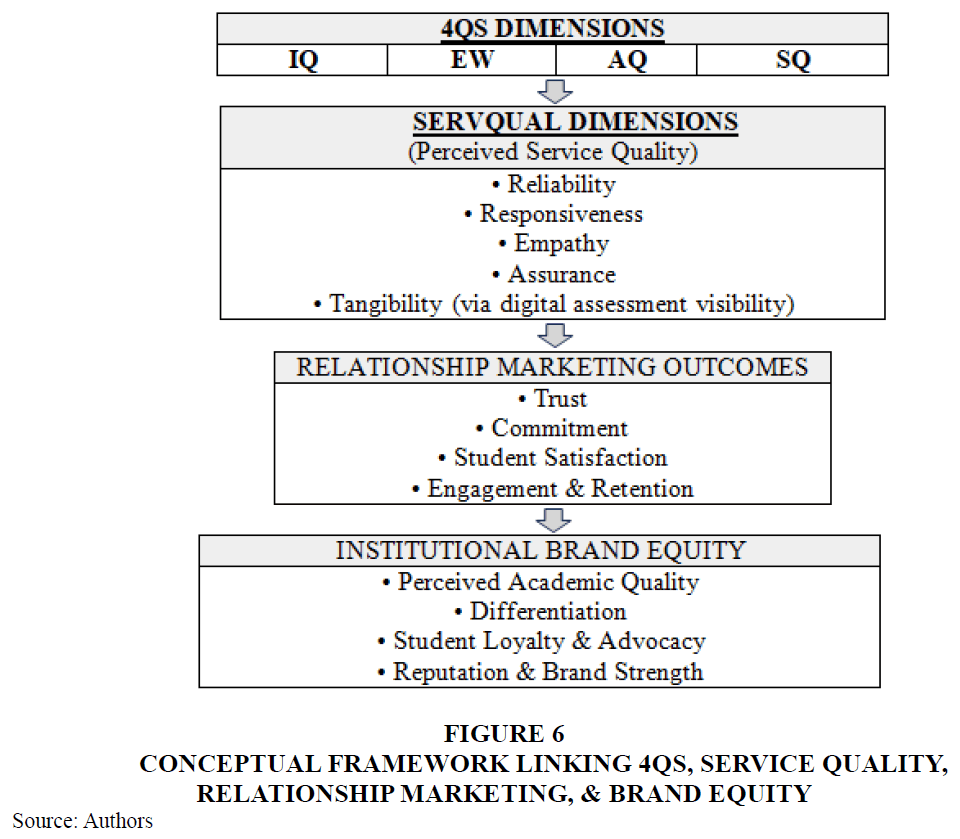
Figure 6 Conceptual Framework Linking 4QS, Service Quality, Relationship Marketing, & Brand Equity
Source: Authors
Conclusion and Future Work
This study presented a 4QS-driven metrics framework that combines lean principles with machine learning–enabled analytics to strengthen academic quality assessment in higher education. The framework provides an auto-scoring digital platform that measures Intelligence Quotient (IQ), Emotional Quotient (EQ), Adversity Quotient (AQ), and Spiritual Quotient (SQ) to collect student and stakeholder feedback through a transparent and scalable system. The pilot implementation results show that real-time quotient visualisation operates successfully in practice to support academic decisions based on data without requiring extra evaluation work.
The study provides educational value but it also establishes academic assessment as a strategic tool for marketing educational services and delivering superior student support. The integrated 4QS analytics system enables educational institutions to analyze student information and divide their student body into distinct groups which supports proactive learning management and helps academic governance systems achieve market-based goals. The implementation of lean digital assessment tools in services marketing enables organizations to enhance their responsiveness while building trust in institutional processes and delivering greater value to their primary stakeholders which consist of students and faculty members and administrators.
The empirical data comes from exploratory research with a small sample size but this framework establishes a strong foundation for upcoming studies. The current research would benefit from additional work through extensive multi-institutional longitudinal studies that use predictive machine learning models to connect 4QS results with key marketing metrics including student satisfaction and retention and engagement and advocacy. The framework would receive additional confirmation of its value as an academic resource and strategic instrument through these extensions.
The study shows that the 4QS model functions as an open-source browser-based application which operates through Python and JavaScript and Google Sheets and Apps Script and Chart.js. The system operates with minimum infrastructure dependency because its lean design enables fast feedback and visual insight at scale. The research provides a multidisciplinary approach that combines educational analytics with digital efficiency and marketing strategy to demonstrate 4QS-driven assessment as an effective method for achieving sustainable educational excellence.
Key Achievements
A live auto-scoring 4QS digital application was created and deployed on GitHub Pages for this study to provide automated real-time assessment capabilities. The system gathers actual responses from various academic stakeholders which produces diverse data sets that correspond to different educational roles. The built-in analytics system generates radar-based visualizations for quotient profiling without requiring users to perform external calculations. The model adopts open-source architecture which enables educational institutions to replicate its results while making adjustments and expanding its reach through data-based quality assessment systems.
Planned Enhancements
The current implementation lays the groundwork for multiple future directions. ‘Predictive Analytics’ will join machine learning models to forecast Course Outcome (CO) achievements through quotient score analysis. This system functions as both an early detection tool and an educational improvement instrument for curriculum alignment. The ‘Bloom’s Taxonomy Mapping’ system matches quotient-based profiles to Bloom's learning levels which allows faculty members to predict student participation levels and learning deficiencies. The system provides ‘Multilingual and Localized Versions’ which let users access content in different languages for better support of diverse student groups. The feature allows users to access the platform through their native languages which boosts its accessibility to students from different linguistic backgrounds. The educational institution needs to establish ‘admin and faculty dashboards’ which will display batch and class and academic year trends while showing the connection between 4QS trends and academic KPIs.
Offline-First Version
Enhance the standalone Python implementation for secure offline usage, particularly in resource-constrained institutions. The current version of the 4QS model focuses on streamlined automation and classification systems with visual feedback functions although the previous versions used machine learning techniques to predict academic results. Machine learning model integration for CO prediction and dropout forecasting and adaptive testing systems represents a future development which developers actively work on at the present time. The study tests the performance of affordable psychological assessment tools which function without needing proprietary software or expensive financial resources. The system provides immediate feedback and direct quotient classification that helps teachers and students and educational decision-makers to understand their performance levels.
References
Bar-On, R. (2006). The Bar-On model of emotional–social intelligence (ESI). Psicothema, 18(Suppl.), 13–25.
Berry, L. L. (1995). Relationship marketing of services—Growing interest, emerging perspectives. Journal of the Academy of Marketing Science, 23(4), 236–245.
Indexed at, Google Scholar, Cross Ref
Cohen, S., Kamarck, T., & Mermelstein, R. (1983). A global measure of perceived stress. Journal of Health and Social Behavior, 24(4), 385–396.
Indexed at, Google Scholar, Cross Ref
D’Mello, S. K., Bosch, N., Shute, V., & Baker, R. (2023). Emotion-aware analytics in online learning. In C. Lang, G. Siemens, A. F. Wise, & D. Gašević (Eds.), Springer handbook of learning analytics (pp. 299–316). Springer.
Duckworth, A. L., & Seligman, M. E. P. (2005). Self-discipline outdoes IQ in predicting academic performance. Psychological Science, 16(12), 939–944.
Morgan, R. M., & Hunt, S. D. (1994). The commitment–trust theory of relationship marketing. Journal of Marketing, 58(3), 20–38.
Indexed at, Google Scholar, Cross Ref
Nanade, S., & Lal, S. (2019a). Applying lean for effective implementation and governance of education in future cities. International Journal of Innovative Technology and Exploring Engineering, 8(7S), 214–216.
Nanade, S., & Lal, S. (2019b). Developing engineering curriculum: The lean way. International Journal of Innovative Technology and Exploring Engineering, 8(8S3), 2278–3085.
Nanade, S., Lal, S., & Nanade, A. (2021). 4QS predictive model based on machine learning for continuous student learning assessment. In Technology and tools in engineering education (pp. 185–211). CRC Press.
Indexed at, Google Scholar, Cross Ref
Nanade, S., Lal, S., Goswami, S., & Sharma, A. (2020). 4QS model to assess the student learning capabilities. International Journal of Advanced Science and Technology, 29(8), 2227–2244.
Parasuraman, A., Zeithaml, V. A., & Berry, L. L. (1988). SERVQUAL: A multiple-item scale for measuring consumer perceptions of service quality. Journal of Retailing, 64(1), 12–40.
Stoltz, P. G. (2000). Adversity quotient: Turning obstacles into opportunities. John Wiley & Sons.
Wang, J., Zhao, L., & Yuan, B. (2022). Machine learning for personalized adaptive education systems. IEEE Access, 10, 44678–44693.
Zeithaml, V. A., Berry, L. L., & Parasuraman, A. (1996). The behavioral consequences of service quality. Journal of Marketing, 60(2), 31–46.
Indexed at, Google Scholar, Cross Ref
Zohar, D., & Marshall, I. (2001). SQ: Spiritual intelligence, the ultimate intelligence. Bloomsbury Publishing.
Received: 13-Jan-2026, Manuscript No. AMSJ-26-16820; Editor assigned: 14-Jan-2026, PreQC No. AMSJ-26-16820(PQ); Reviewed: 21- Jan-2026, QC No. AMSJ-26-16820; Revised: 26-Jan-2026, Manuscript No. AMSJ-26-16820(R); Published: 30-Jan-2026