Research Article: 2026 Vol: 30 Issue: 2S
A Study On The Effect Of Augmented Reality On Consumer Purchase Intention In Furniture Industry
Kavitha R Gowda, ASOB, Alliance University
Aastha Verma, Digital Marketing and Business Development Executive
Shazia Kausar, University of Technology and Applied Sciences, Shinas
Joefrelin C. Ines, University of Technology and Applied Sciences, Shinas
Khadija Ahmed AlIsaei, University of Technology and Applied Sciences, Shinas
Fatma Malallah AL-Ajmi, University of Technology and Applied Sciences, Shinas
Citation Information: Gowda, K.R., Verma, V., kausar, K., Ines, J.C., AlIsaei, KA., & AL-Ajmi, F.M. (2026). A study on the effect of augmented reality on consumer purchase intention in furniture industry. Academy of Marketing Studies Journal, 30(S2), 1-16.
Abstract
In the marketing sector, augmented reality (AR) is experiencing a surge in popularity, with predictions of remarkable market growth. This technology has reshaped how consumers engage with products, particularly in the furniture industry. However, limited research exists on its impact on consumer behaviour in this context. This study aims to investigate how augmented reality influences consumer purchase intentions in the furniture industry, exploring various constructs: vividness, augmentation, product informativeness, personalized recommendations, product variety enjoyment, immersion, usefulness, and purchase intention (DV). Our findings reveal crucial insights: Vividness and Augmentation: These positively impact perceived enjoyment, subsequently elevating purchase intention. A more vivid and augmented AR experience enhances enjoyment and, in turn, the likelihood of making a purchase. Product Variety, Personalized Recommendations, and Product Informativeness: These positively influence perceived usefulness, leading to increased purchase intention. Offering diverse product options, personalized suggestions, and rich product information within AR enhances its utility. Additionally, our study underscores the mediating roles of perceived enjoyment and perceived usefulness. These mediators elucidate how vividness, augmentation, product variety, personalized recommendations, and product informativeness indirectly affect purchase intention by enhancing the overall consumer experience. In summary, our research sheds light on the significant impact of augmented reality on consumer behavior in the furniture industry. To leverage this technology effectively, businesses should focus on creating immersive AR experiences, providing a diverse product range, and offering personalized recommendations. These efforts can boost perceived enjoyment and usefulness, ultimately driving purchase intention among consumers.
Keywords
Augmented Reality, Purchase Intention, Furniture Industry, S-O-R Model, Vividness, Augmentation, Product Informativeness, Personalized Recommendations, Product Variety Enjoyment, Immersion, Usefulness.
Introduction
An emerging cutting-edge marketing technology called augmented reality (AR) improves users' sensory perceptions by adding to or superimposing digital content like text, geolocation data, graphics, audios, and videos onto a live view of actual physical objects and environments in real-time. AR creates a tighter connection between virtual items and users' actual surroundings. Augmented reality (AR) offers a more immersive, vibrant, engaging, and realistic user experience. A growing variety of web-based and mobile augmented reality (AR) applications have appeared to provide users with unique, immersive, entertaining, educational, and beneficial user experiences as a result of the popularity of mobile devices and the accessibility of high- speed wireless networks. As a result, AR is developing into a game-changing technology that will revolutionize marketing in the years to come (Tan et al., 2022). According to a PwC industry analysis, AR generated $33 billion in net economic gains in 2019. In addition, according to PwC's 2019 report, the benefits will amount to $338.1 billion by 2025 and $1.0924 trillion by 2030. According to estimates, the global AR market would be worth $4.16 billion in 2020 and $97.76 billion in 2028 (Insights, 2021) Dange et al., (2021).
Sometimes the terms augmented reality (AR) and virtual reality—or virtual environment, as Milgram and Kishino (1994) called it—are used interchangeably. Both of them are a part of the current digital technology trend known as "mixed reality," which is defined as the blending and integration of the real and virtual worlds where real and virtual objects interact, support, and complement one another Du et al., (2022). While AR and virtual reality (VR) are related, VR technology completely immerses users in a synthetic environment while AR technology enhances a user's interaction with reality through a computer-generated environment. Users of AR can continue to see and hear the outside world while also experiencing new sights and sounds that are precisely timed to the user's three-dimensional (3D) orientation to a particular geographic area. As a component of mixed reality, augmented reality (AR) concentrates on adding digital information to the actual world rather than incorporating it into virtual ones (Figure 1) (Azuma, 1997). As a result, rather than producing a fully fake environment in which users shut themselves out and can lose their sense of time and place, augmented reality (AR) seeks to enhance the real world Heller et al., (2019). As a component of mixed reality, augmented reality (AR) concentrates on adding digital information to the actual world rather than incorporating it into virtual ones (Figure 1) (Azuma, 1997). As a result, rather than producing a fully fake environment in which users shut themselves out and can lose their sense of time and place, augmented reality (AR) seeks to enhance the real world Haile & Kang, (2020).
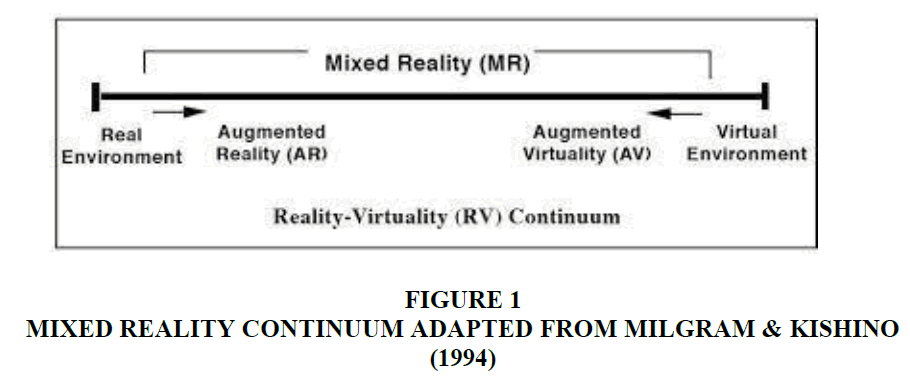
Figure 1 Mixed Reality Continuum Adapted from Milgram & Kishino (1994)
Research Gap
The use of augmented reality (AR) in online purchasing has a beneficial impact on customer satisfaction, engagement, and choice confidence. Additionally, research indicates that AR purchasing experiences provide entertainment, commercial, and experiential value (Bulearca & Tamarian, 2010; Chen & Hsieh, 2010) as well as feelings of novelty (Yim et al., 2017). However, not enough research has been done on how AR marketing (ARM) affects consumer views and buy intentions. Javornik (2016) draws attention to knowledge gaps about how customers interact with and react to this emerging reality Javaheri et al., (2020).
According to Jessena et al. (2020), it is important to look at how AR affects several phases of the customer journey, such as discovery, purchase, and referrals Jiang et al., (2021). In a similar vein, Zimmermann et al. (2023) advise researching how AR affects important outcomes like intention to buy and actual purchasing behavior. Kumar, Gupta & Chauhan (2022) point out additional gaps in our knowledge of the reasons for AR adoption and the aspects that consumers find most appealing. The majority of earlier research ignored the experience factors impacting purchasing decisions in favor of the Technology Acceptance Model (TAM) (Ehab, Adel & Abdelmoaty, 2020). Growing customer desire for eco-friendly furniture in the Indian furniture sector underscores changing consumer tastes that marketers need to take into account (Choudhury & Gulati, 2020) ; Jung et al., (2021).
Research Questions
• Does an augmented reality application affect customers’ purchase intention?
• If so, then how do augmented reality influence consumer purchase intention in furniture
• What aspects of augmented reality have an impact on affective and cognitive responses?
• How do affective and cognitive responses affect purchase intention?
Review of Literature
In "Making omnichannel an augmented reality: the present and future state of the art," Hilken et al. (2018) examined how augmented reality (AR) improves omnichannel interactions across the customer journey Hilken et al. (2017). Three fundamental AR value drivers embedded, embodied, and extended consumer experiences were highlighted in the report, which combined previous research to provide conceptual and management insights. By bridges the gap among online and physical touchpoints, augmented reality (AR) allows for the smooth integration of electronic and offline environments, providing customers with distinctive in-store experiences and enhanced engagement Kamel et al., (2022).
In "Try-on experience with augmented reality comforts your decision," Song, Baek, & Choo (2020) investigated the impact of AR try-on technologies on consumer decision comfort. According to their research, choice satisfaction is improved by immersion and psychological ownership, which originate from environmental embed (EE) and simulated physical control (SPC) Karthik, Gowda & Banerjee, (2021). They discovered that whereas immersion and ownership are positively impacted by both EE and SPC, the effect of EE is lessened for users who have previously used AR. It was demonstrated that immersion mediated the effect of EE but not SPC, underscoring the significance of interactive and captivating virtual experiences in fostering consumer confidence Kazmi et al., (2021).
In "The playground effect: How augmented reality drives creative customer engagement," Jessena et al. (2020) suggested that, in contrast to conventional marketing frameworks, AR promotes creative consumer involvement. They demonstrated a step-by-step procedure that demonstrates how AR-induced interaction fosters customer innovation and results in intrinsic satisfaction. According to the study, augmented reality (AR) is a potent instrument for innovative marketing and improved customer connection since it can stimulate novel kinds of consumer engagement and idea production Khan, (2019).
In "Shopping in augmented reality: The effects of spatial presence, personalization, and intrusiveness on app and brand responses," Smink, Reijmersdal, Noort, and Neijens (2020) examined how AR apps affect customer persuasion Kumar, (2021). They discovered that although perceived intrusiveness has a negative influence on brand reactions and purchase intention, spatial presence as well as perceived personalization had a favorable impact. When users could see objects in their surroundings, such furniture arrangement, spatial presence was especially important since it helped them make better choices about size and style. AR's usefulness for customer participation and choices confidence was reinforced by the perception that non-AR retail experiences were more intrusive Kumar, (2022).
In "Augmented reality adoption intention among travel and tour operators in Malaysia: mediation effect of value alignment," Alam et al., (2024); Alam et al. (2021) looked at important factors that influence AR adoption, such as compatibility, trialability, customer demand, and competition pressure. The study discovered that correlations between perceptual expenses, difficulty, and behavioral intention were partially mediated by value alignment. Every element had a positive correlation with adoption aspirations, with the exception of outside support Du et al., (2022). The findings emphasize how crucial it is to match AR solutions with company values and perceived advantages in order to increase corporate acceptability Kumar & Srivastava, (2022).
In "Using augmented reality to reduce cognitive dissonance and increase purchase intention," Barta, Gurrea, & Flavian (2023) examined how AR affected cognitive load, perceived similarity, and purchase decision-making. They discovered that AR lowers pre-purchase cognitive dissonance by reducing confusion and option similarity, which enhances confidence and desire to pay, using the stimulus-organism-response (S-O-R) paradigm. AR is a useful tool for e-commerce because of its ability to lessen over-choice confusion, particularly when customers are presented with a large number of comparable product selections Kumar, Gupta & Chauhan, (2023); Niemensivu, (2019).
In "The Effect of Augmented Reality Experience on Loyalty and Purchasing Intent: An Application on the Retail Sector," Eru, Topuz, & Cop (2022) investigated the joint effects of innovation and AR experience on loyalty and purchase intent. The results showed that innovation improves the augmented reality experience, which has a favourable effect on satisfaction, perception information quality, and eventually customer loyalty. Long-term client retention and engaging augmented reality experiences are directly linked, as seen by the strong correlation between increased loyalty and higher buy intention Ozturkcan, (2021).
In "How the COVID-19 pandemic may accelerate millennials’ adoption of augmented reality," Caboni & Hagberg, (2019); Caboni & Pizzichini (2022) examined how the pandemic altered consumer behaviour and promoted AR adoption. They showed that AR facilitates customized and networked buying experiences, addressing health-related limitations and novel shopping desires developed during the pandemic, through an exploratory examination of two AR retail applications. Participants' eagerness to keep using augmented reality after the pandemic suggests that adoption of AR may increase if customers place a higher priority on convenience, safety, and customized experiences Prasojo & JosephNg, (2021).
A comprehensive analysis of AR shopping research was presented by Riar et al. (2023) in "Using augmented reality for shopping: a framework for AR-induced consumer behaviour, literature review and future agenda." Their concept combined cognitive, emotive, and social outcomes that result in behavioural impacts like intent to buy, loyalty, and word-of-mouth (WOM) with technology features like interaction, realism, and informativeness Riar et al. (2023). AR elicits both cognitive and emotional customer reactions which in turn affect purchasing and sharing behaviours, according to the study Siltanen et al., (2013).
In "Meta-analysis of augmented reality marketing," Kumar, Gupta, and Chauhan (2022) reviewed 19 quantitative papers on AR marketing. They found that the most important AR elements influencing both utilitarian and hedonistic values were augmentation and interactivity. By enhancing product realism and experiencing immersion, augmentation strongly predicted users' purchasing intentions, whereas interactivity had no direct effect on behavioral intentions. The S-O-R paradigm, in which AR characteristics serve as triggers that produce favorable emotional and cognitive states that influence behavioral outcomes like engagement and purchase intent, was validated by the study Thomas et al., (2022).
Finally, Poushneh & Vasquez-Parraga (2017) investigated the effects of augmented reality (AR) on user experience (UX), satisfaction, and purchase willingness in retail in "Discernible impact of augmented reality on retail customer's experience, satisfaction, and willingness to buy." Through rigorous testing, they discovered that AR enhances aspects of the user experience and perceived product quality, such as pragmatic, aesthetic, and hedonistic features. Improved UX thus raised customer satisfaction and purchase intent. According to the study's findings, AR's impact on the pragmatic and hedonistic facets of retail improves consumer perceptions and behavioral reactions, providing crucial managerial knowledge for retail strategy Vaidyanathan, (2020).
When taken as a whole, these studies demonstrate AR's significant influence on consumer pleasure, engagement, and purchasing patterns across industries. They highlight how AR may increase interactivity, lower cognitive barriers, stimulate creativity, and boost confidence while making decisions. Nonetheless, there are still unanswered questions about cross-cultural impacts, long-term adoption trends, and how AR interacts with post-purchase behavior and brand loyalty Viknesh et al., (2021).
Theoretical Framework
A theoretical model is a framework that academics develop to organize their research methods and decide how to approach a particular area of investigation. It might help you specify your research's goal and generate an informed opinion. For this study, I choose SOR Model because it has been proven in previous research to be a feasible to use for the study of behavioural consumer responses in online shopping purposes (Zhang and Benyoucef, 2016; Oh et al.,2008b).
Stimulus-Organism-Response Model
The stimulus-organism-response (S–O-R) paradigm originates in the classic stimulus- response theory (Pavlov, 1902) which postulates that, after being shown a specific stimulus, subjects perform a paired response Zanger et al., (2022).
The S–O-R model proposes that stimuli provoke organismic reactions that lead to specific actions. The organism mediates the influence of a given stimulus on the response Gatter et al., (2022). The S–O-R
model has been previously applied to online shopping environments (e.g., Eroglu et al., 2001; Ettis, 2017), and is the most widely used theoretical foundation for immersion-based research (Loureiro et al., 2019).
The SOR model can be used to describe how different stimuli, including product features, brand perception, and promotional offers, influence customers' internal processes, like attitudes, beliefs, and emotions, which in turn affect their purchase intention.
The research model shown in Figure 2 is structured similar to the SOR model, where the constructs are divided within the categories: stimulus, organism and response. The overall relationship of the model is that the stimulus has an effect on organism, which further has an effect on the response. The stimulus constructs to measure in this study are divided into entertainment and information. Vividness and augmentation have been placed into entertainment, whereas product informativeness, personalized recommendations and product variety have been categorized as information. In regards to the organism step of the research model, perceived enjoyment and immersion have been classified as affective responses, while perceived usefulness in the cognitive responses to be measured. Lastly, the response step of the SOR model includes one of the steps from the five-stage consumer decision-making process, where purchase intention will be measured.
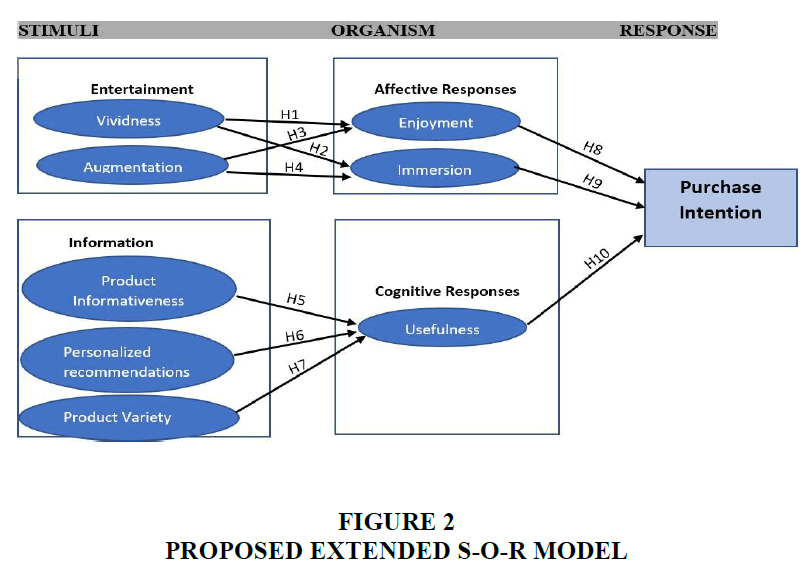
Figure 2 Proposed Extended S-O-R Model
Hypothesis
H1: Vividness have significant positive affect on perceived enjoyment.
H2: Vividness have significant positive affect on immersion.
H3: Augmentation have significant positive affect on enjoyment.
H4: Augmentation have significant positive affect on immersion.
H5: Product informativeness have significant positive affect on perceived usefulness.
H6: Personalized recommendations have significant positive affect on perceived usefulness.
H7: Product Variety have significant positive affect on perceived usefulness.
H8: Perceived Enjoyment have significant positive affect on purchase intention.
H9: Immersion have significant positive affect on purchase intention.
H10: Perceived usefulness have significant positive affect on purchase intention.
H11: Perceived enjoyment significantly mediates the relationship between vividness and purchase intention.
H12: Perceived enjoyment significantly mediates the relationship between augmentation and purchase intention.
H13: Immersion significantly mediates the relationship between vividness and purchase intention.
H14: Immersion significantly mediates the relationship between augmentation and purchase intention.
H15: Perceived usefulness significantly mediates the relationship between product informativeness and purchase intention.
H16: Perceived usefulness significantly mediates the relationship between personalized recommendations and purchase intention.
H17: Perceived usefulness significantly mediates the relationship between product variety and purchase intention.
Research Methodology
Research Objective
• To study the factors affecting consumer purchase intention in furniture
• To analyse the relationship between entertainment (vividness, augmentation) and affective response (enjoyment, immersion).
• To understand the relationship between information (product responsiveness, personalized recommendation) and cognitive response(usefulness).
• To examine the influence of affective and cognitive response on purchase
Research Design
A framework for carrying out marketing research is called a research design (Malhotra & Birks, 2007). In order to investigate cause-and-effect links, particularly between experiences with augmented reality (AR) and purchase intents, this study uses a confirmatory causal design (Robson, 2005). Related outcomes like attitude and product knowledge are also investigated via causal research. Due to time restrictions, a cross-sectional strategy with a single data gathering from a target sample is used (Saunders et al., 2007). The deductive method is used in a positivist manner, moving form theory to testing for hypotheses and helping to expand upon preexisting frameworks of thought (Saunders et al., 2007).
Data Collection and Instrument
The study used both primary and secondary data to create a strong research foundation (Saunders et al., 2007). Secondary data, including raw data and published summaries from earlier studies, were first collected through Google Scholar, ResearchGate, ProQuest, JSTOR, and Emerald databases using keywords like "augmented reality," "virtual reality," and "purchase intention" (Malhotra & Birks, 2007). This helped build the research model and framework. Primary data were gathered using structured questionnaires distributed online and offline. A survey method, linked to the positivist paradigm, allowed for pattern identification and hypothesis testing (Oates, 2005). Respondents rated items on a 5-point Likert scale from Strongly Disagree to Strongly Agree. The questionnaire included images and descriptions of the IKEA Place app using AR technology, followed by demographic and variable-based questions. Participants were required to own a smartphone and have used the app at least once. A total of 405 valid responses were collected Table 1.
| Table 1 Description of Latent Construct | ||
| Construct | Items | Sources |
| Vividness | • The visual display through AR feature is clear • The visual display through AR feature is well defined. • The visual display through AR feature is sharp. |
(Yim et al., 2017), (McLean and Wilson, 2019) |
| Augmentation | • Digital products were well integrated to my real room environment. • The products seemed to have real dimensions. • The products seemed to be part of real environment. |
(Javornik, 2016b) |
| Product informativeness | • AR supplies relevant information about the product. • AR provides in detailed information about the product. • AR helps me in understanding product features easily. |
(Rese et al., 2017), (Kowalczuk et al., 2021), (Raska & Richter, 2017) |
| Personalized recommendations | • AR personalized recommendations made my experience more efficient. • Personalized recommendations made my furniture shopping easy. • Personalized recommendations make me use AR based app and website. |
(Söderström, 2021) |
| Product Variety | • AR helps me to see a greater number of products in less time. • AR provide variety of product to choose easily. • AR helps to check recent designs of furniture according to my requirement. |
(Saliya, 2021) |
| Enjoyment | • Using AR for buying furniture is entertaining. • Using AR for buying furniture is enjoyable. • AR encourages me to try new furniture in my house |
(McLean and Wilson, 2019), (Kowalczuk et al., 2021), (Raska and Richter, 2017), (Yim et al., 2017) |
| Immersion | • AR app is annoying while using. • AR app is deceptive. • I feel irritated while using AR based app. |
(Yim et al., 2017), (Kowalczuk et al., 2021) |
| Usefulness | • AR feature is useful in my furniture shopping experience. • AR increase my furniture shopping effectiveness. • AR reduce my furniture shopping time. |
(McLean and Wilson, 2019), (Kowalczuk et al., 2021), (Raska & Richter, 2017), (Rese et al., 2017), (Yim et al., 2017 |
| Purchase intention | • There is a strong likelihood that I will buy the product I have interacted with via AR. • In future while buying furniture I will consider using AR feature. • I would intend to purchase furniture in presence of AR in the near future. |
(Yim et al., 2017), (Watson et al., 2020) |
Analysis and Interpretation PLS-SEM
A research design is a framework for doing marketing research (Malhotra & Birks, 2007). This study used a validated causal methodology to examine cause-and-effect relationships, namely between augmented reality (AR) experiences and purchase intents (Robson, 2005). Causal study also looks into associated results like attitudes and product knowledge. A cross- sectional approach with a single data collection among a target sample is employed due to time constraints (Saunders et al., 2007). According to Saunders et al. (2007), the deductive approach is applied in a positivist way, progressing from theories to testing hypotheses and supporting the development of previous conceptual frameworks.
Assessment of the measurement model
The investigation evaluated concept validity and reliability in accordance with Hair et al. (1998). The remaining indicators demonstrated sufficient dependability; those with factor loadings less than 0.7 were eliminated. Cronbach's alpha and composite reliability, which ranged from 0.59 to 0.76 and 0.786 to 0.821, respectively, and both beyond the 0.5 criterion, were used to assess internal consistency (Nunnally & Bernstein, 1994). AVE values (0.55–0.6) above 0.5 and the square root of AVE exceeded inter-construct correlations, confirming convergent and discriminant validity (Fornell & Larcker, 1981; Chiu & Wang, 2008). A comprehensive collinearity test was conducted to address common technique bias, and all VIF values were below 3.3, showing absence of contamination (Kock, 2015; Kock & Lynn, 2012) Table 2 & Table 3.
| Table 2 Result Measurement Model | ||||||
| Construct | Item | Scale | Loadings | AVE | Ρc | α |
| Vividness | V1 | Reflective | 0.773 | 0.595 | 0.815 | 0.659 |
| V2 | 0.807 | |||||
| V3 | 0.733 | |||||
| Augmentation | A1 | Reflective | 0.798 | 0.593 | 0.814 | 0.657 |
| A2 | 0.756 | |||||
| A3 | 0.755 | |||||
| Product Informativeness | PI1 | Reflective | 0.794 | 0.569 | 0.798 | 0.62 |
| PI2 | 0.721 | |||||
| PI3 | 0.746 | |||||
| Personalized Recommendation | PR1 | Reflective | 0.789 | 0.605 | 0.821 | 0.676 |
| PR2 | 0.745 | |||||
| PR3 | 0.799 | |||||
| Product Variety | PV1 | Reflective | 0.736 | 0.594 | 0.814 | 0.657 |
| PV2 | 0.781 | |||||
| PV3 | 0.794 | |||||
| Perceived Enjoyment | Enj1 | Reflective | 0.750 | 0.596 | 0.816 | 0.662 |
| Enj2 | 0.800 | |||||
| Enj3 | 0.766 | |||||
| Immersion | I1 | Reflective | 0.858 | 0.572 | 0.789 | 0.768 |
| I2 | 0.902 | |||||
| I3 | 0.450 | |||||
| Perceived Usefulness | U1 | Reflective | 0.784 | 0.6 | 0.818 | 0.667 |
| U2 | 0.787 | |||||
| U3 | 0.752 | |||||
| Purchase Intention | Purch1 | Reflective | 0.724 | 0.551 | 0.786 | 0.594 |
| Purch2 | 0.775 | |||||
| Purch3 | 0.727 | |||||
| Table 3 Fornell-Larcker Correlation Matrix | |||||||||
| Augumentation | Enjoyment | Imersion | Personal Recommend | Product Info | Product Variety | Purchase intention | Usefulness | Vividness | |
| Augumentat ion |
0.77 | ||||||||
| Enjoyment | 0.496 | 0.772 | |||||||
| Imersion | -0.095 | 0.013 | 0.75 6 |
||||||
| PersonalRec ommend |
0.531 | 0.51 | -0.03 | 0.778 | |||||
| ProductInfo | 0.513 | 0.454 | - 0.00 9 |
0.59 | 0.754 | ||||
| ProductVari ety |
0.466 | 0.531 | 0.02 2 |
0.564 | 0.54 | 0.77 | |||
| Purchaseint ention | 0.498 | 0.508 | - 0.05 5 |
0.464 | 0.458 | 0.428 | 0.742 | ||
| Usefulness | 0.508 | 0.544 | - 0.07 4 |
0.523 | 0.523 | 0.549 | 0.552 | 0.775 | |
| Vividness | 0.488 | 0.381 | - 0.11 3 |
0.454 | 0.415 | 0.346 | 0.413 | 0.407 | 0.772 |
Assessment of structural model
The findings of the path analysis and structural model evaluation are shown. Using Chin's (1998) threshold of 0.015, 0.27, 0.37, and 0.40 for mild to large effects, the predictive power of the model was assessed using the R2 value. Using 5,000 bootstrapping sub samples & the one-tailed test at a level of confidence of 95%, SmartPLS4 was used to examine path significance; p < 0.05 showed significant. Perceived enjoyment was significantly impacted by vividness (β = 0.183, t = 2.998, p < 0.005), but augmentation had a bigger impact (β = 0.407, t = 6.78, p < 0.005), confirming H1 and H3.
Product diversity (β = 0.302), individual suggestions (β = 0.214), and product accessibility (β = 0.233) all had a substantial impact on perceived usefulness. Purchase intention was strongly influenced by perceived utility (β = 0.389) and felt enjoyment (β = 0.297), confirming H5, H6, H7, H8, and H10. Nevertheless, H2, H4, and H9 were rejected due to non- significant effects in vividness (β = −0.077), augment (β = −0.051), and immerse (β = −0.021). Multicollinearity problems were eliminated because the variation in the inflation factor (VIF) values varied from 1.006 to 1.765, below the threshold of 5 (Hair et al., 2006; Hair et al., 2011) Figure 3, Table 4.
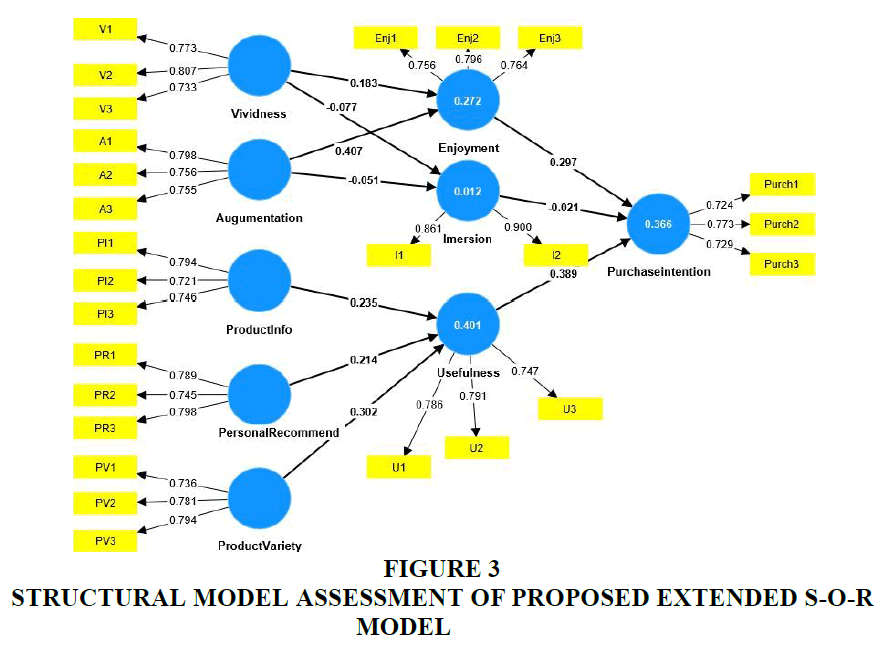
Figure 3 Structural Model Assessment of Proposed Extended S-O-R Model
| Table 4 Structural Model Assessment | ||||||
| Hypothesis | Relationship | Path coefficients | Tstatisti cs (|O/ST DEV|) | VIF | P values | Decision |
| H3 | Augumentation-> Enjoyment |
0.407* | 6.78 | 1.312 | 0.000* * |
Accepted |
| H10 | Usefulness -> Purchaseintention |
0.389* | 7.543 | 1.428 | 0.000* * |
Accepted |
| H7 | ProductVariety-> Usefulness |
0.302* | 6.306 | 1.623 | 0.000* * |
Accepted |
| H8 | Enjoyment-> Purchaseintention |
0.297* | 5.669 | 1.424 | 0.000* * |
Accepted |
| H5 | ProductInfo -> Usefulness | 0.233* | 4.409 | 1.698 | 0.000* * |
Accepted |
| H6 | PersonalRecommend-> Usefulness |
0.214* | 4.291 | 1.765 | 0.000* * |
Accepted |
| H1 | Vividness -> Enjoyment | 0.183 | 2.998 | 1.312 | 0.001* * |
Accepted |
| H9 | Imersion-> Purchaseintention |
-0.021 | 0.466 | 1.006 | 0.321 | Rejected |
| H4 | Augumentation -> Imersion | -0.051 | 0.738 | 1.312 | 0.230 | Rejected |
| H2 | Vividness -> Imersion | -0.077 | 1.043 | 1.312 | 0.149 | Rejected |
“*” denotes significant 1.96(p < .05), “**” denotes significant 2.58(p < .05) Hair et. al. (2013)
Evaluating the mediating effect in the model: Using SmartPLS 4, the mediated impacts of utility, enjoyment, and immersion were examined (Hair et al., 2017). All connections had significant coefficients of path with t-values over 1.96 and p-values below 0.05, with the exception of "Vividness → Immersion → Purchase Intention" and "Augmentation → Immersion → Purchase Intention." This suggests that Purchase Intention is either directly or indirectly influenced by Product Variety, Product Information, Vividness, Augmentation, and Personalized Recommendations through Usefulness and Enjoyment. Enjoyment somewhat mediated the effects of Vividness and Augmentation on Purchase Intention, but Immersion did not, as the latter pathways were statistically insignificant. The mediating function of enjoyment and use in consumer intention to buy was therefore confirmed by the acceptance of H11, H12, H15, H16, and H17 and the rejection of H13 and H14 Table 5.
| Table 5 Mediation Result | ||||
| Hypothesis | Relationship | T statistics (|O/STDEV|) | P values | Decision |
| H17 | ProductVariety -> Usefulness -> Purchaseintention | 5.061 | 0 | Accepted |
| H15 | ProductInfo -> Usefulness -> Purchaseintention | 3.518 | 0 | Accepted |
| H11 | Vividness -> Enjoyment -> Purchaseintention | 2.504 | 0.006 | Accepted |
| H13 | Vividness -> Imersion -> Purchaseintention | 0.441 | 0.33 | Rejected |
| H14 | Augumentation -> Imersion -> Purchaseintention | 0.335 | 0.369 | Rejected |
| H12 | Augumentation -> Enjoyment -> Purchaseintention | 3.957 | 0 | Accepted |
| H16 | PersonalRecommend -> Usefulness -> Purchaseintention | 3.593 | 0 | Accepted |
Discussion and Limitations
In order to better understand how augmented reality (AR) affects consumer behavior in the furniture industry, this study looked at the effects of product variety, personalized recommendations, augmentation, vividness, and product informativeness on purchase intention, enjoyment, and usefulness. With the exception of immersion with purchase intention, augmentation, and vividness, the majority of hypothesized correlations were significant.
A greater range of products improves perceived utility, as demonstrated by the positive and significant connection between product variety and usefulness (β = 0.302, t = 6.306). Additionally, usefulness was positively impacted by personalized recommendations (β = 0.214, t = 4.291), indicating that customized recommendations boost customer value perception.
Similarly, product informativeness significantly increased usefulness (β = 0.233, t = 4.409), indicating that perceived usefulness is strengthened by comprehensive product information.
Augmentation had a significant positive impact on enjoyment (β = 0.407, t = 6.78), suggesting that engaging experiences and realistic AR integrations improve customer satisfaction. Enjoyment was also positively impacted by vividness (β = 0.183, t = 2.998), demonstrating that AR's capacity to provide realistic, clear representations improves the user experience.
Additionally, purchase intention was significantly raised by both pleasure (β = 0.297, t = 5.669) and utility (β = 0.389, t = 7.543), indicating that consumers are motivated to acquire furniture products by enjoyable and helpful augmented reality experiences. Immersion, however, had no discernible effect on intent to buy, and its associations with vividness and amplification were likewise negligible. In the setting of furniture shopping, this may imply that although augmented reality (AR) improves visual and experience features, the sense of total involvement does not directly convert into greater purchase intention.
Managerial Implications
The world has changed due to technological improvements, which have an impact on all industries, including marketing. These days, technology is an essential part of everyday life, and businesses are realizing how important it is for advertising products and influencing how consumers behave (Laroche et al., 2013; Wang et al., 2015). It is now crucial to look into how technological advancements affect consumer choices (Saboo et al., 2015).
This study has a number of managerial ramifications for Bangalore, India's furniture sector. To increase utility and, subsequently, buy intention, businesses should invest in augmented reality (AR) technology that offers a variety of product options and reliable information.
Providing engaging and educational augmented reality experiences can boost customer happiness and increase revenue. The apparent utility of augmented reality technologies is further strengthened through the. Inclusion of personalized product recommendations.
Additionally, the study highlights how vividness increases enjoyment and purchasing intention. Businesses can make use of this by developing realistic, interactive augmented reality experiences that encourage participation and loyalty. Additionally, providing a wide range of products via augmented reality platforms boosts usability and makes it easier for clients to see whole product lines. Additionally, AR apps can help customers evaluate the size and appearance of products, increasing their confidence while making purchases.
Even though augmented reality improves the buying experience, it is still unable to completely replace in-person or online shopping. By incorporating thorough product descriptions, images, and customer reviews into augmented reality interfaces, retailers may enhance customer experiences. All things considered, investing in cutting-edge augmented reality features can improve utility, enjoyment, and buy intention, boosting competition in the furnishings market.
Limitations and Future Research
Data was gathered using a self-administered questionnaire, albeit some respondents might have given biased answers (Tax et al., 1998). Such bias might be lessened with more surveys. Only those who responded from Bangalore were included in the sampling frame, which limited generalizability to other industries or geographical areas. Bias may have also been induced by subjective selection of earlier research. This study excluded elements like cost and brand loyalty in favor of variables affecting purchase intention, enjoyment, and usefulness. These variables could be included in future research to provide more comprehensive insights. Behavioral
techniques are advised for validation because the study used self-reported data that is susceptible to social desirability bias. For a more thorough understanding, future studies should examine how AR affects various product categories and nationalities.
References
Alam, S. S., Masukujjaman, M., Susmit, S., Susmit, S., & Aziz, H. A. (2024). Augmented reality adoption intention among travel and tour operators in Malaysia: mediation effect of value alignment. Journal of Tourism Futures, 10(2), 185-204.
Indexed at, Google Scholar, Cross Ref
Alam, S. S., Susmit, S., Lin, C. Y., Masukujjaman, M., & Ho, Y. H. (2021). Factors affecting augmented reality adoption in the retail industry. Journal of Open Innovation: Technology, Market, and Complexity, 7(2), 142.
Indexed at, Google Scholar, Cross Ref
Barta, S., Gurrea, R., & Flavián, C. (2023). Using augmented reality to reduce cognitive dissonance and increase purchase intention. Computers in Human Behavior, 140, 107564.
Indexed at, Google Scholar, Cross Ref
Caboni, F., & Hagberg, J. (2019). Augmented reality in retailing: a review of features, applications and value. International Journal of Retail & Distribution Management, 47(11), 1125-1140.
Indexed at, Google Scholar, Cross Ref
Caboni, F., & Pizzichini, L. (2022). How the COVID-19 pandemic may accelerate millennials’ adoption of augmented reality. International Journal of Retail & Distribution Management, 50(13), 95-115.
Indexed at, Google Scholar, Cross Ref
Dange, A., Gowda, K. R., Srinidhi, V. R., & Halaswamy, D. (2021). Analysing the Attitude of Social Media Users towards Ephemeral Marketing as a Digital Marketing Tool. Acta Universitatis Bohemiae Meridionales, 24(3).
Du, Z., Liu, J., & Wang, T. (2022). Augmented reality marketing: A systematic literature review and an agenda for future inquiry. Frontiers in psychology, 13, 925963.
Indexed at, Google Scholar, Cross Ref
Eru, O., Topuz, Y. V., & Cop, R. (2022). The effect of augmented reality experience on loyalty and purchasing intent: An application on the retail sector. Sosyoekonomi, 30(52), 129-155.
Indexed at, Google Scholar, Cross Ref
Gatter, S., Hüttl‐Maack, V., & Rauschnabel, P. A. (2022). Can augmented reality satisfy consumers' need for touch?. Psychology & Marketing, 39(3), 508-523.
Indexed at, Google Scholar, Cross Ref
Haile, T. T., & Kang, M. (2020). Mobile augmented reality in electronic commerce: investigating user perception and purchase intent amongst educated young adults. Sustainability, 12(21), 9185.
Indexed at, Google Scholar, Cross Ref
Heller, J., Chylinski, M., de Ruyter, K., Mahr, D., & Keeling, D. I. (2019). Touching the untouchable: exploring multi-sensory augmented reality in the context of online retailing. Journal of Retailing, 95(4), 219-234.
Indexed at, Google Scholar, Cross Ref
Hilken, T., De Ruyter, K., Chylinski, M., Mahr, D., & Keeling, D. I. (2017). Augmenting the eye of the beholder: exploring the strategic potential of augmented reality to enhance online service experiences. Journal of the Academy of Marketing Science, 45(6), 884-905.
Indexed at, Google Scholar, Cross Ref
Hilken, T., Heller, J., Chylinski, M., Keeling, D. I., Mahr, D., & de Ruyter, K. (2018). Making omnichannel an augmented reality: the current and future state of the art. Journal of Research in Interactive Marketing, 12(4), 509-523.
Indexed at, Google Scholar, Cross Ref
Javaheri, H., Mirzaei, M., & Lukowicz, P. (2020, December). How far can wearable augmented reality influence customer shopping behavior. In MobiQuitous 2020-17th EAI International Conference on Mobile and Ubiquitous Systems: Computing, Networking and Services (pp. 464-469).
Indexed at, Google Scholar, Cross Ref
Jessen, A., Hilken, T., Chylinski, M., Mahr, D., Heller, J., Keeling, D. I., & de Ruyter, K. (2020). The playground effect: How augmented reality drives creative customer engagement. Journal of business research, 116, 85-98.
Jiang, Q., Sun, J., Yang, C., & Gu, C. (2021). The impact of perceived interactivity and intrinsic value on users’ continuance intention in using mobile augmented reality virtual shoe-try-on function. Systems, 10(1), 3.
Indexed at, Google Scholar, Cross Ref
Jung, T. H., Bae, S., Moorhouse, N., & Kwon, O. (2021). The impact of user perceptions of AR on purchase intention of location-based AR navigation systems. Journal of retailing and consumer services, 61, 102575.
Indexed at, Google Scholar, Cross Ref
Kamel, T. S., Elsayed, O. T., & Enaba, H. M. (2022). The Impact of Augmented Reality Advertising Characteristics on Purchasing Intention. The Academic Journal of Contemporary Commercial Research, 2(3), 47-74.
Indexed at, Google Scholar, Cross Ref
Karthik, S., Gowda, K. R., & Banerjee, J. (2021). Click & Collect Retailing: A Study on Its Influence on the Purchase Intention of Customers. Transnational Marketing Journal, 9(2), 239-251.
Kazmi, S. H. A., Ahmed, R. R., Soomro, K. A., Hashem E, A. R., Akhtar, H., & Parmar, V. (2021). Role of augmented reality in changing consumer behavior and decision making: Case of Pakistan. Sustainability, 13(24), 14064.
Indexed at, Google Scholar, Cross Ref
Khan, H. (2019). Role of augmented reality in influencing purchase intention among millenials. Journal of Management (JOM), 6(6).
Kumar, A. (2021). Does millennial shopping orientation using augmented reality enabled mobile applications really impact product purchase intention?. University of South Florida (USF) M3 Publishing, 5(2021), 45.
Indexed at, Google Scholar, Cross Ref
Kumar, H. (2022). Augmented reality in online retailing: a systematic review and research agenda. International Journal of Retail & Distribution Management, 50(4), 537-559.
Indexed at, Google Scholar, Cross Ref
Kumar, H., & Srivastava, R. (2022). Exploring the role of augmented reality in online impulse behaviour. International Journal of Retail & Distribution Management, 50(10), 1281-1301.
Indexed at, Google Scholar, Cross Ref
Kumar, H., Gupta, P., & Chauhan, S. (2023). Meta-analysis of augmented reality marketing. Marketing Intelligence & Planning, 41(1), 110-123.
Indexed at, Google Scholar, Cross Ref
Niemensivu, F. (2019). The perceived user value of AR in online shopping experience.
Ozturkcan, S. (2021). Service innovation: Using augmented reality in the IKEA Place app. Journal of Information Technology Teaching Cases, 11(1), 8-13.
Poushneh, A., & Vasquez-Parraga, A. Z. (2017). Discernible impact of augmented reality on retail customer's experience, satisfaction and willingness to buy. Journal of Retailing and Consumer Services, 34, 229-234.
Prasojo, J. R., & JosephNg, P. S. (2021). JomAR purchasing furniture in augmented reality experiences. International Journal of Business Strategy and Automation (IJBSA), 2(4), 1-12.
Raska, K., & Richter, T. (2017). Influence of augmented reality on purchase intention: The IKEA case.
Riar, M., Xi, N., Korbel, J. J., Zarnekow, R., & Hamari, J. (2023). Using augmented reality for shopping: a framework for AR induced consumer behavior, literature review and future agenda. Internet research, 33(1), 242-279.
Indexed at, Google Scholar, Cross Ref
Saliya, T. L. (2021). Factors Affecting Purchase Intention of Furniture Products: The Case of Wolaita Sodo Town.
Siltanen, S., Oksman, V., & Ainasoja, M. (2013). User-centered design of augmented reality interior design service. International Journal of Arts & Sciences, 6(1), 547.
Smink, A. R., Van Reijmersdal, E. A., Van Noort, G., & Neijens, P. C. (2020). Shopping in augmented reality: The effects of spatial presence, personalization and intrusiveness on app and brand responses. Journal of Business Research, 118, 474-485.
Indexed at, Google Scholar, Cross Ref
Söderström, C. (2021). Augmented Reality and Artificial Intelligence: The Influence on Behavioral Consumer Responses in E-Commerce (Master's thesis, NTNU).
Song, H. K., Baek, E., & Choo, H. J. (2020). Try-on experience with augmented reality comforts your decision: Focusing on the roles of immersion and psychological ownership. Information Technology & People, 33(4), 1214-1234.
Indexed at, Google Scholar, Cross Ref
Tan, Y. C., Chandukala, S. R., & Reddy, S. K. (2022). Augmented reality in retail and its impact on sales. Journal of marketing, 86(1), 48-66.
Indexed at, Google Scholar, Cross Ref
Thomas, T., Mathew, R., & KG, A. (2022). Usefulness of Augmented Reality on Product Selection: An Experimental Study. SCMS Journal of Indian Management, 19(2).
Vaidyanathan, N. (2020, February). Augmented reality in retail-A case study: technology implications to utilitarian, aesthetic and enjoyment values. In Proceedings of the 2020 4th International Conference on Virtual and Augmented Reality Simulations (pp. 27-34).
Indexed at, Google Scholar, Cross Ref
Viknesh, R., Gowda, K. R., & Banerjee, J. (2021). A Study on Decision Paralysis in Customers with Special Reference to Placing Order in Restaurant. Transnational Marketing Journal, 9(2), 253-266.
Watson, A., Alexander, B., & Salavati, L. (2020). The impact of experiential augmented reality applications on fashion purchase intention. International Journal of Retail & Distribution Management, 48(5), 433-451.
Zanger, V., Meißner, M., & Rauschnabel, P. A. (2022). Beyond the gimmick: How affective responses drive brand attitudes and intentions in augmented reality marketing. Psychology & Marketing, 39(7), 1285-1301.
Zimmermann, R., Mora, D., Cirqueira, D., Helfert, M., Bezbradica, M., Werth, D., ... & Auinger, A. (2023). Enhancing brick-and-mortar store shopping experience with an augmented reality shopping assistant application using personalized recommendations and explainable artificial intelligence. Journal of Research in Interactive Marketing, 17(2), 273-298.
Received: 10-Nov-2025, Manuscript No. AMSJ-25-16306; Editor assigned: 11-Nov-2025, PreQC No. AMSJ-25-16306(PQ); Reviewed: 20-Nov-2024, QC No. AMSJ-25-16306; Revised: 29-Nov-2025, Manuscript No. AMSJ-25-16306(R); Published: 16-Oct-2025