Research Article: 2026 Vol: 30 Issue: 1
AI and the Future of Work: Navigating Job Displacement, New Job Roles, and Skill Transformation
Renushree H K, Mangalore University, Karnataka, India
Citation Information: HK, R. (2026) Ai and the future of work: navigating job displacement, new job roles, and skill transformation. Academy of Marketing Studies Journal, 30(1), 1-10.
Abstract
AI is simultaneously displacing routine jobs and creating new high-skill roles, demanding urgent policy and retraining responses. This study explores how Artificial Intelligence (AI) is reshaping the labour market, not only by displacing some jobs, but also by opening up new opportunities and altering the kinds of skills people need. In everyday life, we see automation replacing routine and low-skilled work in places like factories, shops, and customer service centres. At the same time, AI is fuelling demand for experts in areas such as data science, cybersecurity, and AI ethics. This transformation brings real worries for many: workers whose jobs are replaced may struggle to find new roles that require advanced technical skills, which can deepen divides in income and opportunity. To better understand these changes, we systematically reviewed 432 research studies published since 2018, focusing closely on the 154 most relevant works. Our analysis uncovers which sectors are most at risk, highlights the increasing need for specialized skills, and points to the urgent importance of retraining and upskilling the workforce. We also emphasize the crucial role of policy, including educational reforms and strategies to ensure that the growth fueled by AI is shared fairly. Collaboration among governments, industries, and universities is vital to help people adapt and thrive. By bringing together the latest evidence, this paper contributes to the ongoing conversation about the future of work, showing how AI is both a disruptive force and a potential driver of more inclusive and equitable changes in the labour market.
Keywords
AI, Future of Work, Job Displacement, Skill Transformation, Job Market.
Introduction
Artificial Intelligence (AI) is changing the global labor market as technology advances quickly. AI is now part of industries like manufacturing, healthcare, retail, and customer service, which has changed job roles, skill needs, and how the labor market works. Automation, machine learning, and robotics may replace some routine and low-skilled jobs, but they also create new high-skill jobs that need advanced technical skills. Because AI can both disrupt traditional jobs and drive innovation, it is important to understand its effects on society and the economy (Patil, 2024; Paslari, 2023).
Many studies show that AI-driven automation has replaced human workers in jobs with repetitive tasks. Sectors like manufacturing and customer service have seen major changes as robots and chatbots take over more roles (Brahmaji, 2024; Huo et al., 2024). These shifts can improve efficiency and productivity, but they also raise concerns about unemployment, labor market divides, and growing income gaps. On the other hand, AI has also created new jobs in fields like data science, AI development, cybersecurity, and ethics, as well as in healthcare areas such as diagnostics, robotic surgery, and personalized medicine (Song, 2024; Mäkelä & Stephany, 2024). These new roles require advanced technical skills and human abilities like creativity, problem-solving, and emotional intelligence (Morandini et al., 2023).
The rapid pace of technological adoption has widened the skills gap, particularly among low- and middle-skilled workers who lack access to advanced education and training. This widening gap drives employment polarization, as high-wage, highly skilled roles increase and low-wage jobs decrease (Jia, 2024; Bonfiglioli et al., 2025). As a result, socioeconomic inequality intensifies, especially in regions and industries with limited reskilling opportunities. While stakeholders increasingly recognize the necessity of reskilling and upskilling programs, many initiatives encounter persistent barriers related to accessibility, scalability, and affordability, particularly in emerging economies (Masood, 2025).
A central debate within the literature concerns whether AI will result in net job losses or overall job creation. While some scholars argue that AI complements human labor and enables new economic opportunities, others contend that the pace of job creation is insufficient to offset displacement, especially if skill development lags behind technological adoption (Lanamäki et al., 2024; Georgieff & Hyee, 2022). Beyond quantitative impacts, AI also redefines the qualitative nature of work. Routine tasks are increasingly automated, while higher-order functions such as problem-solving, decision-making, and human-AI collaboration grow in importance All Day Technologyy, (2024). This shift underscores the need for lifelong learning, digital literacy, and continuous adaptation of the workforce (Mula & Ristiani, 2025).
This study pursues two primary objectives. The first objective is to evaluate the extent of job displacement caused by artificial intelligence in sectors such as manufacturing and customer service, identifying roles most susceptible to automation and new categories of AI-driven employment. The second objective is to examine the evolving skill requirements necessary for success in an AI-driven economy, with particular focus on the expanding skills gap and its socioeconomic implications. Through a synthesis of current literature, the study highlights challenges related to income inequality, labor market polarization, and regional disparities, and proposes strategies for reskilling, upskilling, and policy intervention Batarlienė & Jarašūnienė, (2024).
Artificial intelligence exerts a dual impact as both a disruptive force and a catalyst for transformation in the labor market, necessitating a comprehensive response. Examination of sector vulnerabilities, evolving skill requirements, and policy responses contributes to the discourse on the future of work and identifies strategies to promote inclusive and sustainable growth in the context of AI adoption.
Methodology
This study employs a systematic literature review (SLR) to examine the impact of Artificial Intelligence (AI) on job displacement, the creation of new roles, and evolving skill requirements. The primary research question was divided into sub-questions addressing socio-economic implications, sector-specific effects, emerging skills, and workforce adaptation.
A comprehensive search was conducted across major academic databases, limited to peer-reviewed journal articles, books, and reports published from 2018 onwards. The inclusion criteria required studies to address AI in direct relation to labor market outcomes, while studies lacking theoretical or empirical contribution were excluded. To enhance coverage, backward and forward citation chaining was applied to capture both foundational and recent contributions Del Prete, (2022).
The initial search identified 438 studies, of which 432 met the relevance criteria. After detailed screening, 154 studies were selected for their methodological rigor, thematic contribution, and alignment with the research objectives. Thematic analysis of these studies highlighted trends in job displacement, new employment opportunities, skill transformation, and broader socio-economic impacts such as inequality and labor market polarization.
AI’s Role in Job Displacement
Artificial Intelligence (AI) is often discussed in relation to job displacement in today’s labor market. As machine learning, robotics, and automation improve, they are taking over many routine and repetitive tasks. This is especially noticeable in manufacturing, customer service, and retail. For instance, robots now handle assembly-line and quality control work that people used to do (Kumar et al., 2024). In customer service, chatbots and virtual assistants manage tasks like answering questions, processing transactions, and making recommendations (Patil, 2024; Bonfiglioli et al., 2024). As a result, there is less need for human workers in jobs that follow set patterns Gao & Segumpan, (2024).
The impact of job displacement caused by automation is not the same everywhere—it depends on the type of work, the industry, and the location. Workers with lower skill levels are especially at risk, particularly in fields like agriculture, retail, and transportation, where machines are taking over more tasks (Brahmaji, 2024; Huo et al., 2024). For instance, jobs in logistics face threats from self-driving vehicles and drones, while automated checkouts and smart inventory systems are making cashiers and stock clerks less necessary (Lin, 2024; Masood, 2025). While some experts believe these changes will happen gradually (Acemoglu et al., 2022; Quintini, 2024), others warn that sectors such as logistics and manufacturing could see rapid and widespread job losses (Paslari, 2024). These different views show that no one is sure how fast workers and industries will be able to adjust to the new technology-driven reality Kanagarla, (2024).
AI’s displacement effects are also uneven across socioeconomic groups. Low-skilled workers are at higher risk of unemployment, while high-skilled professionals in fields such as data science, cybersecurity, and AI development are more likely to see their roles enhanced by AI technologies. This divergence contributes to employment polarization, where high- and low-wage jobs expand while middle-skill roles decline (Patil, 2024; Jia, 2024). The resulting inequality is further compounded by the concentration of wealth among technology firms and those who control AI infrastructure (Lin, 2024).
AI is not just eliminating jobs; it is also changing how work is organized. As automation takes over routine tasks, new jobs are appearing in areas like AI system design, data analysis, and machine learning (Brahmaji, 2024; Mäkelä & Stephany, 2024). These new roles often require advanced skills, which can put workers who have lost their jobs at a disadvantage Lee, (2025). While reskilling programs are often suggested as a solution, many of these programs struggle with issues like accessibility, scalability, and effectiveness, especially in places where educational resources are limited (Westover, 2024; Sultana et al., 2024). In addition, more jobs now require people to work alongside AI systems in decision-making, problem-solving, and other complex tasks (Hussain, 2024; Manoharan et al., 2024).
AI-driven job displacement raises significant risks for low-skilled workers and intensifies labor market inequalities. While AI can enhance productivity and foster new forms of work, its disruptive potential requires coordinated policy responses. Proactive investment in reskilling, inclusive workforce strategies, and social protection measures are essential to mitigate adverse effects and ensure that the benefits of AI are equitably shared. Without such interventions, AI’s role in job displacement could deepen inequality and fuel social instability. A summary of AI’s sectoral impacts on job displacement is presented in Table 1, Figure 1.
| Table 1 AI Impact on Job Displacement – Sector Wise | |||
| Industry Type | Displacement (%) | Rationale | Source Citations |
| Manufacturing | 30% | AI and automation have significantly reduced the need for manual labor in repetitive tasks such as assembly, quality control, and inventory management. AI-powered robots are replacing human workers in these tasks. | Kumar et al., 2024; Paslari, 2023 |
| Customer Service | 25% | AI technologies like chatbots and virtual assistants are automating tasks such as answering queries, processing transactions, and providing product recommendations, which were traditionally handled by humans. | Patil, 2025; Bonfiglioli et al., 2024 |
| Retail | 20% | AI applications like automated checkouts, inventory management, and AI-driven recommendations are reducing the need for human workers in roles such as cashiers and stock clerks. | Masood, 2024 |
| Transportation | 15% | Autonomous vehicles and drones are expected to replace jobs in transportation, such as truck driving and delivery services, due to their ability to perform tasks more efficiently and cost-effectively. | Huo et al., 2024; Lin, 2024 |
| Agriculture | 10% | AI technologies like automated harvesting systems, drones for crop monitoring, and AI-powered machinery are reducing the need for manual labor in agriculture, but the displacement is happening more slowly compared to other sectors. | Patil, 2025 |
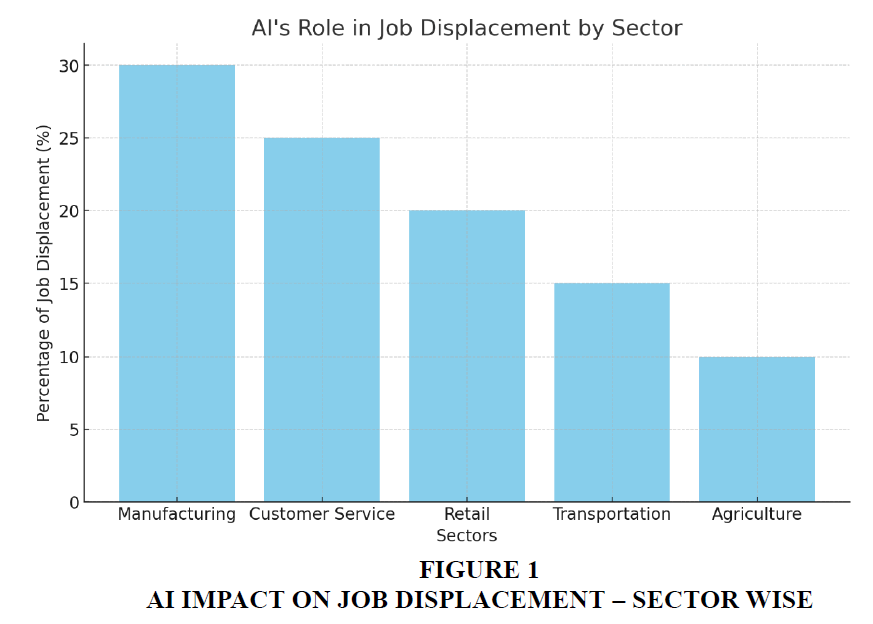
Figure 1 AI Impact on Job Displacement – Sector Wise
Creation of New Job Roles
While AI is frequently associated with job displacement, it is also a significant driver of new employment opportunities, particularly in high-skill sectors requiring advanced technical expertise and interdisciplinary knowledge Li, Kim & Sutedjo, (2024). The restructuring of labor markets through AI adoption has led to the emergence of novel career paths in areas such as data science, machine learning, cybersecurity, AI ethics, and human–AI collaboration. Many of these roles did not exist a decade ago, underscoring AI’s transformative capacity to redefine work and generate innovation-oriented employment (Patil, 2025; Mäkelä & Stephany, 2024).
A key cluster of new roles has emerged in data science, machine learning, and AI engineering. Organizations integrating AI systems require professionals to design, implement, and maintain these technologies. Data scientists interpret large datasets for actionable insights, while machine learning engineers develop adaptive algorithms. These positions demand strong competencies in programming, statistical modeling, and analytics, making them highly sought after in the digital economy (Morandini et al., 2023). Similarly, the rise of AI in cybersecurity has created urgent demand for experts capable of defending against AI-driven threats and safeguarding sensitive data (Kumar et al., 2024).
Beyond technical domains, AI has accelerated the development of hybrid roles that combine technical fluency with soft skills. Examples include AI operations managers, implementation consultants, and human–AI interaction specialists, who ensure effective integration of AI technologies into organizational processes Lin & He, (2025). Increasingly, AI ethics professionals are required to address issues of bias, accountability, and privacy in algorithmic systems, reflecting the social and ethical challenges of AI adoption (Brahmaji, 2024; Grover, n.d.; Patil, 2025).
AI-driven job creation is also evident across non-technology sectors. In healthcare, innovations in diagnostics, personalized medicine, and robotic surgery have spurred roles in health informatics and AI-assisted clinical practice (Hussain, 2024). In education, intelligent tutoring systems and adaptive learning platforms have created opportunities for digital learning specialists, educational data analysts, and content developers (Kumar et al., 2024). These trends illustrate how AI’s influence extends beyond the technology industry into vital social sectors.
Nevertheless, most AI-driven opportunities remain concentrated in high-skill areas, which risks excluding workers displaced from routine or manual jobs (Brahmaji, 2024). The demand for expertise in programming, analytics, and machine learning outpaces the capacity of current education and training systems. Furthermore, many emerging roles require a blend of technical and human-centric skills such as creativity, adaptability, and emotional intelligence (Mäkelä & Stephany, 2024). This imbalance intensifies inequalities, particularly in regions with limited access to advanced training and lifelong learning opportunities (Jia, 2024).
To maximize the benefits of AI-driven job creation, governments, industries, and academic institutions must collaborate to design inclusive reskilling and upskilling initiatives. Lifelong learning and affordable training programs are essential to enable displaced workers to transition into new roles. Without such measures, the advantages of AI-related employment growth risk being unevenly distributed, exacerbating existing economic and social divides (Masood, 2024; Sultana et al., 2024; Hussain, 2024).
AI is fostering new employment opportunities across technology, healthcare, education, and governance. Yet, their concentration in high-skill domains underscores the urgent need for targeted workforce development policies. The summary of AI’s impact on new job creation is presented in Table 2, Figure 2.
| Table 2 AI Impact on New Job Creation | |||
| Sector | New Job Creation (%) | Rationale | Source Citations |
| Data Science | 25% | The rise of AI technologies has led to an increasing demand for data scientists to analyze large datasets, extract insights, and make data-driven decisions. | Patil, 2025; Morandini et al., 2023 |
| Machine Learning | 30% | With AI systems being adopted across industries, the need for machine learning engineers to develop algorithms and improve AI models has grown substantially. | Mäkelä & Stephany, 2024; Morandini et al., 2023 |
| Cybersecurity | 20% | As AI and automation become more integral to businesses, specialized cybersecurity professionals are needed to protect AI-driven systems from threats and vulnerabilities. | Kumar et al., 2024 |
| AI Ethics | 15% | With AI systems impacting society, there is an increased need for professionals to ensure that AI technologies are used ethically, transparently, and responsibly. | Patil, 2025; Grover, n.d. |
| Human-AI Collaboration | 10% | Roles in human-AI collaboration are emerging, as companies seek professionals who can manage AI systems alongside human workers to enhance productivity and decision-making. | Brahmaji, 2024; Grover, n.d. |
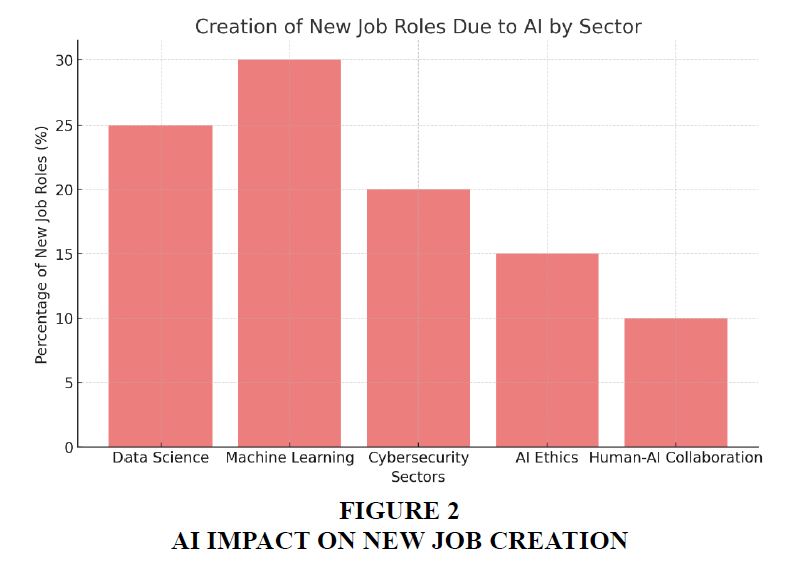
Figure 2 AI Impact on new Job Creation
Changes in Skill Requirements and Workforce Adaptation
Artificial Intelligence (AI) is profoundly reshaping industries and labor markets, with one of its most significant impacts being the transformation of skill requirements. AI-driven automation and intelligent systems are not only replacing routine and manual tasks but also redefining the competencies essential for future employability. This transition compels workers to adapt to technological change, collaborate effectively with machines, and embrace continuous learning as a career-long necessity Mulyana et al., (2024).
A primary shift is the growing demand for advanced technical expertise, particularly in machine learning, data science, and AI system development. As AI becomes integral to organizational operations, roles such as data scientists, machine learning engineers, and cybersecurity specialists are increasingly prioritized. These positions require strong competencies in programming, data analytics, cloud computing, and algorithmic modeling (Brahmaji, 2024; Patil, 2025). Digital literacy is no longer optional but a baseline requirement across industries. Accordingly, education and training systems must urgently integrate AI-related curricula to prepare future workers for these emerging demands (Kumar et al., 2024).
At the same time, employers are placing heightened emphasis on human-centered soft skills. While AI systems excel at structured and repetitive tasks, they remain limited in creativity, empathy, and complex judgment. Consequently, adaptability, critical thinking, problem-solving, and emotional intelligence are increasingly recognized as indispensable skills for leadership roles, collaborative decision-making, and direct human engagement (Mäkelä & Stephany, 2024). For instance, although AI supports diagnostic accuracy in healthcare, physicians remain essential for managing complex cases and delivering holistic patient care (Morandini et al., 2023).
Another defining feature of the AI era is the imperative of lifelong learning. With technological progress outpacing traditional qualification cycles, workers can no longer depend on static skills. Continuous reskilling and upskilling have become essential, particularly in vulnerable sectors such as manufacturing and retail, where automation is displacing routine employment (Sultana et al., 2024). Yet, the pace of change often exceeds the capacity of conventional education systems, leading to persistent skills mismatches and widening labor market inequalities (Westover, 2024).
These challenges are especially acute in emerging economies, where unequal access to education and digital infrastructure exacerbates disparities in workforce readiness. While advanced economies invest heavily in reskilling initiatives, workers in developing regions often face limited opportunities to acquire AI-relevant skills (Masood, 2024; Jia, 2024). Without targeted interventions, this imbalance risks reinforcing structural inequalities.
Organizations are responding by rethinking workforce strategies to balance AI integration with human capital development. HR departments are increasingly investing in in-house training programs, external partnerships, and digital learning platforms, while simultaneously promoting a culture of adaptability and continuous learning (Hussain, 2024; Brahmaji, 2024).
AI is driving a dual demand: advanced technical expertise and human-centered soft skills. This duality presents both opportunities for innovation and risks of exclusion for those unable to adapt The Ethical Droid, (2024). To ensure inclusive growth, governments, industries, and academic institutions must collaborate to provide equitable access to reskilling initiatives, narrow skill gaps, and prepare workers for the evolving AI-driven economy (Brahmaji, 2024; Patil, 2025). A consolidated overview of AI’s impact on skill requirements is presented in Table 3, Figure 3.
| Table 3 Skill Changes Due to AI | |||
| Skill Type | Percentage Change (%) | Rationale | Source Citations |
| Technical Skills | 40% | As AI and automation become more prevalent, the demand for technical expertise in areas such as machine learning, data science, and AI system development has significantly increased. | Patil, 2025; Morandini et al., 2023 |
| Soft Skills | 30% | Soft skills such as adaptability, emotional intelligence, and creativity are increasingly essential as AI complements human labor and enhances decision-making in workplaces. | Mäkelä & Stephany, 2024; Brahmaji, 2024 |
| Lifelong Learning | 20% | With rapid technological advancements, continuous learning and upskilling are necessary to stay relevant in the changing job market. | Westover, 2024; Sultana et al., 2024 |
| Adaptability | 10% | The ability to adapt to new technologies, tools, and roles is becoming crucial as AI transforms the nature of work across industries. | Hussain, 2024; Patil, 2025 |
| Creativity | 10% | As AI handles more routine tasks, the need for creativity and innovation in problem-solving and decision-making continues to grow, especially in roles that require human judgment. | Mäkelä & Stephany, 2024; Morandini et al., 2023 |
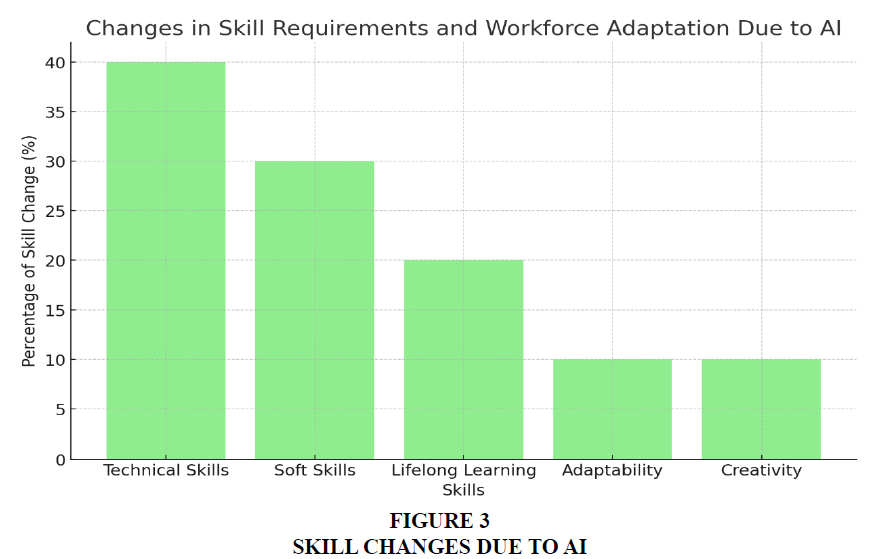
Figure 3 Skill Changes Due to AI
Socioeconomic Implications
The integration of Artificial Intelligence (AI) into the workforce is reshaping labor markets, job structures, and broader social systems. While AI adoption enhances efficiency, productivity, and innovation, it simultaneously generates significant socioeconomic challenges. These include rising income inequality, employment polarization, and an expanding digital divide. Addressing these challenges requires a nuanced understanding of their implications and timely policy interventions World AI University, (2025).
Income Inequality: AI-driven automation disproportionately threatens low-skilled and routine jobs, particularly in manufacturing, retail, and transportation. Workers in these sectors face heightened risks of displacement, stagnating wages, and reduced employment opportunities (Patil, 2025; Hussain, 2024). In contrast, high-skilled professionals in domains such as data science, machine learning, and AI engineering are experiencing surging demand and wage premiums, thereby exacerbating the income gap (Jia, 2024).
Employment Polarization: The labor market is undergoing increasing polarization. High-skill, high-wage roles are expanding, while middle-skill occupations—clerical, administrative, and routine manufacturing jobs—are rapidly contracting (Bonfiglioli et al., 2024; Huo et al., 2024). This hollowing out of the middle-income segment undermines economic stability, erodes social mobility, and places additional pressure on the middle class (Kumar et al., 2024).
The Digital Divide: Unequal access to AI-driven opportunities is widening the gap between developed and developing economies. Advanced economies benefit from strong digital infrastructure and AI-oriented education systems, while emerging economies often face limited access to training, weak infrastructure, and inadequate digital literacy (Masood, 2024; Hussain, 2024). Such disparities exacerbate global inequalities, allowing technologically advanced regions to capture disproportionate benefits.
Disruption of High-Skilled Professions: Although low-skilled jobs are most vulnerable, AI is also transforming traditionally high-skilled domains. In law, accounting, and healthcare, AI-powered tools are increasingly automating document review, diagnostics, and data analysis (Brahmaji, 2024; Jia, 2024). While these innovations improve efficiency, they simultaneously reduce reliance on conventional professional expertise, raising concerns about job security and wage suppression in these sectors.
Regional and Sectoral Inequality: The economic benefits of AI are unevenly distributed, concentrating in technologically advanced industries such as digital health, renewable energy, and autonomous transportation. Workers in rural or underdeveloped regions, who often lack access to digital tools and training, risk exclusion from these opportunities, reinforcing geographic disparities (Brahmaji, 2024; Masood, 2024).
Policy Interventions: To mitigate these socioeconomic risks, governments and institutions must implement proactive strategies. Recommended measures include reskilling and upskilling initiatives, digital literacy programs, social protection mechanisms, and, in some contexts, universal basic income schemes (Sultana et al., 2024; Westover, 2024). Ensuring equitable access to training and technological opportunities across regions and social groups is essential to preventing further inequality and polarization.
In sum, while AI offers considerable potential to drive economic growth and innovation, its benefits are unevenly distributed. Without targeted interventions, AI adoption may exacerbate existing inequalities by displacing vulnerable workers, eroding the middle class, and deepening the global digital, (2023) divide. Addressing these challenges requires an integrated policy framework that promotes inclusive growth, equitable opportunities, and sustainable labor market transitions. A summary of these socioeconomic implications is presented in Table 4, Figure 4.
| Table 4 Socio Economic Implications of AI | |||
| Socioeconomic Implication | Estimated Impact (%) | Rationale | Source Citations |
| Income Inequality | 35% | AI's impact on income inequality is significant, as it creates a divide between high-skilled, high-wage workers and low-skilled, low-wage workers. The automation of low-skill jobs exacerbates wage gaps. | Patil, 2025; Jia, 2024 |
| Employment Polarization | 30% | AI drives employment polarization, where high-skill, high-wage jobs grow, while middle-skill, middle-wage jobs diminish, leading to a hollowing out of the middle class. | Bonfiglioli et al., 2024; Huo et al., 2024 |
| Digital Divide | 15% | The digital divide is deepening, particularly between developed and developing countries, where access to AI-driven opportunities is unequal. Regions with limited infrastructure and digital literacy lag behind. | Masood, 2024; Hussain, 2024 |
| Regional Disparities | 10% | AI's impact on regional disparities is significant as economically advanced areas benefit from AI adoption, while rural and less developed regions struggle to integrate new technologies. | Westover, 2024; Sultana et al., 2024 |
| Job Displacement | 10% | Job displacement due to AI is contributing to unemployment, particularly in low-skill sectors such as manufacturing and customer service, where automation replaces human labor. | Kumar et al., 2024; Lin, 2024 |
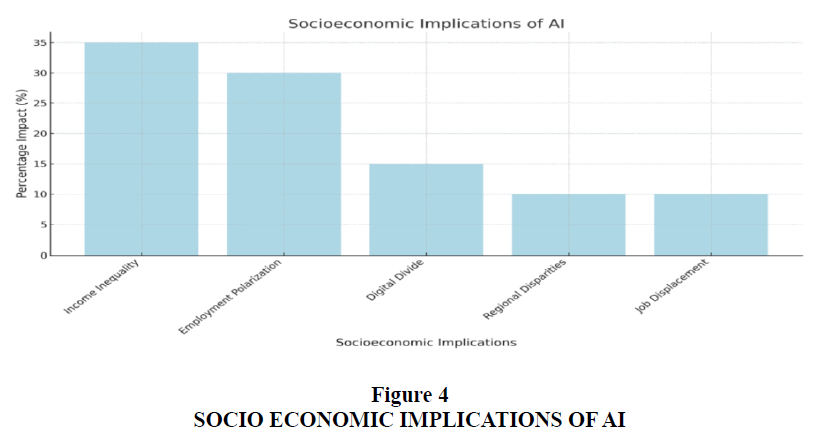
Figure 4 Socio Economic Implications of AI
The concept of the job displacement sector wise, new jobs evolution, changes in the skills and the socio economic implications due to AI has been presented in Figure 5.
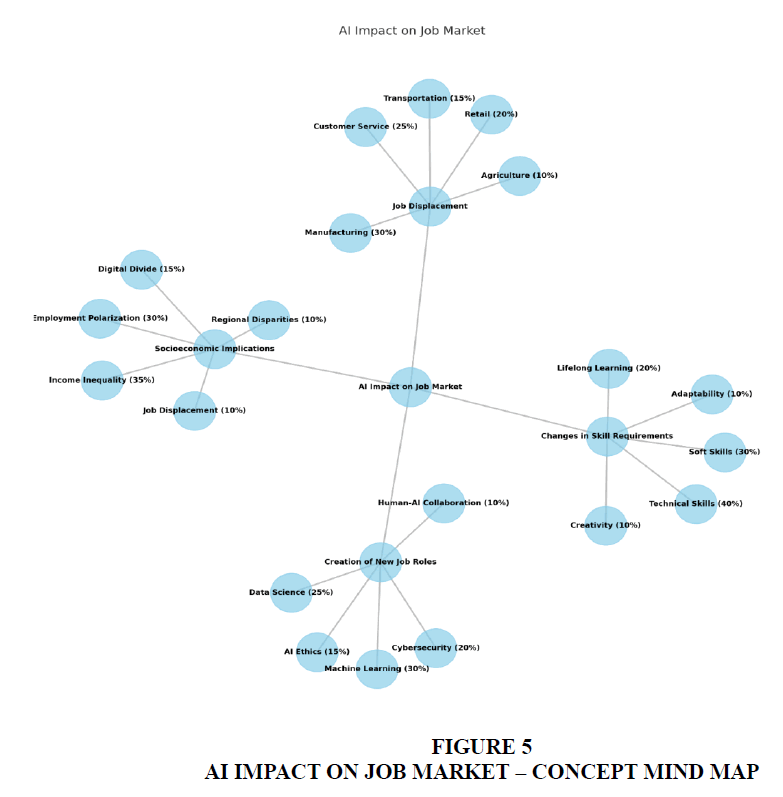
Figure 5 AI Impact on Job Market – Concept Mind Map
Conclusion
Artificial Intelligence (AI) is fundamentally transforming the labor market, simultaneously displacing traditional roles while creating new avenues of employment. Routine, low-skill jobs in manufacturing, retail, and customer service remain the most vulnerable to automation, whereas high-skill domains—such as data science, cybersecurity, and AI governance—are experiencing rapid expansion. This duality positions AI as both a disruptive force and a driver of innovation.
Yet, this transition underscores the persistent challenge of a widening skills gap. Many displaced workers lack the technical expertise and adaptive competencies required to transition into emerging roles, particularly in regions with limited access to reskilling opportunities. Without substantial investments in education, continuous training, and the development of soft skills such as adaptability and problem-solving, the benefits of AI will remain unevenly distributed, favoring the already highly skilled.
To mitigate these risks, coordinated and multi-stakeholder action is essential. Policymakers must adopt inclusive strategies that prioritize large-scale reskilling, upskilling, and social protection measures. Simultaneously, businesses must commit to ongoing workforce development to ensure adaptability in AI-intensive environments. If managed responsibly, AI adoption can enhance productivity, foster innovation, and promote sustainable growth. Conversely, inadequate preparation risks exacerbating inequality and labor market polarization.
In conclusion, preparing the workforce for the AI-driven economy is not only a matter of technological advancement but also a prerequisite for equitable and inclusive socioeconomic development.
Conflicts of Interest
The author declares no conflicts of interest
References
Batarliene, N., & Jarašuniene, A. (2024). Improving the quality of warehousing processes in the context of the logistics sector. Sustainability, 16(6), 2595.
Indexed at, Google Scholar, Cross Ref
Bonfiglioli, A., Crinò, R., Gancia, G., & Papadakis, I. (2025). Artificial intelligence and jobs: evidence from US commuting zones. Economic Policy, 40(121), 145-194.
Indexed at, Google Scholar, Cross Ref
Del Prete, M. (2022). Mindful sustainable consumption and sustainability chatbots in fast fashion retailing during and after the COVID-19 pandemic. J. Mgmt. & Sustainability, 12, 19.
Gao, S., & Segumpan, R. G. (2024). International Theory and Practice in Humanities and Social Sciences.
Georgieff, A., & Hyee, R. (2022). Artificial intelligence and employment: New cross-country evidence. Frontiers in artificial intelligence, 5, 832736.
Huo, Q., Ruan, J., & Cui, Y. (2024). “Machine replacement” or “job creation”: How does artificial intelligence impact employment patterns in China's manufacturing industry?. Frontiers in Artificial Intelligence, 7, 1337264.
Indexed at, Google Scholar, Cross Ref
Jia, X. (2024). Social inequality in the age of AI: Implications for labor, wage distribution, and worker power. Communications in Humanities Research, 40(1), 80-87.
Indexed at, Google Scholar, Cross Ref
Kanagarla, K. (2024). Artificial Intelligence and Employment Transformation: A Multi-Sector Analysis of Workforce Disruption and Adaptation. Available at SSRN 5015970.
Lanamäki, A., Väyrynen, K., Hietala, H., Parmiggiani, E., & Vasilakopoulou, P. (2024). Not Inevitable: Navigating Labor Displacement and Reinstatement in the Pursuit of AI for Social Good.
Indexed at, Google Scholar, Cross Ref
Li, Y., Kim, M., & Sutedjo, A. (2024). Effects of Virtual Reality as a Patient Education Tool: A Meta-analysis. Journal of Educational Technology Development and Exchange (JETDE), 17(2), 216-228.
Indexed at, Google Scholar, Cross Ref
Lin, Q., & He, L. (2025). Linking artificial intelligence (AI) with employees’ work behaviors. The Service Industries Journal, 1-33.
Mäkelä, E., & Stephany, F. (2024). Complement or substitute? How AI increases the demand for human skills. arXiv preprint arXiv:2412.19754.
Indexed at, Google Scholar, Cross Ref
Masood, A., Lee, U. H. M. S., & Rahim, A. A. (2025). HALAL REIMAGINED: IR4. 0 TECH DRIVES SUSTAINABILITY AND INCLUSIVITY IN ISLAMIC MONETARY ECONOMICS. Malaysian Journal of Syariah and Law, 13(1), 164-178.
Indexed at, Google Scholar, Cross Ref
Morandini, S., Fraboni, F., De Angelis, M., Puzzo, G., Giusino, D., & Pietrantoni, L. (2023). The impact of artificial intelligence on workers’ skills: Upskilling and reskilling in organisations. Informing Science, 26, 39-68.
Indexed at, Google Scholar, Cross Ref
Mula, I., & Ristiani, A. (2025). Transformasi Struktur Pekerjaan dan Kebutuhan Keterampilan di Era Teknologi AI dan Otomatisasi di Pasar Global. Nian Tana Sikka: Jurnal Ilmiah Mahasiswa, 3(1), 155-167.
Indexed at, Google Scholar, Cross Ref
Mulyana, A., Masduki, T., Muizu, W. O. Z., Febrianti, T., & Triski, D. S. (2024). The Contribution of Off-Takers to Sustainable Agricultural Cluster Businesses. Sustainability, 16(23), 10475.
Indexed at, Google Scholar, Cross Ref
Paslar, A. (2023). The role of artificial intelligence and automation in shaping labor markets. In Development Through Research and Innovation (pp. 137-151).
Indexed at, Google Scholar, Cross Ref
Patil, D. (2024). Impact of artificial intelligence on employment and workforce development: Risks, opportunities, and socioeconomic implications. Opportunities, And Socioeconomic Implications (November 12, 2024).
Proctor, A. R. (2025). Conversations About Safety: Protecting Young Farm Workers (Doctoral dissertation, The University of Iowa).
Song, Q. (2024). Multiple impacts of artificial intelligence on occupations and labor markets. Academic Journal of Management and Social Sciences, 8(3), 107-111.
Sultana, F., Talpur, U., Iqbal, M. S., Ali, A., & Memon, K. H. (2024). The macroeconomic implications of automation and AI on labor markets and employment. The Critical Review of Social Sciences Studies, 2(2), 497-507.
Received: 16-Sep-2025, Manuscript No. AMSJ-25-16176; Editor assigned: 17-Sep-2025, PreQC No. AMSJ-25-16176(PQ); Reviewed: 11-Oct-2025, QC No. AMSJ-25-16176; Revised: 28-Oct-2025, Manuscript No. AMSJ-25-16176(R); Published: 02-Nov-2025