Research Article: 2026 Vol: 30 Issue: 2
Attentional and Emotional Drivers Of Purchase Intention: Evidence From A Perceived Value–Based Predictive PLS-SEM Mediation Model
Pialy Saha Mondal, Department of Management, School of Business, Adamas University, Kolkata, India
Avradeep Ganguly, Department of Management, School of Business, Adamas University, Kolkata, India
Diptayan Bhattacheryya, Department of Management, School of Business, Adamas University, Kolkata, India
Gouranga Patra, Department of Management, School of Business, Adamas University, Kolkata, India
Citation Information: Mondal., P.S, Ganguly., A, Bhattacheryya., D & Patra., G. (2026) Attentional and emotional drivers of purchase intention: evidence from a perceived value–based predictive pls-sem mediation model.
Academy of Marketing Studies Journal, 30(2), 1-15.
Abstract
The scenario of advertising is widely fragmented and crowded, making it more challenging to know how brief emotional and cognitive reactions become actual buying intentions at the end. Even though research on neuromarketing has shown the activation of emotion and attention by market stimuli and these responses become structured judgments of value and behavioral preparedness. Hence, this study determines how emotional and attentional response is related to buying intention and whether perceived value acts as intermediate system in this relationship in terms of fastest-growing consumer market. A survey was conducted in West Bengal, India to collect data from 450 consumers. When it comes to data analysis, it includes three stages – “Exploratory Factor Analysis (EFA), Confirmatory Factor Analysis (CFA), and Partial Least Squares-Structural Equation Modeling (PLS-SEM)”. Findings of the study indicate acceptable validity and reliability of constructs. As per the structural estimates, there is a direct impact of both emotional and attentional responses on purchase intention, while also working indirectly with perceived value. As per the mediation findings, value perceptions are helpful to explain transformation of affective engagement and cognitive focus into behavioral response. Overall, predictive power and strength have been observed in the model. By evaluating affective and cognitive systems together, the study provides more integrated and nuanced insights on how responses induced by promotions are combined into buying intentions, especially in emerging markets.
Keywords
Neuromarketing, Attentional Response, Emotional Response, Perceived Value, Purchase Intention, Pls-Sem; Mediation, Consumer Decision-Making, Predictive Modeling.
Introduction
These days, advertising environments work in saturation conditions. Consumers face branding messages incoming around digital platforms, streaming services, social media feeds, and traditional channels. This density of information, along with algorithm-based exposure, and short attention spans, has made traditional understandings complicated further on how to make purchase decisions (Dwivedi et al, 2019; Shmueli et al, 2019). Traditional models of consumer decision are anchored widely in spoken preferences and rational determination to keep providing vital structure, still they seem to be inefficient to explain how stimulus-based, rapid reactions shaping downstream intentions of behavior in those environments.
When it comes to consumer neuroscience and neuromarketing, recent developments demonstrate that processes related to decision-making often start before conscious discussion turns out to be completely engaged. As per the empirical findings, affective arousal and capture of attention take place at a very nascent stage of stimulus exposure, impacting how to process constant information and interpret the same (Oliveira & Giraldi, 2023; Kühn & Gallinat, 2016). This way, later evaluations are structured by emotional engagement or cognitive focus in subtle yet consequential manners. However, while current studies have showed physiological and neural responses to stimuli of advertising, only a few studies have systematically analyzed how these reactions are combined into buying intention in integrated framework Ariely & Berns, (2010).
In the previous studies, a constant limitation is concerning on the theoretical separation of constructs. Emotional and attentional responses are analyzed constantly as unique predictors of consumer behavior, often without enough theoretical knowledge. Still, market behavior rarely comes from affective/cognitive reactions. Rather consumer decision is usually based on evaluative stage where stimuli are analyzed in trade-offs, perceived benefits, and overall worth Bagozzi, Gopinath & Nyer, (1999). Perceived value has been identified rapidly as central dominant of buying intention, which is theorized as subjective knowledge of what is achieved and lost (Rintamäki et al., 2017; Zeithaml, 1988; Konuk, 2019). Present research further observed that cognitive comparison and emotional intensity shape value perceptions (Dwivedi et al., 2019; Iglesias et al, 2019). With this point of view, attentional focus may increase visibility of some attributes of product, while perceived desirability may be influenced by emotional engagement, which jointly impact formation of value Baron & Kenny, (1986).
Another issue is associated with methodological focus. Most of the studies related to neuromarketing has been explanatory, showing relations among variables without determining predictive relevance explicitly. In contexts of marketing applied, the potential to predict behavioral intention holds a lot of significance. Predictive methods related to structural modeling, especially “Partial Least Squares Structural Equation Modeling (PLS-SEM)”, have been prominent to determine mediation structures while determining predictive performance out of sample (Shmueli et al, 2019; Hair et al, 2022). Components of neuromarketing has been integrated in those predictive models has been widely under explored, particularly in emerging markets where patterns of being exposed to marketing are evolving Benny, (2021).
This study tests value-oriented model of mediation against this backdrop, where emotional and attentional response impact buying intention with perceived value both directly and indirectly. Instead of considering affective reaction and cognitive engagement as parallel impacts, they are theorized as interrelated processes converging in judgement in this study. With survey data collected from consumers, this study expands the use of digital advertising as context of emerging market of West Bengal, India. This study defines how psychological activation based on stimulus is turned into buying intention. By combining evaluating, emotional, and attentional responses in the framework, this study adds novel understanding to consumer behavior and neuromarketing research. It especially increases knowledge of how cognitive responses are cognitive in early stages and combined into formulation of intention under saturation of marketing, while extending current theory ahead of neural activation to predict consumer behaviour Bryman, (2016).
Review of Literature and Proposed Hypotheses
Neuromarketing and Consumer Choice Architecture
The rising intersection among neuroscience and marketing has motivated practitioners to rethink how to shape and initiate consumer decisions. Instead of perceiving buying intention as outcome of completely rational process of comparison, recent studies have observed layered interaction among affect, evaluation, and attention (Kühn & Gallinat, 2016; Plassmann et al., 2015). As per the empirical evidence, consumer reasoning is often preceded with early-stage responses and may affect how to interpret later data (Oliveira & Giraldi, 2023). This change is matched with wider perspectives of dual-process in behavioral sciences, which differentiates between intuitive, slower processing and considered reasoning (Kahneman, 2011; Harris, Ciorciari & Gountas, (2018)).
While research on neuromarketing has elevated techniques related to measurement like EEG, neuroimaging, and eye-tracking, theoretical integration has been underdeveloped of these affective and cognitive systems into behavioral intention models. Along with whether emotion and attention are triggered, it is also important to understand how they turn into buying outcomes, which has been a major challenge.
Attentional Response and Its Behavioral Implications
Attention acts as selective filter in environments where incentives work for lack of cognitive processes. In advertising, attentional allocation has been associated with brand recall, encoding of memory, and salience of attribute (Venkatraman et al., 2015). Sustained cognitive attention may easily get into appraising. Still, attention doesn’t evaluate what is observed Hayes, (2013). It can still impact how stimuli are considered in constant judgments. It is observed that rising cognitive or visual engagement improves perceived value of certain attributes of the product (Orquin & Mueller Loose, 2013). This way, attentional response may indirectly redefine value perceptions, especially when key attributes are found to be helpful.
Meanwhile, increased attention may also reinforce behavioral preparedness. When cognitive response is achieved by stimuli, they are considered and retrieved more constantly in formation of decisions. In online environments, there is abundance of competing messages and ability of promoting content may apply both motivational and appraising impact. As per these arguments, it is worth expecting that higher engagement of attention will be related to strong inclination of purchase and value perception Israel & Hay, (2006).
H1: Attentional response positively impacts perceived value
H2: Attentional response positively impacts buying intention
Motivational Factor – Emotional Response
Emotions have widely been identified as the core of consumer experience; still contemporary studies constantly focus on their valuation. As per affective neuroscience, neural activation associated with reward can impact assessments of desirability even before conscious comparison (Kühn et al., 2016; Lerner et al, 2015). Emotionally reminiscent stimuli in marketing environments have been known to improve brand attachment, memorability, and approach-based behavior (Oliveira & Giraldi, 2023; Dwivedi et al., 2019; Krajbich & Dean, 2015).
Unlike completely cognitive assessments, emotional response may strengthen perceived perks or minimize perceived psychological expenses. According to Holbrook (2006), value is deeply practical, which is defined by both affective and utilitarian aspects. Similarly, more recent studies have suggested that there is a contribution of affective engagement to building value by increasing subjective desirability (Iglesias et al, 2019). Emotional arousal may also trigger motivational preparedness at the behavioral level, which is different from emotional appraisal Lee et al., (2007). Consumers may be motivated to the product even with limited analytical justification. Hence, emotional response may impact buying intention both directly with motivational pathways and indirectly with value perceptions Lim, (2018).
H3: Emotional response positively influences perceived value
H4: Emotional response positively influences purchase intention
Perceived Value
Perceived value holds the core position in “consumer behavior theory”. Traditionally referred to as comparison among sacrifices and perceived benefits, modern interpretations identified that judgment of value are not complete calculations (Zeithaml, 1988). They adopt symbolic, emotional, and experiential aspects (Konuk, 2019). Value formation may demonstrate the integrated effects of emotional engagement and attentional engagement. When there is focus given on affective resonance and certain attributes at the same time, these factors may shape overall determination of worth. Empirical evidence constantly focusses on certain attributes and has affective resonance at the same time; these factors combine and shape evaluation of worth Ramsøy, 2015. Perceived value has been consistently identified by empirical evidence as strong predictor of buying intention around different types of products (Konuk, 2019). Based on these arguments, here is the proposed hypothesis
H5: Perceived value positively influences buying intention
Perceived Value – The Mediator
Even though emotional and attentional responses have been associated with consumer outcomes, they turn into behavioral intention and may cover constant processes for evaluation. As per mediation theory, antecedent drivers impact outcomes with intervening systems clarifying the given pathways (Hayes, 2013). In the framework based on neuromarketing, attentional engagement may improve the attributes of products, while emotional response may deepen desirability of customers. They may not work separately. Rather, judgments of value are shaped by consumers, which ultimately affect buying intention. As both emotion and attention may trigger motivational systems, total mediation seems to be improbable. Hence, perceived value sends part of the influence in partial mediation Sánchez-Fernández & Iniesta-Bonillo, (2007). It is relevant with modern knowledge of interaction of cognitive behavior and consumer decision (Dwivedi et al, 2019). Accordingly, here are the proposed hypotheses –
H6: Perceived value acts as a mediator between purchase intention and attentional response
H7: Perceived value acts as a mediator between purchase intention and emotional response
Conceptual Framework
In modern advertising environments, purchase intention is not likely to be based on individual psychological impulse. It is observed that affective activation and cognitive engagement clarify by redefining how consumers determine and interpret market stimuli gradually (Oliveira & Giraldi, 2023; Kühn & Gallinat, 2016). Instead of considering emotion and attention as individual predictors, it is perceived by this framework that interlinked processes work in larger sequence. When advertising gathers long-term attention, some cues of products have been cognitively accessible, probably improving their relevance (Venkatraman et al, 2020; Sarstedt et al., 2021).
Meanwhile, emotional responses may increase experiential appeal and desirability, while influencing interpretation of benefits (Dwivedi et al, 2019). Hence, perceived value is placed as quick mechanism of evaluation with which affective intensity and salience are combined into assessing worth. Modern models based on value constantly understand this addition of emotional and cognitive asspects in redefining behavioral intent (Konuk, 2019; Iglesias et al, 2019). Figure 1 illustrates the specifics of structural model on both direct impacts of “emotional response (EMO) and attentional response (ATT)” on “purchase intention (PI)”, along with indirect paths with “perceived value (PV)”. The framework reflects the chance that affective and cognitive systems impact behavioral preparedness at the same time and with evaluating change Sweeney & Soutar, (2001).
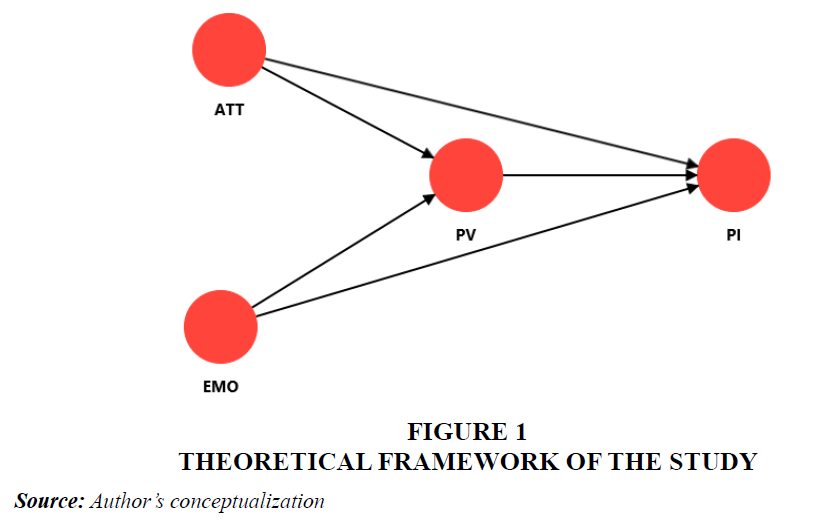
Figure 1 Theoretical Framework of the Study
Source: Author’s conceptualization
Methodology
This study relies on “quantitative research design” to determine the indirect and direct relationships between “emotional response, attentional response, buying intention, and perceived value”. West Bengal is a rapidly growing market going through constant expansion of digital advertising and data was collected from 450 consumers who have been recently exposed to ad content in different media platforms. For structural equation modeling, 450 is a sweet spot for sample size (Hair et al, 2022). To include people who are engaged actively with stimuli of advertising, a purposive sampling technique was applied (Oliviera and Giraldi, 2023).
With reflective multi-item scales, all variables were measured from established studies and evaluated to gather attentional engagement as per 5-point Likert scale (Pieters & Wedel, 2004), along with perceived value, emotional response, and buying intention (Dwivedi et al, 2019; Ajzen, 1991; Rintamäki et al., 2017). There are three stages for conducting data analysis – “Exploratory Factor Analysis (EFA) (i.e., by using SPSS software) to determine dimensional structure; PLS-SEM using SmartPLS for testing mediation framework, and CFA using AMOS software to validate the model for measurement (Kline, 2023). Predictive power can be evaluated with bootstrapping of 5000 resamples, PLS, VIF, R-square, f2 to predict processes (Hair et al, 2022; Shmueli et al, 2019).
Data Analysis and Results
There are three stages of conducting data analysis – PLS-SEM, CFA, and EFA. With this approach, properties of measurement were set up before conducting a test on relationship.
EFA
Data Suitability
Factorability and sampling accuracy was tested before conducting factor analysis. This way, the “Kaiser-Meyer-Olkin (KMO) and Bartlett test of Sphericity” test was conducted. Excellent capability was observed with KMO value of 0.932. In addition, the Bartlett value showed significant correlation across variables for factor analysis (χ2 = 4076.513, df = 153, p < 0.001). As per these findings, dataset was found ideal for exploring dimensions. In-depth statistics were reported in Table 1
| Table 1 KMO and Bartlett’s Test of Sphericity | |
| Test | Value |
| Kaiser-Meyer-Olkin Measure of Sampling Adequacy | 0.932 |
| Bartlett’s Test Approx. Chi-Square | 4076.513 |
| df | 153 |
| Sig. | 0 |
Source: Author’s computation using SPSS
Factor Extraction and Rotation
With “Principal Axis Factoring with Promax rotation”, EFA was conducted to correlate factors as theoretically expected. A 4-factor solution was reinforced by determining the “scree plot” and eigen values. Combining these factors, total variance was 58.198%, which suggested representation of dimension. Findings of this test was highlighted in Table 2.
| Table 2 Total Variance Explained (EFA) | |||||||
| Factor | Initial Eigenvalues Total | % of Variance | Cumulative % | Extraction Sums of Squared Loadings Total | % of Variance | Cumulative % | Rotation Sums of Squared Loadings |
| 1 | 7.356 | 40.864 | 40.864 | 6.948 | 38.597 | 38.597 | 4.765 |
| 2 | 2.07 | 11.502 | 52.366 | 1.635 | 9.083 | 47.68 | 4.667 |
| 3 | 1.559 | 8.662 | 61.029 | 1.08 | 6 | 53.281 | 5.204 |
| 4 | 1.128 | 6.265 | 67.294 | 0.705 | 3.917 | 58.198 | 5.305 |
| 5 | 0.585 | 3.253 | 70.547 | ||||
| 6 | 0.547 | 3.038 | 73.585 | ||||
| 7 | 0.519 | 2.886 | 76.471 | ||||
| 8 | 0.509 | 2.829 | 79.3 | ||||
| 9 | 0.486 | 2.698 | 81.998 | ||||
| 10 | 0.445 | 2.475 | 84.473 | ||||
| 11 | 0.424 | 2.355 | 86.828 | ||||
| 12 | 0.411 | 2.285 | 89.113 | ||||
| 13 | 0.387 | 2.152 | 91.265 | ||||
| 14 | 0.359 | 1.992 | 93.257 | ||||
| 15 | 0.334 | 1.854 | 95.111 | ||||
| 16 | 0.319 | 1.773 | 96.884 | ||||
| 17 | 0.299 | 1.661 | 98.545 | ||||
| 18 | 0.262 | 1.455 | 100 | ||||
Source: Author’s computation using SPSS
Figure 2 illustrates significant break post 4th factor, which supports the 4-factor solution in the “scree plot”.

Figure 2 Scree Plot
Source: Author’s computation using SPSS
Pattern matrix (Promax) and Factor Correlation
The shared variance was adequate with the given factors with satisfactory communalities (0.452 to 0.724). Strong loadings were observed in pattern matrix (above 0.6), without sensible cross-loadings and solution was met with structural stability after 5 iterations. Theoretically, the 4 factors were reliable with constructs proposed – “Perceived Value (PV), Emotional Response (EMO), Attentional Response (ATT), and Purchase Intention (PI) Table 3.”
| Table 3 Pattern Matrix (Promax Rotated) | ||||
| Item | Factor 1 | Factor 2 | Factor 3 | Factor 4 |
| ATT1 | 0.707 | |||
| ATT2 | 0.875 | |||
| ATT3 | 0.673 | |||
| ATT4 | 0.658 | |||
| ATT5 | 0.641 | |||
| EMO1 | 0.785 | |||
| EMO2 | 0.676 | |||
| EMO3 | 0.825 | |||
| EMO4 | 0.697 | |||
| EMO5 | 0.743 | |||
| PV1 | 0.673 | |||
| PV2 | 0.737 | |||
| PV3 | 0.707 | |||
| PV4 | 0.761 | |||
| PI1 | 0.76 | |||
| PI2 | 0.829 | |||
| PI3 | 0.837 | |||
| PI4 | 0.825 | |||
Source: Author’s computation using SPSS
Loadings over 0.6 were observed in the rotated pattern matrix without sensible cross-loadings, suggesting proper factor structure. Items are aligned properly with given constructs, which supported validity of construct at the stage of exploration and progression is justified for confirmatory testing Table 4.
| Table 4 Factor Correlation Matrix | ||||
| Factor | 1 | 2 | 3 | 4 |
| 1 | 1 | 0.397 | 0.522 | 0.554 |
| 2 | 0.397 | 1 | 0.503 | 0.605 |
| 3 | 0.522 | 0.503 | 1 | 0.641 |
| 4 | 0.554 | 0.605 | 0.641 | 1 |
Source: Author’s computation using SPSS
There is moderate correlation across constructs in the matrix of factor correlation, which is relevant with theoretical expectations. Problematic levels were not approached to support discriminant validity. Hence, the 4-factor structure was relevant to confirmatory testing.
CFA
The measurement model was authorized by the Confirmatory Factor Analysis test which is also identified with EFA. The model demonstrated “strong overall fit (χ2/df = 0.924; GFI = 0.972; AGFI = 0.963; CFI = 1.000; TLI = 1.003; RMSEA = 0.000; PCLOSE = 1.000).” There was significant and substantial factor loading, which illustrates that pointers observed have properly suggested their own theories.
Together, these findings support the robustness of the four-factor measurement structure Table 5.
| Table 5 Confirmatory Factor Analysis (CFA) Model Fit Indices | ||
| Fit Index | Obtained Value | Recommended Threshold |
| χ² (CMIN) | 119.145 | — |
| Degrees of Freedom (df) | 129 | — |
| χ²/df (CMIN/DF) | 0.924 | < 3.00 |
| p-value | 0.722 | > 0.05 |
| GFI | 0.972 | ≥ 0.90 |
| AGFI | 0.963 | ≥ 0.90 |
| RMR | 0.055 | ≤ 0.08 |
| NFI | 0.971 | ≥ 0.90 |
| RFI | 0.966 | ≥ 0.90 |
| IFI | 1.002 | ≥ 0.90 |
| TLI | 1.003 | ≥ 0.90 |
| CFI | 1 | ≥ 0.90 |
| RMSEA | 0 | ≤ 0.08 |
| RMSEA (LO 90%) | 0 | — |
| RMSEA (HI 90%) | 0.018 | — |
| PCLOSE | 1 | > 0.05 |
| PNFI | 0.819 | ≥ 0.50 |
| PCFI | 0.843 | ≥ 0.50 |
| AIC (Default model) | 203.145 | Lower is better |
| ECVI (Default model) | 0.452 | Lower is better |
| Hoelter (0.05) | 590 | > 200 |
| Hoelter (0.01) | 638 | > 200 |
Source: Author’s computation using AMOS
The CFA results indicate satisfactory model fit across commonly reported indices (Kline, 2023). All values are falling within acceptable ranges, which supported the adequacy of the 4-factor measurement structure identified during EFA. With the measurement model validated, the analysis proceeded to structural evaluation Figure 3.
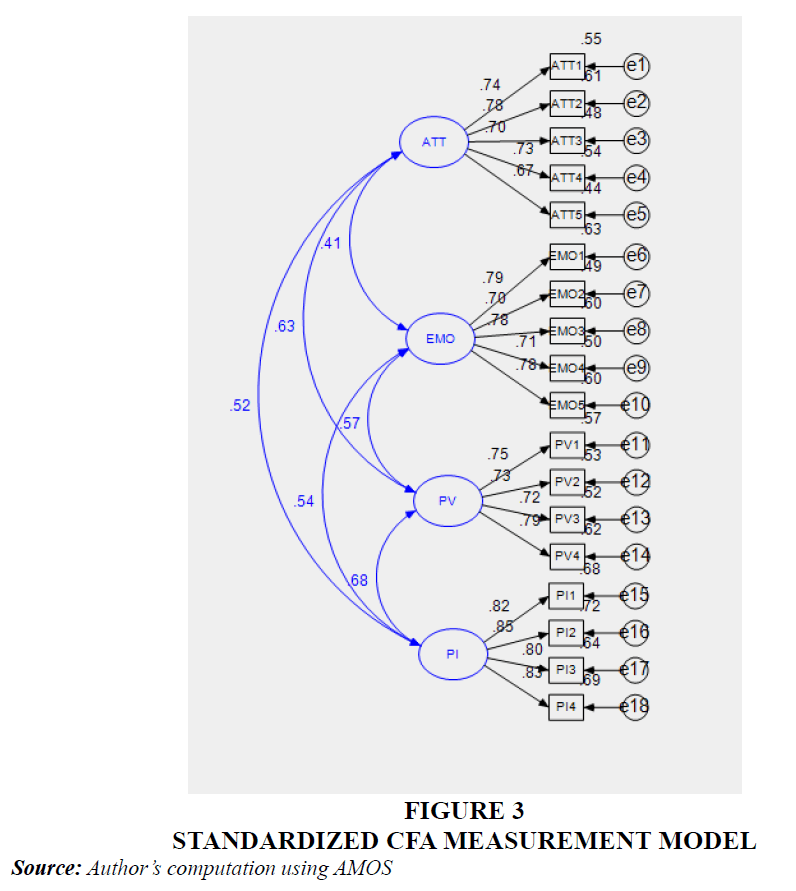
Figure 3 Standardized CFA Measurement Model
Source: Author’s computation using AMOS
Standardized CFA estimates show that all indicators have a significant load on their own constructs, with loadings exceeding 0.60. These results indicate acceptable convergent validity and internal consistency (Kline, 2023; Hair et al., 2022). The pattern of loadings and the absence of problematic cross-relationships further support the distinctiveness of the four-factor structure. With the measurement model validated, structural relationships were subsequently examined.
Structural Equation Modeling (PLS-SEM)
PLS-SEM was conducted for analyzing the proposed relationships, given its suitability for mediation analysis and prediction-oriented modelling Table 6.
| Table 6 Measurement Model: Reliability and Convergent Validity | |||
| Construct | Cronbach’s Alpha | Composite Reliability (CR) | AVE |
| ATT (Attentional Response) | 0.845 | 0.89 | 0.618 |
| EMO (Emotional Response) | 0.865 | 0.903 | 0.65 |
| PV (Perceived Value) | 0.835 | 0.89 | 0.669 |
| PI (Purchase Intention) | 0.894 | 0.927 | 0.759 |
Source: SmartPLS output (Author’s computation)
Measurement model evaluation
All constructs demonstrate acceptable internal consistency (α and CR above 0.70) and convergent validity (AVE above 0.50), satisfying recommended criteria for reflective measurement models (Hair et al., 2022). These results indicate that the pointers sufficiently signify their own latent variables. Discriminant validity was subsequently examined Table 7.
| Table 7 Discriminant Validity (HTMT Criterion) | ||||
| Constructs | ATT | EMO | PV | PI |
| ATT | — | |||
| EMO | 0.417 | — | ||
| PV | 0.641 | 0.575 | — | |
| PI | 0.526 | 0.535 | 0.674 | — |
Source: SmartPLS output (Author’s computation)
All HTMT values fall below the conservative threshold of 0.85, indicating adequate discriminant validity (Henseler et al., 2015). The constructs therefore appear empirically distinct. Following this assessment, potential collinearity among predictors was examined Table 8.
| Table 8 Collinearity Diagnostics – Indicator Level (VIF Values) | |
| Indicator | VIF |
| ATT1 | 1.799 |
| ATT2 | 2.067 |
| ATT3 | 1.662 |
| ATT4 | 1.751 |
| ATT5 | 1.588 |
| EMO1 | 2.104 |
| EMO2 | 1.698 |
| EMO3 | 2.064 |
| EMO4 | 1.741 |
| EMO5 | 2 |
| PI1 | 2.39 |
| PI2 | 2.612 |
| PI3 | 2.299 |
| PI4 | 2.482 |
| PV1 | 1.794 |
| PV2 | 1.772 |
| PV3 | 1.738 |
| PV4 | 1.943 |
Source: Author’s computation using SmartPLS (collinearity diagnostics)
All VIF values were below 3, indicating no critical multicollinearity concerns among the predictors (Hair et al., 2022). This suggests that the estimated path coefficients are unlikely to be distorted by collinearity. With the measurement properties established, the structural model was then assessed Figure 4.
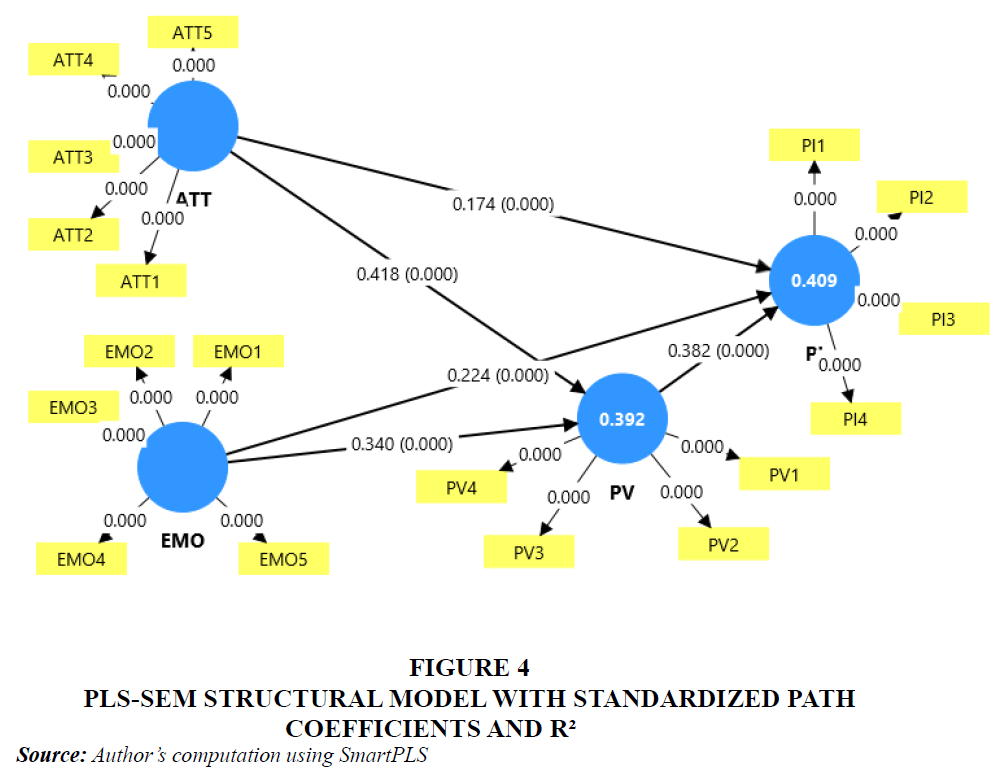
Figure 4 PLS-SEM Structural Model with Standardized Path Coefficients and R2
Source: Author’s computation using SmartPLS
Structural Model Evaluation
The structural model indicates that attentional response has a positive influence on “purchase intention (β = 0.174, p < 0.001) and on perceived value (β = 0.418, p < 0.001)”. Emotional response similarly shows significantly positive influence on “purchase intention (β = 0.224, p < 0.001) and perceived value (β = 0.340, p < 0.001).” Perceived value, in turn, is positively associated with purchase intention (β = 0.382, p < 0.001). The model accounts for 39.2% of the variance in perceived value and 40.9% of the variance in purchase intention, indicating moderate explanatory capacity (Hair et al., 2022) Table 9.
| Table 9 Structural Model: Direct Effects (Bootstrapping Results) | ||||
| Path | β | t-value | p-value | Result |
| ATT → PV | 0.418 | 10.639 | < 0.001 | Supported |
| EMO → PV | 0.340 | 8.620 | < 0.001 | Supported |
| PV → PI | 0.382 | 7.801 | < 0.001 | Supported |
| ATT → PI | 0.174 | 3.643 | < 0.001 | Supported |
| EMO → PI | 0.224 | 5.403 | < 0.001 | Supported |
The coefficients of structural path suggested that there is a significant influence of emotional and attentional response on both buying intention and perceived value, with support for all relationships (p<0.001). With these findings, the central role of components of neuromarketing is confirmed in redefining behavioral intentions and customer evaluations Table 10.
| Table 10 Structural Model: Coefficient of Determination (R2) | ||
| Endogenous Construct | R2 | Interpretation |
| PV | 0.392 | Moderate |
| PI | 0.409 | Moderate |
In Table 10, there is 39.2% of variance in the model explained in perceived value with 40.9% of variance in intention, which suggests moderate strength of relationship (Hair et al, 2022). These standards suggest that the proposed predictors account for a valuable amount of behavioral variation. Effect sizes were subsequently examined to assess the relative contribution of individual paths Table 11.
| Table 11 Effect Size (F2) of Structural Paths | ||
| Structural Path | f2 | Effect Size |
| ATT → PV | 0.25 | Medium |
| EMO → PV | 0.166 | Medium |
| PV → PI | 0.15 | Medium |
| ATT → PI | 0.036 | Small |
| EMO → PI | 0.063 | Small |
Effect size estimates suggest that attentional and emotional responses have moderate effects on perceived value, whereas their direct effects on purchase intention are smaller in magnitude. Perceived value shows a comparatively stronger effect on purchase intention. Predictive relevance was subsequently assessed Table12.
| Table 12 Predictive Relevance (Plspredict Results) | |||
| Endogenous Construct | Q2_predict | RMSE | MAE |
| “Perceived Value (PV)” | 0.385 | 0.787 | 0.646 |
| “Purchase Intention (PI)” | 0.313 | 0.832 | 0.682 |
Source: Author’s computation using SmartPLS (PLSpredict procedure)
Positive Q2_predict values indicate that the model retains acceptable out-of-sample predictive relevance (Shmueli et al., 2019). Together with the R2 and f2 results, this suggests that the model performs adequately from both explanatory and predictive perspectives.
The mediating role of perceived value was then examined using bootstrapping with “5,000 resamples to estimate specific indirect effects and determine the nature of mediation Table 13.
| Table 13 Mediation Analysis: Specific Indirect Effects (Bootstrapping) | ||||
| Indirect Path | β | t-value | p-value | Mediation |
| ATT → PV → PI | 0.159 | 6.332 | < 0.001 | Supported |
| EMO → PV → PI | 0.130 | 5.789 | < 0.001 | Supported |
Mediation analysis
With 5,000 resamples (two-tailed), Bootstrapping was used to measure the “indirect effects”. The “indirect paths” from attentional response and emotional response to purchase intention through perceived value have statistical significance. With significantly direct and indirect effects, the results support partial mediation in both relationships Table 14.
| Table 14 Summary of Mediation Results | |||
| Relationship | Direct Effect | Indirect Effect | Type of Mediation |
| ATT → PI via PV | Significant | Significant | Partial Mediation |
| EMO → PI via PV | Significant | Significant | Partial Mediation |
The mediation results designate partial mediation, having statistically significant effects. This suggests that attentional and emotional responses are associated with purchase intention both directly and through perceived value. These findings are examined further in the discussion section.
Discussion of Results
The results indicate that both attentional and emotional responses are associated with purchase intention, directly and through perceived value. Findings of this study are aligned with modern-day perspectives that early affective and cognitive response trigger consumer decisions instead of completely rational determination (Oliviera and Giraldi, 2023). Attention seems to improve salience of attributes, while subjective appraisal is improved by emotional engagement. Findings of mediation demonstrate that perceived value act as evaluative association between behavioral intent and those responses. Affective and cognitive reactions have been very sensible when combined with value perceptions (Hayes, 2013). Emotion and attention use individual impact with direct effects. In this study, emotional and attentional systems are integrated in an individual framework, providing more unified account when it comes to neuromarketing. Perceived value is further confirmed as mediating variable which links formulation of intention and psychological responses. When predictive and explanatory assessment is combined, the study contributes to existing literature by proposing neuromarketing theory ahead of neural accounts. As per the findings, efficiency of advertising relies both on building emotional engagement and gathering attention to strengthen value. With integration of affective resonance and cognitive response, campaigns may reflect in intention exposure.
References
Ariely, D., & Berns, G. S. (2010). Neuromarketing: the hope and hype of neuroimaging in business. Nature reviews neuroscience, 11(4), 284-292.
Indexed at, Google Scholar, Cross Ref
Bagozzi, R. P., Gopinath, M., & Nyer, P. U. (1999). The role of emotions in marketing. Journal of the academy of marketing science, 27(2), 184-206.
Indexed at, Google Scholar, Cross Ref
Baron, R. M., & Kenny, D. A. (1986). The moderator–mediator variable distinction in social psychological research: Conceptual, strategic, and statistical considerations. Journal of personality and social psychology, 51(6), 1173.
Indexed at, Google Scholar, Cross Ref
Benny, V. (2021). A Study on Attitude of Women Investors towards Stock Market Investment in Kerala. anvesak.
Bryman, A. (2016). Social research methods. Oxford university press.
Dwivedi, A., Johnson, L. W., Wilkie, D. C., & De Araujo-Gil, L. (2019). Consumer emotional brand attachment with social media brands and social media brand equity. European journal of marketing, 53(6), 1176-1204.
Indexed at, Google Scholar, Cross Ref
Harris, J. M., Ciorciari, J., & Gountas, J. (2018). Consumer neuroscience for marketing researchers. Journal of consumer behaviour, 17(3), 239-252.
Indexed at, Google Scholar, Cross Ref
Hayes, A. F. (2013). Mediation, moderation, and conditional process analysis. Introduction to mediation, moderation, and conditional process analysis: A regression-based approach, 1(6), 12-20.
Henseler, J., Ringle, C. M., & Sarstedt, M. (2015). A new criterion for assessing discriminant validity in variance-based structural equation modeling. Journal of the academy of marketing science, 43(1), 115-135.
Indexed at, Google Scholar, Cross Ref
Holbrook, M. B. (2006). Consumption experience, customer value, and subjective personal introspection: An illustrative photographic essay. Journal of business research, 59(6), 714-725.
Indexed at, Google Scholar, Cross Ref
Iglesias, O., Markovic, S., Singh, J. J., & Sierra, V. (2019). Do customer perceptions of corporate services brand ethicality improve brand equity? Considering the roles of brand heritage, brand image, and recognition benefits. Journal of business ethics, 154(2), 441-459.
Indexed at, Google Scholar, Cross Ref
Israel, M., & Hay, I. (2006). Research ethics for social scientists. Sage.
Kline, R. B. (2023). Principles and practice of structural equation modeling. Guilford publications.
Krajbich, I., & Dean, M. (2015). How can neuroscience inform economics?. Current opinion in behavioral sciences, 5, 51-57.
Indexed at, Google Scholar, Cross Ref
Kühn, S., Strelow, E., & Gallinat, J. (2016). Multiple “buy buttons” in the brain: Forecasting chocolate sales at point-of-sale based on functional brain activation using fMRI. NeuroImage, 136, 122-128.
Indexed at, Google Scholar, Cross Ref
Lee, N., Broderick, A. J., & Chamberlain, L. (2007). What is ‘neuromarketing’? A discussion and agenda for future research. International journal of psychophysiology, 63(2), 199-204.
Indexed at, Google Scholar, Cross Ref
Lerner, J. S., Li, Y., Valdesolo, P., & Kassam, K. S. (2015). Emotion and decision making. Annual review of psychology, 66(1), 799-823.
Indexed at, Google Scholar, Cross Ref
Lim, W. M. (2018). Demystifying neuromarketing. Journal of business research, 91, 205-220.
Indexed at, Google Scholar, Cross Ref
Pieters, R., & Wedel, M. (2004). Attention capture and transfer in advertising: Brand, pictorial, and text-size effects. Journal of marketing, 68(2), 36-50.
Indexed at, Google Scholar, Cross Ref
Plassmann, H., Venkatraman, V., Huettel, S., & Yoon, C. (2015). Consumer neuroscience: applications, challenges, and possible solutions. Journal of marketing research, 52(4), 427-435.
Indexed at, Google Scholar, Cross Ref
Ramsøy, T. Z. (2015). Introduction to neuromarketing & consumer neuroscience. Neurons Inc.
Sánchez-Fernández, R., & Iniesta-Bonillo, M. Á. (2007). The concept of perceived value: a systematic review of the research. Marketing theory, 7(4), 427-451.
Indexed at, Google Scholar, Cross Ref
Sarstedt, M., Ringle, C. M., & Hair, J. F. (2021). Partial least squares structural equation modeling. In Handbook of market research (pp. 587-632). Cham: Springer International Publishing.
Indexed at, Google Scholar, Cross Ref
Shmueli, G., Sarstedt, M., Hair, J. F., Cheah, J. H., Ting, H., Vaithilingam, S., & Ringle, C. M. (2019). Predictive model assessment in PLS-SEM: guidelines for using PLSpredict. European journal of marketing, 53(11), 2322-2347.
Indexed at, Google Scholar, Cross Ref
Sweeney, J. C., & Soutar, G. N. (2001). Consumer perceived value: The development of a multiple item scale. Journal of retailing, 77(2), 203-220.
Indexed at, Google Scholar, Cross Ref
Venkatraman, V., Dimoka, A., Pavlou, P. A., Vo, K., Hampton, W., Bollinger, B., ... & Winer, R. S. (2015). Predicting advertising success beyond traditional measures: New insights from neurophysiological methods and market response modeling. Journal of Marketing Research, 52(4), 436-452.
Indexed at, Google Scholar, Cross Ref
Zeithaml, V. A. (1988). Consumer perceptions of price, quality, and value: a means-end model and synthesis of evidence. Journal of marketing, 52(3), 2-22.
Indexed at, Google Scholar, Cross Ref
Received: 02-Mar-2026, Manuscript No. AMSJ-26-16958; Editor assigned: 03-Mar-2026, PreQC No. AMSJ-26-16958(PQ); Reviewed: 10-Mar-2026, QC No. AMSJ-26-16958; Revised: 17-Mar-2026, Manuscript No. AMSJ-26-16958(R); Published: 24-Mar-2026