Research Article: 2026 Vol: 30 Issue: 2
Beyond The Sacred Sites: What Influences Spiritual Tourism
Neera Jain, Management Development Institute, Gurgaon
Citation Information: Jain, N. (2026) Beyond the sacred sites: what influences spiritual tourism. Academy of Marketing Studies Journal, 30(2), 1-13.
Abstract
This study explores the antecedents of spiritual tourism and factors that influence the achievement of transcendence. This phenomenological study analysed in-depth interviews with 18 spiritual tourism seekers and reveals that the quest for a higher purpose arises from a profound existential ruptures that shatter existing identity structures and create an urgent need for meaning-making that conventional coping mechanisms cannot address. This study proposes a framework to understand the pathway from crisis to transcendence, moderated by social validation, digital media, affordability, self-determination, age, and authenticity. This research bridges studies in tourism, existential psychology, and identity, revealing spiritual tourism as a meaning-making and identity reconstruction process. The findings extend the identity transition work and traditional price sensitivity models through the introduction of additional concepts. For practitioners, the study highlights the importance of crisis-specific programming and integration support systems. This research contributes to ongoing theoretical discussions about transformative tourism while providing actionable insights for spiritual tourism destinations, travel operators, and policymakers.
Keywords
Spiritual Tourism, Transformation, Identity Reconstruction, Meaning-Making, Existential Value Proposition.
Introduction
Spiritual tourism is undertaken to seek transformative experiences that answer elemental questions about the identity or purpose about one’s life. A key differentiator between religious and spiritual tourism is that religious tourism originates from pilgrimage traditions and involves adherence to faith practices and rituals, whereas spiritual tourism is conceptualized as a journey to find balance between the body, mind, and spirit, which may or may not have a relationship with religion. Halim et al. (2021) conceptualized several themes related to spiritual tourism – meaning or purpose of life, consciousness, spiritual resources, transcendence, self-determination, reflection, and spiritual coping.
The transformative experience gets imbibed in individuals consciously as well as unconsciously, altering their previously taken-for-granted behaviours (Soulard et al., 2021). Transformative experience (TE) occurs when the tourists experience such changes not just during their journey, but also after reaching their homes (Alahakoon et al., 2021; Mair and Sumner, 2017). TE in tourism is increasingly gaining scholarly interest. Bueddefeld & Duerden (2022) collated Transformative Learning Theory (TLT) and free-choice learning to explain the process of learning in the context of tourism. Chhabra (2021) proposed that research should focus on investigating the post-trip outcomes, such as self-actualisation and transformation. Teoh et al. (2021) proposed a TE framework comprising the experience, consumer and facilitator. Mohamed et al. (2020) studied differences in behaviour between the tourism context and daily life, but not the transformations due to travel. Moreover, neither Pung & Chiappa (2020) nor Neuhofer et al. (2020) nor Dillette et al. (2019) could make a distinction between TE and well-being. Tasci & Godovykh (2021) argue that the interpretation of experience is the key trigger of TE. Thus, studying the antecedents and influencing factors of TE can improve the broader understanding of the TE process.
There is ample scholarly contribution in studying spiritual tourism and its impact on the economy (Samarathunga et al., 2025; Choe & Mahayuni, 2023; Valeri, 2023; Timothy, 2021), transcendence (Surpi et al, 2025; Wang et al., 2023, 2024; Xia et al., 2024), antecedents (Nguyen-Viet et al., 2025; Sudiarta et al., 2025; Ohlan & Ohlan, 2024), and its development (Mishra & Maheshwari, 2025; Sutarya, 2024; Nguyen, 2024). However, there is scant literature available that integrates the antecedents, influencing factors and the outcome in a comprehensive framework. This research explores the relationships of this dynamic concept to help understand why individuals choose to go on a spiritual journey and what factors influence their choice to do so.
This study addresses a critical gap in spiritual tourism literature by examining the processual nature of spiritual tourism experiences through a qualitative investigation of 18 in-depth interviews with spiritual tourists. The nature is referred to as processual, as the lived experiences are likely to cause a change in the individual’s behaviour and thought process. This research proposes and explores a dynamic model wherein diverse antecedents propel individuals toward the search for higher purpose in life, which in turn creates the conditions for transcendent experiences. Importantly, this research recognizes that this pathway is not uniform or universal. The relationship between higher purpose and transcendence is moderated by multiple contextual and individual factors, including age, self-determination, affordability, digital media, social validation, and authenticity, which are studied as moderators.
The theoretical contribution of this research lies in its integration of existential psychology, transformational learning theory, and tourism scholarship to explain not merely what spiritual tourists do, but why they embark on such journeys and how their experiences unfold differently based on moderating conditions. By centering the concept of higher purpose as a mediating mechanism between antecedents and transcendence, this study provides a nuanced understanding of spiritual tourism as a meaning-making process rather than simply a tourism subtype. This perspective aligns with broader theoretical currents in tourism studies that emphasize transformation, while extending the concept specifically to spiritual contexts.
This research employs interpretive phenomenological analysis to capture the lived experiences of spiritual tourists across different destinations and demographic backgrounds. The 18 semi-structured interviews provide detailed accounts of the motivations of participants and their experiences, enabling the identification of patterns that lead to the proposed model. This qualitative approach is particularly appropriate for exploring subjective spiritual experiences and understanding the moderating factors.
The practical implications of this research extend to multiple stakeholders. For spiritual tourism destinations and retreat centres, understanding the factors that facilitate authentic transcendent experiences can inform programming, marketing, and infrastructure development. For tourism scholars, this study contributes to ongoing theoretical discussions about spiritual tourism, identity reconstruction, and the role of tourism in contemporary meaning-making. For policymakers, recognizing spiritual tourism's characteristics can guide development strategies that balance commercial viability with authentic spiritual experiences.
This section is followed by a literature review synthesizing existing scholarship on spiritual tourism, religious versus spiritual tourism, transcendence, and the proposed moderating factors, culminating in the presentation of the conceptual framework. The methodology section details the research design, participant selection, data collection procedure. The findings section presents narratives from participants that illuminate each element of the proposed model. The discussion section enumerates the theoretical and practical contributions, followed by the limitations and future research directions.
Literature Review
Norman (2014) posited that spiritual tourism is a type of healing or a quest related to wellness. Scholars have faced difficulty in defining spiritual tourism (Liutikas 2021; Mylonopoulos et al., 2019; Kujawa, 2017) as it aims to achieve holistic health using spiritual methods (Nel-lo Andreu et al., 2021). It is different from religious tourism, where the aim is to achieve religious goals (Duda & Doburzynski, 2019). Religious tourism is often seasonal and linked to holidays, which led Rinschede (1992) to opine that religious tourism connects with holiday and cultural tourism. Melissa Tsai (2021) posited that though ‘pilgrimage’ and ‘spiritual tourism’ are at times used interchangeably, ‘religious tourism’ is an acceptable way to describe visits to religious sites. Over the years, scholars have made efforts to study and investigate the terms ‘religious’ and ‘spirituality’ (Oman, 2013; Giordan, 2007; Emmons and Paloutzian, 2003). They are mentioned as interrelated and complementary, with differentiation based upon the context. However, Turner et al. (1995) distinguish spirituality from religion. Koenig et al. (2000) define religion as a structured system of beliefs, rituals, and symbols that facilitate proximity to the sacred, whereas Wulff (1997) perceives it as a supernatural power that people respect and follow. Spirituality is viewed as divine love or a feeling of wholeness and inner peace (Van Kamm, 1986). Haws (1994) defined spirituality as the experience of oneness with nature and a sense of connectedness with oneself or a higher being, while Zinnbauer & Pargament (2005) posit that spirituality is closely tied to the meaning and purpose of life. Pargament (1999) claims that spirituality is the quest for the sacred. While Jarrat and Sharpley (2017) measured transcendence, meaning, and connection as spiritual travel dimensions, Little & Schmidt (2006) identified four dimensions of spiritual tourism - self-awareness, other awareness, sense of connection, and intense sensation. Smith & Diekmann (2017) identified three main dimensions: pleasure, altruism, and meaningful experience.
Spiritual tourism involves searching for a balance between mind, body, and soul (Bramer, 2009). This alignment to well-being enables categorizing wellness tourism under spiritual tourism as well (Steiner & Reisinger, 2006). Spirituality includes the development of appreciation for the expanse and depth of natural forces existing in the universe. McIntosh and Zahra (2013) found that the experience of such tourism helps the spiritual tourists find meaning or purpose in their lives. A review of literature reveals that travellers experienced enhanced awareness of self and felt a greater connection with something beyond the self. In addition, they experienced intensely and recognised a range of sensations including wonder, awe, fear, and release. An essential element of spirituality is transcendence, which is defined as moving beyond the distinct self into a unified wholeness (Amram & Dryer, 2008). King & DeCicco (2009) stated that transcendence can be viewed as a capacity occurring beyond ordinary consciousness. Transcendence is experienced during spiritual tourism in most individuals (Cheera et al., 2017; Robledo, 2015). Heintzman (2013) found that transcendence is a highly valued factor by spiritual tourists. Wilson et al. (2013) posited that transcendence provided motivation and elevated levels of energy in spiritual tourists.
Transformation begins from the point when individuals face challenges resulting in a disorienting dilemma (Mezirow, 1997). TE may be stimulated by some highly emotional or cognitive experiences (Taylor, 2008). Experimental evidence shows that self-reflection is a key stimulant for transformation (Lengieza et al., 2019) and destinations provide a favourable environment for the same (Neuhofer et al., 2021). Therefore, transformation depends on the tourists, their motivations for spiritual travel, as well as the destination (Reisinger, 2013). It is important to note that factors causing TE are not categorically divided based on personal or destination dimensions. However, Coetzee et al. (2019) divided the dimensions of TE into personal and social, while Xu et al. (2021) posit that the dimensions of TE include psychological, communicative and behavioural. Teoh et al. (2021) suggest that TE includes physical, knowledge, psychological, and social changes. Equally important is the observation that TE is a personalized process with individuals experiencing different TEs in similar situations (Voigt et al., 2011). The changes due to TE are measurable on three spectra – time (enduring vs temporary), degree (major vs minor), and form (tangible vs intangible) (Fu et al., 2019).
The origin of TE can be linked to the Transformative Learning Theory (Mezirow, 1997), wherein transformative learning is stated as the “process of effective change in a frame of reference” (Mezirow, 1997, p. 5). This can result in a change in an individual due to a new perspective or behaviour. Reisinger (2013) expressed that tourism has the potential to create opportunities for individuals to achieve their potential as human beings and reflect on the transformational nature of their existence. Novel experiences cause individuals to reflect on their past experiences (Alahakoon et al., 2021). TE acquired through such travels can be powerful and long-lasting (Phillips, 2019). Pung et al. (2020) argue that TE may be interpreted from the perspective of existentialism, pragmatism, and education.
Individuals engage in spiritual tourism when they are motivated (Heintzman, 2020), and a key element of motivation is self-determination, which is a vital force for spiritual development (Hanefar, 2015). Self-determination may be viewed as intrinsic motivation experienced either before, during, or after the travel experience. Little & Schmidt (2006) viewed self-determination as an internal drive to become more self-aware. The Self-Determination Theory (SDT) by Deci and Ryan (1985) links personality, motivation, and optimal functioning, which suggests that both intrinsic and extrinsic motivation shape the person (Deci & Ryan, 2008). Tourists with high self-determination can achieve self-actualisation, which is the highest form of motivation in Abraham Maslow’s hierarchy. Thus, spiritual tourism becomes meaningful (Smith & Diekman, 2017) and valuable.
Elements such as self-awareness, motivation, inner psychological development, restorative environment, spiritual well-being, and meaningful experience are viewed as key dimensions in spiritual tourism. These dimensions accentuate the ability of the individual for self-reflection and purify the soul (Smith & Diekmann, 2017; Coghlan, 2015). Spiritual tourism helps with the coping process (Smith & Diekmann, 2017; Heintzman, 2020) as the experiences help the individual work through the difficulties they are facing at that moment in time.
Spiritual resources help individuals to cope, solve problems (Emmons, 2000), and provide guidance to achieve excellence (Hanefar, 2015). Spiritual resources include spiritual practices (Heintzman, 2020), cultural practices, other people, material, places, environment, and experiences (Smith & Diekmann, 2017; Hanefar, 2015). Spiritual resources contribute significantly to the development of spirituality (Ambroz and Ovsenik, 2011), psychological growth (Morgan, 2010), and a restorative environment (Heintzman, 2020). Spiritual resources increase knowledge and wisdom and help the spiritual tourists experience transcendence, which leads to a higher state of consciousness, which in turn helps the individuals cope with their problems. Thus, we see that these dimensions of spirituality are interrelated. This study explores how these dimensions come together to lead to the outcome.
Methodology
This exploratory study uses the grounded theory (Glaser & Strauss, 1967) approach, as it allows the researcher to start the study with a general topic and further refine the questions as the study progresses (Mills et al., 2006). This phenomenological study focuses on understanding the lived experiences and subjective meanings that respondents attached to specific phenomenon and their first-person perspective. Snowball sampling was used to gather information about potential participants in this study using references of known people. This technique was used as individuals undergoing some form of personal experience where they need to seek transcendence or spiritual upliftment, are normally not open to conversing then, with researchers who are unknown to them or who are not referred by someone known to them. Of the 26 references received in the same geographical region, the researcher spoke telephonically to each of these potential respondents. 18 respondents agreed to participate in the study. The interviews were conducted over a period of nine weeks from August to October 2025. The methodology used included in-depth interviews and observations of body language and expressions of the respondents to gather rich descriptions. Since this study involved noting observations during the interviews, in-person meetings were considered the most appropriate method to conduct interviews. Notes were taken by the researcher during the interactions and recorded separately. The transcripts were then analysed to find common themes with an aim of understanding the essential structures or meaning of the experiences. Data was collected from 18 respondents as theoretical saturation was achieved at this stage. The respondents were selected on the basis of a qualifier question, which asked whether they were planning to go on a spiritual tourism/quest in the next three months or had just returned from such a journey in the past three months. The respondents had varying reasons for seeking spiritual support.
Data Analysis
Demographic Analysis
The respondents comprised of individuals from either gender. 56% of the respondents were females while 44% of the respondents were males Table 1.
| Table 1 Gender Ratio of the Respondents | ||
| Gender | Count | % age |
| Female | 10 | 56 |
| Male | 8 | 44 |
The respondents were classified into four categories in terms of ages. The majority of the respondents, 67% were in the age range of 45 years to 60 years. There were one respondents each in the age ranges of below 30 years and more than 60 years Table 2.
| Table 2 Age Ranges of the Respondents | ||
| Age range (years) | Count | %age |
| Below 30 | 1 | 5.5 |
| 30 to 45 | 4 | 22 |
| 45 to 60 | 12 | 67 |
| More than 60 | 1 | 5.5 |
The respondents comprised 28% employees, 22% unemployed and 50% had their own businesses or were self-employed Table 3.
| Table 3 Occupational Profile of the Respondents | ||
| Occupation | Count | %age |
| Employee | 5 | 28 |
| Business/Self-employed | 9 | 50 |
| Unemployed | 4 | 22 |
Findings
This study found a complex interplay of crisis-dependent antecedents that shape the pursuit of a higher purpose/meaning in life and factors that influence its relationship with achieving transcendental/transformative experiences. The findings demonstrate that spiritual tourism emerges from profound experiential disruptions. The primary antecedents to seeking a higher purpose in life cluster around critical disruptions in life that destabilize existing identity structures and meaning-making frameworks.
The loss of a loved one is a powerful catalyst, and respondents described how death in the family shattered their understanding of reality and purpose.
Respondent R02 stated, “Each morning I wake up and remember that Arav is gone, and it is like drowning all over again. I don’t want to forget him, but I need to find a way to cope with that”.
Sudden job loss triggered a similar questioning in individuals who had created their identity around professional achievement.
Respondent R05 reflected, “For 25 years, my purpose was clear. It was to climb the corporate ladder and provide for my family, and achieve success as defined by salary and designation. I achieved all that. Then unexpectedly it was all gone, and I had no idea what to do next”.
Multiple respondents stated they experienced emptiness despite achieving societal markers of achievement, which revealed that external validation did not fill internal emptiness.
Respondent R10 articulated this by stating, “I have always been practical and focused on building my business. Now I ask myself questions I never had time for before. What is the point of all this?”
Stress or Burnout seemed to be a factor that caused some of the respondents to pursue a transformative experience.
Respondent R01 stated, “I spent my career obsessed with results and metrics in high-pressure work environments. I have been doing this for multiple years, and now I ask myself what the point of doing this at all is. Is there a higher purpose for me? What will this mean when I retire?”
Some respondents expressed a desire to search for their individual identity.
As respondent R12 articulated, “I have been working throughout my life in the service of others. First, it was for my younger siblings, then it was for my mother-in-law and husband, and now I serve my children. Where do I fit in? Am I meant to serve others all my life? When do I get to explore myself?”
Suffering and the need to make sense of pain seemed to be common in all respondents who had recently lost a loved one, such as a family member.
Respondent R15 expressed, “After losing my son Bobby, I don’t feel like there is any meaning to my life. What do I look forward to? Who should I earn for? How will I live on?”
The study identified multiple factors influencing the respondents’ pursuit of transformative spiritual experiences. Social validation, including word-of-mouth recommendations from individuals who had experienced similar crises, emerged as the most powerful influence.
As Respondent R16 explained, “Roshni’s suggestion means a lot to me because she understands. The way she describes her experiences cannot be compared to any website or brochure. I wanted to interact with others who had similar experiences so I could understand how they are coping with their loss.”
Digital media played an important role in influencing the seeker’s intention to achieve a transformational experience. It provided information even though it was viewed with a certain degree of scepticism.
Respondent R11 shared, “I went online to explore YouTube videos and browse communities so I could ask them how I can get over my pain.”
Affordability was another influencing factor in the respondents’ choice of how they sought the transformational experience.
Respondent R04 stated, “I was ok to spend the money in my spiritual quest, but it needed to be worth it. I was also looking for a place that would not be too far off.”
Some respondents felt that they wanted to choose the journey carefully and not have the travel agents force an itinerary upon them. They also felt that they needed to undertake the spiritual journey ‘now’ instead of later.
Age-related awareness of mortality also emerged as a significant antecedent, with midlife respondents expressing urgency about making their remaining years meaningful.
Respondent R03 stated, “At 53, I feel I am running out of time. Madhav should have had his whole life ahead of him, but instead, I am the one still here. That makes me think that I should spend time on more meaningful things, as my grandparents before me did.”
A preference for an authentic experience was a thread running commonly in the conversations with most respondents.
Respondent R18 expressed, “I prefer to go to Haridwar, which has a genuine spiritual legacy. The chants in the evening on the steps of the Ganges are in themselves a spiritual experience.”
This study reveals a complex landscape where the quest for a higher purpose emerges from the following antecedents:
1. Critical Life Disruptions – Loss and bereavement of loved ones; Career disruption, including job loss or retirement; Health Crises; Relationship breakdown, including divorce or estrangement.
2. Existential Void – Meaninglessness despite achievement; mid-life transitions such as awareness of having limited time or empty nests; Spiritual hunger, such as sensing that there is more to existence.
3. Stress or Burnout – Chronic overwhelm; Role overload, including multiple demanding roles.
4. Search for Individual Identity – False self-recognition, such as realizing that one has been living according to others’ expectations; Heritage disconnection, such as feeling alienated from cultural roots or immigrant diaspora identity struggles.
5. Suffering and Need to Make Sense of Pain – Unresolved trauma, including childhood abuse or life disappointments; Desire to understand pain, such as wanting suffering to have purpose or seeking to transform grief into growth.
This study also uncovered the factors that influence the need for seeking a transcendental or transformative experience, which are given below:
1. Social Validation – Word-of-mouth, including testimonials from those who have experienced similar crises; Community, including a desire to be among others on similar journeys and the need to feel understood; Growing acceptance of spiritual seeking in professional circles and a cultural shift toward mindfulness and wellness.
2. Digital Media – Social media exposure including YouTube testimonials and virtual tours, access to podcasts, and narratives inspiring hope; Virtual communities for spiritual paths, connecting with others considering similar journeys, and the ability to ask questions and get real-time feedback.
3. Affordability – Cost relative to perceived value; Time availability; Proximity based expense on travel logistics;
4. Self Determination – Need to choose the journey personally; Readiness with a sense that ‘the time is now’; Pain level that makes status quo untenable; Willingness to be vulnerable and open to the unfamiliar to obtain relief.
5. Age – Life stage factors such as mid-life crisis or transition, realization of mortality; Maturity to engage with spiritual learnings; Younger generations open to alternative wellness and older generations seeking a return to roots.
6. Authenticity – Preference for places with genuine spiritual lineage and evidence of genuine transformation in others; connection to one’s own heritage and ancestry; Peacefulness of the environment at the destination.
The convergence of these factors created conditions where spiritual tourism became a psychological imperative for the respondents.
Discussion
The findings demonstrate that the quest for a higher purpose stems from existential ruptures, which are critical life events that dismantle the existing frameworks through which individuals indulge in meaning-making. These ruptures propel individuals towards spiritual tourism as a response to the psychological disorientation.
Identity dissolution emerges as a mechanism across multiple antecedents who have experienced bereavement, job loss, divorce, or critical health issues. This collapsed their sense of self and purpose. The bereaved mother who described drowning each morning upon realizing her son’s death, and the senior executive who lost his job had “no idea who I was without” his professional designation, exemplify how such disruptions cause a loss of the framework that defined their existence. This confrontation within the person demands new resources, which can help the individual make some meaning of their experience. Spiritual tourism in this context becomes an identity reconstruction project wherein they seek meaning beyond their socially constructed roles.
Realization about one’s mortality reorients life’s priorities, and this drives individuals toward meaning-making activities that transcend physical existence, including questioning inherited scripts about success and purpose and rejecting conventional life trajectories and choosing paths deemed authentic by the individual.
Some of the respondents in this study had achieved society’s markers of success, such as prestigious designations, financial security, and social status, yet they experienced a certain emptiness. This finding challenges hedonic theories that suggest individuals have a proclivity to positive circumstances, revealing instead that certain situations cause a crisis wherein the implicit promises fail to deliver their meaning. This created a suffering, a meaninglessness within success, that conventional therapies may not be able to address, requiring a spiritual response.
The pursuit of transformative spiritual experiences is moderated by multiple influencing factors that may function as enablers and shapers. Social validation emerged as a powerful factor enabling the spiritual journey. Recommendations from individuals who had a similar crisis experience carried more weight than any promotional material, as they developed a trust based on shared suffering rather than any subject matter expertise. Digital ecosystems reduced psychological barriers and enabled the respondents to watch videos and interact with members in virtual communities to ask questions that they may not be able to ask others in person. Digital content also inspired some of the respondents to undertake the spiritual journey. Affordability reflects value assessments about what constitutes legitimate investment in the upliftment of the soul. The expense incurred in spiritual tourism is evaluated relative to the perceived transformative potential. This can be viewed as an existential value proposition where the individuals seek alignment between investment and soul-level need. Self-determination emerged as a factor that shapes whether the quest for life’s meaning translates into spiritual tourism. Respondents emphasized that this journey must be chosen by them, reflecting an individual assertion, even though circumstances had left them with a feeling of being powerless. The businessman’s insistence that “this journey needs to be my choice and not something that someone else thinks I should do” illustrates how spiritual tourism becomes an act of self-authorship. This finding suggests that individuals undertaking spiritual tourism seek to reclaim autonomy in meaning-making. The quest for transcendence becomes woven with the quest for self-determination. Age influences by creating an urgency and a readiness to engage with spiritual teachings. This moderating factor suggests that the relationship between quest for purpose and pursuit of a transformative experience is context-based, with mid-life respondents exhibiting a higher receptivity to spiritual tourism as a response to meaning-making. Authenticity reflects a need for individuals who have ignored their own heritage throughout their careers to seek a reconnection with their roots. This suggests that existential ruptures can trigger cultural re-orientation, turning individuals towards ancestral wisdom. This factor provides a framework for spiritual seeking where traditional Indian concepts, such as ‘Ashram’ life stage, offer a structured transition from worldly achievement to spiritual development.
Synthesizing these findings reveals that the path from existential rupture to transcendental experience is not direct, but rather moderated and contextually shaped. The antecedents create an existential need, a void that needs to be filled, questions that demand answers, but this need is, by itself, insufficient. The moderating factors collectively determine whether this need manifests as spiritual tourism and whether the experience has a transformative potential.
The process of seeking a higher purpose to achieve transcendence or transformation is moderated by multiple factors that shape how individuals pursue transcendental experiences through spiritual tourism. By synthesizing the antecedents and influencing factors, we propose a framework of the pathway to achieve transformative spiritual experiences. This study proposes a three-stage framework for a more nuanced understanding of spiritual tourism see Figure 1.
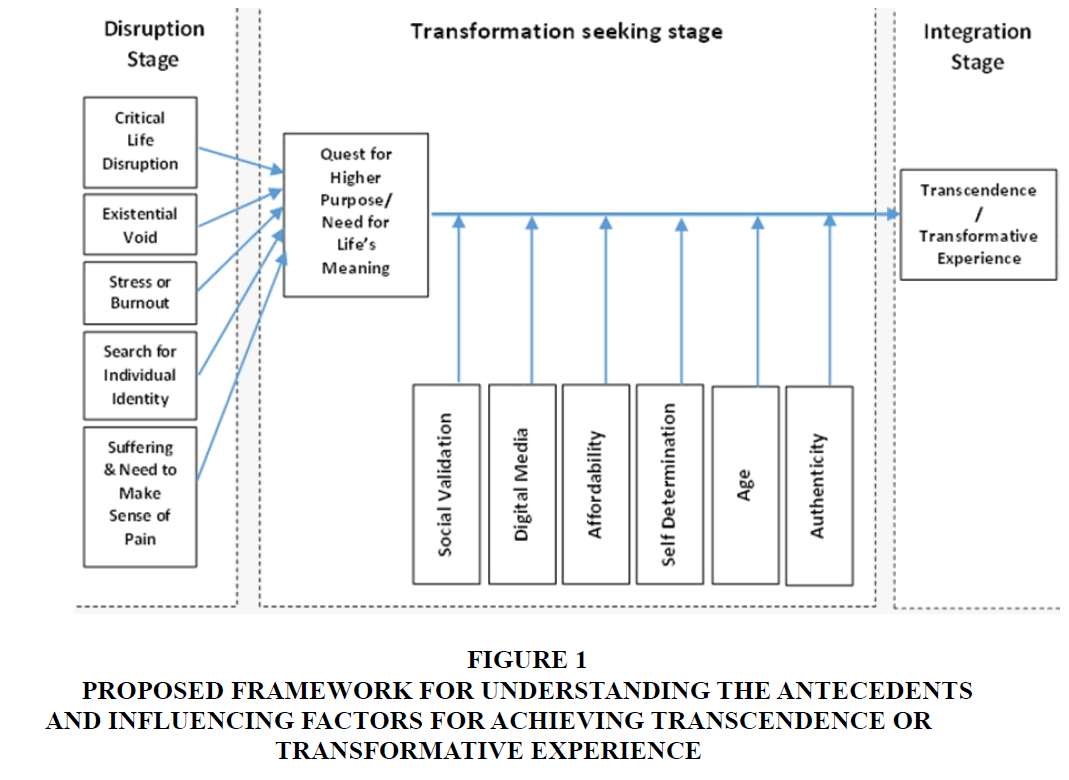
Figure 1 Proposed Framework for Understanding the Antecedents and Influencing Factors for Achieving Transcendence or Transformative Experience
Contributions
Theoretical Contributions
This qualitative study offers several theoretical contributions. Firstly, this study reveals a three-stage process that extends beyond existing motivation theories. These three stages are the Crisis/Disruption stage, where life events create an existential void; the Transformation seeking stage, where individuals actively pursue transcendental experiences; and the Integration stage, where there is a desire to embed the transformation achieved into the ongoing life of the individual. Secondly, the study extends the identity transition work of Ibarra (1999) by introducing ‘spiritual identity reconstruction’ as a coping mechanism and proposes spiritual tourism as an identity transition ritual. Thirdly, it extends the traditional price sensitivity models by introducing the concept of ‘existential value proposition’, which shows how crisis context alters affordability calculations. This study brings out the need for interdisciplinary approaches to complex phenomena, as spiritual tourism cannot be understood through the lens of tourism alone.
Practical Contributions
This study offers practical insights for multiple stakeholders in the spiritual tourism ecosystem. The findings can be translated into actionable strategies by enhancing offerings, marketing approaches, and support systems that genuinely serve individuals seeking transformative experiences. Spiritual tourism destinations can develop specialized programmes for bereavement and grief transition, career transition, identity reconstruction, post-divorce healing, chronic illness meaning-making, burnout recovery and other similar programs with varying intensities. They should focus on gathering authentic testimonials, articulate spiritual lineage and traditional foundations of their practices, integrate support systems through check-in calls, facilitate communities of people with similar experiences, and improve affordability by offering payment instalment plans for longer programs. Travel operators can develop packages addressing specific existential crises, show authentic retreat life on digital media, create YouTube content for spirituality seekers, partner with grief counsellors, divorce attorneys, and corporate human resource departments for wellness programs. Spiritual teachers need to understand the specific psychological dynamics of different life transitions. Government tourism boards need to invest in infrastructure at well-known spiritual centres such as Rishikesh, Bodh Gaya, and Dharamshala, improve accessibility, and develop quality standards for spiritual tourism operators. Employers need to offer breaks for spiritual renewal, recognize that addressing burnout may require spiritual resources, and provide coaching for integrating insights gained by the individual who returns from a spiritual journey.
These practical contributions aim to enhance the spiritual tourism ecosystem to better serve individuals undergoing existential crises seeking spiritual transformation. The larger goal is to make spiritual tourism a recognized, evidence-based, ethically governed resource for an individual’s transition and meaning-making in response to the inevitable disruptions in life.
Limitations and Future Research Recommendations
While this study provides rich insights into spiritual tourism motivations and influences, it has several limitations that need to be acknowledged. First, even though the sample of 18 participants is appropriate for a qualitative inquiry, it limits the generalizability across broader populations. It is recommended that future scholars validate these findings with a larger audience. Second, this study is limited to respondents from northern India. Future scholars may choose to conduct such a study across different geographies. Third, the respondents included individuals who had decided to pursue spiritual tourism or had returned from it, creating a self-selection bias. Future scholars may explore why some individuals in crisis turn to spiritual tourism while others do not. Fourth, the interviews captured motivations at a single point in time. It is suggested that future scholars conduct a longitudinal study to assess whether the motivations change over time and whether transformative experiences prove sustainable over time. Fifth, the absence of stakeholder perspectives represents a structural limitation. Future scholars may choose to examine how the various stakeholders of spiritual tourism shape the transcendence-seeking journey of the seekers. Sixth, this study does not address the negative outcomes of spiritual tourism. It is recommended that future scholars examine the financial exploitation by the stakeholders in the spiritual tourism ecosystem or the psychological destabilization when transformative expectations are not met.
In addition, future scholars need to examine factors that predict successful integration vs regression; investigate optimal time spent at a spiritual retreat and structure for different crises; research cultural differences in spiritual tourism seeking and outcomes; and investigate the specific practices that produce transformation. They should also study the dynamics between the spiritual teacher and the seeker of transcendence. An interesting area for future research would be to develop assessment frameworks for understanding individual needs, create decision-making frameworks to choose the appropriate program for the individual, and explore how to integrate spiritual insights into daily life.
Conclusion
This study reveals that spiritual tourism seekers’ quest for transcendence emerges from profound existential ruptures. Personal loss and suffering, life upheavals such as career disturbances, loss of identity, burnout, an existential crisis, or the realization of mortality create disruptions that shatter existing identity structures and expose the inadequacy of material success as a source of meaning. These crises generate an urgent need for transformation that conventional coping mechanisms cannot address. This study demonstrates that spiritual tourism is a self-determined response to existential crises and is a journey undertaken to seek meaning through a transcendental or transformative experience. Seekers weigh several factors such as affordability, authenticity, cultural resonance, and social validation through word-of-mouth testimonials and digital research. Recommendations from others who have undergone similar experiences weigh more than expert opinions or marketing messages, highlighting the importance of experiential harmony in spiritual tourism.
Theoretically, this research bridges multiple disciplines such as tourism studies, existential psychology, identity theory, and cultural studies, revealing that spiritual tourism cannot be understood through any single lens. It introduces the Crisis-Transformation-Integration framework, positioning spiritual tourism as a dynamic, processual phenomenon rather than a static consumer choice. The findings demonstrate how faith, intuition, and existential urgency shape decision-making alongside practical considerations. For practitioners such as professionals in tourism destinations and travel organizers, this research underscores the critical importance of authenticity, personalized guidance, and integration support. This study opens new opportunities at the intersection of crisis, meaning-making, and transformative travel, inviting continued exploration of how individuals seek transcendence in an age of disruption.
References
Alahakoon, T., Pike, S., & Beatson, A. (2021). Transformative destination attractiveness: An exploration of salient attributes, consequences, and personal values. Journal of Travel & Tourism Marketing, 38(8), 845-866.
Indexed at, Google Scholar, Cross Ref
Amram, Y., & Dryer, C. (2008, August). The integrated spiritual intelligence scale (ISIS): Development and preliminary validation. In 116th annual conference of the American Psychological Association (Vol. 1, p. 46). Boston, MA: American Psychological Association.
Bueddefeld, J., & Duerden, M. D. (2022). The transformative tourism learning model. Annals of Tourism Research, 94, 103405.
Indexed at, Google Scholar, Cross Ref
Chhabra, D. (2021). Transformative perspectives of tourism: Dialogical perceptiveness. Journal of Travel & Tourism Marketing, 38(8), 759-768.
Choe, J., & Mahyuni, L. P. (2023). Sustainable and inclusive spiritual tourism development in Bali as a long-term post-pandemic strategy. International Journal of Religious Tourism and Pilgrimage, 11(2), 11.
Indexed at, Google Scholar, Cross Ref
Deci, E. L., & Ryan, R. M. (1985). The general causality orientations scale: Self-determination in personality. Journal of research in personality, 19(2), 109-134.
Indexed at, Google Scholar, Cross Ref
Duda, T., & Doburzyński, D. (2019). Religious tourism vs. sacred space experience: Conflict or complementary interaction?. International Journal of Religious Tourism and Pilgrimage, 7(5), 2.
Indexed at, Google Scholar, Cross Ref
Halim, M. S. A., Tatoglu, E., & Hanefar, S. B. M. (2021). A review of spiritual tourism: A conceptual model for future research. Tourism and hospitality management, 27(1), 119-141.
Indexed at, Google Scholar, Cross Ref
Hanefar, S. B. M. (2015). Development of Spiritual Intelligence Model for Adolescents in Malaysia. University of Malaya (Malaysia).
Heintzman, P. (2020). Spiritual and religious outcomes of leisure travel and tourism: a framework for synthesizing empirical research. Travel and Tourism Research Association: Advancing Tourism Research Globally, 36(1), 131-140.
King, D. B., & DeCicco, T. L. (2009). A viable model and self-report measure of spiritual intelligence. International journal of transpersonal studies, 28(1), 8.
Indexed at, Google Scholar, Cross Ref
Koenig, H. G. (2000). Religion, spirituality, and medicine: Application to clinical practice. Jama, 284(13), 1708-1708.
Kujawa, J. (2017). Spiritual tourism as a quest. Tourism Management Perspectives, 24, 193-200.
Indexed at, Google Scholar, Cross Ref
Little, D. E., & Schmidt, C. (2006). Self, wonder and God! The spiritual dimensions of travel experiences. Tourism: An International Interdisciplinary Journal, 54(2), 107-116.
Liutikas, D. (2021). The expression of identities in pilgrim journeys. In Pilgrims: Values and identities (pp. 17-34). Wallingford UK: CABI.
Mezirow, J. (1997). Transformation theory out of context. Adult education quarterly, 48(1), 60-62.
Indexed at, Google Scholar, Cross Ref
Mills, J., Bonner, A., & Francis, K. (2006). The development of constructivist grounded theory. International journal of qualitative methods, 5(1), 25-35.
Indexed at, Google Scholar, Cross Ref
Mishra, D., & Maheshwari, N. (2025). Spiritual tourism development: a comprehensive synthesis for sustainable destination planning and growth. Journal of Islamic Marketing, 16(2), 606-626.
Indexed at, Google Scholar, Cross Ref
Neuhofer, B., Celuch, K., & To, T. L. (2020). Experience design and the dimensions of transformative festival experiences. International Journal of Contemporary Hospitality Management, 32(9), 2881-2901.
Indexed at, Google Scholar, Cross Ref
Nguyen, P. (2024). Futures of spiritual tourism in Vietnam in 2050(Doctoral dissertation, Open Access Te Herenga Waka-Victoria University of Wellington).
Indexed at, Google Scholar, Cross Ref
Nguyen-Viet, B., Nguyen My, P., & Dang-Van, T. (2025). Enhance domestic tourists’ revisit intention in spiritual destinations originating in patriotism and religious orientation. Journal of Hospitality and Tourism Insights.
Indexed at, Google Scholar, Cross Ref
Ohlan, R., & Ohlan, A. (2024). Religious tourism scholarship: current state and future research directions. Journal of Islamic Marketing, 15(3), 800-818.
Indexed at, Google Scholar, Cross Ref
Pung, J., & Chiappa, G. (2020). An exploratory and qualitative study on the meaning of transformative tourism and its facilitators and inhibitors. European Journal of Tourism Research, 24, 2404-2404.
Samarathunga, W. H. M. S., Schänzel, H., & Perera, J. A. D. R. (2025). Spiritual tourism, spiritual tourists and religions: the nexus between authenticity and commodification. Tourism Planning & Development, 22(6), 848-870.
Smith, M. K., & Diekmann, A. (2017). Tourism and wellbeing. Annals of tourism research, 66, 1-13.
Steiner, C. J., & Reisinger, Y. (2006). Ringing the fourfold: A philosophical framework for thinking about wellness tourism. Tourism recreation research, 31(1), 5-14.
Soulard, J., McGehee, N. G., Stern, M. J., & Lamoureux, K. M. (2021). Transformative tourism: Tourists' drawings, symbols, and narratives of change. Annals of Tourism Research, 87, 103141.
Sudiarta, M., Bratayasa, I. W., & Subadra, I. N. (2025). Spiritual Tourism: A Grounded Theory Approach. Bali Journal of Hospitality, Tourism and Culture Research, 2(2), 65-73.
Surpi, N. K., Sudiana, I. G. N., Widana, I. K. A., & Putra, I. K. S. (2025). Revitalizing Ancient Balinese Yoga: A Strategic Framework for Sustainable Spiritual Tourism Development Anchored in Divine Transcendence. Jurnal Kajian Bali (Journal of Bali Studies), 15(3), 1190-1221.
Sutarya, I. G. (2024). On-off hybrid spiritual tourism in the new normal era. Southeast Asia: A Multidisciplinary Journal, 24(2), 95-106.
Tasci, A. D., & Godovykh, M. (2021). An empirical modeling of transformation process through trip experiences. Tourism Management, 86, 104332.
Teoh, M. W., Wang, Y., & Kwek, A. (2021). Conceptualising co-created transformative tourism experiences: A systematic narrative review. Journal of Hospitality and Tourism Management, 47, 176-189.
Timothy, D. J. (2021). Sociopolitical and economic implications of religious and spiritual tourism. In The Routledge handbook of religious and spiritual tourism (pp. 301-314). Routledge.
Tsai, H. Y. M. (2021). Exploring the motivation-based typology of religious tourists: A study of Welcome Royal Lord Festival. Journal of Destination Marketing & Management, 21, 100623.
Valeri, M. (2023). Modelling the effect of spiritual tourism motivators on spiritual tourism consumption. Tourism: An International Interdisciplinary Journal, 71(3), 634-646.
Wang, S., Blasco, D., Hamzah, A., & Verschuuren, B. (2023). Tourists and ‘philosophers’: Nature as a medium to consciousness and transcendence in spiritual tourism. Annals of Tourism Research, 99, 103543.
Xia, J., Isa, S. M., & Jiang, C. (2024). Potential of spiritual tourism in providing healing and well-being in the post-COVID era. In Handbook of Tourism and Consumer Behavior (pp. 67-82). Edward Elgar Publishing.
Zinnbauer, B. J., & Pargament, K. I. (2005). Religiousness and spirituality. Handbook of the psychology of religion and spirituality, 54, 1-6.
Received: 02-Jan-2026, Manuscript No. AMSJ-26-16389; Editor assigned: 04-Jan-2026, PreQC No. AMSJ-26-16389(PQ); Reviewed: 10- Jan-2026, QC No. AMSJ-26-16389; Revised: 20-Jan-2026, Manuscript No. AMSJ-26-16389(R); Published: 25-Jan-2026