Research Article: 2026 Vol: 30 Issue: 2
Challenges Of Zero-Waste Lanes Vs. Corporate Green Claims: A Comparative Ethnography Of Divergent Sustainability Narratives In Urban India
0Venkataramana Karri, International Institute of Business Studies, Bengaluru,India
Jalaja Enamala, Dhruva college of Management, Hyderabad, India
Gopal Krishna Sanapala, GSFC University, Vadodara, India
Hemangine Rai, Christ (Deemed to be University), Bengaluru, India
K.R. Chandrakala, International Institute of Business Studies, Bengaluru, India
Citation Information: Karri., V, Enamala., J, Sanapala., G.K, Rai., H & Chandrakala., K.R. (2026). Challenges of zero-waste lanes vs. corporate green claims: a comparative ethnography of divergent sustainability narratives in urban india. Academy of Marketing Studies Journal, 30(S3), 1-20.
Abstract
Urban India currently has a negative sustainable approach captured in two of the main narratives concerning the urban space. These include the community-developed zero-waste and the corporate greenwashing approach. This comparative ethnography study seeks to document and analyze the corporately and community-developed narratives of sustainability in the cities of Bengaluru, Hyderabad, Chennai, and Pune. We spent one month in each of the cities, conducting and transcribing a total of 48 interviews, and performing document reviews and participatory observations. We found that the community-developed zero-waste lanes policy resulted in partnerships and civic narratives of stewardship and social community ownership. The corporate-developed policies, on the other hand, resulted in the narratives of the social community and corporate advocacy from a community-developed sustainability perspective. The narratives developed from the civic and corporate policy engagements integrated reflexively formed the governance from policy; the civic and corporate engagements aligned and flowed public resources from the civic advocated to the social and corporate invested in public sustainability. The study contributes to sustainability governance literature and forms a sustainability paradox and civic and corporate narratives to and beyond digital binaries for sustainability governance.
Keywords
Corporate Green Claims, Environmental Governance, Ethnography, Institutional Theory, Narrative Analysis, Sustainability Narratives, Urban Sustainability, Zero-Waste Lanes.
Introduction
The Expanding Global South experiences rapid urban growth, creating an economic paradox wherein development conflicts with the increasing environmental crisis of urban waste management. Environmental crisis management conflicts are clearly apparent in India, with rapid urban development raising the need to balance over-consumerism with sustainable ecological practices. The Environmental management crises are fundamentally rooted in the conflicts of two dominant models of governance - the community-centred ecological activism model and the corporate sustainable marketing model. This is much more than a mere conflict of systems and resources; these opposing models represent the paradox of coping with urban integration and the developed model of ‘grounded’ activism citizenship systems and a corporate model of ‘greenwashing’, where responsibility and ownership of the environmental crisis is removed (Lyon and Montgomery, 2015, Dangelico & Vocalelli, 2017; Darjee et al., 2021).
Existing scholarship has made important contributions, though isolated, examining community-based waste activism and critiquing business environmentalism (Mankad et al., 2019; Cetas Yasué, 2017). Still, the literature is patchy. A real absence surrounds comparative and integrative frameworks which synthesize these models to understand how they simultaneously exist, compete, and envision built environments (urban). While some have attempted to unpack their differing motivational bases (intrinsic vs. extrinsic), governance (participatory vs. top-down), silos, and conflicts, these remain largely unexplored in ways they fabricate silos and conflicts that construct particular narratives to extend the frameworks of legitimacy, accountability, and impact (Gidwani Corwin, 2017). The absence is particularly felt in urban India, with its rich, complex institutional architecture, particularly the informal, regulatory fragmentation, and market volatility, which might filter positive sustainability transitions from negative ones.
From a fundamental perspective, sustainability is not simply a technical or managerial problem, but a space of contested narratives. Differing understandings of 'green' practice, who has the right to define it, and who is obligated to do so, inform and shape policy, allocate resources, and generate or diminish public trust. Given the significance of the issue, it is regrettable that current research has not sufficiently examined the ways in which these narratives are lived out in the community and corporate domain. In the absence of this knowledge, attempts to deepen sustainability will continue to reinforce the counterproductive structural inequities that underpin it through mere window dressing (Banerjee, 2011).
In an attempt to fill this void, the current research undertakes a comparative ethnographic study across four metropolitan cities of India and poses the following question– What narratives do community-led zero-waste lanes and corporately sponsored greenwashing initiatives sculpt to define urban sustainability in India, and what are the narratives exposing the paradoxes and predicaments of eco-governance that is made to scale? We contend that zero-waste lanes sustain a narrative of embedded stewardship that is community governed, transparent, and intrinsically motivated, while corporate sustainability initiatives are characterized by a narrative of market-driven strategic compliance.
There are three main contributions of this research. The first is the contribution to the narrative on sustainability governance through the incorporation of narrative-cognition within the comparative framework, which expands the community-corporate interface to overcome the community-corporate binary to unpack the complexity and hiding opportunities for co-opetition. The second is the contribution to the institutional and stakeholder theories, through the articulation of sustainability narratives, that operate as resource-steering, policy-shaping, trust-configuring instruments within the volatile landscape of the city. The third is the contribution of sequencing to the decision-making of the policymakers and organizational leaders through the articulation of hybrid governance incorporating bottom-up community mobilization and transparent/corporate civic responsibility for the improvement of the urban centres.
Literature Review
The rapid economic growth of Urban India is set against the backdrop of profound social, economic, and environmental issues, underscoring the need for proactive and integrative approaches to the management of waste (Makan et al., 2025; Kumar & Bhati, 2022; Lavalle et al., 2011). The shift from the linear models of waste disposal to integrated approaches of the circular economy is both necessary and complicated, especially in the face of the ever-increasing volumes of waste being produced; for example, cities such as New Delhi produce over 11,000 tons of waste per day (Mazzoli et al., 2024; Meads et al., (2017); Anand & Devi, 2023). The review focuses on the intertwined concepts of motivation, governance, and policy and market mechanisms to dissect the phenomenon of urban sustainability, focusing on the zero waste grassroots movements as well as the circumstantial environmentalism adopted by corporations.
Motivational Drivers: Internal Stewardship vs External Branding
Given the nexus of driven engagement with the purpose of achieving objectives of a given community, Enhanced Community Zero Waste Initiatives aim at enabling a sense of personal achievement, social utility, and morally prompted participation geared toward ecological stewardship and community livelihood (Mankad, Zhang, & Curnock, 2019; Cetas & Yasué, 2017; Palmer et al., 2020), along with social – ecological frameworks – the moral espousal of community governance eco networks (Ruiz-Mallén et al., 2015), driven engagement, ecological community participation and ecological stewardship derive from a profound sense of personal achievement and social concern that enable governed networks of local participation fostering ecological governance.
However, the motivational focus of corporate sponsorship is unsustainably driven by external motivators that seek to integrate environmental and social sustainability on the premise of a geared towards a social value proposition on integrated marketing strategy (Lyon & Montgomery, 2015; Dangelico & Vocalelli, 2017). The negative motivational external motivator incoherence purported in the motivation of community civic engagement systems presents a breakdown internally to community systems within their regulatory frameworks for freedom of civic engagement. These primary systems must be brought to the communal ground and integrated to real engagement at the community level in a regulatory framework that authenticates and systems real civic engagement.
In community-based integrated-zero eco waste initiatives, participation paradoxically stems from personal achievement and civic social obligation alongside a moral order to ecological preservation and community livelihood. Local community participation focused on social ecological frameworks geared toward the governance of the eco networks of communities and the participation in the community governance systems providing for social ecological networks energizes social ecological community participation supporting the community-based systems of natural resources providing for integrated community-based eco systems and the services for local communities.
In corporate sustainability, the motivational focus is external, with engagement on environmental action stratified with designed alignment to enhance their marketing, profiting, and branding position within the market (Lyon & Montgomery, 2015; Dangelico & Vocalelli, 2017). It results in a negative external motivator incoherence to primary community civic systems engaged with active regulatory frameworks for community engagement, hence the paradox in community systems for citizenship.
In grassroots initiatives, actions and motivation are based on ethical congruence and are based on genuine concern for moral accountability, whereas in any corporate structured action, motivational engagement is merely a compliance function for reputation management (Devireddy, 2024; Verma, 2024). Many systems of motivation pertain to the genuine action towards the environment and wholly ignore the action systems which are structured for external motivation in a system that focuses sustainability for a market purpose and is clearly structured to replace genuine motivation for active engagement towards sustainability by performing the actions of sustainability.
Community Governance: Bottom-Up Control versus Top-Down Control
In the case of the underdeveloped municipal systems of India, participatory community governance serves as the main anchor for decentralized participatory community loss management. Governance as of shared power and localized decision making, it alters the role of citizens from primarily passive non-government actors to active participants in local and transnational environmental governance (Totikidis, Armstrong & Francis, 2008; Tsey et al., 2012; Vandenberg, 2024; Eversole 2011). Partnership relationships foster the co-design of waste systems to the local ecologies and social systems, which promote social transparency and accountability (O'Meara, Pendergast & Robinson, 2007; Gephart, (2004); Greenwood et al., 2007; Gwynn et al., 2015; Hannon & Zaman, 2018; Hart & Dowell, 2011; Hojnik & Ruzzier, (2016); Karatzas et al., (2019); Gaventa, 2004).
This discussion centres on the vital but overlooked informal waste sector. Informal waste pickers and recyclers demonstrate operational efficiency and perform essential recycling services forming the backbone of urban waste recovery in India (Chambliss & Schutt, (2024); Chaturvedi, 2014; Kornberg, 2020). Effective community governance seeks to acknowledge and integrate this sector, attending to the governance deficits of the state and corporate actors and extending social networks for better results (Menzies, 2004; SADULLAEVICH, 2023). However, this integration is severely limited because of enduring caste and gender-based exclusions that marginalize these workers and sustain inequities (Wittmer, 2023; York & Venkataraman, 2010; Pastor et al., 2024; Pillora & McKinlay, 2011; Rabby, Chimhundu & Hassan, 2021). It is suggested that co-management models, where communities share power with formal institutions, have better outcomes than purely top-down approaches, but they remain constrained by institutional fragmentation (Kearney et al., 2007; Kesidou & Demirel, (2012); Kirchherr et al., (2017); Kirchherr et al., (2018); Fischer, 2012).
Lack of Policy and Systemic Support: Fragmentation and the Greenwashing Facilitation
The absence of cohesive regulation has severely obstructed the proliferation of zero-waste ecosystems. In India, the policy framework continues to be out of sync with real-world conditions, with colliding municipal by-laws, divergent financial flows, and siloed governance (Kumar & Bhati, 2022; Mishra, 2024). These barriers give way to systemic impasses, including bureaucratic inertia and the absence of real stakeholder collaboration, which grassroots approaches have to work their way around with community mobilization and voluntary networks (Nguyen et al., 2021; Fopa Tchinda & Talbot, 2024; Park, 2025).
The lack of regulation allows companies to engage in corporate greenwashing (misrepresentation of environmental responsibility) (Saroja, 2025; Devireddy, 2024). Companies can engage in ‘quasigroup’ (superficial) policies, public relations-oriented rather than transformational, which further widens the gap between the discourse and the practice of sustainability (Backman, Verbeke & Schulz, 2017). Emerging initiatives such as the Central Consumer Protection Authority are intended to stop such practices, but weak enforcement, lack of stringent mechanisms, and limited accountability reduce their effectiveness (Kishwar et al., 2024; Vijayalakshmi, 2024; Walker & Wan, 2012). There is little to no collaborative policy co-designing with civil society in India’s waste management system, which has been identified as a primary means to enhance its legitimacy and policy coherence (Chong & Druckman, 2007; Fopa Tchinda & Talbot, 2024).
Resource, Market Dynamics, and Operational Impacts
Access to resources and market forces shape the operational realities of waste management. Grassroots zero-waste initiatives divert landfills and reduce greenhouse gases, but they are chronically limited by under-resourced initiatives, funding deficits, and low levels of technological investment (Rizos et al., 2016; Schaltegger et al., 2012; Sousa-Zomer et al., 2018; Steg, 2016). They draw upon the ‘community led resilience’ and informal networks to overcome such constraints.
Randhawa et al. (2020) stated that self-developed WTE activities have a larger resource base, but are also faced with concerns regarding profit and the environment. Competitive markets that are top-down and brand-oriented, as described by Dangelico & Vocalelli (2017) and Orsato (2006), create a trust deficit in the public. There is no real consultation, and there is disruption of informal waste workers, as described in Demaria, (2023); Demaria et al., 2016, Weng 2023, and Yoganandham 2025. Model innovation in India is reportedly less promising, given the prospective circularity and product-service systems, due to insufficient supportive institutions, cost and capacity limitations (Bocken et al. 2014; Boons et al., 2013, Lozano 2018; Lüdeke-Freund et al., (2019), Sehnem et al. 2019; Shanmugasundaram, 2024).
Due to their dual meanings, the academic literature may be seen as inconsistent regarding the concept of zero waste lanes. For example, social inclusion, participatory public administration, and self-motivation are polar opposite accolades, yet limited by barriers of policy fragmentation and scalability. Conversely, it appears as if, and indeed many corporate ‘green’ claims are empowered, due to the external factors of weak governance and ‘green’ washing are the culprits, which creates the main sacrifice of the informal sector, the ecosystem, and the livelihood. This severely undermines the majority of the claims.
If any integrative models of urban systems or ecosystems exist, they are few and far between and still are used as a null hypothesis across numerous studies (Gidwani & Corwin, 2017; Lutringer & Randeria, 2017). The literature in question has with near exclusivity concentrated on the community-society-economy nexus and has almost completely overlooked the narratives of embedded stewardship and of strategic compliance and how, in tandem, oppositional and in so doing shape the legitimacy and effectiveness of the urban sustainability governance. Furthermore, an important number of empirical gaps still exist, most notably, the absence of cross-comparative studies, the metropolitan-centricity of the research, the gaps in the relationship of greenwashing and the informal sector, and the gaps on the environmental outcomes (Dhaundhiyal et al., 2024; Gayathiri & Rathnapriya, 2024).
The current study addresses the proposed research question. This investigation utilizes cross-city comparative ethnography across four Indian cities and surpasses the limit of a single case study to assess the co-production of several disparate narratives of sustainability. This study aims to comprehend the intersections and contradictions of the rationale, governance and operationalization of zero waste lanes and cynical greenwashing and their implications on the prospects of just and effective urban waste management in India.
Theoretical Framework
In addressing the issue of zero waste corridors and the corporate greenwashing sustainability practices, we are employing Institutional Theory, Stakeholder Theory, and Narrative Discourse Theory. The purpose of the distance and discourse theories is to uncover the structures and communications of the phenomena of sustainability and the legitimacy the structures and communications attain. The phenomena we are addressing are sustainability and its legitimacy. All of these theories taken together will describe the phenomena surrounding urban imprints and the sustainability practices in the public and private sectors of Indian cities.
Institutional Theory
The institutional theory seeks to explain the behaviour of organizations and communities when it comes to devising actions to satisfy their expected roles (Dodson & Smith, 2003; DiMaggio & Powell, 1983; Scott, 2013), which, in the context of sustainability, involves addressing what are termed institutional pressures (coercive, mimetic, and normative) that dictate positive environmentally responsible behaviours to adopt. We deploy this approach within two main facets. We deal with the intersection of legitimacy and greenwashing in the context of the tactical green institutional pressures that lead to corporate green discourse and decoupling (Meyer & Rowan, 1977; Lyon and Montgomery, 2015). Then, in relation to institutional logics, we posit that zero waste lanes and corporate actions stem from contrary institutional logics, community stewardship logic and market logic, that respectively define their aims, oversight, and legitimacy (Thornton, Ocasio & Lounsbury, 2012). This theory helps to map out the motivations for action within highly siloed streams of sustainability and the veil of substantiality behind many of the more visible actions and those which are, in many contexts, mere window dressing.
Stakeholder Theory
Consider an organization within the framework of stakeholder theory (Freeman, 2010). Such an organization would have input from employees, clients, suppliers, and other representatives of affected parties. For urban sustainability, stakeholders and actors are community residents, informal waste workers, NGOs, policymakers, and businesses. We utilise stakeholder theory to assess the governance structures (participatory governance in zero waste lanes exemplifies multi-stakeholder governance in all its aspects of inclusivity and accountability, while on the other hand, corporate sustainability tends to focus on a tactical stakeholder management theory which is primarily motivated by risk aversion and reputation protection (Mitchell, Agle & Wood, 1997; Nelson, 2000). This also allows us to assess the sustainability outcome imbalances in terms of voice, influence, and control to assess the corporate advocacy / grassroots advocacy asymmetries in particular. This allows us to assess the outcomes of sustainability in terms of justice, accountability, and inclusivity.
Narrative Discourse Theory
Fairclough & Czarniawska (2014, 2004) characterized narratology and discourse theory as the means by which social phenomena are described and explained, particularly the interaction of language, narration, and communication. Sustainability, therefore, is a paradoxical narrative that is both complex and flexible as it gets (re)shaped by actors of diverse interests and ideologies. This is the theory that explains the zero waste movement, the discourse of environmental responsibility of corporations, and the marketing of various (dis)courses of virtuous care and capitalism. Our focus is on the narratives of discourse legitimation, resource capture, and critique of competitors (Vaara, Tienari, & Laurila, 2006). Our focus is on the narrative tensions and the interaction of rival narratives resulting in a highly complex ideological and institutional antinomy. This allows for a transcendence from a purely structural and behavioural examination to the more problematic signification and communicative aspects of sustainability.
The sustainability practices described in our synthesis are impacted by the principal internal sustainability practices by institutions, stakeholder interaction entails specifying roles of participants and customers, and the theorization which are concerned with the meaning and legitimacy of the practices. This framework allows empirical cross-case analysis of the zero waste lanes and greenwashing to capture and respond to diverse institutional logics, manage (or conceal) particular stakeholders, and construct legitimizing or delegitimizing narratives. This also aids in theory building, particularly in the context of this framework which integrates empirical and theoretical work on the interaction of institutions, stakeholders, and narratives in contemporary urban centres.
Methodology
Research Design
The investigations that comprise this work have taken the perspective of comparative research using an ethnographic approach to examine the stories around the concept of sustainability in urban India pertaining to two different socio-institutional settings: zero-waste lanes and corporate sustainability initiatives. As noted by Doherty and Haugh (2022) and Marcus (1995) in the field of comparative ethnography, the focus is on investigating the enactment, narrativization, and legitimization of the common thematic concerns of waste, alteration, and sustainability in distinct ways and the different rationales that govern them.
The multiple locales have the potential to bring convergence and divergence in discourses and practices, something that is currently very much in vogue in organization and sustainability studies (Banerjee, 2011; Whiteman & Cooper, 2000). The choice of ethnography is predicated on its capacity to produce thick and rich descriptions and understandings derived from extensive participant observation and immersion, which are indispensable to disentangling the social, cultural, and operational complexities of community and corporate settings. The comparative dimension of the research hinges on sharpening the analytical focus on the different domains of sustainability strategies and narratives. In this sense, an examination of the narratives is in line with the contemporary conception of sustainability as a socio-material practice that aims to create, sustain, and manage legitimacy and public policy.
Data Collection
The data collection period lasted four months between April-July 2025 and featured a multi-sited ethnography approach (Marcus, 1995). Fieldwork was conducted in one zero-waste neighborhood each in the cities of Bengaluru, Hyderabad, Chennai and Pune, as well as the corporate headquarters and Corporate Social Responsibility (CSR) field sites of two large waste management companies.
The data collection activities of the studies are of the triangulated kind which will consist of the following data streams:
Participatory Observation: To document the lived practices and unofficial conversations, researchers took part in the everyday waste management practices of the members of the zero-waste communities and the corporate employees, in addition to community and corporate meetings focused on sustainability.
Interviews: 48 semi-structured interviews conducted according to the purposive sampling provided in Table 1. This sampling method incorporates the primary variables of interest in the research: stakeholder type (community activists, residents, corporate CSR managers, sustainability officers, Non-Governmental Organization (NGO) partners, policymakers), and geographic location. During the fieldwork, the final distribution was adaptively adjusted to reach thematic saturation in each core participant group.
| Table 1 Proposed Sampling Framework for Semi-Structured Interviews | |||||
| Stakeholder Category | Bengaluru | Pune | Hyderabad | Chennai | Approx. Total |
| A. Zero-Waste Lanes | ~24 | ||||
| Community Leaders | 2-3 | 2-3 | 1-2 | 1-2 | 6-10 |
| Resident Participants | 2-3 | 2-3 | 1-2 | 1-2 | 6-10 |
| Local NGO / CBO Partners | 1-2 | 1-2 | 1 | 1 | 4-6 |
| B. Corporate Initiatives | ~24 | ||||
| Corporate (CSR/Sustainability) | 3-4 | 2-3 | 2-3 | 2-3 | 9-13 |
| NGO Partners / Industry Observers | 2-3 | 1-2 | 1-2 | 1-2 | 5-9 |
| Policy Makers / Analysts | 1-2 | 1 | 1 | 1 | 4-5 |
| City Approx. Total | ~11-17 | ~9-14 | ~7-11 | ~7-11 | ~48 |
Document and Media Analysis: This includes the analysis of corporate sustainability reports and disclosures, policy documents, community newsletters, newspaper articles, and relevant social media activities.
Data Analysis
There are two phases of analysis. The first was be Braun and Clarke’s (2006) thematic analysis. Sustainability practices, challenges, and values coded and analyzed using NVivo for data analysis. The second Fairclough’s (2013) narrative and critical discourse analysis, which focuses on the construction, legitimization, and contestation of discourse and narratives in relation to particular rhetorical strategies, ethics, positioning, claims, and morality. Miles, Huberman, and Saldaña (2014) comparative coding will be used to determine the differences presented in corporate versus grassroots discourses and narratives.
Methodological Rigor and Trustworthiness
Measures pertaining to balance and credibility from Lincoln and Guba (1985) incorporated into the study to ensure balance and credibility. The study employed triangulation as a means of verification when merging findings from diverse data sources (observations, interviews, and documents). The study used reflexive journaling to illustrate positionality and evolving interpretations of the study by the researcher. Member checking took place by presenting the primary analysis to selected participants to validate and verify the findings. An audit trail maintained to demonstrate clarity and openness in the directions followed and in the decisions on the procedures of coding. Ethical considerations took precedence in this study, gaining ethical clearance from the host institution. Anonymity and confidentiality were guaranteed as all participants provide informed consent. The analysis of corporate documents restricted to those that are publicly available unless particular permission has been granted to access internal documents.
Research Process
The research employs a systematic five-phase thematic analysis to distinguish and understand the narratives around sustainability as found in the claims made by businesses and zero waste legislation. This begins with starting the empirical research where the investigator collects text-based documents such as the zero waste laws and the sustainability reports of 25 businesses and their claims made in green advertising to establish a firm basis for analysis. This follows the preliminary open coding wherein the data is carefully analyzed to bring to the surface the fundamental patterns and the drives, systems of governance, and indicators of control and influence. An inductive method is employed in the analysis to ensure that the outcomes of the analysis drive the findings and not the other way around.
In the second stage, the data that has been coded is integrated and reorganised into thematic clusters which capture important aspects such as the motivational drives, models of governance in the community, and outcomes of the operationalised systems moving from an unsynthesised collection of codes to thematically and methodologically coherent categories. The thematic clusters are further refined to achieve a clear, coherent and distinctive focus. This increased focus on the thematic clusters enhances the rigour of the analysis by eliminating the possibility of thematic overlap which reflects poorly on a thematic analysis. The last phase integrates the thesis of the five refining clusters into a single thematic arrangement which elucidates the systemic barriers that are structural in the sustainability. On the other hand, these barriers are motivational and refer to intrinsic as opposed to market driven, governance that is participatory in contrast to the top down and those which have institutional support as opposed to regulatory voids, barriers which are pertaining to funding, profit driven, and economic benefits that are material as opposed to operational claims that are merely ideological and are empty of true positive ecological benefits Figure 1.
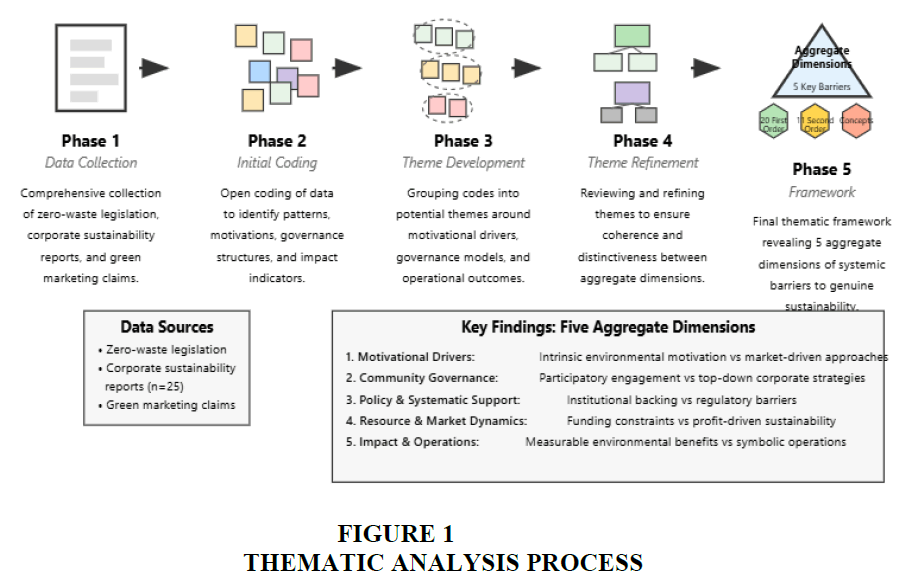
Figure 1 Thematic Analysis Process
Comparative Ethnographic Analysis
This study focuses on the differentiation between grassroots zero-waste lanes and urban India’s corporate greenwashing using a comparative ethnographic approach. Corporate greenwashing is a phenomenon that the most recent literature devotes a lot of attention to. Ethnography portrayed a nuanced comparative study of the how and what of the functioning of sustainability across different spheres of social and institutional hierarchies. The comparative study of community-led zero-waste initiatives and corporate sustainable initiatives is likely to produce different outcomes, in terms of motivations and policy environments in relation to governance structures, the flow of resources, and operational policies.
Understanding the experiences and practices surrounding the socio-ethical value continuum of the ethnographic approach. The socio-ethical and community governance of zero waste corridors will most definitely also be the socio-ethical and community governance of marketplace corporate greenwashing. The corporate advertising contradiction and the grassroots innovating sustenance of the urban ecosystem will most likely be illuminated through the juxtaposition.
This type and the interdisciplinary approach will facilitate the capturing of the lived experiences of community members and activists as well as corporate managers and policy and systems analysts to forge a complex adaptive system that aims to tackle the real potentials and limits of scalability within the urban India sustainability paradox.
Findings
Motivational Drivers
This theme focuses on elements that are not derived from the market for their efforts on sustainability.
• Intrinsic & Ethical Drivers (Zero-Waste Lanes):
º Core Goal: Protect the environment and ethically protect the livelihoods of people without making a profit.
▪ “It is our goal to protect the environment and let the people whose livelihoods we will be disrupting remain unharmed. We will never make a profit.” — Community leader.
º Methodology: Balance methodological considerations of practicality and accessibility for community adoption and participation.
▪ “We appreciate low-cost, visible solutions that our community can easily take part in.” — Grassroots Organiser.
º Ethical Foundation: Integrating an ethical perspective, inclusiveness, and community ownership.
▪ “Livelihood protection is at the heart of our efforts, to leave no one behind.” — Zero Waste Volunteer.
º Strategic Alignment: Complemented and legitimised by external environmental policies, often considered to be social responsibility rather than a business gain.
▪ “Environmental procurement informs the community activities we undertake.” — Local Government Officer.
▪ “Working with us is more of a social responsibility than a business opportunity.” — Grassroot Activist.
• Market & Profit Drivers (Corporate ‘Greening’):
º Primary Motivation: Profit, marketing appeal, and brand enhancement.
▪ “Sure, we enjoy the marketing appeal that comes with branding. It's also valuable for the company.” — Corporate Sustainability Manager.
▪ “Competing in the market is great, but with sustainability we can also improve the brand.” — Marketing executive.
º Inherent Conflict: Characterized by a conflict where economic interests overshadow or are distinct from environmental gains.
▪ “Profit motives usually overshadow the environmental gains.” — Environmental Analyst.
▪ “Differentiation based on Sustainability is an example of our external image but not on our company mission.” — Corporate Strategist.
º Critique: Often seen as a strategic requirement or pseudo-activity rather than a genuine commitment, leading to less environmentally positive outcomes.
▪ “It is often the case that corporate sustainability has more of a strategic requirement than a genuine commitment, which is problematic in terms of overt involvement.” — Corporate Strategist.
The comments expressed also highlight the value-centric policy focus that facilitates the real and impactful zero waste movements, more so the lack of motivational elements that are more internally intrinsic guiding moral compasses with a social focus as opposed to a corporate sustainability that is often externally driven by market and brand interests. This explains the considerable range and sincerity of the sustainable efforts in urban India Figure 2.
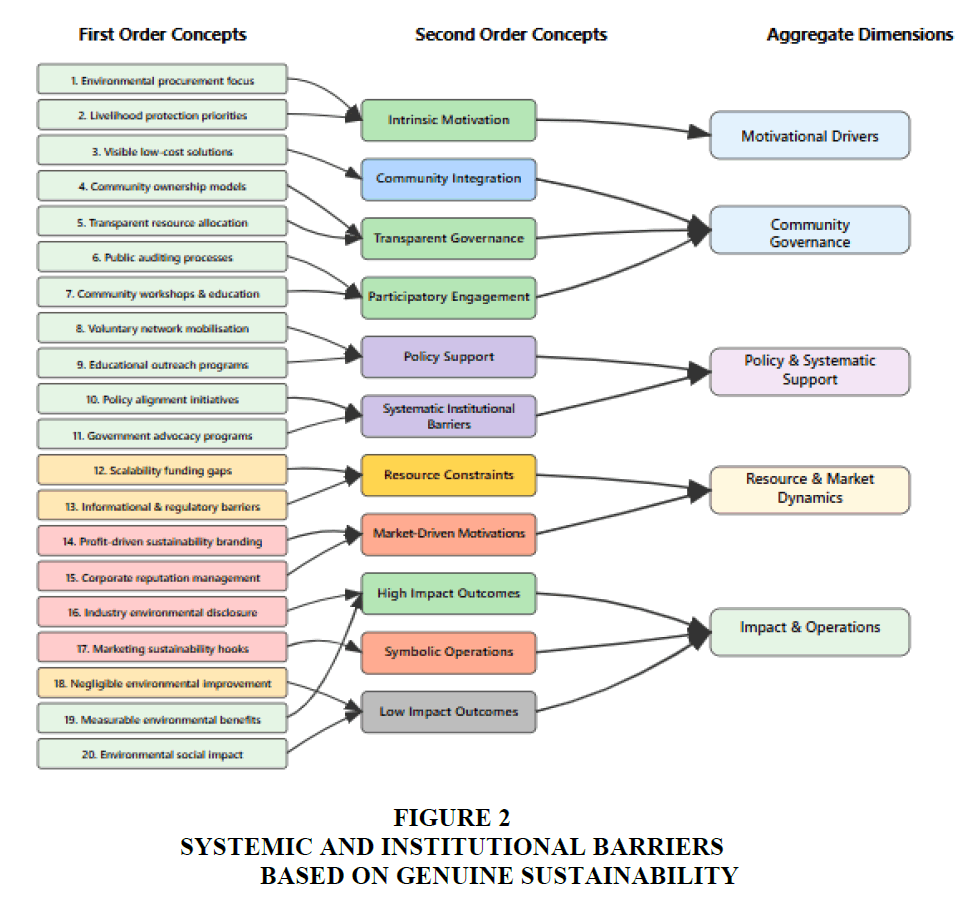
Figure 2 Systemic and Institutional Barriers Based on Genuine Sustainability
Community Governance
The participation democracy and open community governance models stand in contrast to the participatory democracy and closed community governance models.
• Participatory & Transparent Models (Zero-Waste Lanes):
º Inclusive Decision-Making: Open forums governance includes all voices and stakeholders.
▪ "We hold regular workshops where everyone's voice matters." — Community coordinator
• ‘’Our community owns the process, not just the outcomes."— Resident participant’’
º Financial Transparency:Trust and accountability are built, and resources are exhausted in an evident manner.
▪ "Resources are spent transparently; everybody can see where money goes." — Treasurer of a zero-waste project
▪ "Public auditing processes ensure fairness in resource use." — Local auditor
º Trust and Cohesion:Transparent and inclusive governance structures fosters trust and community cohesion, remove governance friction, and unify in the pursuit of a collective purpose.
▪ "Trust developed through governance removes friction and builds community." — Community elder
º Network Diffusion: Energising and diffusing practices are grassroots and peer-to-peer informal networks.
▪ "Grassroots Network energises the diffusion of zero-waste practices." — Mobilising Informal networks
º Institutional Challenges:While policy support may exist, the absence of support uniformity and equitable support can constrain these bottom-up systems.
▪ "Policy support is available, but the lack of uniformity constrains community governance." — Policy analyst
• Hierarchical & Opaque Models (Corporate Sustainability):
º Top-Down Decision-Making:Public governance is almost always the case, and is always the case with little to no considerations of stakeholders, and disincentives authentic participation.
▪ "Corporate sustainability decisions often come from the top down with limited community input." — Observer at an NGO
º Instrumental Community Integration:This is primarily to counter engagement as it is easily instrumented to gain trust and thus control of perception towards the organisation aimed at social image management.
▪ "Corporate governance considers genuine community integration a marketing opportunity." — Sustainability critic
This niche of business and sustainability is a rich source of information concerning the absence of governance participation and transparency. It is a paradox from the systems of community governance.
Policy & Systematic Support
This theme analyses the intersections of institutional support structures and policy alignment from multiple angles, juxtaposing the systemic barriers to grassroots initiatives against the policy framework of corporate sustainability.
• Challenges for Grassroots and Community Initiatives (Zero-Waste Lanes):
º Fragmented Policy Environment:Policies are disjointed and misaligned, leading to confusion and obstructions to the on-the-ground situations, complicating the community’s efforts.
• “Policies that are fragmented and loosely aligned do not consider the realities we face.” - Community advocate
• “At times, policies of the government do not match, and that creates confusion.” - Local official
º Systemic Institutional Barriers: Restrictive systemic structures and the absence of holistic support frameworks inhibit the proliferation of effective grassroots models.
• “Systemic institutional barriers impede the scaling of grassroots initiatives.” - Urban planner
º Critical Resource Gaps: Advocacy and education programmes, and capacity-building frameworks that empowerment and organise communities, and severely underfunded.
• “Advocacy and education programmes are absolutely vital, yet underfunded.” - NGO worker
• Regulatory Environment for Corporate Sustainability:
º Policy Incentives for Scale: Corporate initiatives are invariably supported by government policy incentives that are structured to sustain and amplify economically viable practices.
• “With corporate sustainability, we have government policy incentives, which support scale.” - Corporate Affairs Manager
º Regulatory Deficits Enable Greenwashing: The erosion of trust is a normative consequence of a lack of regulations allowing organisations to engage in sustainability greenwashing, as these claims purportedly provide “feedback” to regulators.
• “Lack of regulations allows practices to erode trust through the easy depiction of greenwashing.” - Environmental watchdog
Conclusion: The Policy Paradox and Path Forward
• The Corporate Policy Assumption: In theory, insufficient policies to target the actions of a corporate entity should yield a greater "engagement" of that entity in substantive actions. In practice, however, an absence of policy leads to complete disengagement as entities shift their focus to sustainability compliant practices offset.
• The Complicated Reality: The current policy landscape is characterized by:
º Support voids for completed community projects.
º A disassociated equilibrium where corporate participation is merely compliant rather than transformative.
• The Required Solution: To close these gaps there is an articulated need for integrated enforceable policy instruments that ensure corporate accountability and at the same time foster bottom-up innovation and capacity.
Resource & Market Dynamics
This section themes analyses the divergent effects of resource and market provision of zero-waste and corporate sustainability initiatives, bolstering the extreme dissonance of priorities and results.
• Constraints on Grassroots Initiatives (Zero-Waste Lanes):
º Chronic Resource Scarcity:Inconsistent sponsorship and extreme budget cuts inevitably limit the scope and sustainability over time of community initiatives.
▪ “Funders are often inconsistent and there is a scarcity of resources for our community projects.” — Zero Waste Organiser
▪ “Funding gaps and system support are needed to fill the gaps in scalability.” — Development Specialist
º Knowledge and Access Barriers:Deficiencies in information and networks are the resource determinants.
▪ “Knowledge gaps are barriers to accessing needed resources.” — Community Volunteer
º Regulatory and Bureaucratic Burdens:Complexity of compliance settlement. Significant impediments to community led developments.
▪ “Costs and extreme complexity of compliance make it regulatory burdensome.” — Local Activist
º Community-Led Resilience:In response, communities utilise informal networks and responsive systems to devise methods to go beyond these institutional and resource constraints.
• Market-Driven Constraints on Corporate Sustainability:
º Profit vs. Environment Conflict:Market and economic pressures results in a profit vs environment conflict where corporations cannot genuinely pursue environmental goals.
▪ “Profit motivation can, to an extent, act against environmental aspirations.” — Industry Insider
º Primacy of Branding over Practice:Market competition motivates the branding and the marketing of sustainability over substantive practice.
▪ “Adding sustainability to our branding increases market differentiation, though it is not necessarily an indicator of practice.” — Corporate Marketer
º Greenwashing and Eroded Trust: This results in minimal environmental improvements that lead to accusations of a lack of transparency and real impact.
▪ “Marketing claims often mask low green improvements.” — Consumer Advocate
▪ “Corporate green claims are under fire for marketing over actual impact.” — Reporter
º Economically-Centered Strategy:The corporate sustainability strategy is driven by an economic logic where, despite high resource inflation, procurement is regulated to a limited set of marketed activities.
Conclusion: Addressing Barriers for Genuine Sustainability
• Divergent Foundations: Zero-waste lanes are informed by divergent foundations of resource and regulatory limitations, while corporate sustainability is informed by economically centred strategies.
• Path Forward:The pathway to authenticity and scalable sustainability hinges on addressing resource mobilization and transparency gaps, and on overcoming the systemic obstacles that frustrate bottom-up civic initiatives while ensuring accountability for corporate-speak.
Impact & Operations
The section addresses the difference between high-impact, self-motivated engagement and low-impact, marketing-oriented in the case of community-initiated operationalization in the domains of the zero-waste movement.
• High-Impact, Community-Led Operations (Zero-Waste Lanes):
º Concrete Environmental Results:Along the community-initiated zero-waste movement, there are measurable positive and validated outcomes in mass waste directions.
▪ "We can prove that our operational waste reduction efforts reduce the trash that impacts the environment." — Community member
º Tangible Social Returns:Newly created social positive outcomes in cleaner and safer domains and reinforced community social engagement.
▪ "The social impact of the environment is seen in the cleaner and safer neighbourhoods." — Resident participant
▪ "The positive environmental results motivate ongoing community engagement." — Volunteer coordinator
º Genuine Participation as Catalyst:Genuine community participation is the bedrock of substantial impact initiatives.
▪ "Genuine community participation gives rise to the substantial initiatives." — Academic
• Low-Impact, Symbolic Corporate Operations (Corporate 'Greening'):
º Predominance of Symbolism:Symbolic, voiceless preparation. The corporate performative actions, which lacks operational change, as the actions diminish credibility.
▪ "The symbolic activities of corporates are the real initiatives." — Leader of Environmental NGO.
▪ "Promotional sustainability hooks are operationally adjacent." — Consumer activist.
º Erosion of Public Trust:While there is a gap between actions and claims, there is also lack of public trust. Ethics and public trust should be interlinked, especially with regards to claims of sustainability.
▪ "Corporate symbolic acts may erode public trust." — Commentator
º Lack of Sustained Impact:One of the results of the sustainment gap is the impact gap. In the sustainability context, engagement is often symbolic in nature, resulting in a lack of impact.
▪ "Where the resource constraints are deep, the low impact results endure." — Urban analyst
The Stark Contrast in Impact
Ultimately, there is an impact gap between the two models. Zero waste lanes do create definable and determined positive environmental and social goods through legitimate, non-tokenistic community engagement. In contrast, ‘eco-friendly’ corporations do depict, albeit positively, community engagement. This lack of positive impact has resulted in a need for corporations to move beyond symbolic social accountability and transparency.
Conclusion
This research focuses on the dichotomous sustainability practices in urban India – community-based zero-waste lane practices and business environmental sustainability practices. It examines the differing accounts of the motivation and governance of these practices and the resulting tri-partite resource-, policy-, and trust-action conflicts. A key paradox presents itself here: the zero-waste initiatives advocate for transparent, participatory stewardship and ecological citizenship for which they espouse, but for which they lack formal authority. On the other hand, there are business sustainability practices which are top-down and overtly opaque, leaving space for dubious green and grey washing with disclaimed sustainability. This research examines sustainability governance micro-practices with macro-behaviours and structures using narratives, stakeholder theory, and power asymmetries to shed light on the paradox. It counters no Sustainability Paradox Deficits and argues that community stewardship with real business sustainability practices is what modern urban India and the Global South aspire to achieve. This poses the Sustainability Paradox. It offers complex polycentric governance for urban India that sustains community stewardship—guaranteed funding, recognition, and capacity building for community governance on the one hand and business transparency and collaborative governance on the other hand. This paradox is the necessity of plural, resilient urban sustainability: hybrid bottom-up urban initiatives with adaptive complex systems.
References
Anand, S. A., & Devi, S. (2023). Towards sustainable urban solid waste management: A comparative analysis and recommendations for India's Swachh Bharat Mission 2.0. Uttar Pradesh Journal of Zoology, 44(23), 295-301.
Indexed at, Google Scholar, Cross Ref
Backman, C. A., Verbeke, A., & Schulz, R. A. (2017). The drivers of corporate climate change strategies and public policy: A new resource-based view perspective. Business & Society, 56(4), 545-575.
Banerjee, S. B. (2011). Voices of the governed: Towards a theory of the translocal. Organization, 18(3), 323-344.
Indexed at, Google Scholar, Cross Ref
Bocken, N. M., Short, S. W., Rana, P., & Evans, S. (2014). A literature and practice review to develop sustainable business model archetypes. Journal of cleaner production, 65, 42-56.
Indexed at, Google Scholar, Cross Ref
Boons, F., Montalvo, C., Quist, J., & Wagner, M. (2013). Sustainable innovation, business models and economic performance: an overview. Journal of cleaner production, 45, 1-8.
Indexed at, Google Scholar, Cross Ref
Chambliss, D. F., & Schutt, R. K. (2024). Making sense of the social world: Methods of investigation. Sage Publications.
Chaturvedi, B. (2014). A waste of wealth: How Indian cities are ignoring the recyclers but asking for recycling. Environmental Justice, 7(5), 138-141.
Indexed at, Google Scholar, Cross Ref
Chong, D., & Druckman, J. N. (2007). Framing theory. Annu. Rev. Polit. Sci., 10(1), 103-126.
Indexed at, Google Scholar, Cross Ref
Dangelico, R. M., & Vocalelli, D. (2017). “Green Marketing”: An analysis of definitions, strategy steps, and tools through a systematic review of the literature. Journal of Cleaner production, 165, 1263-1279.
Indexed at, Google Scholar, Cross Ref
Darjee, K. B., Sunam, R. K., Köhl, M., & Neupane, P. R. (2021). Do national policies translate into local actions? Analyzing coherence between climate change adaptation policies and implications for local adaptation in Nepal. Sustainability, 13(23), 13115.
Indexed at, Google Scholar, Cross Ref
De, I., & Patel, I. (2023). Mapping stakeholders and identifying institutional challenges and opportunities for waste management in towns of U ttar P radesh, I ndia. Environmental Policy and Governance, 33(4), 398-410.
Indexed at, Google Scholar, Cross Ref
Demaria, F. (2023). The political ecology of informal waste recyclers in India: Circular economy, green jobs, and poverty. Oxford University Press.
Demaria, F., & Schindler, S. (2016). Contesting urban metabolism: Struggles over waste-to-energy in Delhi, India. Antipode, 48(2), 293-313.
Indexed at, Google Scholar, Cross Ref
Devireddy, K. R. (2024). Greenwashing Unveiled: The Truth Behind Eco-Labels in India. International Journal of Social Science and Economic Research, 9(10), 4708-4716.
Indexed at, Google Scholar, Cross Ref
Dhaundhiyal, C., Kholiya, D., Vinayak, S., & Dhaundiyal, N. (2024). Exploring the Indian Solid Waste Regime in 2024: A Policy and Infrastructure Review From a Tier 2 City of India. In Municipal Solid Waste Management and Recycling Technologies (pp. 1-26). IGI Global.
Indexed at, Google Scholar, Cross Ref
DiMaggio, P. J., & Powell, W. W. (1983). The iron cage revisited: Institutional isomorphism and collective rationality in organizational fields. American sociological review, 48(2), 147-160.
Dodson, M., & Smith, D. E. (2003). Governance for sustainable development: Strategic issues and principles for Indigenous Australian communities. Canberra, ACT: Centre for Aboriginal Economic Policy Research (CAEPR), The Australian National University.
Eversole, R. (2011). Community agency and community engagement: re-theorising participation in governance. Journal of Public Policy, 31(1), 51-71.
Indexed at, Google Scholar, Cross Ref
Fairclough, N. (2013). Critical discourse analysis: The critical study of language (2nd ed.). Routledge.
Fischer, F. (2012). Participatory governance: From theory to practice.
Indexed at, Google Scholar, Cross Ref
Fopa Tchinda, A., & Talbot, D. (2024). Barriers and enablers of environmental policy coherence: A systematic review. Environmental Policy and Governance, 34(1), 77-92.
Indexed at, Google Scholar, Cross Ref
Freeman, R. E. (2010). Strategic management: A stakeholder approach. Cambridge university press.
Gaventa, J. (2004). Towards participatory governance: assessing the transformative possibilities. Participation: From tyranny to transformation, 25-41.
Gephart Jr, R. P. (2004). Qualitative research and the Academy of Management Journal. Academy of management journal, 47(4), 454-462.
Indexed at, Google Scholar, Cross Ref
Greenwood, R., Deephouse, D. L., & Li, S. X. (2007). Ownership and performance of professional service firms. Organization Studies, 28(2), 219-238.
Indexed at, Google Scholar, Cross Ref
Gwynn, J., Lock, M., Turner, N., Dennison, R., Coleman, C., Kelly, B., & Wiggers, J. (2015). A boriginal and T orres S trait I slander community governance of health research: Turning principles into practice. Australian Journal of Rural Health, 23(4), 235-242.
Indexed at, Google Scholar, Cross Ref
Hannon, J., & Zaman, A. U. (2018). Exploring the phenomenon of zero waste and future cities. Urban Science, 2(3), 90.
Indexed at, Google Scholar, Cross Ref
Hart, S. L., & Dowell, G. (2011). Invited editorial: A natural-resource-based view of the firm: Fifteen years after. Journal of management, 37(5), 1464-1479.
Indexed at, Google Scholar, Cross Ref
Hojnik, J., & Ruzzier, M. (2016). What drives eco-innovation? A review of an emerging literature. Environmental innovation and societal transitions, 19, 31-41.
Indexed at, Google Scholar, Cross Ref
Karatzas, N., Peter, T., Dave, S., Fogarty, C., Belinsky, N., & Pant Pai, N. (2019). Are policy initiatives aligned to meet UNAIDS 90-90-90 targets impacting HIV testing and linkages to care? Evidence from a systematic review. PLoS One, 14(6), e0216936.
Indexed at, Google Scholar, Cross Ref
Kearney, J., Berkes, F., Charles, A., Pinkerton, E., & Wiber, M. (2007). The role of participatory governance and community-based management in integrated coastal and ocean management in Canada. Coastal Management, 35(1), 79-104.
Kesidou, E., & Demirel, P. (2012). On the drivers of eco-innovations: Empirical evidence from the UK. Research policy, 41(5), 862-870.
Indexed at, Google Scholar, Cross Ref
Kirchherr, J., Piscicelli, L., Bour, R., Kostense-Smit, E., Muller, J., Huibrechtse-Truijens, A., & Hekkert, M. (2018). Barriers to the circular economy: Evidence from the European Union (EU). Ecological economics, 150, 264-272.
Indexed at, Google Scholar, Cross Ref
Kirchherr, J., Reike, D., & Hekkert, M. (2017). Conceptualizing the circular economy: An analysis of 114 definitions. Resources, conservation and recycling, 127, 221-232.
Indexed at, Google Scholar, Cross Ref
Kishwar, S. D., Saraswat, V., & Agarwal, R. (2024). Exploring the True Shade of Green: a critical examination of the central consumer protection authority’s guidelines on corporate greenwashing. International Journal on Consumer Law and Practice, 12(1), 3.
Indexed at, Google Scholar, Cross Ref
Kornberg, D. (2020). Competing for jurisdiction: Practical legitimation and the persistence of informal recycling in urban India. Social Forces, 99(2), 797-819.
Indexed at, Google Scholar, Cross Ref
Kumar, S., & Bhati, H. V. (2022). Waste management to zero waste: Global perspectives and review of Indian law and policy. Emerging Trends to Approaching Zero Waste, 79-101.
Indexed at, Google Scholar, Cross Ref
Lavalle, A. G., Serafim, L., de Oliveira, O. P., Hordijk, M., Takano, G., & Sridharan, N. (2011). Participatory Governance, Inclusive Development and Decentralization in the Global South. Journal of Public Deliberation, 23(9), 3-26.
Lozano, R. (2018). Sustainable business models: Providing a more holistic perspective. Business Strategy and the Environment, 27(8), 1159-1166.
Indexed at, Google Scholar, Cross Ref
Lüdeke-Freund, F., Gold, S., & Bocken, N. M. (2019). A review and typology of circular economy business model patterns. Journal of industrial ecology, 23(1), 36-61.
Indexed at, Google Scholar, Cross Ref
Lutringer, C., & Randeria, S. (2017). How not to waste a garbage crisis: food consumption, solid waste management and civic activism in Bangalore/Bengaluru, India. International Development Policy| Revue internationale de politique de développement, (8.2).
Indexed at, Google Scholar, Cross Ref
Lyon, T. P., & Montgomery, A. W. (2015). The means and end of greenwash. Organization & environment, 28(2), 223-249.
Indexed at, Google Scholar, Cross Ref
Makan, A., Salama, Y., Mamouni, F. Z., & Makan, M. (2025). Towards Zero-Waste Cities: An Integrated and Circular Approach to Sustainable Solid Waste Management. Sustainability, 17(17), 7884.
Indexed at, Google Scholar, Cross Ref
Mazzoli, E., Parashar, A., D'Odorico, P., & Branca, G. (2024). Greening the city: A holistic assessment of waste management alternatives in India. Science of the Total Environment, 955, 176894.
Indexed at, Google Scholar, Cross Ref
Meads, G., Russell, G., & Lees, A. (2017). Community governance in primary health care: towards an international Ideal Type. The International Journal of Health Planning and Management, 32(4), 554-574.
Indexed at, Google Scholar, Cross Ref
Menzies, N. K. (2004). Communities and their partners: governance and community-based forest management. Conservation and Society, 2(2), 449-456.
Meyer, J. W., & Rowan, B. (1977). Institutionalized organizations: Formal structure as myth and ceremony. American journal of sociology, 83(2), 340-363.
Indexed at, Google Scholar, Cross Ref
Mishra, P. (2024). Unravelling the Environmental Challenges: a State-of-the-Art Review of the Legal Framework of Solid Waste Management in Metropolitan Cities of India. Chinese Journal of Environmental Law, 9(1), 29-47.
Indexed at, Google Scholar, Cross Ref
Mitchell, R. K., Agle, B. R., & Wood, D. J. (1997). Toward a theory of stakeholder identification and salience: Defining the principle of who and what really counts. Academy of management review, 22(4), 853-886.
Indexed at, Google Scholar, Cross Ref
Nelson, G. M. (2000). Self-governance in Communities and Families. Berrett-Koehler Publishers.
Nguyen, B., Cranney, L., Bellew, B., & Thomas, M. (2021). Implementing food environment policies at scale: what helps? What hinders? A systematic review of barriers and enablers. International journal of environmental research and public health, 18(19), 10346.
Indexed at, Google Scholar, Cross Ref
O’Meara, P., Pendergast, C., & Robinson, A. (2007). Grassroots community engagement: the key to success in a community building program. Rural Society, 17(2), 155-164.
Orsato, R. J. (2006). Competitive environmental strategies: when does it pay to be green?. California management review, 48(2), 127-143.
Indexed at, Google Scholar, Cross Ref
Park, S. (2025). Breaking barriers to immigrant parental engagement: A systematic review and policy implications. Policy Futures in Education, 14782103251381948.
Indexed at, Google Scholar, Cross Ref
Pastor, L. J., Subramanian, V., Cucurachi, S., & Ghorbani, A. (2024). Caste, mistrust and municipal inaction: The interwoven barriers for the integration of waste pickers in India. Journal of Environmental Management, 356, 120513.
Indexed at, Google Scholar, Cross Ref
Pillora, S., & McKinlay, P. (2011). Evolution in community governance: Building on what works.
Rabby, F., Chimhundu, R., & Hassan, R. (2021). Artificial intelligence in digital marketing influences consumer behaviour: a review and theoretical foundation for future research. Academy of marketing studies journal, 25(5), 1-7.
Indexed at, Google Scholar, Cross Ref
Randhawa, P., Marshall, F., Kushwaha, P. K., & Desai, P. (2020). Pathways for sustainable urban waste management and reduced environmental health risks in India: winners, losers, and alternatives to waste to energy in Delhi. Frontiers in Sustainable Cities, 2, 14.
Indexed at, Google Scholar, Cross Ref
Rizos, V., Behrens, A., Van der Gaast, W., Hofman, E., Ioannou, A., Kafyeke, T., ... & Topi, C. (2016). Implementation of circular economy business models by small and medium-sized enterprises (SMEs): Barriers and enablers. Sustainability, 8(11), 1212.
Indexed at, Google Scholar, Cross Ref
Schaltegger, S., Lüdeke-Freund, F., & Hansen, E. G. (2012). Business cases for sustainability: The role of business model innovation for corporate sustainability. International journal of innovation and sustainable development, 6(2), 95-119.
Indexed at, Google Scholar, Cross Ref
Scott, W. R. (2013). Institutions and organizations: Ideas, interests, and identities. Sage publications.
Sehnem, S., Vazquez-Brust, D., Pereira, S. C. F., & Campos, L. M. (2019). Circular economy: benefits, impacts and overlapping. Supply Chain Management: An International Journal, 24(6), 784-804.
Indexed at, Google Scholar, Cross Ref
Shanmugasundaram, L. (2024). Waste picking in the age of COVID-19: an environmental justice perspective. Discover Environment, 2(1), 82.
Indexed at, Google Scholar, Cross Ref
Sousa-Zomer, T. T., Magalhães, L., Zancul, E., & Cauchick-Miguel, P. A. (2018). Exploring the challenges for circular business implementation in manufacturing companies: An empirical investigation of a pay-per-use service provider. Resources, Conservation and Recycling, 135, 3-13.
Indexed at, Google Scholar, Cross Ref
Steg, L. (2016). Values, norms, and intrinsic motivation to act proenvironmentally. Annual Review of Environment and Resources, 41(1), 277-292.
Indexed at, Google Scholar, Cross Ref
Thornton, P. H., Ocasio, W., & Lounsbury, M. (2012). The institutional logics perspective: A new approach to culture, structure, and process. Oxford University Press.
Totikidis, V., Armstrong, A., & Francis, R. (2008, September). The concept of community governance: a preliminary review. In GovNet Conference.
Tsey, K., McCalman, J., Bainbridge, R., & Brown, C. (2012). Improving Indigenous community governance through strengthening Indigenous and government organisational capacity (Vol. 10, pp. 1-15). Australian Government.
Vandenberg, J. (2024). Plastic politics of delay: How political corporate social responsibility discourses produce and reinforce inequality in plastic waste governance. Global Environmental Politics, 24(2), 122-145.
Indexed at, Google Scholar, Cross Ref
Vijayalakshmi, S. (2024). A Case Study Approach to Uncover Greenwashing and Ensure Consumer Protection. PRESIDENCY COLLEGE (AUTONOMOUS), 128.
Indexed at, Google Scholar, Cross Ref
Walker, K., & Wan, F. (2012). The harm of symbolic actions and green-washing: Corporate actions and communications on environmental performance and their financial implications. Journal of business ethics, 109(2), 227-242.
Indexed at, Google Scholar, Cross Ref
Wittmer, J. (2023). Dirty work in the clean city: An embodied urban political ecology of women informal recyclers’ work in the ‘clean city’. Environment and Planning E: Nature and Space, 6(2), 1343-1365.
Indexed at, Google Scholar, Cross Ref
York, J. G., & Venkataraman, S. (2010). The entrepreneur–environment nexus: Uncertainty, innovation, and allocation. Journal of business Venturing, 25(5), 449-463.
Indexed at, Google Scholar, Cross Ref
Received: 24-Jan-2026, Manuscript No. AMSJ-25-16856; Editor assigned: 26-Jan-2026, PreQC No. AMSJ-25-16856(PQ); Reviewed: 06-Feb-2026, QC No. AMSJ-25-16856; Revised: 12-Feb-2026, Manuscript No. AMSJ-25-16856(R); Published: 24-Feb-2026