Research Article: 2026 Vol: 30 Issue: 4
Effectiveness of CSR Ad Appeals During Crises: The Roles of Self-Referencing, Product-Cause Fit, and Processing Fluency
Bidisha Burman, Ph.D, Department of Marketing, Eberhardt School of Business, University of the Pacific, USA
Swati Verma, Ph.D, Department of Marketing, College of Business and Information Technology, Lawrence Technological University, USA
Cecilia Ruvalcaba, Ph.D, Department of Marketing, Eberhardt School of Business, University of the Pacific,USA
Sacha Joseph-Mathews, Ph.D, Dean, College of Business Administration,California State University, Stanislaus, USA
Citation Information: Burman, B., Verma, S, Ruvalcaba,C., & Mathews, J., (2026). Effectiveness of csr ad appeals during crises: the roles of self-referencing, product-cause fit, and processing fluency. Academy of Marketing Studies Journal, 30(S4), 1-24.
Abstract
During crises, organizations face unique communication challenges as consumers experience high stress and uncertainty. This research examines the effectiveness of corporate social responsibility (CSR) advertising appeals for products with crisis-mitigating attributes. Study 1 investigates how rational, promotional CSR, and philanthropic CSR appeals, together with self-referencing, influence consumer evaluations in a health-risk context. Results show that rational appeals generate the highest purchase intention, whereas philanthropic CSR appeals enhance prosocial perceptions of the company. In contrast, promotional CSR appeals generate the least favorable evaluations. Further, self-referencing influences these effects with differences among appeal types diminishing as self-referencing increases. Study 2 demonstrates that high product- cause fit, combined with self-referencing, improves consumer evaluations through processing fluency. Moderated mediation analysis supports these relationships. Together, these findings extend research on crisis communication and CSR advertising by identifying when and why different communication strategies are most effective during periods of societal uncertainty.
Keywords
Advertising appeals, Communication during crisis, Corporate social responsibility, Product-cause fit, Processing fluency, Self-referencing.
Introduction
Humans encounter various threats ranging from natural disasters and wildfires to pandemics. During such events, businesses and governments share responsibility to educate consumers on ways to support efforts to relieve the crisis and protect themselves from it (Özomer et al., 2022; Genovese, 2020). For companies, crisis messaging can advance philanthropic goals while building goodwill (Yoon et al., 2006; Sen & Bhattacharya, 2016). During the Covid-19 pandemic, consumers not only expected socially responsive behavior, they were especially wary of CSR perceived as self-serving (He & Harris, 2020) and (Schreiner & Baier, 2021). Crisis conditions also change how consumers evaluate prevention and protection communications, increasing the salience of message relevance and credibility (Boyle et al., 2022; Özsomer et al., 2022, Xie & Wang, 2022). Consequently, understanding effective communication strategies during times of crisis has become increasingly important for both researchers and practitioners.
During times of crises, such as a natural disaster or pandemic, companies contribute to consumer well-being by engaging in socially responsible messaging. In doing so, they look to create advertising messages that resonate with consumers during such times of high stress. Research on socially responsible messaging shows that companies that do so effectively are praised for their efforts in contributing to society, the community, and consumer well-being, and are rewarded by consumers through increased positive brand perceptions (Aguinis & Glavas, 2012; Anuar, Omar & Mohamad 2013; Ryu, 2024). Although there is much research on socially responsible messaging, little is known about consumer perceptions and effectiveness of such messaging during times of crisis (Bou Saada, Bou-Hamad & Harajli, 2022).
The recent Covid-19 pandemic highlights the challenges of effective messaging during a crisis. Businesses adopted socially responsible messaging to encourage Covid-19 health behaviors (Özomer et al., 2022) as well as provide support to those fighting on the front lines (Mahmud et al., 2021). Getting the message across effectively was a challenge as consumers were processing this unexpected crisis which brought about increased health risk and uncertainty. Although there is extensive research on CSR, the literature on CSR advertising appeals is under-researched (Hartmann et al., 2023). To the best of our knowledge, prior research has not evaluated consumer responses to CSR and non-CSR appeal types during crises. Addressing this gap, we compare philanthropic CSR, and promotional CSR appeals with rational appeal for risk-mitigating products in a crisis context. We propose that rational appeals emphasizing risk reduction will most strongly drive purchase intention, whereas philanthropic CSR appeals will primarily enhance prosocial perception of the firm. In contrast, promotional CSR appeals that reference the crisis without substantive support may elicit backlash. We further examine if philanthropic CSR effectiveness depends on product–cause fit and is shaped by self-referencing and processing fluency (Alcañiz, Cáceres, & Pérez, 2010).
Corporate Social Responsibility
Corporate social responsibility (CSR) is “a firm’s or brand’s commitment to maximize long-term economic, societal, and environmental well-being through business practices, policies and resources” (Sen & Bhattacharya, 2016). CSR is a critical marketing tool that can generate competitive advantage, enhance organizational performance and prestige (Porter & Lee, 2013), protect a company’s reputation in times of crisis (Rim & Ferguson, 2020), support strategic marketing goals (Thomas et al., 2011), and strengthen consumer confidence and trust (Marin et al., 2016; Suryavanshi et al., 2024). CSR activities include philanthropy (e.g., cause-related marketing, donations of cash or products, or advocacy for social issues), business practices (e.g., environmental protection and employee relations), product-related initiatives (e.g., green or organic products), or some combination of these domains, with philanthropy being the most prevalent form (Peloza & Shang, 2011). During times of crisis such as the Covid-19 pandemic, companies increase their CSR activities to build goodwill among consumers which also increases the firm’s reputation and leads to better financial performance (Schwartz & Kay, 2023; Blank et al., 2024).
CSR Ad Appeals During Times of Crisis
Corporations have long recognized the importance of corporate philanthropic responses to crises such as natural disasters, and the subsequent reputational and financial benefits (e.g., Magrizos & Harris, 2023; Muller & Whiteman, 2009; Tilcsik & Marquis, 2013).
Understanding consumer perceptions of socially responsible activities is vital for firms investing in CSR initiatives especially during periods of crisis (Ryu, 2024; Blank et al., 2024). Research during the Covid-19 pandemic indicated shifts in consumer consumption patterns amidst the health crisis (JP Morgan Research, 2020). For example, in a survey of 12,000 consumers worldwide by Edelman Trust Barometer, two-thirds (65%) of the respondents reported that how brands responded to the crisis would have a “huge impact” on their purchase decisions. Additionally, approximately one-third of consumers globally reported that they stopped using a brand due to perceptions that the brand was not acting responsibly during the crisis with this proportion rising as high as 76 percent in certain countries (Rogers, 2020). This is supported by (Ryu, 2024) which examines the impact of consumer perception of CSR communications during a crisis, specifically finding consumers’ perception of persuasion intent leads to positive or negative evaluation of the brand message. This highlights the heightened importance of understanding CSR messaging effectiveness during crises. Since consumer responses to CSR initiatives are influenced by how messages are presented or framed in marketing communications (Hayes et al., 2022; Khan & Pond, 2020), it is essential to examine these appeals and their impact on consumer attitudes, perceptions, and purchase intention during times of public risk and uncertainty.
Philanthropic vs. Promotional Goals of CSR Appeals
CSR appeals can be categorized broadly based on the goals of the message, including those with a promotional goal or a philanthropic goal (Chen et al., 2018). Past literature suggests that promotional CSR is oriented toward short-term profitability and brand differentiation via alignment with social causes and typically designed to achieve promotion effectiveness and drive short-term sales (Chen et al., 2018; Pirch et al., 2007). In our study, we define promotional CSR as messaging that aligns a brand with a social cause or crisis in ways that are intended to influence consumer perceptions and/or increase product sales. The promotional CSR ad used in our study references the challenges faced by overworked frontline healthcare workers during the Covid-19 pandemic and encourages consumers to use the company's hand washing product to stay safe and help reduce the burden on healthcare workers. By linking a crisis-related social issue to product consumption, the message leverages the crisis context to promote the brand and its product, consistent with promotional CSR. While such messaging may appear to reflect shared values with consumers, it is likely to fall short of consumer expectations of meaningful social contribution and responsibility during a crisis.
Philanthropic CSR appeals, on the other hand, involves altruistic motives. Philanthropic CSR typically includes donation to a social cause and is typically unconditional in nature, meaning it is not tied to increasing revenue (Chen et al., 2018; Dean, 2003). In this study, the philanthropic CSR message not only links hand washing benefits with support for frontline healthcare workers but also highlights relief donations the company made to them. To further emphasize altruism, these donations were not contingent upon consumers purchasing the company’s product (Baumgartner, Sujan & Bettman, 1992).
Rational Advertising Appeals
Rational, or informational, appeals persuade audiences through logical reasoning. In crisis contexts, such appeals are often linked to consumers’ risks and informational needs (Yang, Hwang & Mattila, 2021; Balis, 2020). We use rational appeal as a benchmark for comparison with CSR appeals. The rational hand washing-soap advertisement focused on consumer safety and protection by demonstrating the product’s effectiveness in reducing the risk of illness (Cho, Lee & Pfeiffer, 2017).
Hypotheses Development
Our study draws on protection motivation theory (Rogers, 1975) which suggests individuals are motivated to engage in protective behaviors when confronted with a threat. In such situations, individuals tend to cognitively appraise both the threat level and their ability to cope. Protection motivation results from this evaluation process, driving consumers to seek solutions (Rogers, 1975, 1983; Floyd, Prentice-Dunn & Rogers, 2000; Kim et al., 2021, Xie & Wang, 2022).
The need to reduce uncertainty during or after a crisis can cause consumers to demand products and services that simplify their lives and manage threats (Flatters & Willmott, 2009). Crises and natural disasters can often highlight a consumer’s need for self-protection and focus on their own personal safety (Mehrolia, Alagarsamy & Solaikutty, 2020). Thus, when a rational message provides consumers with an effective way to reduce health risk, it is likely to lead to higher purchase intention. Therefore, we posit that:
H1: During a crisis, rational appeal is likely to generate higher purchase intention as compared to CSR appeals.
Additionally, social exchange theory suggests consumers respond positively when they perceive firms as altruistic (Lii & Lee 2012). Philanthropic initiatives therefore tend to lead to favorable consumer attitudinal evaluations. Consumers’ favorable response to CSR is driven by the motivation to support or reward companies that engage in socially responsible behavior (Dean, 2003, Paek & Nelson, 2009). Even for skeptical consumers who tend to respond less favorably to advertising, such initiatives unrelated to consumer product purchases have shown to increase credibility (Anuar, Omar & Mohamad, 2013).
In contrast, while profit-making can be viewed as an acceptable motive behind business-related activities (Menon & Kahn, 2003, if consumers perceive the company’s efforts during a crisis as opportunistic and suspect its motivations are self-seeking and superficial, their perceptions of the company are likely to become unfavorable (Zasuwa, 2019). According to the theory of attribution thinking (Chen et al., 2018; Fein, 1996; Ybarra & Stephan, 1999), consumers often make attributions about company motivations behind their actions. If during this attribution process consumers doubt the company’s true motives, it generates negative reactions including lower purchase intention and may even change their previously held positive opinion of the company (Friedstad & Wright, 1994, Sen & Bhattacharya 2001; Ellen et al., 2006; Suryavanshi et al., 2024). Hence, we hypothesize that:
H2: Compared with rational and promotional CSR appeals, philanthropic CSR appeals will lead to more favorable attitude toward the advertisement and prosocial perception.
Self-referencing
The current research further examines the individual factor of self-referencing and its role in message effectiveness. The crisis during the 2020 pandemic had such a profound impact on virtually everyone, either directly or indirectly, that the construct of self-referencing to advertising messages seemed particularly pertinent to this study. The ‘self’ is a highly rich, systematized, complex, and readily available set of memory structures (Greenwald & Banaji, 1989). Activation of memory constructs associated with the self when processing the incoming information can enhance elaboration and facilitate retrieval of that information from memory (Anderson & Reder, 1979; Brown, Keenan & Potts, 1986; Burnkrant & Unnava, 1995).
Self-referencing occurs when a consumer uses the self as a reference when they evaluate or process advertising information (Burnkrant & Unnava, 1995; Krishnamurthy and Sujan, 1999; Lee, 2017; Rogers et al., 1977).This research focuses on retrospective self-referencing, which involves one’s past experiences and memories and is often activated by past events (Krisnamurthy & Sujan, 1999). Previous studies indicate that relating information to oneself heightens recall, mental stimulation, and can generate more favorable ad evaluations (Meyers-Levy & Peracchio, 1996; Krishnamurthy & Sujan, 1999, Yim et al., 2021). Additionally, the literature finds that the stronger the self-referencing within the ad, the greater the likelihood that the ad will be remembered and better liked by consumers (Lee et al., 2002; Martin et al., 2004).
Early self-referencing research indicated that advertisement readers relate the advertising message to themselves when specific visual strategies or words are employed (Burnkrant & Unnava, 1995; Meyers-Levy & Peracchio, 1996). Other studies demonstrated that the more the advertising context relates to the reader, either via character dimensions (e.g., gender, ethnicity) or through slice-of-life portrayals, the greater the likelihood that the ad will spontaneously encourage the readers to link the ad to certain aspects of the self (Debevec & Iyer, 1988; Baumagartner et al., 1992). Because self-referencing affects how consumers process and evaluate advertising information, the relative effectiveness of rational, promotional CSR, and philanthropic CSR appeals is likely to depend on consumers' level of self-referencing. When self-referencing is high, consumers are more likely to interpret the message through the lens of their own crisis-related experiences and perceive it as personally relevant. As a result, crisis-related messages are likely to be perceived as personally relevant regardless of the specific advertising appeal. In contrast, when self-referencing is low, consumers may rely more on the substantive characteristics of the appeal itself when forming evaluations. We therefore propose:
H3: Self-referencing will moderate the relationship between advertising appeal and (a) purchase intention, (b) attitude towards the advertisement, and (c) prosocial perception of the company.
Although our theorizing suggests that philanthropic CSR may generate favorable consumer responses during a crisis, these responses are also likely to depend on the perceived fit between the organization and its CSR activity. Accordingly, we next consider the role of product-cause fit in shaping consumer evaluations of philanthropic CSR.
Fit of the Philanthropy and the Product
While literature has extensively examined corporate philanthropy, a form of CSR whereby firms contribute resources such as funds, goods, or services to support social interests and promote community well-being (Cho et al., 2017; Hyeon Mo, 2020), it has also highlighted the importance of fit between organizations and their CSR activities.
Fit is commonly defined as the perceived congruence between a social cause and a company’s business (Du, Bhattacharya & Sen, 2010, Kim et al., 2015), or how well the two entities appear meaningfully connected (Robinson, Irmak & Jayachandran, 2012). Literature identifies various forms of fit, such as firm-cause fit (Kuo & Rice, 2015; Zasuwa, 2017), product-cause fit (Chang & Liu, 2012; Hyeon Mo et al., 2020), brand-social cause alliance (Alcaniz et al., 2010), and CSR fit (Alhoqail, Cho & Floyd, 2019), all studied in relation to CSR effectiveness. Several studies suggest that higher the perceived fit, more favorable the consumer responses to CSR initiatives (Zasuwa, 2017; Becker-Olsen, Cudmore & Hill, 2006), including stronger purchase intention (Sen & Bhattacharya, 2001), positive attitudes (Rifon et al., 2004), and greater loyalty (Hyeon Mo, 2020). According to (Alhoqail, Cho & Floyd, 2019), when a CSR initiative fits a company's image and products, consumers are more likely to familiarize themselves with the initiative, which may contribute to product success. However, other work, such as (Drumwright, 1996), has reported potential downsides, including heightened skepticism when the alignment appears too strong.
The effectiveness of fit may be moderated by factors such as company reputation (Bögel, 2019), consumer involvement (Alcaniz et al., 2010), and product type (Torelli et al., 2012). Despite this extensive literature, little is known about how product–cause fit shapes CSR effectiveness during crises. Accordingly, this study focuses on the product-cause fit in a crisis context. To the best of our knowledge, no prior studies test high vs. low fit in combination with self-referencing and processing fluency during crisis periods. Our research, therefore, aims to address this gap and provide valuable insights into these dynamics, helping companies design effective and authentic philanthropic strategies during crises. We further propose that one mechanism through which perceived fit influences consumer evaluations is processing fluency.
Processing Fluency and its Mediating Role
Processing fluency is another important factor in understanding consumer evaluations of CSR messages. It refers to the ease with which a piece of information is processed (Li, 2021). It is typically measured with subjective judgment of processing ease or by measuring reaction time (Grewal et al., 2011; Li, 2021; Klein & Brewer, 2014), define processing fluency as the speed at which information is learned, as reflected by study time. Past studies indicate that higher processing fluency has a positive effect on consumers’ product evaluations (Shen et al. 2010), like consumer attitudes towards the message (Labroo & Lee, 2006), enhanced message's persuasiveness (Lee & Aaker, 2004; Vaughn et al., 2010) and consumer behavioral intention (Li, 2021).
(Li, 2021) examined the mediating role of processing fluency in the interaction between ad form and regulatory focus. The study found that promotion-oriented individuals - those who actively pursue goals to achieve a desired state - processed ads more fluently, leading to stronger behavioral intentions. Similarly, (Lee & Aaker, 2004) found that aligning a coupon's frame with how consumers typically interpret coupons enhances processing fluency. Such compatibility or match makes the message easier to process, which in turn enhances consumer evaluations (Kramer & Kim, 2007).
Building on this, we suggest that processing fluency may influence how self-referencing impacts consumer evaluations. Individuals with high self-reference are likely to process messages more fluently than those with low self-reference, since they can more easily relate the content to themselves. When a message is self-relevant and aligns with one’s self-concept, it becomes more familiar and more readily processed, enhancing fluency than low self-reference individuals. Thus, processing fluency may be driven by self-referencing and would result in more favorable consumer evaluations. Therefore, we hypothesize that:
H4: Processing fluency mediates the interactive effect of self-referencing and product–cause fit on consumer evaluations (purchase intention and attitude towards the ad) during a crisis.
Overall, in study 1, we examine how consumers evaluate three appeal types - philanthropic CSR, promotional CSR, and rational appeals during a health crisis, and test whether self-referencing moderates these evaluations. In study 2, we test whether processing fluency mediates the interactive effects of product–cause fit and self-referencing. Together, these studies extend CSR theory in crisis settings by comparing three CSR appeal strategies while testing both moderating and mediating mechanisms, and they offer practical guidance for credible CSR communication under stress.
Study 1 Method
Pretest
A pretest was conducted to assess the effectiveness of the stimuli for study 1. Forty-five undergraduate business students were recruited for the pretest. The results indicated that the rational appeal (M = 3.79, SD = .80) was perceived as significantly more informational than both the promotional CSR appeal (M = 3.13, SD = .81; t(28) = 2.25, p < .05) and the philanthropic CSR appeal (M = 3.06, SD = .68; t(28) = 2.67, p < .05).
As expected, perceived focus on societal welfare was significantly higher for the philanthropic CSR appeal (M = 4.00, SD = .82) than both the promotional CSR appeal (M = 3.13, SD = .81), t(30) = 3.05, p < .01, and the rational appeal (M = 2.86, SD = 1.35), t(28) = 2.85, p < .01.
We, therefore, used the above stimuli for the experiment in the main study.
Design and participants
Study 1 employed a 3 (message appeal: rational vs. promotional CSR vs. philanthropic CSR) × self-referencing (continuous, measured) between-subjects experimental design. A total of 228 participants (women = 52.3%, mean age = 24.1) were recruited from undergraduate business courses at a four-year university in the western United States and received course credit for participation.
Procedure and stimuli
Participants were randomly assigned to view one of the three handwashing advertisements created and pretested for the study. The product was selected due to its relevance during the Covid-19 pandemic, and the brand name was kept anonymous.
The rational appeal demonstrated the product’s effectiveness in removing germs without directly referencing Covid-19. A visual comparing dirty and clean hands illustrated the cleaning effect, while the message encouraged consumers to wash their hands for at least 20 seconds and stated that the product removes 99% of germs and bacteria. The promotional CSR appeal referenced the pandemic through a visual of overworked healthcare workers with facial scars from constant mask wearing. The message promoted the product for effective hand washing to stay safe, which in turn would help reduce the burden on healthcare workers, thereby linking product promotion with a social contribution. The philanthropic CSR appeal used the same visual of overworked healthcare workers but focused on the company’s support through donations of $20 million in skincare products and 300,000 masks for their protection, independent of consumer purchase. The message also encouraged proper handwashing regardless of which soap consumers used.
Measures
After viewing the ad, participants completed measures of purchase intention (α = .94), attitude towards the ad (α = .89), prosocial perception of the company (α = .92), and self-referencing (α = .81). They also completed measures of perceived Covid-19 relevance (α = .89). All scale items are reported in Appendix B.
Study 1 Results
First, given that the study was conducted within the context of the Covid-19 pandemic, it was important to assess the extent to which participants perceived the pandemic as personally relevant and impactful. Perceived Covid-19 was measured using five items that were averaged to create a Covid-19 relevance index (see Appendix B). Participants reported a high level of perceived Covid-19 relevance (M = 4.24, SD = .69), supporting the relevance of the crisis context.
Next, we conducted ANOVA to test H1 and H2.
Univarate ANOVA
ANOVAs revealed significant effects of message appeal on purchase intention, attitude towards the ad, and prosocial perception of the company (F’s (2, 216)> 8.41, p’s <.001).
For purchase intention, the rational appeal generated significantly higher purchase intention (M = 3.15, SD = 1.22) than both the promotional CSR appeal (M = 2.20, SD = 1.13; t(136) = −2.46, p < .05) and the philanthropic CSR appeal (M = 2.64, SD = 1.19; t(150) = 4.98, p < .001). In addition, purchase intention was significantly higher for the philanthropic CSR appeal than for the promotional CSR appeal (t(146) = −2.32, p < .05), indicating that promotional CSR was the least effective of the three appeals.
A similar pattern emerged for attitude towards the ad. Attitudes were significantly more favorable for the rational appeal (M = 3.30, SD = .97) than for the promotional CSR appeal (M = 2.70, SD = .98; t(147) = 3.75, p < .001). Likewise, the philanthropic CSR appeal (M = 3.26, SD = 1.07) elicited significantly more favorable attitudes than the promotional CSR appeal (t(145) = −3.31, p < .01). Attitude towards the ad did not differ significantly between the rational and philanthropic CSR appeals (t(136) = 0.25, p > .05).
In contrast, prosocial perception of the company was highest for the philanthropic CSR appeal (M = 3.89, SD = 1.02), which significantly outperformed both the rational appeal (M = 3.46, SD = .96; t(140) = −2.57, p < .05) and the promotional CSR appeal (M = 3.19, SD = 1.08; t(150) = −4.06, p < .001). Prosocial perception did not differ significantly between the rational and promotional CSR appeals (t(152) = 1.64, p > .05).
To further examine consumers’ perception of promotional CSR appeals relative to philanthropic CSR and rational appeals, we used the item, “The company advertising the message above is a good corporate citizen,” measured on a 5-point scale from 1 (strongly disagree) to 5 (strongly agree). The mean was significantly lower for the promotional CSR appeal (M = 3.47) than for the philanthropic CSR appeal (M = 4.19) and the rational appeal (M = 3.91) (F = 8.76, p < .001). This finding provides additional insight into how consumers viewed the company using the promotional CSR, which helps explain the appeal's lower effectiveness.
In addition, given the intensity of the pandemic context, we examined consumers’ overall emotions related to Covid-19. Respondents reported relatively high levels of stress (M = 3.71, SD = 1.46), anxiety (M = 3.49, SD = 1.52), frustration (M = 3.83, SD = 1.36), and compassion for those affected by the pandemic (M = 4.06, SD = 1.13). The mean for each emotion was significantly higher than the neutral point of the 5-point scale. These emotional experiences provide additional insight into consumer responses to the advertising appeals used in our experiment. For example, heightened compassion during the pandemic may have strengthened prosocial perceptions of the company when respondents viewed the philanthropic CSR appeal emphasizing donations for pandemic relief. Similarly, respondents’ elevated levels of stress and anxiety may help explain why the rational appeal, which emphasized product effectiveness in helping prevent Covid-19, generated higher purchase intentions than the other advertising appeals.
Together, these results support H1 and partial support for H2. Rational appeal generated the highest purchase intentions, whereas philanthropic CSR appeals produced the most favorable prosocial perceptions of the company. However, rational and philanthropic CSR appeals did not differ significantly in attitude toward the advertisement.
Moderating Effect of Self-Referencing
To test H3, we examined the moderating role of self-referencing using PROCESS Model 1 (Hayes, 2022). Message appeal (rational appeal, promotional CSR appeal, and philanthropic CSR appeal) was entered as a multicategorical independent variable using indicator coding. Self-referencing was included as a continuous moderator. Separate moderation models were estimated for purchase intentions, attitude toward the advertisement, and prosocial perceptions of the company.
Purchase Intention
The message appeal × self-referencing interaction was not significant (F(2, 212) = 1.03, p > .05), suggesting that the effect of appeal type on purchase intention did not vary based on self-referencing. However, self-referencing had a significant positive main effect on purchase intention (b = .59, SE = .15, p < .001), indicating that participants reporting greater self-referencing expressed higher purchase intentions across appeal conditions.
Attitude toward the advertisement
The message appeal × self-referencing interaction approached significance (F(2, 210) = 2.51, p = .084). Follow-up analysis indicated that this effect was primarily driven by differences between the philanthropic CSR and promotional CSR appeal conditions (b = −.34, SE = .18, p = .057). Conditional effects were examined at the 16th, 50th, and 84th percentiles of self-referencing. At lower levels of self-referencing (Self-reference = 1.86), message appeal significantly influenced attitudes toward the advertisement (F(2, 210) = 6.93, p < .01). This effect remained significant at moderate levels (Self-reference = 3.00; F(2, 210) = 3.38, p < .05) but was no longer significant at higher levels of self-referencing (Self-reference = 4.00; F(2, 210) = 1.34, p > .05). Figure 1 illustrates these effects.
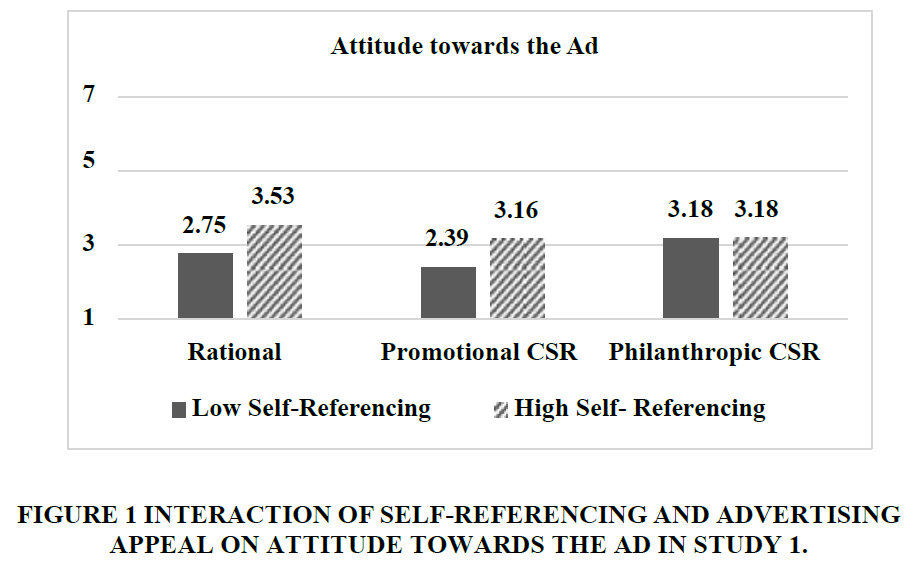
Figure 1 Conceptual framework
Prosocial perception of the company
The message appeal × self-referencing interaction was significant (F(2, 218) = 6.00, p < .01). The interaction was mainly explained by the contrast between the philanthropic CSR and promotional CSR appeal conditions (b = −.59, SE = .18, p < .001). Conditional effects were examined at the 16th, 50th, and 84th percentiles of self-referencing. At lower levels of self-referencing (Self-reference = 2.00), the philanthropic CSR appeal resulted in higher prosocial perceptions than the promotional CSR appeal (b = 1.04, SE = .23, p < .001). This difference remained significant at moderate levels of self-referencing (Self-reference = 3.00; b = .44, SE = .17, p < .01) but was eliminated at higher levels (Self-reference = 4.00; b = −.15, SE = .25, p > .05). Figure 2 illustrates these effects.
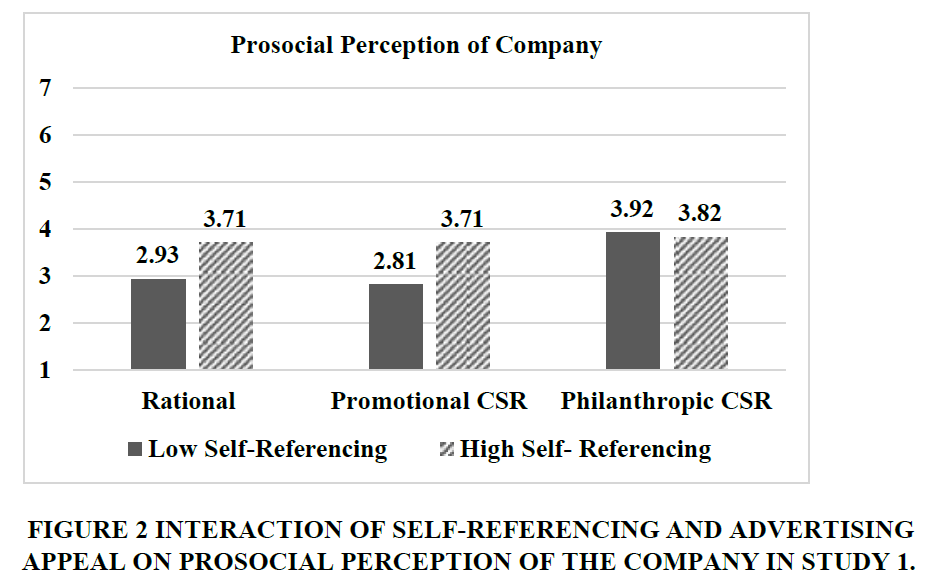
Figure 2 Conceptual framework
Finally, Study 1 provides insight into the role of self-referencing in consumers' evaluations of crisis-related advertising. Self-referencing had a positive main effect on purchase intention, suggesting that consumers who related the advertising message more closely to their own experiences reported higher purchase intentions regardless of the type of advertising appeal. In addition, self-referencing moderated the effect of advertising appeal on prosocial perception and showed a marginal moderating effect on attitude toward the advertisement. Specifically, differences among the advertising appeals were more pronounced among consumers with lower levels of self-referencing and became less pronounced as self-referencing increased. These findings suggest that consumers low in self- referencing were more responsive to the substantive differences among the CSR appeals, assigning substantially more favorable evaluations to philanthropic CSR than to promotional CSR that merely referenced the crisis. In contrast, consumers high in self-referencing evaluated the different advertising appeals relatively similarly, suggesting that processing the message through a personal lens reduced the influence of the specific CSR appeal on their judgments. Together, these findings indicate that authentic philanthropic action is particularly important for enhancing evaluations among consumers who are less inclined to process CSR messages through self-referential thinking. Building on these findings, Study 2 examines whether product–cause fit and processing fluency further strengthen consumer responses to philanthropic CSR.
Study 2 Method
The goal of study 2 was to determine whether additional factors shape the effectiveness of philanthropic CSR. Beyond testing self-referencing as a moderator, this study examines processing fluency as a mediating mechanism in the context of product–cause fit during a crisis.
Design and Participants
We used a 2 (self-referencing: low vs. high) × 2 (product–cause fit: low vs. high) between-subjects design. A total of 360 participants (women=30.6%, mean age=34) were recruited online via Amazon Mechanical Turk (MTurk) and were monetarily compensated.
Procedure and Stimuli
Participants read a brief crisis-related scenario describing the health risks of wildfire smoke and the benefits of using an Air Purifier (Smoke Shield). They were then randomly assigned to one of four advertisements that manipulated self-referencing and product-cause fit. Self-referencing was manipulated using second-person versus third-person language combined with a first-person versus observer visual perspective. Product–cause fit was manipulated by intentionally varying the firm's philanthropic initiative to support either wildfire relief, creating a high-fit condition, versus an unrelated arts and culture cause, creating a low-fit condition, while holding the product and crisis context constant across conditions. Unlike study 1, where self-referencing was measured, in study 2, self-referencing was manipulated.
Manipulating Self-referencing
Self-referencing continues to play an important role in study 2 given that the context remains a social crisis, where consumers are especially likely to process messages through the lens of their own experiences under stress and uncertainty. While in study 1 self-referencing was measured, in study 2 self-referencing was manipulated using the approach of (Meyers-Levy & Peracchio, 1996). Their method induces different levels of self-referencing through both ad visual perspective (a first-person camera angle to heighten self-referencing versus a more distant observer angle to reduce it) and ad copy perspective (using second-person pronouns such as “you/your” to invite self-application versus third-person wording such as “he/she/they” to direct attention to others). Consistent with this method, our stimuli used second-person copy with a first-person visual angle to induce high self-referencing, and third-person copy with a more distant visual angle to induce low self-referencing (see Appendix A for study 2 stimuli).
Measures
After viewing the ad, participants completed measures of purchase intention (α = .84), attitude towards the ad (α = .79), self-referencing (manipulation check), perceived product–cause fit (α = .81), and processing fluency (mediator), followed by demographic questions. All scale items are shown in Appendix B.
Study 2 Results Manipulation Checks
Manipulation checks confirmed the effectiveness of both manipulations. Participants in the high self-referencing condition (M= 4.19, SD = .83) reported greater self-focus than those in the low self-referencing condition (M = 3.81, SD =.91; F(1, 358) =17.27, p < .001). Similarly, the high product–cause fit condition (M= 6.13, SD =.69) was perceived as more related to the product than the low product–cause fit condition, (M= 5.98, SD = .72; F(1, 358) = 4.12, p < .05).
Univariate ANOVA
A 2 × 2 ANOVA revealed significant models for both purchase intention and attitude towards the ad, as well as significant interaction effects between self-referencing and product–cause fit (F’s(1, 356) > 3.85, p’s < .05).
For the high self-reference condition, purchase intention and attitude towards the ad were significantly higher for the high product fit condition (purchase intention: M=4.48, SD=0.61; attitude towards the ad: M = 4.50, SD = 0.68) than for the low product fit condition (purchase intention: M = 4.27, SD = 0.62; attitude towards the ad: M = 4 .29, SD = 0.72; F’s(1, 356) > 6.18, p’s < .05).
In the low self-reference condition, there was no significant difference in purchase intention between high product cause fit (purchase intention: M = 4.17, SD = .56; attitude towards the ad: M = 4.14, SD = .72) and low product cause fit (purchase intention: M=4.20, SD=.60; attitude towards the ad: M = 4.26, SD = .74; F’s(1, 356) <. 09, p’s > .05).
Figure 3 and 4 present the mean comparison of purchase intention and attitude towards the ad across self-referencing and product–cause fit conditions.
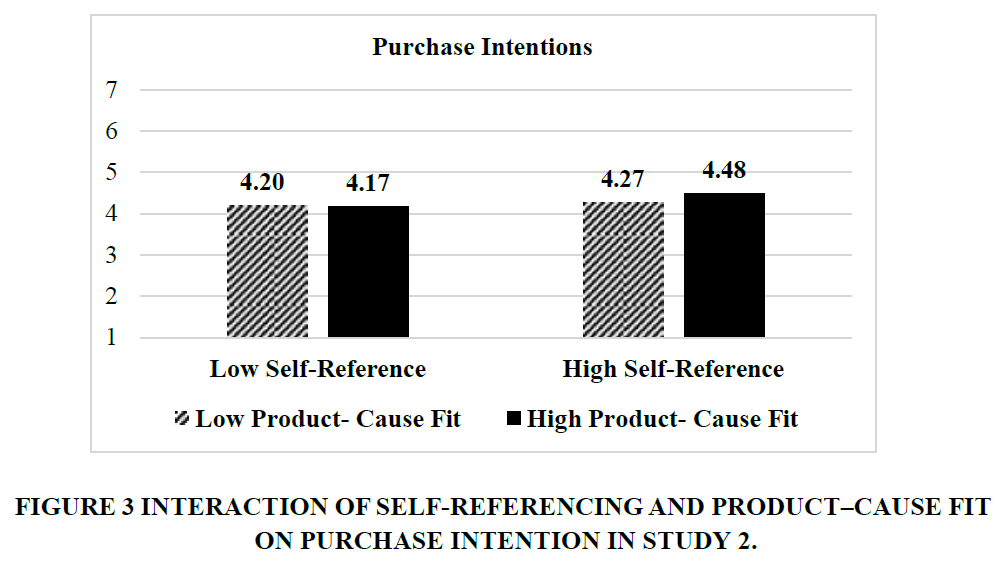
Figure 3 Conceptual framework
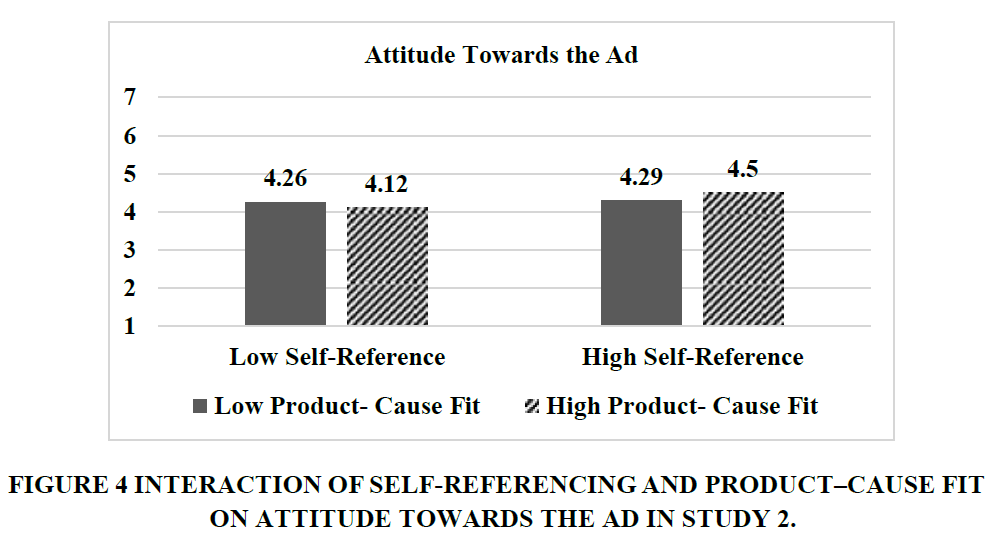
Figure 4 Conceptual framework
Moderated Mediation Analysis
We used PROCESS Model 7 (Hayes, 2017) to test whether processing fluency mediates the interaction effect of self-referencing and product–cause fit on each dependent variable (attitude towards the ad and purchase intention). The independent variable, self-referencing (low = 0, high = 1), and the moderator, product–cause fit (low = 0, high = 1), were coded as in the manipulations described above (Pirsch, Gupta & Grau, 2007)
Purchase Intention
PROCESS Model 7 indicated a significant interaction between self-referencing and product–cause fit on processing fluency (B=.50, p<.05). Self-referencing increased processing fluency when fit was high (B=.63, p<.001), but not when fit was low (B= .13, p>.05). The conditional indirect effect of self-referencing on purchase intention via processing fluency was significant only under high-fit. The index of moderated mediation was significant (Index = 0.066, 95% CI [0.007, 0.143]), indicating that the indirect effect of self-referencing on purchase intention via processing fluency was contingent on the level of product–cause fit (see Table 1).
| Table 1 Moderated Mediation Results for Purchase Intention (Process Model 7: x = Self- Referencing, m= Processing Fluency, y= Purchase Intention, w= Product–Cause Fit). | ||||||||||
| Path coefficients (PROCESS Model 7 moderated mediation): Effects predicting Processing Fluency (a- paths) and Purchase Intention (b and c’ paths), including the X×W interaction. |
||||||||||
| Paths | Description | B | SE | 95% CI [LLCI, ULCI] | Interpretation | |||||
| a₁ | Effect of Self-Referencing on Processing Fluency | 0.13 | 0.16 | [–0.18, 0.44] | Self-referencing did not have a significant main effect on processing fluency. |
|||||
| a₂ | Effect of Product–cause Fit on Processing Fluency | 0.19 | 0.16 | [−0.12, 0.51] | Product–cause fit did not have a significant main effect on processing fluency. |
|||||
| a₃ | Interaction Effect of Self-Referencing × Product–cause Fit on Processing Fluency | 0.50* | 0.22 | [0.06, 0.94] | Product–cause fit moderated the effect of self-referencing on processing fluency. | |||||
| b | Effect of Processing Fluency on Purchase Intention | 0.13* | 0.03 | [0.08, 0.19] | Higher processing fluency leads to greater purchase intention. |
|||||
| c’ | Direct Effect of Self-Referencing on Purchase Intention | 0.14* | 0.06 | [0.02, 0.26] | Self-referencing had a direct positive effect on purchase intention. | |||||
| * p < .05 | ||||||||||
| Conditional Indirect Effects (Self-Referencing → Processing Fluency→ Purchase Intention) | ||||||||||
| Product–cause Fit Level | Indirect Effect (a×b) | Boot SE | 95% CI [LLCI, ULCI] | Interpretation | ||||||
| Lower Fit (0) | 0.017 | 0.021 | [–0.022, 0.061] |
Indirect effect was not significant when fit was lower. | ||||||
| Higher Fit (1) | 0.083* | 0.031 | [0.032, 0.151] |
Indirect effect was significant when fit was higher. | ||||||
| Index of Moderated Mediation | 0.066* | 0.035 | [0.007, 0.143] |
The indirect effect of self-referencing on purchase intention was moderated by product–cause fit. | ||||||
| * p < .05 | ||||||||||
Attitude Towards the Ad
A parallel analysis revealed the same pattern for attitude towards the ad. The conditional indirect effect of self-referencing via processing fluency was significant under high-fit but not low fit, with a significant index of moderated mediation (Index = .057, 95% CI [.004, .127]; see Table 2).
| Table 2 Moderated Mediation Paths (Process Model 7: x = Self-Referencing, M = Processing Fluency, Y = Attitude Toward the ad, W = Product– Cause Fit). |
|||||
| Path coefficients (PROCESS Model 7 moderated mediation): Effects predicting Processing Fluency (a-paths) and Attitude Towards the Ad (b and c′ paths), including the X×W interaction. |
|||||
| Paths | Description | B | SE | 95% CI [LLCI, ULCI] | Interpretation |
| a₁ | Effect of Self-Referencing on Processing Fluency | 0.13 | 0.16 | [–0.18, 0.44] | Self-referencing did not have a significant main effect on processing fluency. |
| a₂ | Effect of Product–cause Fit on Processing Fluency | 0.19 | 0.16 | [−0.12, 0.51] | Product–cause fit did not have a significant main effect on processing fluency. |
| a₃ | Interaction Effect of Self-Referencing × Product–cause Fit on Processing Fluency |
0.50* | 0.22 | [0.06, 0.94] | Product–cause fit moderated the effect of self-referencing on processing fluency. |
| b | Effect of Processing Fluency on Attitude Toward the Ad | 0.11* | 0.03 | [0.05, 0.18] | Higher processing fluency leads to more favorable attitudes toward the ad. |
| c′ | Direct Effect of Self-Referencing on Attitude toward the Ad | 0.15* | 0.08 | [0.00, 0.30] | Self-referencing had a direct positive effect on attitude toward the ad. |
| *p < .05 | |||||
| Conditional Indirect Effects (Self-Referencing → Processing Fluency→ Attitude Towards the Ad) | |||||
| Product–cause Fit Level | Indirect Effect (a×b) | Boot SE | 95% CI [LLCI, ULCI] | Interpretation | |
| Lower Fit (0) | 0.015 | 0.02 | [–0.020, 0.055] |
Indirect effect was not significant when fit was lower. | |
| Higher Fit (1) | 0.071* | 0.03 | [0.032, 0.135] |
Indirect effect was significant when fit was higher. | |
| Index of Moderated Mediation | 0.057* | 0.03 | [0.004, 0.127] |
The indirect effect of self-referencing on attitude toward the ad was moderated by product–cause fit. | |
| * p < .05 | |||||
These results support the prediction that processing fluency mediates the effect of self-referencing on both attitude towards the ad and purchase intention only when product–cause fit is high, consistent with H4.
Study 2 Discussion
The results of study 2 extend study 1 by demonstrating that the effectiveness of philanthropic CSR during a crisis depends on more than just engaging in any philanthropic activity. While philanthropic CSR is effective during societal crisis, the findings further reveal that its impact can be contingent on both self-referencing and product-cause fit, with processing fluency serving as a key underlying mechanism.
Consistent with prior work on fit and CSR effectiveness (e.g., Zasuwa, 2019; Becker-Olsen, Cudmore & Hill, 2006), high product-cause fit led to more favorable attitudes and purchase intention, but only when paired with high self-referencing. When self-referencing was low, the benefits of high-fit disappeared, suggesting that consumers must see personal relevance in the CSR message to fully appreciate product-cause alignment. This reinforces the idea that even well-aligned CSR initiatives may fail to resonate without explicit cues that connect the message to the individual.
The moderated-mediation results further reveal that processing fluency serves as the underlying mechanism for these effects. High self-referencing appears to make high-fit messages easier to process, likely because such messages are more familiar, personally relevant, and cognitively coherent (Lee & Aaker, 2004; Labroo & Lee, 2006). This enhanced fluency, in turn, enhances purchase intention and attitude towards the ad. Integrating fit and fluency perspectives, study 2 shows that the perceived ease of processing CSR communications is not just a peripheral effect but a substantive driver of consumer response in crisis contexts.
General Discussion
Across two experimental studies, we demonstrate that the effectiveness of advertising messages during a crisis is shaped by appeal type, the perceived personal relevance of the message, and product-cause alignment.
Study 1 demonstrates that in a high-stress health crisis, rational appeals emphasizing risk reduction generate the highest purchase intention, while philanthropic CSR appeals produce the most favorable prosocial perception of the company. In contrast, promotional CSR appeals, despite referencing the crisis, are consistently the least effective across purchase intention, attitude towards the ad, and company perception.
These findings suggest that under heightened uncertainty, consumers value either functional risk prevention information or authentic altruistic engagement and are less receptive to messages that may be perceived as self-serving. Self-referencing further moderates the effectiveness of ad appeals, specifically, for consumers with low self-referencing, philanthropic CSR elicited significantly more favorable company evaluations than promotional CSR. Building on these insights, study 2 results show that philanthropic CSR depends on both product-cause fit and self-referencing. High product-cause fit improves purchase intention and attitude towards the ad, but only when the message is framed to increase self-referencing. This relationship is explained by processing fluency, indicating that personally relevant, well-aligned CSR messages are easier for consumers to process and, in turn, yield more favorable evaluations. When self-referencing is low, the effect of high-fit disappears, underscoring the importance of explicit personal relevance cues in CSR communication.
Overall, the two studies suggest that consumers evaluate crisis communications using two complementary criteria: the usefulness of the message for addressing their own needs and the nature of the firm's societal response. When deciding whether to purchase a crisis-related, risk-mitigating product, consumers prioritize messages that directly address their need for protection, making rational appeals particularly effective in driving purchase intention. When evaluating the company, however, consumers place greater value on meaningful philanthropic engagement than on promotional CSR messages that merely reference the crisis. Study 2 further demonstrates that favorable responses to philanthropic CSR are strengthened when the firm's philanthropic initiative is closely aligned with both the product and the crisis and when the message encourages self-referencing. Consistent with our theoretical framework, high product–cause fit and self-referencing enhance processing fluency, making the CSR message easier to process and, consequently, more persuasive. In contrast, promotional CSR appeals that reference a crisis without demonstrating meaningful corporate action trigger less favorable evaluations, suggesting that consumers distinguish between genuine corporate contributions and attempts to capitalize on a societal crisis.
Managerial Implications
Literature has called for greater investigation into consumption patterns during disasters (Baker, 2009; Guion et al., 2007) and more recent research calls for further investigation of the types and formats of effective communications in the context of health crisis (Park et al., 2021). This research addresses these calls by examining how consumers respond to different advertising appeals and CSR message strategies during crises, thereby contributing to both theory and practice.
From a theoretical perspective, the findings challenge the implicit assumption that CSR communications are always effective by demonstrating that, during crises, their effectiveness depends on message relevance, authenticity, and product-cause alignment are critical determinants of effectiveness. The findings further extend the product-cause fit literature by identifying processing fluency as an underlying mechanism through which fit influences consumer evaluations. Together, these results advance our understanding of when and why philanthropic CSR messages are more effective during societal crises.
From a managerial perspective, the findings highlight three major takeaways. First, during a crisis, consumers prioritize reducing uncertainty and fear. For products directly linked to consumer safety, rational appeals emphasizing functional performance and risk mitigation can be as effective as or more effective than CSR appeals, even without explicit references to the crisis. This suggests that firms with strong informational campaigns may not need to substantially alter their messaging during crises, provided that product efficacy and safety benefits are clearly communicated.
Second, self-referencing proved to be an important driver of message effectiveness. Although self-referencing has been studied in general advertising contexts, its role in CSR advertising, particularly during crises, has received limited attention (Lee, 2017). Advertising that encourages consumers to relate the message to their own experiences lead to more favorable evaluations. Managers can encourage self-referencing through second-person framing, which addresses the audience directly using “you” and “your” to create a sense of personal relevance, as well as by using relatable narratives, endorsements from role models, and appeals to shared memories or experiences (Lee, 2017). These strategies enhance personal relevance and strengthen persuasive impact under crisis conditions.
Third, authentic and substantial philanthropic engagement is critical during crises. While philanthropic CSR appeals enhanced a company’s prosocial image, promotional CSR tactics without direct corporate support were viewed less favorably. To enhance favorable consumer responses, firms should engage in visible, unconditional community support that clearly signals genuine commitment.
Importantly, managers should ensure that philanthropic engagement aligns closely with both the product and the crisis context. This alignment is particularly effective when the message also feels personally relevant to consumers, as self-referencing cues can increase processing fluency and increase message persuasiveness.
Overall, findings suggest that effective CSR communication during crises requires both strategic alignment (product-cause fit) and tailored message delivery (self-referencing), supported by credible corporate engagement. Managers should therefore consider not only which causes to support, but also how those causes are framed and communicated to maximize consumer goodwill and behavioral response.
Limitations and Future Research
This research has several limitations that suggest avenues for future research. The current study focuses on the comparative effectiveness of different advertising appeals within a crisis context and for crisis-related products, rather than comparing their effectiveness across crisis and non-crisis conditions. Future research could examine these ad appeals in both crisis and non-crisis contexts to determine whether the observed effects generalize beyond crisis settings.
Study 1 respondents were university students. Although students were directly affected by the pandemic and are frequent users of the product examined, future research should examine whether these findings extend across broader age groups and cultural contexts.
The products examined (hand washing soap and air purifier) were directly related to health, safety, and risk reduction during crises. Future research could test whether the observed effects extend to products unrelated to the crisis context and investigate forms of CSR, such as sponsorships and transaction-based donations.
Each study used a single product category within a single societal crisis (pandemic or wildfire), which may limit generalizability of the findings. Future research could explore different crisis types and other product–cause combinations, as well as conduct cross-cultural replications to test the boundary conditions of these findings.
Finally, while this research focused on attitudinal and intentional measures, future studies could examine actual behavioral responses and long-term effects to provide additional managerial insights into the effectiveness of CSR communications during crises.
References
Aguinis, H., & Glavas, A. (2012). What we know and don’t know about corporate social responsibility: A review and research agenda. Journal of management, 38(4), 932-968.
Indexed at, Google Scholar, Cross Ref
Alcañiz, E. B., Cáceres, R. C., & Pérez, R. C. (2010). Alliances between brands and social causes: The influence of company credibility on social responsibility image. Journal of business ethics, 96(2), 169-186.
Indexed at, Google Scholar, Cross Ref
Alhoqail, S. A., Cho, H. Y., & Floyd, K. (2019). How Social Media Communications can Mitigate Negative Impacts of Corporate Social Irresponsibility on Corporate Financial Performance? Academy of Marketing Studies Journal, 23(4), 1–13.
Anderson JR, & Reder LM. (1979). An elaborative processing explanation of depth of processing. In L. S. Cermak, & F. I. M. Craik (Eds.), Levels of Processing in Human Memory (pp. 385–403). Hillsdale, NJ: Erlbaum.
Indexed at, Google Scholar, Cross Ref
Anuar, M. M., Omar, K., & Mohamad, O. (2013). Does skepticism influence consumers intention to purchase cause-related products?. International Journal of Business and Social Science, 4(5), 94-98.
Balis, J. (2020). Brand marketing through the coronavirus crisis. Harvard Business Review.
Baker, S. M. (2009). Vulnerability and resilience in natural disasters: A marketing and public policy perspective. Journal of Public Policy & Marketing, 28(1), 114-123.
Indexed at, Google Scholar, Cross Ref
Baumgartner, H., Sujan, M., & Bettman, J. R. (1992). Autobiographical memories, affect, and consumer information processing. Journal of Consumer Psychology, 1(1), 53-82.
Indexed at, Google Scholar, Cross Ref
Becker-Olsen, K. L., Cudmore, B. A., & Hill, R. P. (2006). The impact of perceived corporate social responsibility on consumer behavior. Journal of business research, 59(1), 46-53.
Indexed at, Google Scholar, Cross Ref
Blank, A., Loveland, K. E., Cheng, A., Beck, S., & Rundus, A. (2024). Responding to COVID‐19: The impact of corporate social responsibility on consumer behavior. International Journal of Consumer Studies, 48(1), e12982
Indexed at, Google Scholar, Cross Ref
Bögel, P. M. (2019). Company reputation and its influence on consumer trust in response to ongoing CSR communication. Journal of Marketing Communications, 25(2), 115-136.
Indexed at, Google Scholar, Cross Ref
Bou Saada, R., Bou-Hamad, I., & Harajli, D. (2023). Influence of emotional marketing on consumer behavior towards food and beverage brands during the COVID-19 pandemic: a study from Lebanon. Journal of Marketing Communications, 29(8), 822-839.
Indexed at, Google Scholar, Cross Ref
Boyle, P., Bond, R., Martinez Carracedo, J., Simmons, G., Mulvenna, M., & Hollywood, L. (2022). The impact of the COVID‐19 pandemic on grocery shopper behaviour: Analysis of shopper behaviour change using store transaction data. Journal of Consumer Behaviour, 21(2), 259-271.
Indexed at, Google Scholar, Cross Ref
Brown, P., Keenan, J. M., & Potts, G. R. (1986). The self-reference effect with imagery encoding. Journal of personality and social psychology, 51(5), 897.
Indexed at, Google Scholar, Cross Ref
Burnkrant, R. E., & Unnava, H. R. (1995). Effects of self-referencing on persuasion. Journal of consumer research, 22(1), 17-26.
Indexed at, Google Scholar, Cross Ref
Chang, C.-T., & Liu, H.-Y. (2012). Goodwill hunting? Influences of product–cause fit and donation level on consumer responses to cause-related marketing. Journal of Business Ethics, 111(2), 231–247.
Chen, X., Huang, R., Yang, Z., & Dube, L. (2018). CSR types and the moderating role of corporate competence. European Journal of Marketing, 52(7-8), 1358-1386.
Indexed at, Google Scholar, Cross Ref
Cho, S. Y., Lee, C., & Pfeiffer Jr, R. J. (2013). Corporate social responsibility performance and information asymmetry. Journal of Accounting and Public Policy, 32(1), 71-83.
Indexed at, Google Scholar, Cross Ref
Dean, D. H. (2003). Consumer perception of corporate donations effects of company reputation for social responsibility and type of donation. Journal of advertising, 32(4), 91-102.
Indexed at, Google Scholar, Cross Ref
Debevec, K., & Iyer, E. (1988). Self‐referencing as a mediator of the effectiveness of sex‐role portrayals in advertising. Psychology & Marketing, 5(1), 71-84.
Indexed at, Google Scholar, Cross Ref
Du, S., Bhattacharya, C. B., & Sen, S. (2010). Maximizing business returns to corporate social responsibility (CSR): The role of CSR communication. International journal of management reviews, 12(1), 8-19.
Indexed at , Google Scholar, Cross Ref
Drumwright, M. E. (1996). Company advertising with a social dimension: The role of noneconomic criteria. Journal of marketing, 60(4), 71-87
Indexed at, Google Scholar, Cross Ref
Ellen, P. S., Webb, D. J., & Mohr, L. A. (2006). Building corporate associations: Consumer attributions for corporate socially responsible programs. Journal of the academy of Marketing Science, 34(2), 147-157.
Indexed at, Google Scholar, Cross Ref
Fein, S. (1996). Effects of suspicion on attributional thinking and the correspondence bias. Journal of personality and social psychology, 70(6), 1164.
Indexed at, Google Scholar, Cross Ref
Flatters, P., & Willmott, M. (2009). Understanding the post-recession consumer. Harvard Business Review, 87(7/8), 106-112
Floyd, D. L., Prentice-Dunn, S., & Rogers, R. W. (2000). A Meta-Analysis of Research on Protection Motivation Theory. Journal of Applied Social Psychology, 30(2), 407-429.
Indexed at, Google Scholar, Cross Ref
Friestad, M., & Wright, P. (1994). The persuasion knowledge model: How people cope with persuasion attempts. Journal of consumer research, 21(1), 1-31.
Indexed at, Google Scholar, Cross Ref
Greenwald, A. G., & Banaji, M. R. (1989). The self as a memory system: Powerful, but ordinary. Journal of personality and social psychology, 57(1), 41.
Indexed at, Google Scholar, Cross Ref
Grewal, D., Roggeveen, A. L., Compeau, L. D., & Levy, M. (2012). Retail value-based pricing strategies: New times, new technologies, new consumers. Journal of Retailing, 88(1), 1-6.
Indexed at, Google Scholar, Cross Ref
Guion, D. T., Scammon, D. L., & Borders, A. L. (2007). Weathering the storm: A social marketing perspective on disaster preparedness and response with lessons from Hurricane Katrina. Journal of Public Policy & Marketing, 26(1), 20-32.
Indexed at, Google Scholar, Cross Ref
Hartmann, P., Marcos, A., & Apaolaza, V. (2023). Past, present, and future of research on corporate social responsibility advertising. International Journal of Advertising, 42(1), 87-95.
Indexed at, Google Scholar, Cross Ref
Hayes, J. L., Holiday, S., & Park, H. (2022). Corporate social responsibility & the advertising strategic planning process: a literature review & research agenda. International Journal of Advertising, 41(2), 210-232.
Indexed at, Google Scholar, Cross Ref
Hyeon Mo, Y. (2020). The effect of product–cause fit on consumer responses to corporate social responsibility activities. Sustainability, 12(8), 3245.
Hyeon Mo, Y., Kim, Y., & Lee, S. (2020). When does CSR matter most? The impact of product–cause fit and CSR authenticity on consumer responses. Journal of Business Research, 109, 507-516.
J.P. Morgan Research (2020). How COVID–19 Has Transformed Consumer Spending Habits-Have consumer spending habits changed for good as a result of the COVID-19 pandemic?
Khan, U., & Pond, C. (2020). A tale of two evaluations: The dynamic effects of cause-related marketing. Journal of the Association for Consumer Research, 5(3), 282-290.
Indexed at, Google Scholar, Cross Ref
Kim, K., Cheong, Y., & Lim, J. S. (2015). Choosing the right message for the right cause in social cause advertising: Type of social cause message, perceived company–cause fit and the persuasiveness of communication. International Journal of Advertising, 34(3), 473-494.
Indexed at, Google Scholar, Cross Ref
Kim, H. E., Cho, Y. N., & Youn, N. (2021). COVID-19 uncertainty and temporal framing in advertising for online experiential consumption. Journal of Advertising, 50(3), 280-289.
Indexed at, Google Scholar, Cross Ref
Klein, W. M. P., & Brewer, N. T. (2014). Processing fluency and the experience of risk. Journal of Personality and Social Psychology, 106(3), 507–519.
Kramer, T., & Kim, H. M. (2007). Fairness considerations in consumer responses to pricing tactics. Journal of Consumer Research, 34(1), 91–107.
Krishnamurthy, P. & Sujan, M. (1999). Retrospection Versus Anticipation: The Role of the Ad Under Retrospective and Anticipatory Self-Referencing. Journal of Consumer Research, 26(1), 55-69
Indexed at, Google Scholar, Cross Ref
Kuo, A., & Rice, D. H. (2015). The impact of perceptual congruence on the effectiveness of cause‐related marketing campaigns. Journal of Consumer Psychology, 25(1), 78-88.
Indexed at, Google Scholar, Cross Ref
Labroo, A. A., & Lee, A. Y. (2006). Between two brands: A goal fluency account of brand evaluation. Journal of Marketing Research, 43(3), 374-385.
Indexed at, Google Scholar, Cross Ref
Lee, A. Y., & Aaker, J. L. (2004). Bringing the frame into focus: the influence of regulatory fit on processing fluency and persuasion. Journal of personality and social psychology, 86(2), 205.
Indexed at, Google Scholar, Cross Ref
Lee, C. K. C., Fernandez, N., & Martin, B. A. (2002). Using self-referencing to explain the effectiveness of ethnic minority models in advertising. International Journal of Advertising, 21(3), 367-379.
Indexed at, Google Scholar, Cross Ref
Lee, Y. J. (2017). How do self-values play a role in consumers’ perception of CSR advertising? The moderated mediation effect of self-referencing. Journal of Advertising Research, 57(4), 422-435.
Lee, Y. J., Haley, E., & Mark, A. Y. (2012). The effects of corporate social responsibility orientation on the consumer's perception of advertisers' intention. Journal of Current Issues & Research in Advertising, 33(2), 192-209.
Indexed at, Google Scholar, Cross Ref
Li, K. (2021). Exploring the role of regulatory focus and processing fluency in the effectiveness of narrative versus non-narrative advertising: A study about sugar intake in the USA. Health Communication, 36(7), 837-846.
Indexed at, Google Scholar, Cross Ref
Lii, Y. S., & Lee, M. (2012). Doing right leads to doing well: When the type of CSR and reputation interact to affect consumer evaluations of the firm. Journal of business ethics, 105(1), 69-81.
Indexed at, Google Scholar, Cross Ref
Mahmud, A., Ding, D., & Hasan, M. M. (2021). Corporate social responsibility: Business responses to coronavirus (COVID-19) pandemic. SAGE open, 11(1), 2158244020988710
Indexed at, Google Scholar, Cross Ref
Marín, L., Cuestas, P. J., & Román, S. (2016). Determinants of consumer attributions of corporate social responsibility. Journal of Business Ethics, 138(2), 247-260.
Indexed at, Google Scholar, Cross Ref
Martin, B. A., pro-, U. O. O. I. A. A., Kwai-Choi Lee, C., & se-, U. O. A. I. A. (2004). The influence of ad model ethnicity and self-referencing on attitudes: Evidence from New Zealand. Journal of Advertising, 33(4), 27-37.
Indexed at, Google Scholar, Cross Ref
Mehrolia, S., Alagarsamy, S., & Solaikutty, V. M. (2021). Customers response to online food delivery services during COVID‐19 outbreak using binary logistic regression. International journal of consumer studies, 45(3), 396-408.
Indexed at, Google Scholar, Cross Ref
Menon, S., & Kahn, B. E. (2003). Corporate sponsorships of philanthropic activities: when do they impact perception of sponsor brand?.Journal of consumer psychology, 13(3), 316-327.
Indexed at, Google Scholar, Cross Ref
Meyers-Levy, J., & Peracchio, L. A. (1996). Moderators of the impact of self-reference on persuasion. Journal of consumer research, 22(4), 408-423.
Indexed at, Google Scholar, Cross Ref
Muller, A., & Whiteman, G. (2009). Exploring the geography of corporate philanthropic disaster response: A study of Fortune Global 500 firms. Journal of business ethics, 84(4), 589-603.
Indexed at, Google Scholar, Cross Ref
Özsomer, A., Güzel, Z. M., Newmeyer, C. E., & Schmidt‐Devlin, E. (2022). Can advertising enhance consumers' desirable COVID‐19 health behavioral intentions? The role of brand‐pandemic fit. Journal of Consumer Behaviour, 21(4), 685-696.
Indexed at, Google Scholar, Cross Ref
Paek, H. J., & Nelson, M. R. (2009). To buy or not to buy: Determinants of socially responsible consumer behavior and consumer reactions to cause-related and boycotting ads. Journal of current issues & research in advertising, 31(2), 75-90.
Indexed at, Google Scholar, Cross Ref
Park, J., Kim, J., Lee, D. C., Kim, S. S., Voyer, B. G., Kim, C., ... & Yoon, S. (2022). The impact of COVID‐19 on consumer evaluation of authentic advertising messages. Psychology & Marketing, 39(1), 76-89.
Indexed at, Google Scholar, Cross Ref
Peloza, J., & Shang, J. (2011). How can corporate social responsibility activities create value for stakeholders? A systematic review. Journal of the academy of Marketing Science, 39(1), 117-135
Indexed at, Google Scholar, Cross Ref
Pirsch, J., Gupta, S., & Grau, S. L. (2007). A framework for understanding corporate social responsibility programs as a continuum: An exploratory study. Journal of business ethics, 70(2), 125-140.
Indexed at, Google Scholar, Cross Ref
Porter, M. E., & Lee, T. H. (2013). The strategy that will fix health care. Harv Bus Rev, 91(10), 50-70.
Rifon, N. J., Choi, S. M., Trimble, C. S., & Li, H. (2004). Congruence effects in sponsorship: The mediating role of sponsor credibility and consumer attributions of sponsor motive. Journal of advertising, 33(1), 30-42.
Indexed at, Google Scholar, Cross Ref
Rim, H., & Ferguson, M. A. T. (2020). Proactive versus reactive CSR in a crisis: An impression management perspective. International Journal of Business Communication, 57(4), 545-568.
Indexed at, Google Scholar, Cross Ref
Robinson, S. R., Irmak, C., & Jayachandran, S. (2012). Choice of cause in cause-related marketing. Journal of marketing, 76(4), 126-139.
Indexed at, Google Scholar, Cross Ref
Rogers, D. (2020). Consumers are putting brands on notice over coronavirus behaviour, study finds.
Rogers, R. W. (1975). A protection motivation theory of fear appeals and attitude change1. The journal of psychology, 91(1), 93-114.
Indexed at, Google Scholar, Cross Ref
Rogers, R. W. (1983). Cognitive and physiological processes in fear appeals and attitude change: A revised theory of protection motivation. Social psychology: A source book, 153-176.
Rogers, T. B., Kuiper, N. A., & Kirker, W. S. (1977). Self-reference and the encoding of personal information. Journal of personality and social psychology, 35(9), 677.
Indexed at, Google Scholar, Cross Ref
Ryu, S. (2024). Brand communications during a global crisis: understanding persuasion intent, perceived brand opportunism and message sincerity. Journal of Product & Brand Management, 33(1), 162-178.
Indexed at, Google Scholar, Cross Ref
Schwartz, M. S., & Kay, A. (2023). The COVID-19 global crisis and corporate social responsibility. Asian Journal of Business Ethics, 12(1), 101-124.
Indexed at, Google Scholar, Cross Ref
Sen, S., & Bhattacharya, C. B. (2001). Does doing good always lead to doing better? Consumer reactions to corporate social responsibility. Journal of marketing Research, 38(2), 225-243.
Indexed at, Google Scholar, Cross Ref
Sen, S., Du, S., & Bhattacharya, C. B. (2016). Corporate social responsibility: A consumer psychology perspective. Current Opinion in Psychology, 10, 70-75.
Indexed at, Google Scholar, Cross Ref
Shen, H., Jiang, Y., & Adaval, R. (2010). Contrast and assimilation effects of processing fluency. Journal of Consumer Research, 36(5), 876-889.
Indexed at, Google Scholar, Cross Ref
Suryavanshi, A. K. S., Bhatt, V., Thomas, S., Patel, R., & Jariwala, H. (2024). Predicting cause-related marketing patronage intentions, corporate social responsibility motives and moderating role of spirituality. Social Responsibility Journal, 20(4), 682-702.
Indexed at, Google Scholar, Cross Ref
Thomas, M. L., Mullen, L. G., & Fraedrich, J. P. (2011). Successful cause-related marketing partnering as a means to aligning corporate and philanthropic goals: An empirical study. Academy of Marketing Studies Journal, 15(2), 113.
Tilcsik, A., & Marquis, C. (2013). Punctuated generosity: How mega-events and natural disasters affect corporate philanthropy in US communities. Administrative Science Quarterly, 58(1), 111-14
Torelli, C. J., Monga, A. B., & Kaikati, A. M. (2012). Doing poorly by doing good: Corporate social responsibility and brand concepts. Journal of Consumer Research, 38(5), 948-963.
Indexed at, Google Scholar, Cross Ref
Vaughn, L. A., Malik, J., Schwartz, S., Petkova, Z., & Trudeau, L. (2010). Regulatory fit as input for evaluative judgments. Journal of Personality and Social Psychology, 98(2), 181–196.
Xie, Q., & Wang, T. G. (2022). Promoting corporate social responsibility message in COVID-19 advertising: How threat persuasion affects consumer responses to altruistic versus strategic CSR. Journal of Business Research, 148, 315-324.
Indexed at, Google Scholar, Cross Ref
Yang, B., Hwang, Y., & Mattila, A. S. (2021). Feelings of uncertainty and powerlessness from Covid-19: Implications for advertising appeals in the restaurant industry. International Journal of Hospitality Management, 97, 103017.
Indexed at, Google Scholar, Cross Ref
Ybarra, O., & Stephan, W. G. (1999). Attributional orientations and the prediction of behavior: The attribution–prediction bias. Journal of Personality and Social Psychology, 76(5), 718.
Indexed at, Google Scholar, Cross Ref
Yim, M. Y. C., Kim, Y. K., & Lee, J. (2021). How to easily facilitate consumers’ mental simulation through advertising: the effectiveness of self-referencing image dynamics on purchase intention. International Journal of Advertising, 40(5), 810-834.
Indexed at, Google Scholar, Cross Ref
Zasuwa, G. (2019). Do consumers really care about organisational motives behind CSR? The moderating role of trust in the company. Social responsibility journal, 15(8), 977-991.
Indexed at, Google Scholar, Cross Ref
Appendix A
Condition 1: High Self Reference and High Product-cause Fit
Condition 2: High Self-Reference and Low Product-cause Fit
Condition 3: Low-Self Reference and High Product-cause Fit
Condition 4: Low-Self Reference and Low Product-cause Fit
Appendix B
| Table 3 Scale Items | ||
| Scale | Items and End Points | Reliability (by study) |
| Self-Referencing (Martin et al., 2004) | - The advertisement seemed to relate to me personally. - The advertisement seemed to be written with me in mind. Response Scale: Study 1: 5-point scale (1 = Strongly disagree, 5 = Strongly agree). Study 2: 7-point scale (1 = Strongly disagree, 7 = Strongly agree). |
Study 1: α = .81 Study 2: r = .61 |
| Product-cause Fit (adapted from: Nan and Heo, 2007; Lafferty 2006 ; Choi, Chang-Won (2022); Ozsomer et al. 2021) | - I feel the partnership between the brand and the cause is: (very incompatible–very compatible) - I think the donation initiatives described in the ad represents a good match between the SmokeShield Air Purifier and the cause. (strongly disagree–strongly agree). - I think the donation initiatives described in the ad are appropriate for SmokeShield Air Purifier. (strongly disagree–strongly agree). - I think the initiatives taken by the company fits well with the SmokeShield Air Purifier business. (strongly disagree–strongly agree). Response Scale: Study 2: 7-point scale |
Study 2: α = .81 |
| Purchase intention (MacKenzie, Lutz, and Belch, 1986) | - It is ________that I will purchase (handwashing soap/SmokeShield Air Purifier) in the future. (likely–unlikely”) - It is ________that I will purchase (handwashing soap/SmokeShield Air Purifier) in the future. (impossible–possible) - It is ________that I will purchase (handwashing soap/SmokeShield Air Purifier) in the future. (improbable–probable) - Purchasing the (handwashing soap/SmokeShield Air Purifier) in the future is something that I _______________________. (will not consider–will consider) Response Scale: Study 1: 5-point scale Study 2: 7-point scale Items were reverse-coded where necessary so that higher values indicate higher purchase intention. |
Study 1: α = 0.94 Study 2: α = .84 |
| Attitude Towards the ad (adapted from: Machleit and Wilson. 1988) | - The advertisement is Unlikable–Likable. - The advertisement is Bad–Good. - The advertisement is Negative–Positive. - The advertisement is Undesirable–Desirable. Response Scale: Study 1: 5-point semantic differential scale. Study 2: 5-point semantic differential scale. |
Study 1: α = 0.89 Study 2: α = .79 |
| Processing Fluency (Tybout et al., 2005; Cauberghe & Pelesmacker 2014) | - It is easy to process the information presented in the Ad. - It is difficult to understand what the Ad presented. Response Scale: Study 2: 7-point scale (1 = Strongly disagree, 7 = Strongly agree). |
Study 2: r = .57 |
| Prosocial Perception of the Company (Lee 2017) | This company is
- Nice - Caring - Altruistic Response Scale: Study 1: 5-point scale (1 = Strongly disagree, 5 = Strongly agree). |
Study 1: α = .92 |
| Perceived Covid-19 Relevance (adapted from: Lee, Haley, and Mark 2012) | - The COVID-19 pandemic is relevant to me. - The COVID-19 pandemic is of great concern to me. - I am supportive of any relief effort toward the COVID-19 pandemic. - The COVID-19 pandemic is an important issue to me. - The COVID-19 pandemic has affected my life. Response Scale: Study 1: 7-point scale (1 = Strongly disagree, 7 = Strongly agree). |
Study 1: α = 0.89 |
Received: 27-July-2026, Manuscript No. AMSJ-26-17351; Editor assigned: 27-July-2026, PreQC No. AMSJ-26-17351(PQ); Reviewed: 10-Aug-2026, QC No. AMSJ-26-17351; Revised: 17-Aug-2026, Manuscript No. AMSJ-26-17351(R); Published: 25-Aug-2026