Research Article: 2026 Vol: 30 Issue: 3
Effectiveness of Tax Policy Changes – A Comparative Study of Impact on Tax Collection in India and the United States
CA Deepti, Manav Rachna International Institute of Research and Studies
CS Monika Goel, Manav Rachna International Institute of Research and Studies
Citation Information: Deepti. C.A. & Goel. C.S.M. (2026). Effectiveness of tax policy changes – a comparative study of impact on tax collection in india and the united states. Academy of Marketing Studies Journal, 30(S3), 1-13.
Abstract
The growth and advancement of a nation largely depend on the structure of its government's taxation policy. A sound taxation policy is imperative for the country’s public finance, as tax significantly contributes to sustainable development. It is the responsibility of the government of every nation to provide adequate resources and facilities to its citizens, and in return for this, the citizens of the country pay taxes to the government. Every country has a defined set of rules and laws for collecting taxes from the public, though every country has different tax collection methods and a different taxpayer base. In the last two decades, the taxation system around the world has undergone several reforms, which have resulted in increased transparency and voluntary compliance by the taxpayers, thereby increasing revenue generation (TAX POLICY FOR SUSTAINABLE DEVELOPMENT IN ASIA AND THE PACIFIC, 2018). This study compares the tax structure, tax collection, and tax base of India and the United States and examines the reasons for differences in the tax structure and collection. The study also examines the tax policy changes that defined the tax growth in India and the United States during the last 15 years. Possible reasons behind low tax base and low tax returns in a developing country like India, when compared to a developed country like the United States, are also examined to understand how a developing country can improve its tax system to enhance its tax base and collection.
Keywords
India vs US Tax Collection, Tax Base, Population, Number of Tax Returns, Comparison of Tax Structure.
Introduction
Taxation plays an intricate and pivotal role in the growth and advancement of a nation, as tax is the primary source of revenue for the Government of a nation. The government imposes various taxes to collect revenue to fulfill the needs of the people of the society, and create infrastructure for the growth of the economy (Yadav, 2018).
Gross domestic product (GDP) is the most common measure for the size of an economy, and it measures the value of the total final output of goods and services produced by that economy in a certain period of time.
Tax rates depend on whether the nation is developed enough or if it is still in the phase of development. The per capita income of a country also plays a vital role in framing the tax structure of a nation. A nation with high per capita income observes more tax-to-GDP ratio than a nation with low per capita income (Wijaya, Subiyantoro & Sutrisno, 2024).
A complicated tax structure and higher tax rates affect the economic growth of a nation. Besides other consequences, the higher tax rates and complexity of tax structure lead to tax evasion and non-compliance, and tax, being the major source of revenue for the government of a country, gets affected in terms of its collection, ultimately leading to a low tax-GDP ratio.
Review of Literature
The paper elaborates that developing countries like India face many challenges in collecting taxes when compared with developed countries due to poverty, unemployment, higher population density, tax evasion, informal sectors, etc. Also, there is a narrow tax base due to some politically motivated tax exemptions and deductions (Ansari, 1982). Centre for Budget and Governance Accountability, in an international comparison of tax regimes, has examined in the study paper that despite the higher amount of tax collection compared to developed countries like Canada, the US, the UK, Japan, and Korea, the tax to GDP ratio is much lower. This can be increased by adding more and more population to the tax base by removing the unnecessary exemptions and deductions that benefit only the privileged sections of society. The larger population contributes more to the tax collection of a country. The higher the population, the higher the collection of taxes, with the result of a significant impact on the GDP growth rate. has concluded that the Indian government collected 50% of its revenue in the form of taxes compared to the US government, wherein 25% of its revenue is in the form of taxes. This implies that the country with a population base has more revenue in the form of taxes as more and more taxes are collected from the large population base by the single nation when compared with a nation having a smaller population (Subhanij, Banerjee & Jian, 2018). A Comparative study of tax Structure in India with respect to Other Countries has examined India’s rank in ease of tax payment amongst 189 countries at 157 compared to the US which is at 53, which denotes that the tax system of India is very complex, though the total number of tax payments and the amount of tax payments are very large when compared to developed countries. There is a strong urge to simplify the tax system in India. Even in ease of doing business, India’s rank is 63 compared to 6 of the US due to huge compliance and registration requirements (Ghuge & Katdare, 2016). Saez in the study paper, Taxing the Rich More: Preliminary Evidence from the 2013 Tax Increase has concluded evidence of change in tax behaviour how US tax collection has been increased due to the 2013 tax reform (Saez, 2017). Singh and Sharma in the study paper, unleashing entrepreneurial potential: The impact of innovation and technology has been concluded the necessity of promoting digitalization in both developed and developing countries (Singh & Sharma, 2024).
Methodology
The study incorporates the data from various sources. Data for India has been obtained from annual reports of the Comptroller Auditor General of India, Central Board of Direct Taxes. Data for the US has been obtained from IRS Statistics or the World Bank database from 2002 to 2022. The study paid adequate attention to the tax base, tax-to-GDP ratio, individual tax collection, and per capita income of India and the US. Further, India’s data is converted from the Indian rupee to USD using the average exchange rate of that particular year. A correlation analysis has been done between the per capita income and the tax collection. Each country's tax-to-GDP ratio, population, individual tax collection, tax base, and per capita income have been analysed in detail.
Objectives of the Study
1. The study examines the correlation between the per capita income and tax collection in the US and India.
2. The study also examines the tax structure of a developed country (US) and a developing country (India).
3. The objective of the study is to estimate the correlation between the per capita income and the tax-to-GDP Ratio of the US and India.
4. The objective of the study is to understand the reasons for a higher tax base and tax-to-GDP ratio in a developed country (like the US) despite having a low population when compared with a developing country like India.
5. The study also aims to evaluate the effectiveness of tax policy changes in a developed country as compared to a developing country like India.
Comparison of Per Capita Income and Tax collection
Per Capita Income is the amount of money earned per person in a country or nation, also called an average income per person. It is also a measure to evaluate quality of life and standard of living of a country's population.
Per Capita Income = Country’s National Income Population
The tax collection of a country is dependent on the per capita income of the country. The higher the per capita income, the higher the amount of tax collection.
As Per Capita Income in the US is higher when compared to India, and the tax collection and tax base is higher in the US. There has always been a positive relationship between the Per Capita Income and the tax collection of a country. Further, the tax rates are also measured with respect to the Per Capita Income of a nation.
The above Table 1 compares per capita income and non-corporate federal tax collection in India and the US from 2002 to 2022. It can be seen from the table that in absolute numbers India’s tax collection is approx. 20 times of that of US. The federal tax collection in the US has increased 2.5 times whereas the tax collection in India has increased by 12 times in the past 21 years. Despite of having low per capita income and a low tax base in India, the tax collection is higher due to the higher population in India, applicability of TDS on most of the financial transactions beyond a limit, higher rate of TDS on salaried employees, 30% tax rate on partnership firms in India which is not applicable in the US as partnership firms are considered as pass though entities thereby making them tax free and the liability of tax on partnership profits passes to the partners with the result the partners pays tax using the applicable slab rates. Further the payroll taxes in US includes Medicare and Social Security taxes which is charged at 15.3% whereas in India the payroll taxes which is called TDS on salary is based on the slab rate of employee which goes upto 30% + Surcharge + Secondary & Higher education. Therefore, the burden of taxes on individuals is higher in India when compared to USA. That is also the reason of higher non-corporate tax collection in India.
| Table 1 US and INDIA Tax Collection and Per Capita Income (in USD) | ||||
| Year | USA Per Capita Income | USA Non-Corporate Tax Collection ('000) | India Per Capita Income in USD | India Non-Corporate Tax Collection in USD ('000) |
| 2002 | $31,801.00 | $17,06,012 | $ 469 | $ 68,33,236 |
| 2003 | $32,659.00 | $17,33,076 | $ 544 | $ 76,28,013 |
| 2004 | $34,183.00 | $19,04,548 | $ 624 | $ 90,36,900 |
| 2005 | $35,669.00 | $20,79,766 | $ 711 | $ 1,11,48,304 |
| 2006 | $37,843.00 | $22,42,952 | $ 802 | $ 1,44,41,822 |
| 2007 | $39,588.00 | $23,39,012 | $ 1,023 | $ 1,89,60,625 |
| 2008 | $40,854.00 | $20,73,224 | $ 994 | $ 3,00,11,431 |
| 2009 | $39,307.00 | $20,19,929 | $ 1,097 | $ 2,62,26,234 |
| 2010 | $40,557.00 | $21,22,766 | $ 1,351 | $ 2,81,20,532 |
| 2011 | $42,649.00 | $21,86,684 | $ 1,450 | $ 3,23,20,610 |
| 2012 | $44,237.00 | $24,82,032 | $ 1,434 | $ 3,57,17,997 |
| 2013 | $44,401.00 | $26,40,002 | $ 1,438 | $ 3,80,86,531 |
| 2014 | $46,287.00 | $28,35,587 | $ 1,560 | $ 4,03,15,759 |
| 2015 | $48,060.00 | $29,12,064 | $ 1,590 | $ 4,36,45,942 |
| 2016 | $48,971.00 | $30,14,681 | $ 1,714 | $ 4,41,53,601 |
| 2017 | $51,004.00 | $31,29,006 | $ 1,958 | $ 5,43,87,673 |
| 2018 | $53,309.00 | $32,06,770 | $ 1,974 | $ 6,68,42,862 |
| 2019 | $55,547.00 | $31,57,445 | $ 2,050 | $ 6,76,52,228 |
| 2020 | $59,151.00 | $36,34,271 | $ 1,916 | $ 6,62,54,003 |
| 2021 | $64,427.00 | $43,54,964 | $ 2,250 | $ 6,66,88,262 |
| 2022 | $65,473.00 | $41,63,146 | $ 2,366 | $ 8,32,89,766 |
If we compare the population of India and the US, the population of India is four times that of the US population, which means India has a larger scope of tax collection than the US.
The relationship between Per capita income and the tax collection can be explained with the help of a Correlation study in the below Figure 1.
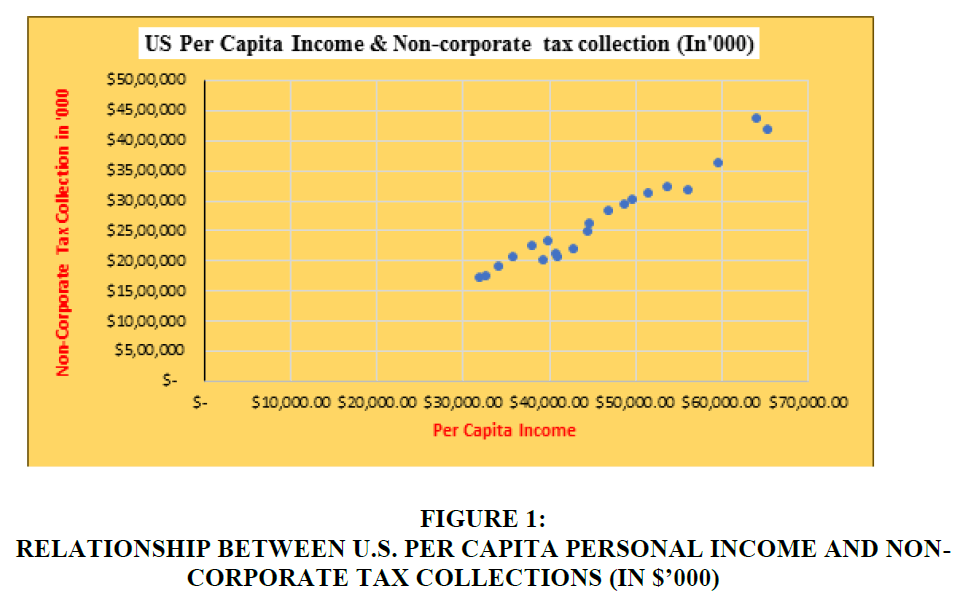
Figure 1 Relationship Between U.S. Per Capita Personal Income and Non-Corporate Tax Collections (in $’000)
Co-efficient of Correlation – 0.98
The above Figure 1 shows the high positive correlation between Per Capita Income and Individual Tax Collection.
The correlation study of Per capita income and non-corporate tax collection in India is also shown in the Figure below:
Co-efficient of Correlation – 0.97
The above Figure 2 also shows that there is a high positive correlation between per capita income and tax collection.
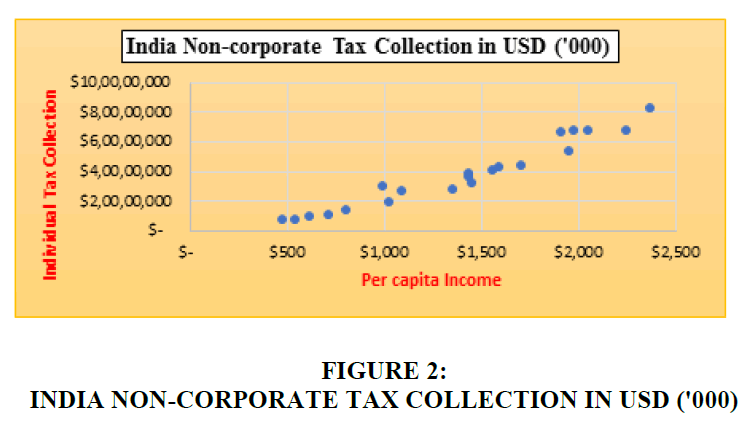
Figure 2 India Non-Corporate Tax Collection in USD ('000)
To improve the country’s tax collection, the focus should be on enhancing the Per capita income of the country or on enhancing the tax base by creating maximum business and employment opportunities and tax policies to cover maximum population in the tax net.
Per Capita Income vs Tax Base
The important determinant for looking at the tax structure of a country is to see the percentage of people filing the tax return or calculating the tax base of a country.
The tax base is the number of people in a country liable to file the income tax return and pay the taxes.
The tax base of a country is dependent on the per capita income of the country. Higher per capita income induces more people to the tax brackets, thereby enhancing the taxability of income of a person. This is shown in the below Table 2.
| Table 2 Comparison of Per Capita Income and Tax Base Between US and India | ||||
| Year | Per Capita Income in USD | Tax Base in % | ||
| US | India | US | India | |
| 2003 | $ 32,717 | $ 544 | 44.91% | 2.56% |
| 2004 | $ 34,280 | $ 624 | 44.67% | 2.58% |
| 2005 | $ 35,868 | $ 711 | 44.75% | 2.36% |
| 2006 | $ 38,120 | $ 802 | 44.68% | 2.55% |
| 2007 | $ 39,883 | $ 1,023 | 45.88% | 2.64% |
| 2008 | $ 41,026 | $ 994 | 50.49% | 2.79% |
| 2009 | $ 39,356 | $ 1,097 | 46.71% | 2.68% |
| 2010 | $ 40,683 | $ 1,351 | 45.36% | 2.76% |
| 2011 | $ 42,747 | $ 1,450 | 45.75% | 2.68% |
| 2012 | $ 44,548 | $ 1,434 | 46.18% | 2.84% |
| 2013 | $ 44,798 | $ 1,438 | 45.71% | 2.89% |
| 2014 | $ 46,887 | $ 1,560 | 45.79% | 2.35% |
| 2015 | $ 48,725 | $ 1,590 | 45.85% | 2.76% |
| 2016 | $ 49,613 | $ 1,714 | 46.06% | 3.01% |
| 2017 | $ 51,550 | $ 1,958 | 45.69% | 3.26% |
| 2018 | $ 53,786 | $ 1,974 | 46.05% | 3.97% |
| 2019 | $ 56,250 | $ 2,050 | 46.09% | 4.53% |
| 2020 | $ 59,763 | $ 1,916 | 46.79% | 4.62% |
| 2021 | $ 64,117 | $ 2,250 | 49.83% | 4.75% |
| 2022 | $ 65,423 | $ 2,366 | 47.47% | 5.19% |
The above table 2 shows the comparison of India and, the US tax base, which is dependent on the country's Per capita income from 2003 to 2022. The tax base in the US is 47.47%, and the per capita income is $65,423 in the year 2022, shows a significant difference between the taxpayer’s base and per capita income in India in 2022. India’s per capita income is just $2,366, which is quite low when compared to a developed country like the US; therefore, the tax base in India is 5.19% in the year 2022.
The above table also shows that in 2003 when the per capita income in the US was $32,717, the tax base was 44.91%, and by the year 2022, the per capita income in the US is almost doubled to $ 65,423 however, the tax base is increased to 47.47%, which indicates that the rise in per capita income of a country definitely affect the tax base of a country but up to a certain limit due dependency of population like age below 18 years who are not able to earn or dependent senior citizens. The above table also shows that the per capita income in India increased from $544 to $2,366 from 2003 to 2022, and the tax base increased from 2.56% to 5.19%, which is still not comparable to the US tax base. Despite the increase in per capita income by four times, the tax base has increased to double, the reason being that the majority of sectors in India are still unorganized, and the agriculture income is exempt from tax.
The major cause of such a big difference in the US and India’s tax base is the economic structure of these two countries as the US economy is more advanced than the Indian economy in terms of employment opportunities, literacy ratio, formal business structure and also the difference in the size of population of the US and India.
Bottlenecks in India for Increasing the Tax Base and Policy Considerations
Considering India’s population, which is approximately 144 crores, with a quarter of the population below 15 years old, and India is a significant informal economy, it is very difficult to reach and maintain the tax base % as it is in the US. However, initiatives can be taken to enhance the % of the tax base by at least 25% in the upcoming 10 years by making structural changes in the informal economy, thereby making it formal. In the US, the female workforce is equally participating in the tax base and has equal per capita income to men. In India, the participation of women workforce is slowly increasing in the business sectors. As per Economic Times dated Nov, 29, 2024, the number of women taxpayers in India is on the rise, with 22.9 million women filing income-tax returns in assessment year (AY) 2023-24 compared to 18.3 million in AY20. In the last five years, the number of women tax filers has grown 25.3% when the total number of individual taxpayers increased by 15.9%.
The increase in the number of taxpayers is also largely driven by increasing compliance and the use of technology. However, still about 45.6% of the Indian population is employed in the agriculture sector, which is exempt from taxes. On the other hand, 10.4% of the US workforce is employed in agriculture and related sectors, which is not exempt from tax; therefore, the strategy should also be to bring agriculture income to the tax net by levying taxes on wealthy farmers who are earning beyond a specified limit.
Tax-GDP Ratio – A Comparison between US and India
GDP is a measure of the value of final goods and services produced in a particular nation during a given period. Tax to GDP ratio is the ratio of a country's tax revenue compared to the GDP. For a developing country like India, the lower tax-GDP ratio has always been a concern, specifically after liberalization, due to a reduction in customs and excise duties. Not only in India but a developed country like the US is also concerned with the slow increase in tax-GDP ratio. Despite having a high tax-GDP ratio in developed countries like the US, the concern for an increase in the same is an issue, and the Government of every country is taking measures towards an increase in the tax-GDP ratio. The present study compares the tax to GDP ratio of a developed country like US with India which is a developing country and measures the reason for low Tax to GDP ratio in India and recommends how tax to GDP ratio can be increased.
The annual Tax to GDP ratio over the period from 2003-2022 in US and India has been expressed below with the help of a diagram Figure 3.
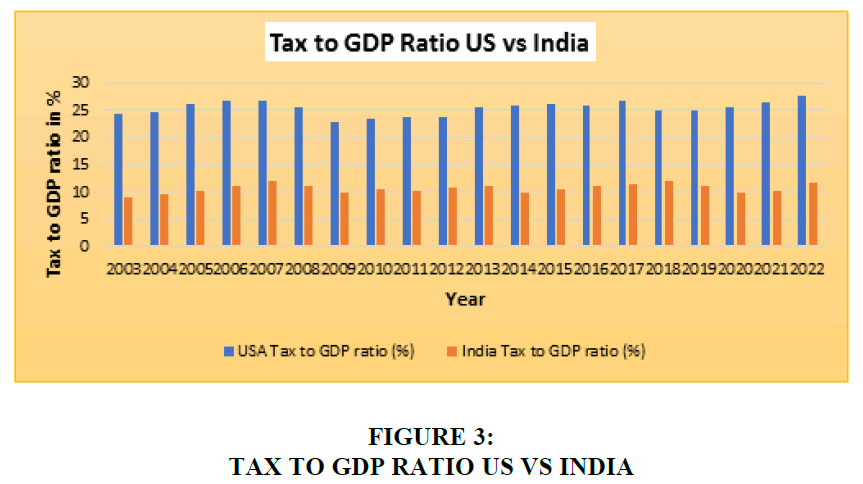
Figure 3 Tax to GDP Ratio US vs India
Tax to GDP Ratio in US and India (2003-2022).
The above diagram shows that though a developed country like the US has a higher tax-GDP ratio than India from 2003-2022, the tax-GDP ratio in the US has not increased significantly. The tax to GDP in the US in 2003 was 24.5%, which has increased to 27.6% in 2022 (OECD.ORG, 2024). The reason behind this stagnant tax-GDP ratio despite of increase in GDP is that the tax structure of the US does not consist of any value-added taxes or GST. Also, the revenue from Payroll taxes is very low in the US.
Bottlenecks in India for Increasing the Tax to GDP Ratio and Policy Considerations
In a country like India with a large population base, taxes are collected in the form of GST/Payroll. The tax to GDP ratio is very low in India as compared to the US, where the population is less and there is no GST. The reason behind the lower tax to GDP ratio in India is that Indians pay less taxes to the government than they should pay, and also, the per capita income is low when compared to the developed countries. India is at the top of the young population; therefore, India needs businesses to flourish and more employment. However, due to the dominance of the agriculture sector and higher tax disputes tax collection in India is lower. Hence there is a need to prevent frivolous litigation and charge taxes on wealthy agriculturists.
Measuring Tax Rates Between the US and India
In the above discussion it has been well observed and concluded that a country's tax structure depends on its Per capita income. The per capita income not only impacts the tax collection, tax base, tax-GDP ratio but also affects the minimum and maximum tax rates. Higher the per capita income, higher the percentage collection of taxes thereby higher tax to GDP ratio.
The above Table 3 represents the US’s Per capita Income and the minimum & maximum percentage of taxes charged to individuals in the US from the year 2002 to 2022. It shows that initially when the per capita income was $31,839 in the US, the minimum tax rate without any basic exemption limit was 10% and the maximum tax rate was 38.6% and by 2022, the per capita income was increased to $65,423 and the minimum tax rate is still at 10% without any basic exemption limit, but the maximum tax rate is reduced to 37% as per capita income is almost doubled when compared to 2002 which has now made the stable economy thereby the revenue collection is also increased with the highest tax base economy.
| Table 3 US Tax Structure and its Relationship with per Capita Income | |||
| Year | Per Capita Income in USD | US Minimum tax rate without any exemption | US Maximum Tax Rate |
| 2002 | 31,839 | 10% | 38.60% |
| 2003 | 32,717 | 10% | 35% |
| 2004 | 34,280 | 10% | 35% |
| 2005 | 35,868 | 10% | 35% |
| 2006 | 38,120 | 10% | 35% |
| 2007 | 39,883 | 10% | 35% |
| 2008 | 41,026 | 10% | 35% |
| 2009 | 39,356 | 10% | 35% |
| 2010 | 40,683 | 10% | 35% |
| 2011 | 42,747 | 10% | 35% |
| 2012 | 44,548 | 10% | 35% |
| 2013 | 44,798 | 10% | 39.60% |
| 2014 | 46,887 | 10% | 39.60% |
| 2015 | 48,725 | 10% | 39.60% |
| 2016 | 49,613 | 10% | 39.60% |
| 2017 | 51,550 | 10% | 39.60% |
| 2018 | 53,786 | 10% | 37% |
| 2019 | 56,250 | 10% | 37% |
| 2020 | 59,763 | 10% | 37% |
| 2021 | 64,117 | 10% | 37% |
| 2022 | 65,423 | 10% | 37% |
Table 4 shows India’s per capita income and the minimum & maximum tax rates from 2002 to 2022. If we compare Table 2 with Table 3, India’s per capita income is very low compared to the US’s per capita income. The minimum tax rate in India in 2002 was 10% subject to an exemption limit. In 2002, it was 10%, subject to an exemption limit, and the maximum tax rate was 30%, and the maximum tax rate was 30%, which hasn’t changed even till now. The reason is that India is a developing economy, and the tax base is quite low when compared with the US.
| Table 4 India’s Tax Structure and its Relationship with per Capita Income | ||||
| Year | India Per Capita Income in USD | India Annual Exemption limit | India Minimum tax rate subject to an exemption limit | India maximum Tax Rate |
| 2002 | $ 469 | $ 1,048 | 10% | 30% |
| 2003 | $ 544 | $ 1,033 | 10% | 30% |
| 2004 | $ 624 | $ 1,088 | 10% | 30% |
| 2005 | $ 711 | $ 1,113 | 10% | 30% |
| 2006 | $ 802 | $ 2,259 | 10% | 30% |
| 2007 | $ 1,023 | $ 2,208 | 10% | 30% |
| 2008 | $ 994 | $ 2,734 | 10% | 30% |
| 2009 | $ 1,097 | $ 3,267 | 10% | 30% |
| 2010 | $ 1,351 | $ 3,374 | 10% | 30% |
| 2011 | $ 1,450 | $ 3,511 | 10% | 30% |
| 2012 | $ 1,434 | $ 3,756 | 10% | 30% |
| 2013 | $ 1,438 | $ 3,759 | 10% | 30% |
| 2014 | $ 1,560 | $ 3,306 | 10% | 30% |
| 2015 | $ 1,590 | $ 4,089 | 10% | 30% |
| 2016 | $ 1,714 | $ 3,819 | 10% | 30% |
| 2017 | $ 1,958 | $ 3,727 | 10% | 30% |
| 2018 | $ 1,974 | $ 3,879 | 10% | 30% |
| 2019 | $ 2,050 | $ 3,575 | 10% | 30% |
| 2020 | $ 1,916 | $ 3,354 | 10% | 30% |
| 2021 | $ 2,250 | $ 3,414 | 10% | 30% |
| 2022 | $ 2,366 | $ 3,033 | 10% | 30% |
Bottlenecks in India for Increasing the Taxes and Policy Considerations
Government of India can’t plan removing the basic exemption limit and increasing the maximum rate of taxes to boost its tax collection. Per capita income is increased to 4 times but still it’s very low when compared to the US. Removal of basic tax exemptions or increasing the maximum rate of taxes will result in higher tax evasion and the quantum of frivolous litigations.
Therefore, it is hereby recommended that the Government of India should focus on enhancing the formal structure of business entities, generating more employment and business opportunities by making international relationships with developed countries.
Tax Buoyancy in US and India
Tax buoyancy refers to ratio of percentage change in tax revenue in relation to percentage change in gross domestic product of an economy. It also suggests that as the economy grows the tax revenue of the government also grows up. Tax Buoyancy of a country has a strong connection with size of tax base, friendliness of tax administration and the tax policies of a country.
Table 5 shows that the tax buoyancy in US is quite fluctuating and responsive towards the change in government policies. For example, in 2005 the % change in tax revenue increased from 3.36% to 12.4% due to the change made by IRS in the tax laws by way of various deductions and exemptions. The effect of these changes can been in the tax revenue of 2006 also. Then in 2009 there was a huge decline in the tax collection due to the Fiscal impact of Great recession of 2007-08 in the United States. In 2013 the % change in tax collection in US was 13.10 and the % change in US GDP decreased still the tax buoyancy increased from 1.99 to 7.12, this increase was caused by impact of the 2013 tax reforms in the US which resulted in increase of top marginal tax rate on capital income by 9.5 points and top marginal tax rate on labour income increased by about 6.5 points. Also, another major reform in 2013 was increase in surtax on high income earners due to the expiration of the Bush tax cuts on high-income earners and Affordable Care Act. The effect of increased on marginal tax rate on capital and labour can be seen in 2014 and 2015 as well. In 2021 & 2022 again the a major hike can be seen in tax revenue there by resulting an increase of tax buoyancy to 9.9 in US due to Automated collection processes in the US. About 74% of FY 2022's tax revenue was collected within the collection notice stream and automated collection.
| Table 5 Tax Buoyancy, % of Tax Collection and Change in GDP in US from 2003-2022 | |||
| FY | % change in Tax Revenue US (A) | % Change in GDP US (B) | Tax Buoyancy in US (C/B) |
| 2003 | -3.16% | 2.80% | -1.13 |
| 2004 | 3.36% | 3.85% | 0.87 |
| 2005 | 12.40% | 3.48% | 3.56 |
| 2006 | 11.01% | 2.78% | 3.96 |
| 2007 | 6.86% | 2.01% | 3.41 |
| 2008 | 1.99% | 0.12% | 16.56 |
| 2009 | -14.56% | -2.60% | 5.60 |
| 2010 | -0.01% | 2.71% | 0.00 |
| 2011 | 2.98% | 1.55% | 1.92 |
| 2012 | 4.53% | 2.29% | 1.99 |
| 2013 | 13.10% | 2.12% | 7.12 |
| 2014 | 7.33% | 2.52% | 3.20 |
| 2015 | 7.78% | 2.95% | 2.87 |
| 2016 | 0.93% | 1.82% | 0.56 |
| 2017 | 2.50% | 2.46% | 1.12 |
| 2018 | 1.43% | 2.97% | 0.48 |
| 2019 | 2.86% | 2.58% | 1.25 |
| 2020 | -2.01% | -2.16% | 0.72 |
| 2021 | 17.71% | 6.06% | 2.98 |
| 2022 | 19.21% | 2.51% | 9.90 |
Tax Buoyancy in India
The tax buoyancy in India was quite stagnant from 2002-03, in fact this was reduced between the years 2010-11 to 2015-16 despite multiple direct tax reforms introduced during this phase like introduction TRACES to smoothen the tax collection process, ease in online payment of taxes, up dation of tax credit passbook i.e. 26AS showing the specified incomes. It was after 2017 with the introduction of GST (Goods & Services Tax) which has boosted the tax buoyancy in India but not at a faster rate.
Table 6 clearly shows that there not much change in tax buoyancy in India over last two decades despite of introduction of various tax reforms like Systematization of PAN allotment process during 1998-2004, streamlining of scrutiny assessment process and E-filing of TDS returns in 2004, introduction of mandatory e-filing in 2006, building efficiency through Central Processing Centre in the tax administration process in 2008, introduction of TRACES in 2012, Introduction of GST in 2017, introduction of faceless assessment scheme in 2020 to fasten the tax assessment and recovery of taxes speedily.
| Table 6 Indian Tax Buoyancy from 2002-03 to 2023-24 | |
| Year | Tax Buoyancy in India |
| 2002-03 | 2 |
| 2004-05 to 2008-09 | 1.3-1.7 |
| 2005-06 | 1.76 |
| 2007-08 | 1.7 |
| 2010-11 | 0.97 |
| 2011-12 | 0.96 |
| 2015-16 | 0.86 |
| 2018-23 | 1.22 |
| 2021-22 | 2.52 |
| 2022-23 | 1.18 |
| 2023-24 | 2.12 |
If we compare the tax buoyancy of India and US we can easily say that the tax reforms introduced by the US government are quite effective.
The reason of low tax buoyancy despite of having large population base is large informal sectors in the Indian economy (developing country), low tax base, large exemptions of agriculture sectors thereby exempting wealthy agriculturists also (Singh, 2019).
Tax policy and Impact- Bottlenecks in India and Policy Considerations:
Despite introduction of tax reforms in past two decades in personal and corporate income taxes, the complexities and distortions of the domestic tax system has hampered India’s competitiveness. The tax system still has higher marginal rates of taxes and lower tax base when compared with the US tax policy where a minor reform leads to increase in tax collection and the tax base. An attempt towards a simplified tax and fair tax system has always been a big challenge for India (a developing country when compared to US a developed country). This is because most of the people in a developing country are engaged in informal or unorganized sectors. Also, the administrative structure of Indian tax department has many weaknesses which is the main obstacle for developing an efficient and ideal tax system.
Further an efficient tax system requires rich to be taxed at the higher tax rates and poor at lower tax rates but in developing countries like India rich people command an immense power to influence the tax system which is the main reason behind lower tax collection and the tax base in a developing country.
Conclusion and Recommendations
The process of tax collection in a developing country is a very challenging when compared to developed countries like the US due to the higher population, informal sector, lower literacy ratio, political causes, exemptions, and deductions. In a developing country like India, despite having a high amount of population and tax collection, when compared to a developed country like the US, the tax-to-GDP ratio is much lower. Therefore, it is hereby recommended that the Government of a developing country focus on simplifying the tax structure, cutting exemptions to wealthy agriculturists. Further, the focus should be on reducing the burden of taxes on individuals, which is currently higher thereby leading higher tax collections from Individuals when compared to the business sectors, and capturing the informal sectors to the tax net and making policies for corporates to detect the tax evasion. To capture more population to the tax base and enhance the tax payments, the tax administration of India should cut down the maximum tax rates to a certain extent so that the tax evasion is reduced and more people of the country come to the tax base. Facilitating the ease in compliance, ease in tax payments, ease in registration requirements, and single tax identification numbers for all the registrations can bring up the informal sector to the formal, thereby making India a more formal economy and enhancing the tax collection. Further the scope of capturing transactions through project insight launched by the income tax department should be enhanced by integrating not the expense incurred by the tax payer and his family member but also integrating the all the bank transactions like sanction and disbursements of loans, loan repayments to prevent claiming of fake tax deductions in their Income tax returns. As there is no correlation between the income declared in the income tax return and repayment of loans the extent of allowable deduction should be on the basis of correlation graph between the income and the spending’s made by the assesses. This feature should be added in the project insight of Income tax so that unnecessary deductions and allowances can be restricted and the revenue collection can be enhanced. Further though the scope of TDS provisions is getting widened by making appropriate amendments in the annual Finance bill, however it can be further increased by reducing the basic exemption limit for the applicability of TDS provisions and reducing the rates of TDS to capture maximum financial transactions in the tax net.
References
Ansari, M. M. (1982). Determinants of tax ratio: a cross-country analysis. Economic and Political weekly, 1035-1042.
Ghuge, N. R., & Katdare, V. V. (2016). A comparative study of tax structure of India with respect to other countries. In International Conference on Global Trends in Engineering, Technology and Management (ICGTETM-2016) (pp. 334-8).
Saez, E. (2017). Taxing the rich more: Preliminary evidence from the 2013 tax increase. Tax Policy and the Economy, 31(1), 71-120.
Indexed at, Google Scholar, Cross Ref
Singh, A., & Sharma, S. (2024). Unleashing entrepreneurial potential: The impact of innovation and technology. Journal of Information and Optimization Sciences, 45(6), 1539-1552.
Indexed at, Google Scholar, Cross Ref
Singh, P. (2019). Tax revenue in India: Trends and issues.
Subhanij, T., Banerjee, S., & Jian, Z. (Eds.). (2018). Tax policy for sustainable development in Asia and the Pacific. UN.
Indexed at, Google Scholar, Cross Ref
Wijaya, S., Subiyantoro, H., & Sutrisno, S. (2024). Economic Sector Contribution and Tax Revenue: Does Per Capita Income Have a Role?. KnE Social Sciences, 545-555.
Indexed at, Google Scholar, Cross Ref
Yadav, S. K. (2018). A comparative study of tax structures of BRICS countries. VISION: Journal of Indian Taxation, 5(1), 1-17.
Indexed at, Google Scholar, Cross Ref
Received: 15-Apr-2026, Manuscript No. AMSJ-26-17205; Editor assigned: 16-Apr-2026, PreQC No. AMSJ-26-17205(PQ); Reviewed: 29-Apr-2026, QC No. AMSJ-26-17205; Revised: 04-May-2026, Manuscript No. AMSJ-26-17205(R); Published: 11-May-2026