Research Article: 2026 Vol: 30 Issue: 5
How Interpersonal Effectiveness Builds Effective Teams: The Serial Role of Group Dynamics and Interpersonal Trust in the Indian IT Industry
Mrs. Devaki S, Research Scholar, Department of MBA, Atria Institute of Technology, Bengaluru Visvesvaraya Technological University, Belagavi
Dr. Richa Das, Research Supervisor, Department of MBA, Atria Institute of Technology, Bengaluru Visvesvaraya Technological University, Belagavi
Citation Information: Devaki S. & Das, R., (2026). How interpersonal effectiveness builds effective teams: the serial role of group dynamics and interpersonal trust in the indian it industry an exploratory study. Academy of
Marketing Studies Journal, 30(5), 1-11.
Abstract
Teamwork has emerged as an important predictor of performance in knowledge-intensive sectors, but the behavior chain by which individual interpersonal skills determine effective team functioning is not well comprehended within the Indian IT sector. The present exploratory research attempts to investigate the hypothesis that interpersonal effectiveness predicts teamwork effectiveness through a chain where group dynamics, or the quality of team interactions, generates an affective-relational emergent state: interpersonal trust based on the team emergent states theory (Marks et al., 2001) and the social exchange theory (Blau, 1964). The primary data for the study were collected among 150 IT workers in Bengaluru by means of a structured and validated questionnaire with Likert-type questions (1-5 rating scale), and analyzed by using reliability analysis, exploratory factor analysis, correlation analysis, and bootstrapped mediation models. All measurement scales have shown excellent internal consistency (α = 0.90-0.96) and very high adequacy of sampling (KMO = 0.903). Interpersonal effectiveness has positively predicted group dynamics; group dynamics has positively predicted interpersonal trust; and trust is the most proximal predictor of teamwork effectiveness. The serial indirect path (interpersonal effectiveness → group dynamics → trust → teamwork effectiveness) was found significant (indirect effect = 0.285, 95% bootstrap CI [0.165, 0.437]), whereas the direct effect turned out to be non-significant, suggesting full sequential mediation. Such results support emergent states approach, showing that interpersonal trust represents an affective emergent state in which team interaction process is transformed into team outcome, and social exchange serves as a mechanism through which the relationship between group dynamics and trust is formed. This way, IT organizations obtain a tangible handle on how to increase teamwork effectiveness: enhance interpersonal skills and create appropriate group environment for trust development.
Keywords
Interpersonal Effectiveness, Group Dynamics, Interpersonal Trust, Teamwork Effectiveness, Serial Mediation, IT Industry, Team Emergent States, Social Exchange Theory.
Introduction
The nature of the work has undergone a dramatic change from individualistic structures to collaborative work structures that involve knowledge-sharing, coordination, and collaboration. Success in knowledge-intensive industries is not only dependent upon the expertise of the employees but also their ability to create productive relationships and operate in teams (Mathieu et al., 2017; Salas et al., 2018). Information technology (IT) is one industry where work is carried out collaboratively through the efforts of the developers, analysts, quality assurance experts, and project managers. Agile approach, remote teams, and hybrid teams have further increased the significance of interpersonal communication (Strode et al., 2022; Georganta et al., 2024).
While there has been constant emphasis on the development of skills among the employees, communication problems, interpersonal conflicts, and lack of collaboration continue to be consistent factors contributing towards project delays and decreased productivity of teams (Kilcullen et al., 2023; Réveillé et al., 2024). Interpersonal effectiveness which involves the ability of an individual to communicate effectively, resolve conflict constructively, display empathy, and regulate emotions in the workplace interactions (Riggio, 1986; Goleman, 1998) has thus become a significant strategic competence. However, an individual-level competency has no direct impact on team performance; it needs to transmit its impact via social processes occurring in the team setting. Clarifying how such a process occurs is precisely the focus of this paper.
Specifically, two team-level constructs stand out in this respect. Group dynamics is a construct that denotes the quality of a team's processes in terms of role clarity, goal congruence, psychological safety, task interdependence, and team cohesion, whereby team members turn individual inputs into a collective action (Forsyth, 2019; Mathieu et al., 2017). Trust is the construct that describes individuals' trust in their colleagues' and leaders' reliability, integrity, and good intentions (Edmondson & Lei, 2014). Though both have been shown to predict team performance, research has primarily focused on them in isolation from each other.
In response to this gap in literature, the current exploratory study examines a series of behavioral linkages within the theoretical framework of team emergent states (Marks et al., 2001), which differentiates between team interaction processes and cognitive/affective emergent states arising from these processes, and social exchange theory (Blau, 1964), which elaborates on how these processes give rise to relational trust. Interpersonal effectiveness affects group dynamics (team interaction process), which gives rise to interpersonal trust (affective emergent state), which in turn results in teamwork effectiveness (the team outcome). The model developed in the study is a serial model as opposed to an association between bivariate factors and hence provides a more accurate explanation of the effects of interpersonal capabilities on teams in the context of India's IT sector, an area not adequately researched despite its economic importance.
Theoretical Foundation
From Team Processes to Emergent States
Early theories of team processes, especially the classic Input–Process–Output (IPO) model (McGrath, 1964; Hackman, 1987), have viewed team action as an essentially linear process wherein member inputs are converted by way of process into outcomes. Though fundamental, such a view is now understood to be far too simple and too monolithic, reducing diverse manifestations of team activity to a common "process" category and explaining very little about the underlying processes generating these phenomena (Ilgen et al., 2005). The current research thus relies on a revised approach to this problem.
The researchers Marks, Mathieu, and Zaccaro (2001) distinguished the team interaction processes, involving the interdependent coordination, communication, and conflict management acts performed by the group members from the emergent states of the teams, representing cognitive, motivational, and affective characteristics of the team that emerge as a result of these acts and, in turn, influence further results. The cohesion, collective efficacy, and interpersonal trust represent typical emergent states. This difference between the interaction process and the emergent state is crucial for the current research: the group dynamics should be regarded as an interaction process while interpersonal trust – as an affective emergent state resulting from this interaction. Placing the two concepts within one line instead of presenting them as parallel predictors allows giving a more accurate and modern explanation of the team functioning than the IPO approach provides (Ilgen et al., 2005; Mathieu et al., 2017).
Social Exchange and the Emergence of Trust
Trust being the emergent state that helps to achieve effective results in a team, the social exchange theory (Blau, 1964) provides an explanation of how it arises. Social exchange is the formation of relationships through the process of reciprocative, discretionary exchange of actions between partners, when one acts responsibly and positively towards the other and gets his or her good behavior in return, and as a result, the partner gains confidence in the competence, benevolence and integrity of his or her counterpart – the core attributes of trust (Mayer et al., 1995; Cropanzano & Mitchell, 2005). It is the very conditions of group dynamics – roles, goals, psychological safety and cohesion – that create the conditions for the positive reciprocal exchanges. Thus, group dynamics can be considered as the mechanism of social exchanges, and interpersonal trust as its outcome.
Combining the two theories results in the serial mediation model being examined in this study. Individual interpersonal effectiveness provides the competencies that make group dynamics better; group dynamics creates positive interactions, which lead to interpersonal trust; and trust, as the closest affective state, helps in the coordination, communication, and dependence required for teamwork. This sequence, where competence determines the process, the process leads to emergence of the state, and the state influences the output, explains why there is a need for serial mediation and how this study differs from previous research that considered these concepts independently or in parallel.
Literature Review and Hypotheses Development
Interpersonal Effectiveness and Group Dynamics
Interpersonal effectiveness includes good communication skills, emotional intelligence, and constructive conflict resolution (Riggio, 1986; Goleman, 1998; Boyatzis et al., 2023). Those team members that have good communication skills and resolve their disagreements through collaboration will contribute to the development of role clarity, goal alignment, and psychological safety in groups (Salas et al., 2018; Georganta et al., 2024). Teams consisting of members with good interpersonal skills have better coordination and low relational conflict (Kilcullen et al., 2023).
Hence:
H1: Interpersonal effectiveness positively affects group dynamics.
Group Dynamics and Interpersonal Trust
Trust emerges from consistent, predictable, and cooperative interactions (Edmondson & Lei, 2014). The factors underlying effective group dynamics – role clarity, shared objectives, free discussion of problems, and cohesiveness – represent the type of interaction through which team members begin seeing each other as reliable and well-intentioned (Forsyth, 2019; Mathieu et al., 2017). Therefore, group dynamics function as an antecedent of relational trust, rather than as an alternative predictor of the outcome.
This implies:
H2: Group dynamics has a positive effect on interpersonal trust.
Interpersonal Trust and Teamwork Effectiveness
Trust in coworkers and leaders is consistently associated with knowledge sharing, willingness to rely on others, and reduced defensive behaviour — all of which underpin effective teamwork (Edmondson & Mortensen, 2021; Salas et al., 2018). As the most proximal relational state in the proposed sequence, trust is expected to exert the strongest direct effect on teamwork effectiveness. Thus:
H3: Interpersonal trust has a significant positive influence on teamwork effectiveness.
The Serial Mediation Pathway
Integrating H1–H3 within the emergent-states and social-exchange perspectives implies that the influence of interpersonal effectiveness on teamwork effectiveness is transmitted sequentially: individual competence shapes the group interaction process, which through repeated positive exchange gives rise to the emergent state of trust, which drives outcomes. This predicts a significant indirect path through both mediators in sequence, and a diminished direct effect once the mediators are included. Figure 1. Formally:
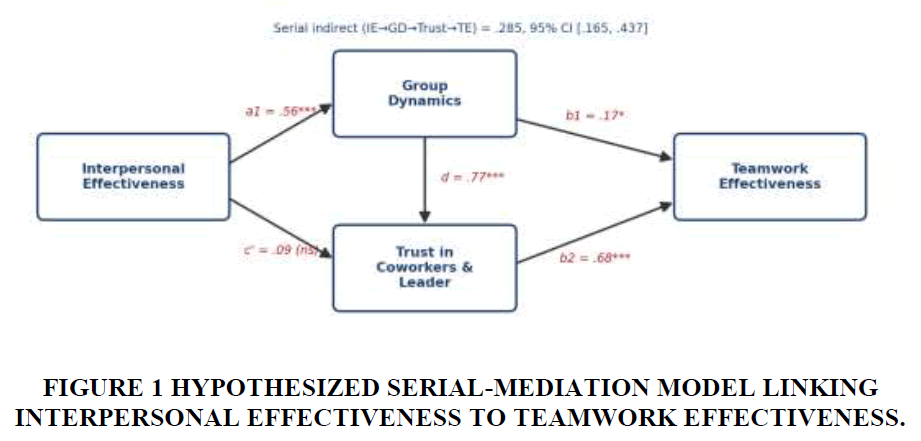
Figure 1 Hypothesized Serial-Mediation Model Linking Interpersonal Effectiveness to Teamwork Effectiveness.
H4: Group dynamics and interpersonal trust serially mediate the relationship between interpersonal effectiveness and teamwork effectiveness (IE → GD → Trust → TE).
Research Methodology
Research Design
The study adopted a quantitative, explanatory, cross-sectional design to examine the hypothesized relationships among interpersonal effectiveness, group dynamics, interpersonal trust, and teamwork effectiveness. A quantitative research method was deemed fitting since the aim was to empirically test the theoretically postulated relationships through statistical modeling. As an exploratory research, it aimed at validating the measure while offering evidence of the serial process proposed.
Population and Sampling
The target respondents include the professionals involved in IT organizations within Bengaluru, which is among the most advanced technology cities in India. The type of sampling utilized was the non-probability sampling approach known as the convenience sampling, due to lack of a full sampling frame and being an exploratory research. The study was voluntary and anonymity of the respondents assured. After ensuring completeness of the data collected, 150 valid responses were selected. The sample size is adequate for the analytical procedures utilized herein, especially bearing in mind that the study is exploratory in nature, as will be noted in Section 8.
Measurement Instrument
The data were obtained using a standardized questionnaire that was based on instruments that had been validated in past research on organizational behavior, but adjusted for the IT setting. All questions were assessed on a five-point Likert scale (1 = strongly disagree, 5 = strongly agree). The questionnaire captured four constructs, described in Table 1 below.
| Table 1 Constructs, Dimensions, and Items. | ||
| Construct (function in the model) | Dimensions | Items |
| Interpersonal Effectiveness (individual input) | Effective communication; emotional intelligence; conflict management | 10 |
| Group Dynamics (interaction process) | Role clarity; goal clarity; psychological safety; task interdependence; team cohesion | 17 |
| Interpersonal Trust (emergent state) | Trust in colleagues; trust in leaders | 7 |
| Teamwork Effectiveness (team output) | Team efficacy; performance; satisfaction; viability; commitment | 16 |
Data Analysis
The analyses followed a systematic procedure. Cronbach’s alpha was used to measure internal consistency, the KMO statistic and Bartlett’s test of sphericity for appropriateness for factor analysis, exploratory factor analysis for examining the construct validity, Pearson correlation coefficients for analyzing bivariate relationships, and bootstrapped serial mediation model (resampling n=5000) to test the proposed path of IE → GD → Trust → TE. Harman’s single factor test was done for common method bias.
Results
Reliability Analysis
All four measurement scales exhibited very good internal consistency, with Cronbach's alpha values ranging from 0.903 to 0.959, well above the 0.70 cut-off point (Table 2). Using the construct-level approach for reporting reliability is more meaningful and valid than using one pooled value.
| Table 2 Descriptive Statistics and Reliability by Construct (N = 150). | ||||
| Construct | Items | Mean | SD | Cronbach’s α |
| Interpersonal Effectiveness | 10 | 3.60 | 0.78 | 0.903 |
| Group Dynamics | 17 | 3.60 | 0.68 | 0.919 |
| Interpersonal Trust | 7 | 3.77 | 0.73 | 0.906 |
| Teamwork Effectiveness | 16 | 3.79 | 0.74 | 0.959 |
Sampling Adequacy and Factor Analysis
The data set was ideal for factor analysis since the value of KMO was 0.903 (highly excellent) while Bartlett's test of sphericity had a high statistical significance value of 7577.9 at χ²(1225) = 7577.9, p < .001 (see Table 3). The theory postulated a structure that was evident from the results of exploratory factor analysis using the principal axis factoring technique. In agreement with the findings of other studies that used mixed-worded scales, there was a second dimension that fitted negatively worded items. Construct-level reliabilities of 0.90–0.96 confirm that items cohere strongly within their intended constructs.
| Table 3 KMO and Bartlett’s Test of Sphericity. | |
| Test | Value |
| Kaiser–Meyer–Olkin measure of sampling adequacy | 0.903 |
| Bartlett’s test of sphericity, χ2 | 7577.9 |
| Degrees of freedom | 1225 |
| Significance | < .001 |
Correlation Analysis
All constructs were positively and significantly intercorrelated (Table 4). Interpersonal effectiveness correlated moderately with group dynamics (r = .64), trust (r = .59), and teamwork effectiveness (r = .60). The strongest association was between trust and teamwork effectiveness (r = .86), followed by group dynamics with trust (r = .80) — a pattern consistent with trust occupying a proximal position relative to the team outcome Figure 2.
| Table 4 Means, Standard Deviations, and Correlations. | ||||||
| Variable | M | SD | 1 | 2 | 3 | 4 |
| 1. Interpersonal Effectiveness | 3.60 | 0.78 | — | |||
| 2. Group Dynamics | 3.60 | 0.68 | .64*** | — | ||
| 3. Interpersonal Trust | 3.77 | 0.73 | .59*** | .80*** | — | |
| 4. Teamwork Effectiveness | 3.79 | 0.74 | .60*** | .76*** | .86*** | — |
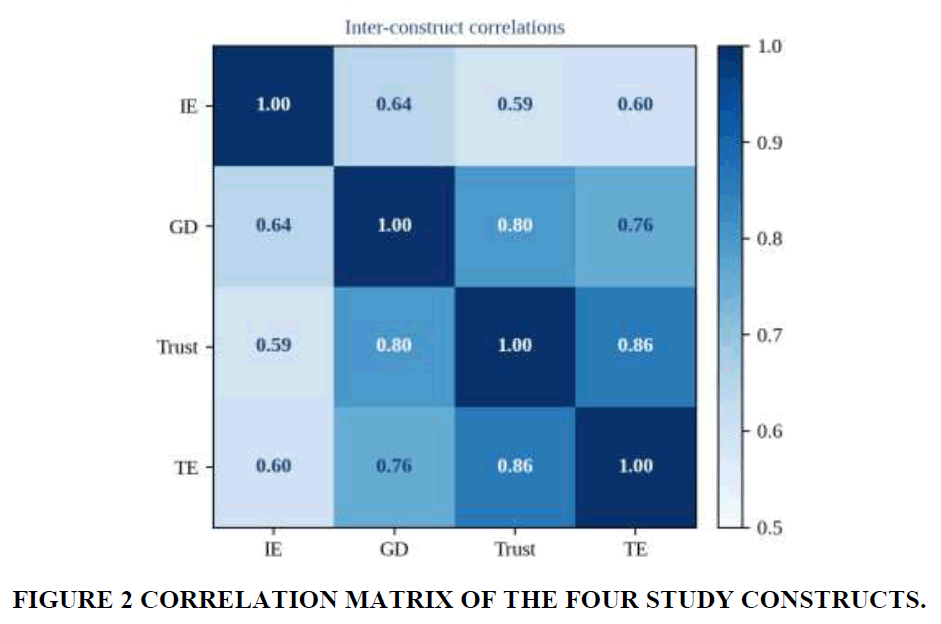
Figure 2 Correlation Matrix of the Four Study Constructs.
Common-Method Bias
Because all measures were self-reported at a single time point, Harman’s single-factor test was conducted. The first unrotated factor accounted for 42.3% of the variance — below the 50% criterion — indicating that common-method bias is unlikely to be a serious threat, though it cannot be entirely ruled out given the design.
Serial Mediation Analysis
A bootstrapped serial-mediation model (5,000 resamples) tested the hypothesized IE → GD → Trust → TE pathway. Consistent with H1, interpersonal effectiveness significantly predicted group dynamics (a₁ = 0.56, p < .001). Consistent with H2, group dynamics strongly predicted interpersonal trust (d = 0.77, p < .001). Consistent with H3, trust was the strongest predictor of teamwork effectiveness (b₂ = 0.68, p < .001), while the residual direct path from group dynamics to the outcome was small but significant (b₁ = 0.17, p = .035). Most importantly, the direct effect of interpersonal effectiveness on team effectiveness was no longer significant after including both mediators in the analysis (c′ = 0.09, p = .069), compared to a significant total effect (c = 0.56, p < .001), which is characteristic of full mediation (Table 5).
| Table 5 Path-Coefficients for the Serial Mediation Model | |||
| Path | Coefficient | SE | p |
| a₁: IE → GD | 0.559 | 0.055 | < .001 |
| d: GD → Trust (controlling IE) | 0.769 | 0.079 | < .001 |
| b₁: GD → TE (controlling IE, Trust) | 0.167 | 0.079 | .035 |
| b₂: Trust → TE (controlling IE, GD) | 0.678 | 0.075 | < .001 |
| c: IE → TE (total effect) | 0.565 | 0.062 | < .001 |
| c′: IE → TE (direct effect) | 0.093 | 0.051 | .069 |
Table 6 presents the indirect effects along with bias-corrected bootstrapping confidence intervals. The serial indirect effect (IE → GD → Trust → TE) was significant with the indirect effect of 0.285, 95% CI [0.165, 0.437], thus confirming hypothesis H4. Additionally, the simple indirect effect via trust (IE → Trust → TE) was significant, while the simple indirect effect via group dynamics (IE → GD → TE) was not (CI contains zero). In total, this information implies that group dynamics is conducive to effective team performance mainly because it leads to the development of trust.
| Table 6 Indirect Effects with 95% Bootstrap Confidence Intervals (5,000 Re-Samples) | |||
| Indirect path | Effect | 95% CI | Supported |
| IE → GD → Trust → TE (serial) | 0.285 | [0.165, 0.437] | Yes |
| IE → Trust → TE | 0.092 | [0.010, 0.205] | Yes |
| IE → GD → TE | 0.088 | [−0.041, 0.214] | No |
Figure 3 illustrates the tested model using standardized coefficients. This is the main serial process involving both mediators.
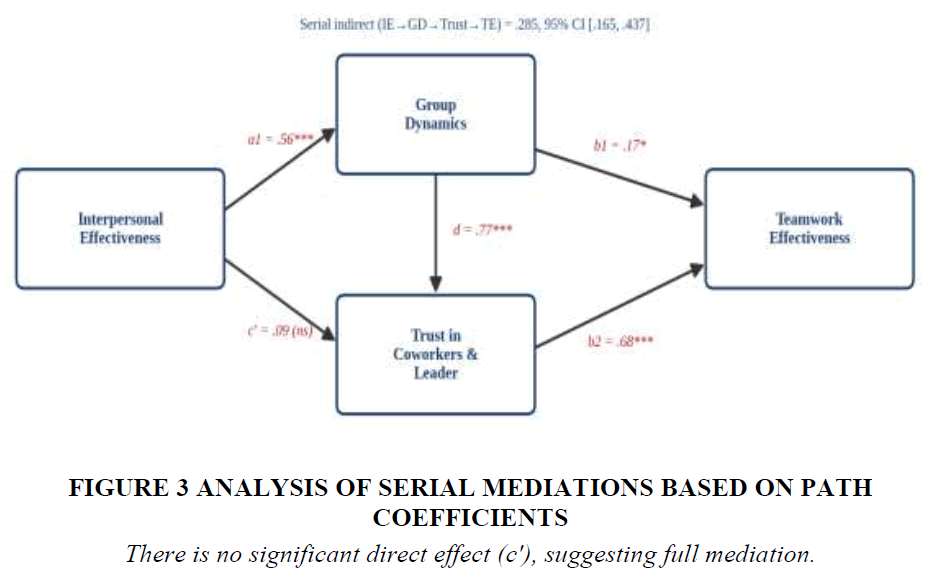
Figure 3 Analysis of Serial Mediations Based on Path Coefficients
There is no significant direct effect (c'), suggesting full mediation.
Discussion
In this study, there was an attempt to investigate the mechanism by which an individual competency affects outcomes that are inherently collective in nature. It has been revealed that interpersonal effectiveness influences team performance not directly but indirectly via a chain that starts from improving group dynamics that, in turn, promotes interpersonal trust which, in turn, affects team performance. All four hypotheses have been supported and the insignificant direct effect suggests that this serial mechanism mediates the effect fully. From a theoretical perspective, the most important result is the sequencing of the two mediators. When both group dynamics and trust were taken into account, trust was found to be the proximal determinant of team performance while group dynamics mainly contributed to the development of interpersonal trust. In other words, group dynamics does not determine team performance directly as it usually believed to be but only through its effects on trust which develops in the favorable conditions provided by group dynamics.
The findings help develop the emergent-states framework by demonstrating that trust is the affective state responsible for carrying forward the impact of the earlier interaction process into team performance outcomes. They offer a tangible team level representation of the social exchange framework because it is the team dynamics that provides the reciprocal exchanges that lead to trust creation. Lastly, they provide context-specific findings about how the process-to-state transition affects outcomes for teams within the Indian IT industry.
Theoretical and Practical Implications
Theoretical Implications
The research contributes to team-effectiveness theory in three main ways. First, it specifies the process versus emergent state concept (Marks et al., 2001) in terms of a hypothesis for testing as a serial mechanism in which a team interaction process (group dynamics) and an emergent affective state (trust) have separate and ordered roles rather than operating simultaneously. Second, it applies social exchange theory to teams through the proposition of group dynamics as the source of trust. Third, it furnishes a well-supported example of the two concepts in an overlooked field.
Practical Implications
The findings provide a practical point of leverage for HR and organizational leaders in IT.
Given the way the effect of interpersonal effectiveness runs through group dynamics and trust, the approach to improving these factors must address the whole chain and not just one part:
· Build interpersonal competencies — such as communication, empathy, and constructive management of conflicts — through relevant training because this is how you can start the chain.
· Build up group dynamics consciously through role and goal clarity and through the provision of psychological safety which will allow trust formation.
· Focus on building trust as the proximal factor because this is what enables team effectiveness.
Because trust is the most proximal factor driving teamwork effectiveness, leadership practices which foster trust will generate the greatest results in terms of team performance.
Limitations and Future Research
Some of the limitations of this study suggest the areas for further research in the field. First of all, this study is purposely limited to the IT industry in Bengaluru, so its findings are limited to this context; further research may consider the same questions in another city or region. Secondly, the information was received from 150 respondents in the process of convenience sampling, so further research may be conducted using a larger and more varied sample. Thirdly, the information was received during one moment of the study, and this shows the correlation of variables, but not their cause-and-effect relationship, so further research may use longitudinal or experimental design to prove the nature of the relationships. Lastly, all the information was gathered using only one self-report survey, and this may exaggerate the correlation of variables, so further research may use information from different moments or several different sources.
Conclusion
This exploratory study provides insight into the behavioral chain through which personal interpersonal competence influences team effectiveness in the Indian information technology industry. Interpersonal competence does not have a direct effect on teamwork effectiveness; it operates indirectly through the enhancement of group process, leading to interpersonal trust, and ultimately resulting inteam effectiveness. The identification of trust as the affective emergent state that mediates between good group process and good group outcomes and social exchange as the basis of its formation represents a more modern theoretical framework than the classical Input-Process-Outcome Model. The findings provide a validated foundation and a sharpened theoretical model for the larger confirmatory study to follow.
References
Anilkumar, J., Bastray, T., Malhotra, N., & Basha, M. (2025). Human resource management in startups: challenges and best practices for entrepreneurial growth. Revista Latinoamericana de la Papa, 29(1), 269-281.
Blau, P. M. (1964). Exchange and power in social life (Vol. 1964). John Wiley & Sons, Incorporated.
Boyatzis, R. E., Rochford, K., & Cavanagh, K. V. (2023). Emotional intelligence and interpersonal effectiveness at work: A review and integration. Journal of Organizational Behavior, 44(3), 401–421.
Cropanzano, R., & Mitchell, M. S. (2005). Social exchange theory: An interdisciplinary review. Journal of management, 31(6), 874-900.
Indexed at, Google Scholar, Cross Ref
Edmondson, A. C., & Lei, Z. (2014). Psychological safety: The history, renaissance, and future of an interpersonal construct. Annu. Rev. Organ. Psychol. Organ. Behav., 1(1), 23-43.
Indexed at, Google Scholar, Cross Ref
Edmondson, A. C., & Mortensen, M. (2021). What psychological safety looks like in a hybrid workplace. Harvard Business Review, 3(109), 1-8.
Forsyth, D. R. (2019). Group dynamics (7th ed.). Cengage Learning.
Georganta, E., Ulfert, A.-S., & Kotte, S. (2024). Interpersonal processes and team effectiveness in agile software teams. European Journal of Work and Organizational Psychology, 33(2), 145–162.
Goleman, D. (1998). Working with Emotional Intelligence. ETC: A Review of General Semantics, 56(1), 103-104.
Indexed at, Google Scholar, Cross Ref
Hackman, J. R. (1987). The design of work teams. In J. W. Lorsch (Ed.), Handbook of organizational behavior (pp. 315–342). Prentice Hall.
Ilgen, D. R., Hollenbeck, J. R., Johnson, M., & Jundt, D. (2005). Teams in organizations: From input-process-output models to IMOI models. Annu. Rev. Psychol., 56(1), 517-543.
Kilcullen, M. P., Feitosa, J., & Salas, E. (2023). Insights from the science of teamwork for interpersonal effectiveness at work. Group & Organization Management, 48(1), 3–37.
Kozlowski, S. W., & Ilgen, D. R. (2006). Enhancing the effectiveness of work groups and teams. Psychological science in the public interest, 7(3), 77-124.
Indexed at, Google Scholar, Cross Ref
Marks, M. A., Mathieu, J. E., & Zaccaro, S. J. (2001). A temporally based framework and taxonomy of team processes. Academy of management review, 26(3), 356-376.
Indexed at, Google Scholar, Cross Ref
Mathieu, J. E., Hollenbeck, J. R., Van Knippenberg, D., & Ilgen, D. R. (2017). A century of work teams in the Journal of Applied Psychology. Journal of applied psychology, 102(3), 452.
Indexed at, Google Scholar, Cross Ref
Mathieu, J., Maynard, M. T., Rapp, T., & Gilson, L. (2008). Team effectiveness 1997-2007: A review of recent advancements and a glimpse into the future. Journal of management, 34(3), 410-476.
Indexed at, Google Scholar, Cross Ref
Mayer, R. C., Davis, J. H., & Schoorman, F. D. (1995). An integrative model of organizational trust. Academy of management review, 20(3), 709-734.
Indexed at, Google Scholar, Cross Ref
McGrath, J. E. (1964). Social psychology: A brief introduction.
Prabakar, S., Kumar, V. S., Sangu, V. S., Muthulakshmi, P., Prabakar, S., & Basha, S. M. (2025). Catalysts of change: The transformative journey from HR 1.0 to HR 5.0–Innovations, challenges, and strategies in human resource management with technology and data-driven integration. Indian Journal of Information Sources and Services, 15(1), 47-54.
Indexed at, Google Scholar, Cross Ref
Réveillé, A., Rosnet, E., & Chaudat, P. (2024). Determinants of team effectiveness in project-based organizations: A systematic review. International Journal of Project Management, 42(1), 102–119.
Riggio, R. E. (1986). Assessment of basic social skills. Journal of Personality and social Psychology, 51(3), 649.
Indexed at, Google Scholar, Cross Ref
Salas, E., Reyes, D. L., & McDaniel, S. H. (2018). The science of teamwork: Progress, reflections, and the road ahead. American Psychologist, 73(4), 593.
Indexed at, Google Scholar, Cross Ref
Salas, E., Shuffler, M. L., Thayer, A. L., Bedwell, W. L., & Lazzara, E. H. (2015). Understanding and improving teamwork in organizations: A scientifically based practical guide. Human resource management, 54(4), 599-622.
Indexed at, Google Scholar, Cross Ref
Strode, D., Dingsøyr, T., & Lindsjorn, Y. (2022). A teamwork effectiveness model for agile software development. Empirical Software Engineering, 27(2), 56.
Indexed at, Google Scholar, Cross Ref
Varoodhini, S., Anilkumar, J., Das, R., Bharathi, T., Ramesh Babu, S., Anjum, A., & Mahabub Basha, S. (2025). DETERMINANTS OF EMPLOYEE ENGAGEMENT IN ORGANIZED RETAIL: AN ANALYTICAL STUDY. Archives for Technical Sciences/Arhiv za Tehnicke Nauke, (34), 72.
Indexed at, Google Scholar, Cross Ref
Received: 01-Sep-2026, Manuscript No. AMSJ-26-17376; Editor assigned: 01-Sep-2026, PreQC No. AMSJ-26-17376(PQ); Reviewed: 15-Sep-2026, QC No. AMSJ-26-17376; Revised: 22-Sep-2026, Manuscript No. AMSJ-26-17376(R); Published: 30-Sep-2026