Research Article: 2025 Vol: 29 Issue: 6
Leveraging Artificial Intelligence in Brand Marketing and Brand Management for Micro, Small and Medium Enterprises through Bibliometrics
Sunita Vaibhav Gujar, Ramdeobaba University Nagpur, India
Avni Suresh Thakkar, Ramdeobaba University Nagpur, India
Amit Kumar, Ramdeobaba University Nagpur, India
Sampada Mashirkar, Ramdeobaba University Nagpur, India
Ashima Varghese, National Academy of Defence Production, Nagpur, India
Citation Information: Vaibhav Gujar, S., Thakkar, A.S., Kumar, A., Mashirkar, S., & Varghese, A. (2025) Leveraging artificial intelligence in brand marketing and brand management for micro, small and medium enterprises through bibliometrics Academy of Marketing Studies Journal, 29(6), 1-18.
Abstract
Micro, Small and Medium-sized Enterprises (MSMEs) are essential to the global economy, especially in generating employment possibilities. This study investigates how artificial intelligence is revolutionizing brand marketing and management. To redefine brand management methods in the digital age, it seeks to comprehend how AI technologies might improve brand equity measurement, maximize brand recognition, and increase tailored communication. A thorough bibliometric analysis of 857 research studies released between 2000 and 2025 was carried out utilising Scopus database. The methodology primarily focused on articles that explore how “artificial intelligence” is applied in the contexts of “brand management” and “brand marketing.” This technique was used to compile and synthesize a wide range of research on how AI affects MSMEs' brand management strategies and examines how generative AI can change the way MSMEs build their brands, how customers act, and how they compete. According to the analysis, AI has significantly improved brand management, especially in the areas of consumer engagement and data-driven, insight-driven personalization of customer interactions. More accurate customer segmentation and targeting have been made possible by AI's capacity to evaluate large data, which has a favourable impact on total brand equity and brand loyalty. The results indicate how important it is for industrialists, marketers, legislators, and scholars to follow ethical guidelines to verify that AI can be used in MSMEs in a way that lasts.
Keywords
Artificial Intelligence, Brand Management, Brand Marketing, Brand Equity, Brand Loyalty Micro Small and Medium Enterprises, Bibliometric Analysis.
Introduction
Brand management and marketing have significantly evolved in the digital era due to rapid advancements in artificial intelligence (AI). Generative AI is a novel technology with the capacity to transform various domains. It enables enterprises, particularly Micro, Small, and Medium Enterprises (MSMEs), to enhance creativity, productivity, and customer involvement in unprecedented ways. AI-driven solutions have become essential for MSMEs seeking to establish robust brand identities, enhance their marketing strategies, and maintain competitiveness amid increasing competition and evolving customer expectations.
(Ibrahim et al., 2024) identified that in the global economy, MSMEs are essential, especially when it comes to generating possibilities for employment. SMEs frequently struggle to establish and improve their brand image. Two significant barriers are a lack of resources and access to a larger market. A key factor in enhancing this communication resilience is the strategic innovation of IoT and AI applications. SMEs may increase product awareness, interact with customers, and grow their market without incurring significant costs by utilizing digital platforms and social media (Ibrahim et al., 2024).
The Impact of AI on Brand Marketing
Traditional brand marketing relied heavily on handcrafted materials, static client segmentation, and overly generalized campaigns. According to (Cui Hailang et al., 2023), contemporary market management is an extensive strategic socialization initiative conducted within a broad social context, characterized by its historical and practical substance, and involving numerous actors. The market is predicated on customer demographics. Based on consumer demand, which encompasses potential demand influenced by usage characteristics and circulation scale, the logical framework aligns with the potential market, efficient market, target market, and end consumer market for various goods or services. Marketing agencies often rely on their products and services to manage production and marketing, enabling them to adapt to the market and generate profit (Cui Hailang et al., 2023).
Generative AI is a kind of artificial intelligence that produces text, images, videos, and music. It has transformed these operations by rendering them more individualized, automated, and data-driven. For MSMEs, often constrained by limited funds and personnel, AI may enhance their competitiveness against larger corporations by automating repetitive tasks, generating high-quality marketing content, and delivering tailored consumer experiences at scale. (Mishra & Sybol, 2025) investigated that AI frees up marketers to concentrate on strategic and high-level decision-making by automating monotonous and data-intensive tasks. This transition from manual processes to automated, intelligent methodologies increase the efficiency and efficacy of branding and market engagement.
As per (Cui Hailang et al., 2023) brand management, grounded in the current state of enterprise development and informed by practical experience, leads to the significant conclusion that the advancement of enterprises is inextricably linked to effective brand management. We approach corporate brand management from this perspective. (Yahelska & Vasylyshyna, 2024) explored that in brand management, intelligence facilitates the creation of distinctive brand strategies through comprehensive analysis of customer behaviour, market trend predictions, and enhancement of marketing campaign efficacy. The intelligence of brand management is defined as the process of enhancing the intelligence quotient in brand management through the integration of sophisticated cognitive and analytical techniques for the creation, support, and development of a brand. This process transcends conventional brand management by integrating insights from marketing, economics, psychology, sociology, and cultural studies. It entails a concurrent enhancement of both mental labour and artificial intelligence in analytical, generative, and managerial tasks, facilitating the brand's adaptation to intricate market dynamics. Brand management is progressively employing artificial intelligence to enhance processes, with branding as a fundamental element utilized to cultivate and expand a brand, namely for the creation of textual, visual, and video content (Yahelska & Vasylyshyna, 2024).
The Evolution of Branding as Part of Brand Management
(Yahelska & Vasylyshyna, 2024) discussed that branding 1.0 refers to the development of a brand platform, brand identity, and advertising, with a heightened focus on statistical identifiers. Branding 2.0 involves adapting to the digital technology era, utilizing digital platforms, enhancing online presence, and collaborating with consumers in the digital landscape. Branding 3.0 integrates human creativity and strategic thinking with the analytical prowess and efficiency of AI in brand development and positioning. Branding 3.0 exemplifies the competition of intellects: who will more adeptly analyze data sets, forecast consumer behaviour with greater accuracy, craft uniquely personalized experiences, and devise more adaptable and efficient methods, among other capabilities. The intellectualization of brand management through artificial intelligence is fundamentally transforming every facet of branding and enhancing its framework (Yahelska & Vasylyshyna, 2024).
Significance of AI in Branding
AI systems such as GPT-4 and DALL-E can autonomously generate high-quality advertisements, social media content, and graphic assets, thereby conserving time and financial resources. (Mishra & Sybol, 2025) identified that in order to keep communications relevant and captivating, brands can instantly modify their messaging in response to social media trends, customer sentiment, and business advancements.
Hyper-Personalization: AI analyses individual behavior to deliver tailored messaging, recommendations, and promotions, hence enhancing engagement and fostering loyalty. As per (Yahelska & Vasylyshyna, 2024), hyper-personalization refers to the tailoring of brand interactions to the individual level through the utilization of artificial intelligence. This encompasses customized marketing communications, product suggestions, and user engagements designed for particular customer profiles. The capacity of AI to adapt brand messages and experiences in real time based on data guarantees their relevance.
Extensive Hyper-Personalization: AI technologies, such as Recommendation Systems and Virtual Assistants, are transforming the advertising industry by providing personalized user experiences (Ja’afar et al., 2024).
(Agersborg et al., n.d.) identified that numerous brand management tasks can be made more efficient by using AI applications, including propensity modeling, recommendation systems, customer segmentation systems, automated customer service, intelligent advertisements, conversion rate optimization systems, and dynamic pricing. These tools can automate regular operations and provide data-driven insights for critical decisions.
(Budiarti, 2025) investigated the utilization of social media, search engine optimization (SEO), influencer marketing, and data-driven marketing personalization has demonstrated efficacy in enhancing brand awareness and consumer engagement. Triangulation experiments utilizing data from the Google Digital Report (2023) indicate that enterprises employing AI-driven analytics and customization technology observe a customer engagement boost of up to 35% relative to those who do not implement such technologies. (Google & Temasek, 2024); (Budiarti, 2025).
(Pradipta Utama et al., 2025) stated that making investments in technology, particularly AI-driven CRM systems, can assist organizations in comprehending consumer behaviors and requirements, and facilitating the customization of pertinent services. Artificial intelligence may be particularly pertinent in sectors that significantly depend on extensive data and high levels of personalization, such as e-commerce, financial services, and technology, where it can facilitate product recommendations, tailored solutions, or pattern recognition through data analysis.
AI systems analyse behavioural data to generate personalized content such as emails, advertisements, and product recommendations. This may enhance conversion rates by as much as 30% (Salesforce, 2024).
Automated content production and distribution harnesses AI tools to generate and manage material, such as social media postings, blogs, advertisements, and visual assets, assuring uniformity and scalability across platforms (Yahelska & Vasylyshyna, 2024).
Chatbots and Customer Interaction: AI-driven virtual assistants are accessible around the clock to assist customers, hence enhancing response times and elevating satisfaction levels. The utilization of chatbots, virtual assistants, and other AI tools to interact with customers, delivering personalized responses and contextual support, alongside conversational interfaces that facilitate significant human interactions with consumers, enhancing user experience, elucidates the concept of the Branding 3.0 building block "Cognitive Brand Engagement" (Yahelska & Vasylyshyna, 2024).
Data-Driven Insights: AI analyzes extensive datasets to identify industry trends, enhance advertising efficacy, and refine brand positioning. (Mishra & Sybol, 2025) mentioned that, AI gives brands the ability to instantly process and evaluate large datasets, revealing market trends and niche opportunities.
Natural language processing (NLP) and (ML) machine learning algorithms can track engagement trends, forecast future actions, and assess customer sentiment. These insights enable businesses to make dynamic adjustments to strategies, like pricing or product offerings, in order to stay ahead of the competition and remain relevant in a market that continues to evolve quickly, as per (Mishra & Sybol, 2025).
(Yahelska & Vasylyshyna, 2024) revealed that the Data Analytics component entails decision-making derived from the analysis of extensive data from diverse sources (social media, consumer behaviour, market trends) and employing AI to forecast future consumer behaviour and market fluctuations, enabling brands to anticipate demands and maintain a competitive edge.
A crucial element is the integration of brand technology across various digital platforms, bolstered by AI, to establish a cohesive brand and enhance brand strategies as per (Yahelska & Vasylyshyna, 2024).
Brand Equity Theory (BET) (Ja’afar et al., 2024) investigated the connection between brand perception and brand loyalty is encapsulated within Brand Equity Theory (BET), as described by Aaker et al., highlighting the crucial role of perception in cultivating and maintaining consumer loyalty. Aspects such as brand awareness, perceived quality, brand associations, and brand loyalty shape consumers' views of a brand. Positive brand perceptions are crucial in fostering strong brand loyalty, they suggest that consumers who regard a brand favorably, associating it with attributes like good quality or beneficial connotations, are predisposed to loyalty. These favourable perceptions cultivate trust and emotional attachment to the brand, hence enhancing consumer loyalty.
Tools powered by AI enable more efficient brand equity management and measurement. Brands may improve their marketing tactics by becoming more knowledgeable about consumer perceptions and loyalty through the use of data analytics and predictive modelling (Jelonek et al., 2024).
Artificial Intelligence Assistance for Micro, Small, and Medium Enterprises in Brand Management
Artificial intelligence is crucial for brand management, beyond mere marketing. It ensures that the brand remains consistent, honest, and adaptable in its strategy. For MSMEs, maintaining a uniform brand identity across many digital platforms can be challenging; however, AI-driven tools facilitate this process by:
Ensuring Consistency of Brand Voice: AI monitors and harmonizes messaging across platforms, maintaining uniformity in brand voice.
AI safeguards brand reputation by identifying fraudulent reviews and deepfakes, hence enhancing customer trust.
Enhancing Product Development: AI assists MSMEs in rapidly generating innovative concepts through expedited prototyping, trend analysis, and consumer feedback evaluation.
According to (Ardiani et al., 2025), the marketing strategy of Micro, Small, and Medium Enterprises can be ascertained by market research, product planning, price determination, consumer marketing, and marketing communications. At the same time, MSMEs' competitive advantages include cost efficiency, market analysis, innovation, and accountability for their chosen business model. The purchasing decisions of MSMEs are evaluated based on product selection, brand loyalty, marketing volume, timing of purchases, and purchasing behaviour.
Challenges and Ethical Dilemmas
Although AI can assist MSMEs, challenges persist, including elevated implementation costs, concerns around data protection, and algorithmic biases. Moreover, improper management of AI-generated material may diminish a brand's authenticity. (Dong, 2025) identified the challenging task is to strike a balance between managing long-term brand equity and short-term performance gains. Despite the considerable potential of AI, MSMEs must achieve a balance between automation and human control to remain aligned with their values and foster creativity.
According to (Dong, 2025), increasing focus on explainability, transparency, and anthropomorphism (human-like traits in AI), MSMEs may thrive in future.
In-depth interviews by (Efendri Waruwu & Selvi Agustina, 2023) indicate that MSMEs acknowledge the need of sustainability and ethical branding for competitive advantage. AI-driven marketing tools provide customisation and adherence to ethical principles. Nonetheless, difficulties including data privacy and ethical considerations are acknowledged. This study highlights the capacity of AI-driven marketing to enhance ethical branding and sustainability in MSMEs. By utilizing AI technologies judiciously, MSMEs can improve their brand reputation and cultivate consumer confidence. The research underscores the significance of transparency, equity, and adherence to ethical standards in ethical branding efforts (Efendri Waruwu & Selvi Agustina, 2023).
The Prospects of Artificial Intelligence in Branding for Small and Medium Enterprises
As artificial intelligence advances, it will assume a more significant role in brand marketing and management. This will occur via enhancements in predictive analytics, real-time customization, and immersive experiences, such as AI-driven virtual influencers and metaverse branding. For MSMEs, early and deliberate adoption of AI will be crucial for maintaining competitiveness in an increasingly AI-driven market.
The article by (Ardiani et al., 2025) examines the impact of Generative AI on brand management in micro, small, and medium enterprises (MSMEs). It discusses the advantages and disadvantages of employing AI to develop robust, customer-centric brands in the digital era and provides guidance on its implementation. The study provides MSMEs with a strategic framework for harnessing AI's promise while mitigating risks through the integration of industry expertise and case studies. The findings will facilitate their long-term success in a competitive market.
With the help of AI-driven technologies, brands can become proactive rather than reactive, quickly modifying their communication plans in response to shifting consumer preferences and market dynamics. In rapidly changing environments, this flexibility is essential for sustaining a robust and consistent market presence (Mishra & Sybol, 2025).
(Ogarte, n.d.) examined the challenges impacting local MSMEs' marketing include product positioning, branding, distribution, pricing, promotion, and personnel. To succeed in the current competitive landscape, local MSMEs must implement a comprehensive strategy encompassing product differentiation, crisis management, reputation enhancement, geographic expansion, distribution optimization, strategic pricing, and efficient workforce acquisition and retention. Product differentiation enables firms to distinguish themselves in a saturated market, addressing specific client requirements and establishing a unique brand identity. Crisis management is essential for addressing unexpected problems and sustaining resilience in unstable market conditions, enabling organizations to adjust and recover promptly. Moreover, reputation cultivation, by consistent excellence and favorable customer engagements, engenders confidence and promotes enduring customer loyalty. Geographic expansion and effective distribution management allow MSMEs to access new markets, hence augmenting their customer base and fostering growth. Employing strategic pricing enables enterprises to maintain competitiveness while optimizing profitability, and assessing marketing efficacy guarantees optimum resource allocation. Emphasizing talent acquisition and retention enables firms to obtain competent people essential for innovation and operational success (Ogarte, n.d.).
Brand identity has emerged as the paramount method for Micro, Small, and Medium Enterprises (MSMEs) to differentiate themselves from competitors amid digital saturation and rapidly evolving client expectations. However, constrained resources, ineffective marketing channels, and the increasing need for hyper-personalization have rendered conventional brand management strategies progressively less effective. Artificial Intelligence (AI) is no longer a mere concept for the future; it is a tangible instrument that MSMEs can utilize to create, sustain, and expand their brands. This chapter examines the impact of AI, particularly generative AI, on brand marketing and management. It perceives AI as a democratizing agent that empowers smaller enterprises to compete with larger corporations.
The MSME Branding: Adaptability vs Financial Resources
MSMEs constitute about 45% of employment and 33% of global GDP; nevertheless, they have challenges in brand expansion due to systemic issues. There is a shortage of funds to conduct market research and experiment with new campaigns. Personnel with specialized skills in data analysis and content generation is in short supply. Digital platforms fragment consumers' focus. Conventional solutions struggle to deliver tailored experiences or enable brands to adjust in real time at scale.
The Revolution of Content
Instruments such as ChatGPT and Midjourney reduce content production costs by fifty percent while maintaining brand voice consistency.
Consumer insights applicable for prediction by (Budiarti, 2025) revealed that customer experience and brand loyalty exert a favourable and substantial influence on customer citizenship behaviour and corporate performance.
Customers can serve as active brand ambassadors, with their contributions in offering evaluations, endorsing items, and exhibiting long-term loyalty being strategic assets for organizations to establish durable competitive advantages (Budiarti, 2025).
Sentiment analysis and trend predictions enable proactive adjustments to your strategy, thereby mitigating the risks associated with your campaign. (Kim, n.d.) emphasised that AI-driven sentiment analysis operates by analysing extensive volumes of textual data from platforms including social media, product evaluations, and online discussion forums. These platforms are abundant with user-generated content that provides immediate perspectives on various themes pertaining to a company.
Utilizing Generative AI to Transform Brand Management
AI transforms brand management from a reactive approach to a proactive one. Natural Language Processing-powered systems monitor activities continuously to safeguard brand reputation.
Coherent omnichannel presence of AI ensures message consistency across websites, social media platforms, and online retail outlets. As per (Pandjaitan, 2024), the social media marketing mix (SMMM) will remain an essential technique in integrated marketing communications (IMC) for sales promotion, marketing promotion, and branding. Businesses will extensively use ChatGPT and artificial intelligence, along with innovative and entertaining content that appeals to a wide audience. To accomplish their objectives, businesses should concentrate on social media platforms that work well and accord top priority to fostering loyalty and trust among Gen Z and Millennials (Pandjaitan, 2024).
Generative AI accelerates invention by producing prototypes of novel concepts and packaging designs within hours rather than weeks. Generative AI transcends automation, facilitating intelligent creation and anticipatory interaction.
Many marketing professionals are unclear about how to use AI for branding, despite its rapid advancements. Systematic research and frameworks are required to help practitioners and researchers maximize AI's potential for brand equity (Dong, 2025).
Research Questions: This research study focuses on the following questions on the key-terms "artificial intelligence" AND "brand management," OR "brand marketing" as below:
RQ1 Which documents received most citations?
RQ2 Which are the top affiliated universities?
RQ3 Which authors are co-cited the most?
RQ4 Which countries are the most inter-bibliographically connected?
RQ5 What are the most often used author keywords in articles?
Literature Review
A quantitative survey by (Akbar et al., 2024) was administered to 268 micro business proprietors utilizing Instagram in Central Java. The results indicate that the intensity and efficacy of social media marketing significantly influence brand recognition, therefore impacting consumer loyalty. This research identifies the direct impact of social media marketing on consumer loyalty, in contrast to its effect via brand awareness. This study's findings underscore the significance of strategic social media involvement for e-commerce micro enterprises, highlighting that the quality of engagement surpasses its frequency (Akbar et al., 2024).
(Sumaryanto & Widajanti, 2023), the study sample comprises 51 MSMEs in Indonesia, encompassing marketing performance, marketing innovation, customer need adaptability, empowered interaction capability, and marketing intelligence. The data indicates that enhanced interaction capability has a substantial positive impact on marketing performance. Nonetheless, marketing innovation, adaptation to consumer needs, and marketing intelligence do not substantially influence marketing performance. Moreover, consumer need adaptability and marketing knowledge do not moderate the impact of empowered interaction capability on marketing performance (Sumaryanto & Widajanti, 2023).
The research by (Ardiani et al., 2025) used a quantitative descriptive model with a sample of 100 MSMEs in Indonesia. It delineates many post-COVID-19 problems encountered by MSMEs, such as elevated raw material costs, constrained human resources, insufficient capital, inadequate facilities and infrastructure, and limited access to product marketing.
The research indicates that digital marketing is progressively embraced by MSMEs in South Labuhanbatu Regency. It determines that marketing techniques exert a substantial direct influence on competitive advantage, which then impacts purchase decisions. Nonetheless, marketing methods do not directly influence purchasing decisions.
(Jumbulingam et al., n.d.) results indicated that employing diverse digital marketing methods was crucial for the establishment of SME brands. Social media, content production, community interaction, influencer collaboration, SEO, and email marketing were crucial in enhancing brand awareness and loyalty among Malaysian consumers. The research emphasized that content marketing allowed SMEs to communicate their values and distinctive selling propositions. Furthermore, the execution of an SEO plan markedly enhanced a SME's prominence in search engine results, augmented website traffic, and established customer credibility. Influencer marketing proved beneficial for Malaysian SMEs in enhancing audience reach and augmenting brand recognition through individualized customer interactions. Furthermore, email marketing significantly contributed to brand development by improving consumer interactions and engagement. This study offered empirical insights into how Malaysian SMEs utilized digital marketing channels to enhance their brands, highlighting the necessity to adjust strategies in response to evolving consumer preferences and technology advancements in the digital realm (Jumbulingam et al., n.d.).
By demonstrating how AI can augment brand equity—defined as the value a brand contributes to a product or service—through the enhancement of brand recognition, image, and loyalty in the event sector. By employing AI tools such as personalized content, real-time data analysis, and customer interaction platforms, brands can provide distinctive, customized experiences at events, thereby fostering a deeper emotional connection with attendees (Ja’afar et al., 2024).
A primary advantage of AI in sentiment analysis is its capacity to discern subtleties in human emotion, tone, intent, sarcasm, context, and sentiment intensity (Kim, n.d.).
Technologies like as Artificial Intelligence (AI), Virtual Reality (VR)/Augmented Reality (AR), 3D printing, and laser cutting substantially improve the visualization and execution of branding initiatives (Pricilia Junita & Kusumowidagdo, n.d.).
According to (Budiarti, 2025), trust is a crucial component in the digital marketplace, as customers have become increasingly discerning in their wants and expectations. Eventually, cultivating trust by openness, customer endorsements, and proactive engagement with the public is an increasingly vital brand strategy.
Methodology
Bibliometric Analysis
Due to its substantial advantage of providing thorough scientific mapping over a predetermined period, which uncovers unique patterns for experts and decision-makers, bibliometric analysis has grown in popularity and is widely used across various sectors. According to (Donthu et al., 2021a) study, bibliometric analysis is a methodical and exacting way to look at and assess large amounts of scientific data, which helps academics understand the intricacies of a field's development and highlight its emerging frontiers. A detailed review of the references included at the end of each article is part of the citation inspection process, which is frequently carried out using statistical or quantitative techniques (Donthu et al., 2021b). Several significant details regarding the makeup and identification of current and developing knowledge in a certain field are revealed by looking at both cited and referenced papers. To identify patterns in authorship, publication procedures, and the reach of secondary journals, this approach quantitatively evaluates several aspects of the literature on a certain subject. According to (Kannan P, 2019), such an analysis aims to shed light on the complex dynamics of knowledge growth within the corresponding disciplines of study.
Data Source and Search Strategy
To conduct data mining, the researchers used the Scopus database. Between 2000 and 2025, the researchers used three key terms: "artificial intelligence" AND "brand management," OR "brand marketing." Scopus served as the main data source for the VOSviewer (version 1.6.20). The original study produced a total of 861 articles. Applying the time period filter and the "All field" search criterion effectively reduced the total number of documents to 857. Using subject categorization allowed for further refinement of the papers. Statistical Analyses: Below is a thorough rundown of performance analysis metrics and indicators related to science mapping.
i. Analyzing performance metrics provides important information about the academic environment in a given field. The citation overviews for different documents were analyzed by the researchers. The researchers emphasize the increasing number of pertinent articles published annually, which highlights periods of increased research activity and reveals patterns over time. The amount of writing produced by the most prolific writers identifies the important academics advancing the area and highlights their impact.
ii. Science mapping indicators apply numerous analytical tools to explore the trends and structure of a given subject of study. By identifying eminent academics and their most cited works using a thorough document-by-document citation analysis of top writers, we were able to determine the significance of important publications. By identifying trends in the frequency with which the works of the most frequently cited authors are cited together, co-citation analysis helps academics understand the relationships between their thoughts. Through their shared references, universities and sources are bibliographically coupled to reveal the cooperation interactions between them and demonstrate the strength of their research networks. Similarly, the mapping of common references across countries showcases the nation's bibliographic network, revealing the dynamics of global research partnerships. Finally, the examination of keyword co-occurrence reveals the study's primary topics and their interrelationships, shedding light on evolving trends and emerging key phrases. Collectively, these indicators offer a comprehensive understanding of the research landscape via network and density representations.
Results and Discussion
Performance Analysis
1. Overview of Citation and Documents
Figure 1 shows the total number of publications from 2000 to 2025 that were part of this literature review study on AI applications in brand management and brand marketing. The graph indicates a general rising trend in the number of publications, with 2019 and later showing a particularly noteworthy increase, indicating growing interest and potential breakthroughs in this field of study. Publications of documents by year displayed are 2025,"193", 2024,"252" 2023,"101" 2022,"79" 2021,"51" 2020,"44" 2019,"29" 2018,"15" 2017,"8" and 2016,"12". According to the graphic, there will be a maximum of 3586 citations and 252 documents on "brand management" and "artificial intelligence" in 2024, followed by others. The chosen research articles offer important new developments and perspectives on a range of aspects of leveraging AI in brand management to assist MSMEs."Article," "350" Conference Paper,"242" Book Chapter,"164" Book,"39" Conference Review,"27" Review,"26" Note,"3" Retracted,"3" Data Paper,"1" Editorial,"1" Erratum,"1" are among the 12 document types on the aforementioned domain.The review investigated the top subject areas with the most published papers out of 26 as"Computer Science," with a maximum of "418" publications, as indicated by high-impact journals such as IEEE Transactions on Pattern Analysis and Machine Intelligence, the field of computer science has experienced rapid expansion in recent years, particularly in terms of artificial intelligence (AI), machine learning (ML), and the internet of things (IoT). It is consistent with worldwide trends in digital transformation and new ways of utilizing computers that there has been an increase in study. In addition, the field of "Business, Management and Accounting" (399 publications) is thriving due to the fact that there is a significant need for it from a variety of different professions. Publications of the highest caliber, such as the Academy of Management Annals and the Strategic Management Journal, are primarily concerned with quantitative approaches and novel concepts. Research sometimes intersects with economics and decision sciences to find solutions to challenges encountered by businesses in the real world. In the fields of "Economics and Econometrics," (215 publications), the recursive impact factor list is dominated by Econometrica and the American Economic Review. This popularity is due to the fact that both publications place an emphasis on policy and make use of data to support their assertions. The field of economics discusses trade openness as one of its topics. Other topics include environmental economics and asymmetric volatility spillovers. metric volatility spillovers. The field of "Engineering," which has 196 publications, is mostly concerned with applications and derives its benefits from publications such as IEEE Transactions on Wireless Communications and Nature Biomedical Engineering, which bridge the gap between theoretical concepts and practical applications. The "Social Sciences" domain has (146 publications). Although this subject is not as technically oriented, it does make use of computational methods (such as bibliometric analysis in management studies) and policy research to investigate how changes in technology and the economy impact society as a whole. The other fields, ranging from "Decision Sciences", 114, "Mathematics," 89", "Physics and Astronomy," 46", "Medicine," 39" to "Energy," 36", exhibit a high degree of specialized specialization. For instance, computational research is frequently supported by mathematics and physics, whereas medicine and energy are primarily concerned with providing support for practical transdisciplinary work.With "18" articles, The National Natural Science Foundation of China is the largest sponsor of the research on AI and brand management in MSMEs, out of 113 funding agencies. Followed by Fundação para a Ciência e a Tecnologia,"12", European Regional Development Fund,"4", Ministerio de Ciencia e Innovación,"4", Federación Española de Enfermedades Raras,"3", Ministry of Science and Technology, Taiwan,"3", National Key Research and Development Program of China,"3", National Office for Philosophy and Social Sciences,"3", China Postdoctoral Science Foundation,"2", European Commission,"2" documents respectively.
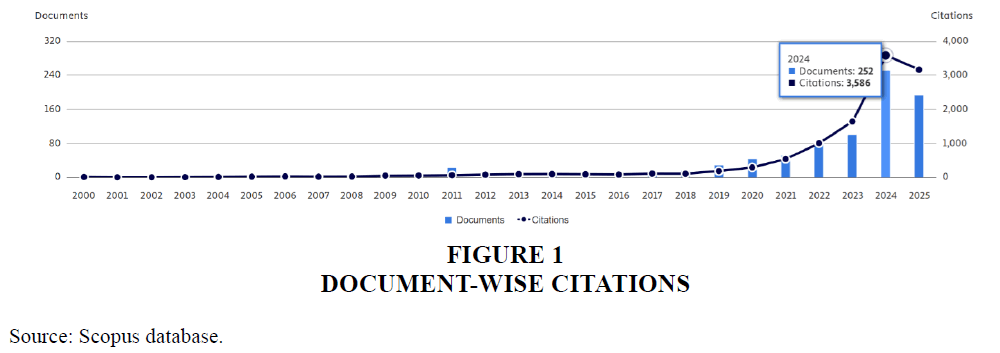
Figure 1 Document-Wise Citations
Source: Scopus database.
Top Affiliations
Out of the 160 affiliations from universities displayed in Figure 2, Lovely Professional University, India, is at the top of the list, which demonstrates the amount of multidisciplinary research that India is conducting. The LPU places emphasis on research that collaborates with businesses and spans across sectors in MSMEs. The effective publication method employed by Christ University allows the institution to produce a significant amount of research, resulting in 13 publications. With ten publications, Symbiosis International Deemed University primarily focuses on conducting research that is accessible to everyone and building connections with people from around the globe. Universidade do Porto, Amity University, Ahlia University, Sharda University and Chandigarh University have 7 publications each which highlight diverse geographic contributions. Universidad de Granada and Vel Tech Rangarajan Dr. Sagunthala R&D Institute of Science and Technology have 6 publications in this area. These schools are successful due to their strategic investments in Scopus-indexed journals, conferences, and collaborations, but their success varies by subject area and region.
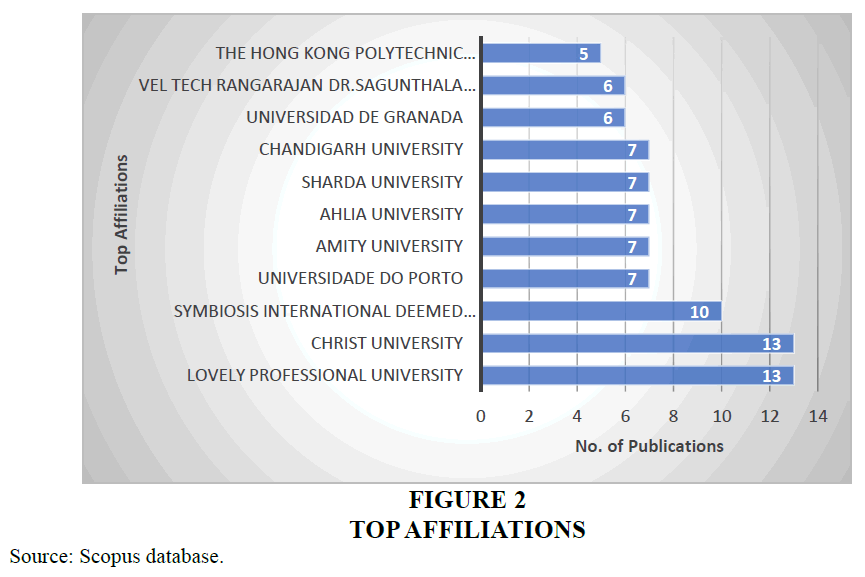
Figure 2 Top Affiliations
Source: Scopus database.
Science Mapping
Bibliometric analysis shows how a study area is organized, how it has evolved, and how its components are connected through scientific mapping. Network analysis, clustering, and visualization are the procedures that are utilized to discover patterns in academic papers. These patterns encompass collaboration networks among individuals, trends in themes, and the dissemination of information. Through the process of scientific mapping, raw publication data is transformed into information that is meaningful to academics, policymakers, and institutions, thereby assisting them in making sense of complex academic contexts. Combining numbers and images creates a link between data and decision-making within the scientific field.
Co-citation Analysis of Authors
Co-citation analysis investigates at how often two different authors are cited jointly in scholarly articles. The idea is that if two writers are commonly referenced together, their work is related in some way and is part of the same intellectual network in a research topic. Citations or frequency is the approximate number of times an author is mentioned in the dataset. In Figure 3, Dwivedi Y.K. has 205 citations, which means that the publications that were looked at used his work 205 times. Total Link Strength (TLS) measures at all the co-citation ties an author has with other writers. Higher TLS means more power to shape research themes. Dwivedi Y.K. has 20,316 TLS, shows that he is a major figure in the field, which means that his work is a foundation and is often cited with other important writers. Grewal D. is a core contributor with 186 citations and 14,253 TLS. A lot of citations and strong co-citation relationships, probably an important person in research on marketing and management. Wang Y. has 153 moderate citations but a lot of 10,270 TLS, which shows that it is relevant to more than one field. Kumar V. has 149 citations and TLS 11,508. He is an author of the bridge with links together several areas of study, such AI in marketing and business analytics. Rust R.T. 142 citations and TLS 10,916 with specialized impact (such service innovation and customer analytics). Peripheral links to Li y. 139, 11262, Wang X. 130, 13848, Zhang Y. 129, 9907, Liu Y. 128, 9641, Kim J. 114, 7754 indicate paths to specific research streams followed by other authors.
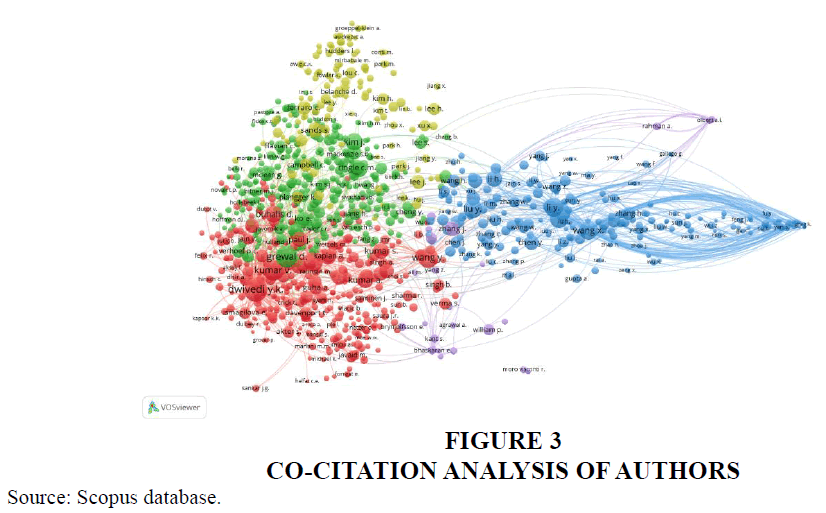
Figure 3 Co-Citation Analysis of Authors
Source: Scopus database.
Top Nations with Inter-Bibliographic Connections
Bibliographic coupling is a bibliometric method that examines at how related research entities (such countries, organizations, or authors) are by analysing the references they all have in common. Bibliographic coupling shows how many references two things have in common, which shows how comparable their current study is. When used on nations, bibliographic coupling shows which countries are doing research on related themes, trends in working together and networks for sharing knowledge and new areas of investigation. The number of references that two countries have in common is called coupling strength. More coupling strength means more thematic similarity. Cluster Groups indicate the countries that are grouped together because they have similar references. Out of 86, top nations with maximum number of publications are illustrated in Figure 4. With the highest production “India” has 198 publication networks, which could be because of a strong focus on STEM, government R&D incentives (such NRF financing), or a huge academic workforce. “China” has 140 articles with rapid growth, probably because of national AI and IT programs like "Made in China 2025." “The United States of America” has 114 with more citations and influence. “The United Kingdom” with 48 documents is a strong in specialist fields (like financial and healthcare AI) with a lot of cooperation between industries. “Spain” has 33 projects financed by the EU (Horizon Europe). “Italy” has 31 areas of focus on robots and sustainable technology. “Portugal” has 30 articles because of great engineering schools like U. Porto. “Australia” with 27 connections to research networks in the Asia-Pacific region, such as working with India and China. “Turkey” 27 projects in a new research center (TÜBİTAK funding in AI). Malaysia has 23 increasing productions, maybe in halal tech or Islamic finance followed by other nations.
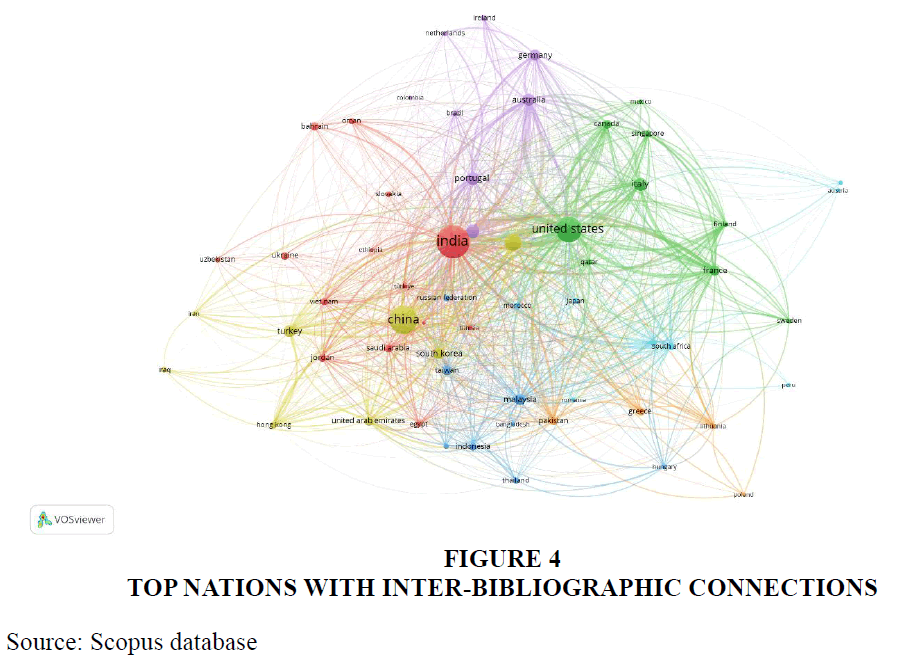
Figure 4 Top Nations with Inter-Bibliographic Connections
Source: Scopus database
Most Occurring Keywords
Out of all 4990, 529 keywords are selected with criteria of minimum 3 published documents. For each 529 keyword, total link strength of co-occurrence links with other key terms is calculated. The keyword with the greatest total link strength is selected. Number of keywords selected are 1000. Co-occurrence analysis checks at how often terms show up together in academic papers. This helps to show how themes are connected, what research trends are, and how information is organized in a discipline. By investigating the number of times terms show up together in publications, this dataset shows the thematic organization of a research field, which is probably AI in business or marketing. As displayed in Figure 5, Artificial Intelligence has 463 occurrences and Total Link Strength (TLS) is 2889. This key term that connects all domains. The strongest connections are probably with marketing, business, and machine learning. Represents the basic technology that makes other apps possible. Marketing with 179 occurrences and TLS 1350 is the main business use of AI. High TLS means that AI, social media, and consumer behaviour are all very well connected. Often used with "digital marketing." Commerce keyword has 114 occurrences and 1142 TLS shows a lot of focus on e-commerce apps. Probably linked to sales, customer behaviour, and AI. There are fewer times when these ties happen, but they are a little stronger than "sales." Sales with 113 occurrences and 1100 TLS displays a close relationship with business. AI is used in sales forecasting, automating customer relationship management (CRM), and scoring leads. Machine Learning (ML) with 82 occurrences and 755 TLS is a technical area of AI. Not very common compared to AI, which suggests that most articles use the broader word "AI", has a strong connection to big data. On social media 73 occurrences and 590 TLS, AI makes a key marketing channel better. Links to marketing, how people act as consumers, and digital marketing. Digital Marketing has 71 occurrences and 527 TLS is a part of marketing. A strong connection between social media and how people act as consumers. A little more targeted than regular marketing. Consumer Behaviour has occurred 51 times with 484 TLS, is a new area of interest. Connections to business and marketing. Fewer instances signal that this is a recent area of research. Big Data has 45 occurrences and 364 TLS is the base for AI and ML systems.
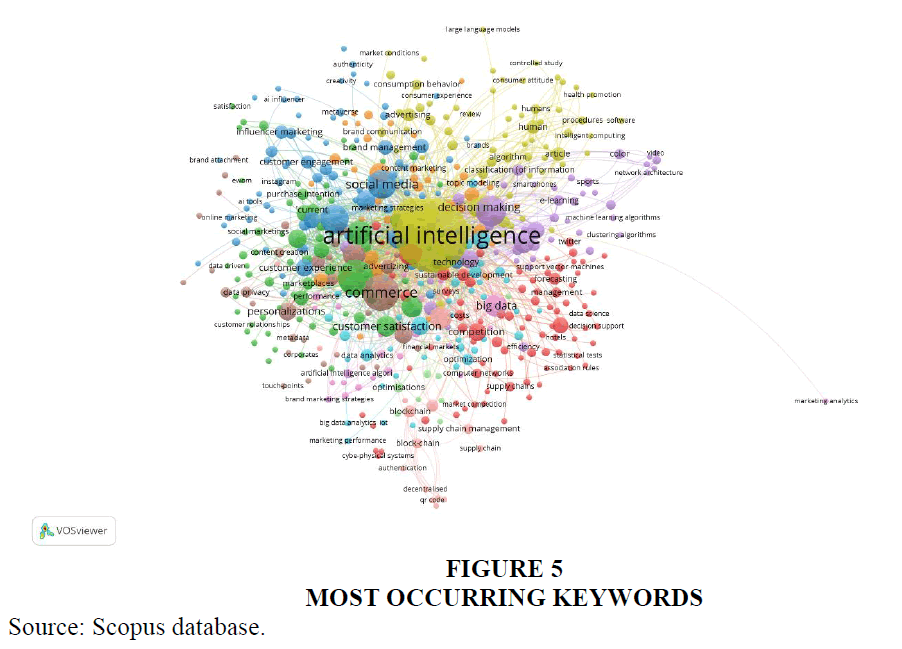
Figure 5 Most Occurring Keywords
Source: Scopus database.
Implications of the Study
AI was main area of attention for this study. Most of the research papers were examined at how AI can be used in corporate settings instead of only technical ones. The capacity of brands to swiftly adjust to evolving market dynamics, consumer inclinations, and technological advancements via artificial intelligence facilitates the modification of brand strategies and fosters rapid innovation. Furthermore, the ongoing learning of artificial intelligence systems enables brands to enhance their strategies over time, thereby improving performance and consumer satisfaction (Yahelska & Vasylyshyna, 2024).
For brand marketing, AI should be used for things like dividing customers into groups, making advertisements that are more relevant to them, and improving campaigns. More and more people are interested in how AI might predict and affect shopping choices and preferences. AI is changing online shopping with chatbots and recommendation systems. (Ja’afar et al., 2024). The study demonstrates how AI may assist brands in continually providing value, thereby cultivating long-term loyalty and enhancing overall customer happiness. This comprehensive understanding of how AI enhances brand equity aids in the broader application of Brand Equity Theory (BET), providing insights into how emerging technologies might improve a brand's competitive standing in dynamic industries such as the event industry (Ja’afar et al., 2024).
As per (Jelonek et al., 2024) in CSR, increased acceptability of AI in consumer relations can result from the incorporation of AI into brand management, which can have a favourable impact on public perceptions of brand interaction. AI can also help corporate social responsibility by facilitating more meaningful and focused consumer interaction (Jelonek et al., 2024).
AI-driven sentiment analysis constitutes a substantial progression in brand management, equipping organizations with the necessary instruments to comprehend consumer emotions and opinions more profoundly (Kim, n.d.).
(Yahelska & Vasylyshyna, 2024) mentioned that influencer marketing and AI-driven sentiment analysis are two fields of research that are expanding. Digital Marketing is a specialized topic that looks at programmatic advertising, SEO optimization, and marketing automation. Digital technologies and artificial intelligence are crucial to contemporary brand management. A major evolutionary step, branding 3.0 improves brand strategy by fusing technical prowess with human ingenuity. Gaining strategic advantages in a competitive market requires adjusting to intelligent brand management (Yahelska & Vasylyshyna, 2024).
The analysis by (Begum, 2024) indicated that artificial intelligence enhances brand image, customer engagement, brand loyalty, and customer-brand connections, particularly in sectors such as hospitality and retail. Principal technologies encompass chatbots, robotics, voice assistants, and digital assistants. Nonetheless, deficiencies persist in empirical validation and sectoral diversification. The bibliometric review thoroughly examines the diverse facets of brand management affected by AI. The implications for brand management necessitate the fortification and promotion of AI and advanced technologies to augment customer experiences, subsequently influencing brand management through heightened customer engagement, enhanced brand image, improved brand reputation, stronger customer brand identification, and increased brand loyalty, among other factors. The review emphasized the capacity of AI technologies, including chatbots, digital assistants, and voice assistants, to increase brand perceptions, cultivate customer trust, and strengthen customer loyalty in (Begum, 2024).
Research Gaps
The study points out three major gaps, first there isn't enough research on AI ethics in small and medium-sized businesses; second there isn't enough research on the connections between consumer psychology and generative AI; and third there are differences between technical and applied AI literature. The researchers utilised co-occurrence network analysis to show how the research landscape is changing, focusing on how AI may help small and medium-sized businesses compete with larger ones. To get the most out of AI while lowering risks, strategic suggestions include using hybrid human-AI workflows, making rules for transparency, and standardizing terms.
Conclusion
There is a high probability that Artificial Intelligence (AI) will change the way Micro, Small, and Medium Enterprises (MSMEs) market and manage their brands. This study shows how generative AI has changed the game by making it possible for MSMEs to compete with bigger companies by allowing for hyper-personalized customer engagement, data-driven decision-making, and more efficient operations. Using bibliometric analysis, we found major trends, such as the widespread use of AI in marketing, e-commerce, and consumer behaviour analytics. We also found important gaps in the ethical use of AI and the need for standardization of terms.
By facilitating increased customisation, improving insights about consumer psychology, and redefining market leadership, artificial intelligence is transforming brand equity. This study provides insights into how to successfully integrate AI into marketing processes while highlighting the useful applications of AI in enhancing brand management strategies for MSMEs. Companies are urged to use AI-powered solutions for improved customer relationship management, consumer behaviour forecasting, and market segmentation.
There are big concerns when there are problems like brand authenticity degradation, algorithmic bias, and too much dependence on automation. Still issues exist with explainability, transparency, and striking a strategic balance between short-term gains and long-term brand value. To get the most out of AI, MSMEs need to use hybrid human-AI collaboration models, where human creativity keeps an eye on AI-generated outputs to protect the brand. Also, to gain consumers' trust, AI companies need to be open about how they use AI and have systems in place to reduce prejudice.
Predictive customisation, AI-enhanced customer experiences, and real-time brand reputation management are the things that will shape the future of AI in MSME branding. For growth to be fair, policymakers and business leaders need to work together to create ethical standards and make sure that AI training datasets are diverse. By using AI in a responsible way, MSMEs can not only become more competitive, but they can also build long-term relationships with customers in a market that is becoming more digital. The next wave of brand evolution will be led by MSMEs that find the proper mix between being new and being real.
References
Agersborg, C., Månsson, I., & Roth, E. (2020). Brand Management and Artificial Intelligence-A World of Man Plus Machine A qualitative study exploring how Artificial Intelligence can contribute to Brand Management in the B2C sector.
Akbar, I., Hanafi, S. M., & Mujib, A. (2024). Exploring E-Commerce: Social Media’s Impact on Brand Awareness and Loyalty for Micro Businesses in Central Java. Khazanah Sosial, 6(3), 447–458.
Ardiani, W., Yolanda Ritonga, A., Pardamean Nasution, M., & Nahrisah, E. (2025). MSMES MARKETING STRATEGIES ON COMPETITIVE ADVANTAGE CASE STUDY OF MSMES IN SOUTH LABUHANBATU DISTRICT. In Journal of Industrial Engineering & Management Research (Vol. 6, Issue 1).
Begum, N. (2024). Beyond Automation: How AI Service Integration is Shaping the Future of Brand Management. Management Dynamics, 25(1).
Indexed at, Google Scholar, Cross Ref
Budiarti, A. (2025). Strategic Brand Positioning in the Digital Marketplace: Insights from Emerging Businesses. Kontigensi : Jurnal Ilmiah Manajemen, 12(2), 1023–1036.
Cui Hailang, Nie Yuankun, Li Zhanling, & Zeng Jun. (2023). Retraction: Construction and Development of Modern Brand Marketing Management Mode Based on Artificial Intelligence (Journal of Sensors (2022) 2022 (9246545) DOI: 10.1155/2022/9246545). In Journal of Sensors (Vol. 2023). Hindawi Limited.
Dong, Y. (2025). Implementation of artificial intelligence for brand equity. Cogent Business and Management, 12(1).
Indexed at, Google Scholar, Cross Ref
Donthu, N., Kumar, S., Mukherjee, D., Pandey, N., & Lim, W. M. (2021a). How to conduct a bibliometric analysis: An overview and guidelines. Journal of Business Research, 133, 285–296.
Efendri Waruwu, & Selvi Agustina. (2023). Leveraging AI-Driven Marketing For Ethical Branding In MSMES. Sammajiva: Jurnal Penelitian Bisnis Dan Manajemen, 1(2), 289–298.
Indexed at, Google Scholar, Cross Ref
Ibrahim, F., Mandjusri, A., & Shambodo, Y. (2024). Communication Resilience in Enhancing Branding of SME Products: Implementation of Information Technology as a Strategic Innovation. Jurnal Minfo Polgan, 13(1), 373–381.
Ja’afar, N. S., Khan, N., Oh, V. K. S., & Obreja, S. G. (2024). AI-Powered Digital Marketing: Elevating Brand Perception in the Event Industry. Journal of Advanced Research in Applied Sciences and Engineering Technology, 75–94.
Jelonek, D., Kumar, N., & Pawełoszek, I. (2024). Artificial intelligence applications in brand management. Scientific Papers of Silesian University of Technology. Organization and Management Series, 2024(202), 153–170.
Indexed at, Google Scholar, Cross Ref
Jumbulingam, K., Fadel, H., Al-Daqqaq, D. M. A., & Mimaki, C. A. (n.d.). Examining the importance of digital marketing strategies in brand creation for SMEs in Malaysia.
Indexed at, Google Scholar, Cross Ref
Kannan P. (2019). Bibliometric Analysis of Library Philosophy and Practice: A study based on Scopus Database.
Kim, J.-E. (n.d.). AI-Powered Sentiment Analysis for Brand Management. In International Journal of Advanced and Innovative Research (Vol. 22).
Mishra, R., & Sybol, S. S. (2025). Successful AI integration in branding: Leveraging innovation to enhance brand identity and market impact. In Knowledge Sharing and Fostering Collaborative Business Culture (pp. 77–104). IGI Global.
Ogarte, N. (n.d.). Empowering Local Brands: The Role of Government and Marketing in Driving Growth.
Pandjaitan, R. H. (2024). The Social Media Marketing Mix Trends in Indonesia for 2024: Communication Perspective. Jurnal Komunikasi Ikatan Sarjana Komunikasi Indonesia, 9(1), 251–269.
PRADIPTA UTAMA, A., SHIRATINA, A., MARLAPA, E., JANEE ALI, A., MERCU BUANA, U., MERUYA SELATAN, J., KEMBANGAN, K., & RISET BISNIS DAN MANAJAMEN, J. (2025). Jurnal riset bisnis dan manajemen customer citizenship behavior on business performance: ARTIFICIAL INTELLIGENCE AS MODERATION IN SMES. 18(1).
Pricilia Junita, A., & Kusumowidagdo, A. (n.d.). INTERIOR BRANDING: ISSUES AND OPPORTUNITIES FOR INTERIOR DESIGN BUSINESSES.
Sumaryanto, S., & Widajanti, E. (2023). MSME Marketing Performance during the COVID-19 Pandemic: The Role of Empowered Interaction Capability. Journal of Economics, Business, & Accountancy Ventura, 25(3), 382–397.
Yahelska, K., & Vasylyshyna, L. (2024). Brand management intelligence: digital technologies and tools. Scientia Fructuosa, 158(6), 51–69.
Indexed at, Google Scholar, Cross Ref
Received: 23-Aug-2025, Manuscript No. AMSJ-25-16152; Editor assigned: 24-Aug-2025, PreQC No. AMSJ-25-16152(PQ); Reviewed: 10-Sep-2025, QC No. AMSJ-25-16152; Revised: 16-Sep-2025, Manuscript No. AMSJ-25-16152(R); Published: 26-Sep-2025