Research Article: 2026 Vol: 30 Issue: 4
Naming Bonds: How Ghanaian Brands' Use of Nicknames and Consumer Names Influence Trust, Perceptions, and Disposal Behaviors
Winston Asiedu Inkumsah (Ph.D.), Marketing Department, University of Professional Studies, Accra Ghana
Ebenezer Arthur Duncan (Ph.D.), Marketing Department, University of Professional Studies, Accra Ghana
Michael Kwame-Adjei (Ph.D.), Marketing Department, University of Professional Studies, Accra Ghana
Juliana Akushika Andoh (Ph.D.), Marketing Department, University of Professional Studies, Accra Ghana
Peter Kwasi Kodjie (Ph.D.), Marketing Department, University of Professional Studies, Accra Ghana
Citation Information: Inkumsah, A.W., Duncan, A.E., Kwame-Adjei, M., Andoh, A.J. & Kodjie, K.P. (2026). Naming bonds: how ghanaian brands' use of nicknames and consumer names influence trust, perceptions, and
disposal behaviors. Academy of Marketing Studies Journal, 30(3), 1-19.
Abstract
The complexities of consumer-brand relationships in emerging markets constitute a relatively uncharted territory, with Ghanaian consumer behavior presenting an intriguing case study. This investigation examines the impact of Ghanaian brands' strategic use of nicknames and consumer names on trust, perceptions, and disposal behaviors. Employing a quantitative, cross-sectional design, the study surveyed 650 Ghanaian online consumers, leveraging established scales with robust psychometric properties. Findings reveal that nickname impression and personalized naming significantly influence trust and responsible disposal practices, underscoring the crucial role of cultural identity in shaping consumer behavior. Cultural identity is also found to moderate the relationship between personalized naming strategies and brand perceptions, highlighting the necessity of culturally tailored approaches. Extending Social Identity Theory to this context, the study provides a nuanced understanding of the naming bonds underpinning consumer-brand relationships, furnishing a foundation for future research and informing effective branding strategies in Ghana and beyond.
Keywords
Cultural Identity, Nickname Impression, Personalization, Consumer Trust, Branding Strategies.
Introduction
Ghana's marketplace is characterized by a subtle yet pervasive phenomenon: the strategic use of personal address. Brands are increasingly adopting nicknames and personal names in their marketing efforts (Bendell & Kristal, 2023), sparking curiosity about the underlying drivers of this trend. The incorporation of nicknames and personalized names evidently strikes a chord with consumers (Kato, 2023), influencing their attitudes and behaviors. This occurrence prompts inquiry into the effects of nickname impression and consumer name personalization on trust, brand perceptions, and disposal behaviors. Examination of these dynamics reveals cultural identity's crucial role in shaping these relationships, yielding valuable insights into Ghanaian consumer behavior and informing strategies for fostering lasting brand connections (Musonda & Siame, 2025).
Despite the cultural significance of names, consumers exhibit limited knowledge of the symbolic meanings embedded in Ghanaian fabrics, a fundamental aspect of local culture (Ampa-Korsah et al., 2022). Conversely, fabrics bearing symbolic names experience rapid market uptake, with symbolic names exerting a positive influence on purchase intention (Ampa-Kors' purchasing decisions (Ampa-Korsah, 2021). Social Identity Theory (Tajfel & Turner, 1979) offers a useful framework for unpacking this issue, suggesting that consumers' cultural identities and group affiliations significantly influence their responses to brands that tap into these cultural narratives. This makes Social Identity Theory an apt framework for understanding the influence of nickname impression and consumer name personalization in Ghanaian branding.
Names exert considerable influence over consumer behavior. Nicknames, for instance, can convey affection, disdain, or social hierarchies (Aleksandrova, 2020; Mickiene & Baranauskiene, 2023), whilst personalized product names can enhance psychological ownership (Kou, Shuai & Powpaka, 2021). In online contexts, hosts' nicknames bolster review credibility (Fang et al., 2024), and brand nicknames signify attachment within online communities (Zhang, Ye & Thomson, 2025). The phonetic characteristics of brand names also convey meaning (Arora, Kalro & Sharma, 2023). The effects of name personalization are nuanced. Adding names to luxury goods can amplify social cost concerns (O'Rourke et al., 2025), whereas transparent communication, similarity, and benefits foster trust during brand name changes (Kannou, Rached & Abdelkader, 2024). Cultural context also plays a role: waste attitudes influence redistribution choices (Sarigöllü, Hou & Ertz, 2021), e-waste disposal varies by product and region (Wang, Liu & Yin, 2023), and brand names reflect national cultural characteristics (Madieva, 2024). This study examines the interplay between brands' use of nicknames, consumer names, and these complex relationships.
This investigation addresses a notable geographical and demographic void in current research, concentrating on Ghanaian brands and consumers, a population underrepresented in naming and branding studies. In contrast to research by (Aleksandrova, 2020; Fang et al., 2024; Kou, Shuai & Powpaka, 2021), and others cited herein, which examined name effects in contexts such as Bulgarian politics, global online reviews, and Western luxury goods, this study explores the impact of Ghanaian brands' nickname and consumer name usage on trust, perceptions, and disposal behaviors. Bridging this gap is crucial for devising effective, culturally sensitive marketing strategies in Ghana and similar understudied regions.
Based in Social Identity Theory, this investigation examines the influence of Ghanaian brands' nickname and consumer name usage on trust, perceptions, and disposal behaviors. A quantitative methodology was utilized, surveying Ghanaian consumers to assess the impact of naming strategies on brand relationships and behavior. Key findings indicate that Ghanaian brands' use of nicknames can cultivate a sense of community and trust, whilst personalized names enhance perceived warmth and loyalty. The study's significance lies in its contribution to understanding the cultural subtleties of branding in Ghana, providing actionable insights for marketers. Notably, this research extends Social Identity Theory to the underrepresented context of African branding, demonstrating the theory's applicability in collectivist cultures. The novel contribution is twofold: theoretically, it enriches understanding of cultural identity's role in shaping consumer behavior; practically, it offers guidance on leveraging naming strategies to build stronger brand-consumer relationships in Ghana and similar contexts, informing culturally tailored marketing practices.
Literature Review
This investigation addresses notable gaps in naming and branding literature by examining the Ghanaian context, where cultural identity and personal relationships hold considerable sway. Whilst existing research has explored name effects in Western, global, or specific cultural contexts (Aleksandrova, 2020; Fang et al., 2024; Kou, Shuai & Powpaka, 2021), Ghanaian brands and consumers remain relatively unrepresented. Social Identity Theory (Tajfel & Turner, 1979) offers a suitable framework, emphasizing cultural identity's role in shaping consumer responses to brands that leverage cultural narratives. This review synthesizes research on nickname impression, consumer name personalization, and their influence on trust, perceptions, and disposal behaviors, informing the development of a conceptual framework for understanding Ghanaian branding strategies (Ahmed & Ben Rached, 2023).
Social Identity Theory
Social Identity Theory (Tajfel & Turner, 1979) clarifies how group affiliations shape identity and behavior, emphasizing collective identity over individual identity formation (in contrast to Identity Theory, Burke & Reitzes, 1981). Whilst it may oversimplify complex social identities (Hornsey, 2008), SIT provides a relevant framework for examining Ghanaian branding dynamics. The nexus between nickname impression, consumer name personalization, and cultural identity cultivates in-group favoritism, reinforcing consumer-brand connections. SIT underpins understanding of how cultural identity influences consumer behavior in Ghanaian contexts, contingent upon cultural relevance and brand authenticity.
Nickname Impression
Nickname Impression, the perception tied to nickname use in branding (Laghi et al., 2011), resonates with Brand Personality (Aaker, 1997) in attributing human-like traits to brands. Nickname Impression is distinct in its focus on nickname-specific connotations. Contextual variability is a limitation, as meanings shift across cultures or social groups (Eckert, 2016). Through Social Identity Theory (Tajfel & Turner, 1979), Nickname Impression activates cultural identity, fostering in-group favoritism, shaping Consumer Trust and Brand Perceptions, and augmenting warmth and authenticity. The interplay between Nickname Impression and Consumers' Names Personalization influences Cultural Identity, impacting Product Disposal Behaviors. Cultural subtleties in Nickname Impression fortify brand connections, whilst positive impressions bolster trust and perceptions (Zhang & Ma, 2025).
Consumers' Names Personalization
Consumers' Names Personalization, the strategic use of individual names to craft tailored experiences (Cook & Skrupky, 2023), exhibits parallels with Customization (Pine, 1993). Both entail adapting offerings to individual tastes, although Customization encompasses a broader scope. Over-personalization poses a potential drawback, risking intrusiveness (Barlas et al., 2020). Through the lens of Social Identity Theory (Tajfel & Turner, 1979), personalized names can strengthen cultural identity alignment, cultivating brand affinity. This variable likely enhances Brand Perceptions and Consumer Trust, as tailored interactions convey attentiveness. The nexus between Consumers' Names Personalization, Nickname Impression, and Cultural Identity may influence Product Disposal Behaviors, informing effective branding strategies in collectivist contexts (Yamagishi, Jin, & Miller, 1998).
Consumer Trust
Consumer Trust, encompassing a brand's perceived reliability, intentions, and competence (Munuera-Aleman, Delgado-Ballester & Yague-Guillen, 2003), bears resemblance to Credibility (Erdem & Swait, 1998) in conveying dependability. A limitation of Consumer Trust lies in its fragility, readily undermined by missteps (Mackenzie, 2020). Rooted in Social Identity Theory (Tajfel & Turner, 1979), trust is bolstered when brands align with cultural identity, cultivating in-group allegiance. The interplay between Nickname Impression, Consumers' Names Personalization, and Consumer Trust is contingent upon cultural context and brand authenticity, with effects likely more pronounced for culturally congruent brands.
Brand Perceptions
Brand Perceptions, encompassing consumers' views on a brand's attributes, benefits, and image (Saracevic & Schlegelmilch, 2024), reflect Brand Image (Keller, 1993) in shaping cognitive links. Managing perceptions poses a challenge, as they resist change (Ileri & Arik, 2018). Via Social Identity Theory (Tajfel & Turner, 1979), cultural identity alignment influences Brand Perceptions, with brands embodying in-group values boosting appeal. Nickname Impression and Consumers' Names Personalization shape perceptions, with cultural congruence strengthening brand appeal and impacting Product Disposal Behaviors. Positive perceptions nurture brand loyalty and sustainable consumption (Trzcielinski, Mongiat-Leveque & Besson, 2024).
Product Disposal Behaviors
Product Disposal Behaviors, covering end-of-life product management strategies (Sarigöllü, Hou & Ertz, 2021), align with Post-Consumption Practices (Acar, 2020) in addressing product lifecycle outcomes. Unpacking disposal motivations is complex, involving intertwined emotional and pragmatic factors. Social Identity Theory (Tajfel & Turner, 1979) suggests disposal behaviors reflect cultural norms and group affiliations, guiding eco-friendly choices. Cultural identity and brand connections shape Product Disposal Behaviors, with aligned brands fostering responsible stewardship. Tailored interactions, like nickname use or customized engagements, reinforce cultural bonds, influencing sustainable consumption paths (Memon et al., 2029).
Cultural Identity
Cultural Identity, signifying the cultural dimensions shaping self-concept (Pan et al., 2020), echoes Collective Identity (Van Stekelenburg, 2013) in highlighting group-derived significance. Its fluidity, adapting to context and experience, adds complexity. Anchored in Social Identity Theory (Tajfel & Turner, 1979), Cultural Identity underpins in-group favoritism, influencing brand preferences and loyalty. Brands aligning with cultural values bolster connections, shaping perceptions and behaviors. Personalized cues like nicknames or tailored engagements enhance cultural alignment, cultivating brand affinity and guiding consumption patterns, including sustainable disposal practices.
Conceptual Framework
Social Identity Theory (Tajfel & Turner, 1979) sheds light on the complex dynamics between nickname impression, personalized consumer names, and subsequent consumer behaviors. Strategic use of nicknames and personalized names aligns with cultural identities, shaping trust, brand perceptions, and disposal behaviors. Cultural identity's moderating role highlights the need for tailored approaches in diverse markets, indicating that identity-relevant branding harnesses social identity cues to boost consumer engagement (Figure 1).
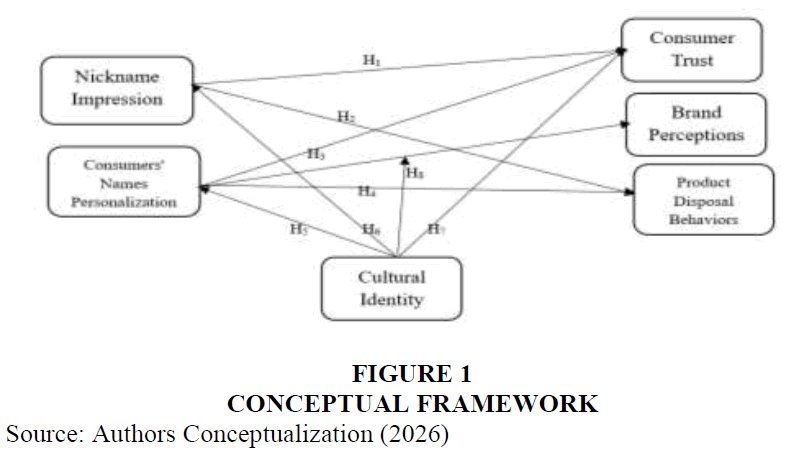
Figure 1 Conceptual Framework
Source: Authors Conceptualization (2026)
Hypotheses Development
Nickname Impression and Consumer Trust
This hypothesis draws on Social Identity Theory (Tajfel & Turner, 1979), where Nickname Impression activates cultural identity, cultivating in-group trust. Empirical research supports this connection, as brand personality shapes trust (Adha & Utami, 2021; Villagra, Monfort & Sanchez Herrera, 2021) and nickname use deepens brand connections (Liu & Liu, 2024; Zhang & Patrick, 2021). Cultural context and brand familiarity bound this relationship, with nickname meanings shifting across contexts and effects potentially intensifying with familiar brands. Nickname Impression likely boosts Consumer Trust by conveying attentiveness and authenticity, harnessing cultural alignment to solidify trust.
H1: Nickname Impression is positively related to Consumer Trust
Nickname Impression and Product Disposal Behaviors
Anchored in Social Identity Theory (Tajfel & Turner, 1979), this hypothesis posits that nickname-driven cultural connections promote responsible disposal practices. Empirical evidence stems from research on brand attachment shaping disposal decisions (Dommer & Winterich, 2021; Zhang, 2025) and cultural identity guiding consumption patterns (Sutrisno, 2023). Cultural norms around disposal and brand attachment contextualize this relationship, with effects likely more pronounced for brands embodying cultural values. Nickname Impression may foster sustainable disposal behaviors by bolstering brand loyalty and cultural congruence.
H2: Nickname Impression is positively related to Product Disposal Behaviors
Consumers' Names Personalization and Consumer Trust
Grounded in Social Identity Theory (Tajfel & Turner, 1979), this hypothesis suggests that personalized interactions via name usage cultivate trust by conveying attentiveness and cultural alignment. Empirical evidence comes from studies on personalization strengthening brand relationships and trust-building strategies (Chougala, 2024; Madhuri et al., 2024; Prem, 2025). Cultural context and interaction frequency shape this relationship, with effects likely more pronounced in high-context cultures and frequent engagements. Consumers' Names Personalization probably enhances trust by infusing interactions with authenticity and personal relevance.
H3: Consumers' Names Personalization is positively related to Consumer Trust
Consumers' Names Personalization and Product Disposal Behaviors.
Based on Social Identity Theory (Tajfel & Turner, 1979), personalized interactions cultivate brand attachment, shaping disposal decisions. Empirical evidence stems from research on personalization boosting brand loyalty (Ahmed et al., 2025; Maghembe & Magasi, 2024) and attachment theory guiding disposal behaviors (Dommer & Winterich, 2021; Wan, Shen & Choi, 2021). Cultural norms around disposal and brand attachment contextualize this relationship, with effects likely more pronounced for brands embodying cultural values. Consumers' Names Personalization may promote sustainable disposal behaviors by strengthening brand loyalty and cultural congruence.
H4: Consumers' Names Personalization is positively related to Product Disposal
Behaviors
Cultural Identity and Consumers' Names Personalization
Cultural Identity shapes the effectiveness of personalized naming strategies. Based on Social Identity Theory (Tajfel & Turner, 1979), particularly social categorization, consumers with strong cultural identities respond positively to brands using culturally congruent naming practices. Empirical evidence reveals cultural identity influences responses to culturally tailored marketing and shapes brand connections (Lapinski et al., 2025; Liu, 2023; Rachwal-Mueller & Fedotova, 2024). Boundary conditions include cultural identity strength and relevance of cultural values to brand positioning, with effects more pronounced for brands embodying Ghanaian cultural values.
H5: Cultural Identity has a positive effect on Consumers' Names Personalization.
Cultural Identity and Nickname Impression
Cultural Identity informs perceptions of brands' nickname usage. Anchored in Social Identity Theory (Tajfel & Turner, 1979), consumers with strong cultural ties favor brands using nickname strategies that align with their cultural norms. Empirical research shows cultural identity shapes brand preference and cultural alignment boosts brand responses (Jadhav, 2024; Kushwah et al., 2020; Yeboah-Banin & Quaye, 2021). Boundary conditions include cultural identity strength and brand cultural relevance, with effects more pronounced for Ghanaian brands tapping local cultural values.
H6: Cultural Identity has a positive effect on Nickname Impression
Cultural Identity and Consumer Trust
Cultural Identity significantly influences trust in brands. Anchored in Social Identity Theory (Tajfel & Turner, 1979), individuals with strong cultural ties tend to trust brands reflecting their cultural heritage. Empirical research underscores cultural similarity's role in trust-building and highlights cultural alignment's importance in cultivating trust (Brown, 2024; Hankimaa, 2021; Sikorsk & Albrecht, 2025). The relationship hinges on cultural identity strength and brand authenticity, especially for Ghanaian brands aligning with local cultural norms.
H7: Cultural Identity has a positive effect on Consumer Trust
Moderating Role of Cultural Identity in the relationship between Consumers' Names Personalization and Brand Perceptions
Anchored in Social Identity Theory (Tajfel & Turner, 1979), this hypothesis suggests cultural alignment strengthens personalization-driven brand perceptions. Empirical evidence indicates cultural identity shapes brand evaluations (Kushwah et al., 2020; Sharma, Patro & Chaudhry, 2022) and personalization influences in-group perceptions (Jawad et al., 2024). Cultural relevance and brand authenticity contextualize the moderation effect, with effects likely more pronounced for culturally congruent brands. Cultural Identity probably bolsters the personalization-brand perceptions link by conveying cultural attunement and shared values.
H8: Cultural Identity moderates the relationship between Consumers' Names
Personalization and Brand Perceptions
Methodology
Research Design
A quantitative, cross-sectional design is adopted, utilizing survey-based data collection to investigate relationships between variables. Primary data is collected through structured questionnaires, supplemented by secondary data from existing literature (Cummings, 2018; Qick & Hall, 2015).
Study Context
Ghana serves as the study's setting, a culturally vibrant and swiftly expanding consumer market in West Africa. Ghana's multifaceted cultural terrain and rising brand engagement make it a suitable context for investigating cultural influences on consumer behavior. The emphasis is on consumer interactions with brands employing nickname impressions and personalized naming strategies (Kwarteng-Amaniampong, Potgieter & Tait, 2025; Takyi et al., 2025).
Population
The population comprises Ghanaian consumers aged 18+, with internet access and exposure to branded products and services, reflecting Ghana's diverse online consumer demographic. Ghana's population stands at around 35.7 million people (United Nations, 2024).
Samplying Technique
A multi-stage probability sampling technique is adopted. Ghanaian online consumers are stratified by region (southern, central, and northern Ghana) to ensure geographical coverage. The sampling procedure involves randomly selecting online platforms (social media, forums, and websites), followed by proportional sampling from each regional stratum, and concludes with random selection of participants within strata. This approach ensures representativeness, reduces bias, and allows for generalizability of findings, supported by Ghana's increasing internet penetration and diverse online consumer demographic (Harter et al., 2010; Stone, 2009).
Sample Size Calculation
The sample size is calculated using Cochran's formula (Cochran, 1977) for large populations, targeting a representative subset of Ghana's online consumers. With a 95% confidence level, 4% margin of error, and maximum variability (p=0.5), the calculation yields a sample size of around 650 respondents, considered adequate for robust analysis given Ghana's population of 35.7 million.
n = Z^2 * p * (1-p) / e^2
= (1.96) ^2 * 0.5 * (1-0.5) / (0.04) ^2
= 650
Data Collection Instrument
The data collection instrument is a structured online questionnaire, carefully designed to capture Ghanaian online consumers' behaviors and perceptions. Established scales with robust psychometric properties are utilized, including the Nickname Impression Scale (4 items) (Laghi et al., 2011), Consumers' Names Personalization Scale (5 items) (Cook & Skrupky, 2023), Consumer Trust Scale (6 items) (Munuera-Aleman, Delgado-Ballester & Yague-Guillen, 2003), Brand Perceptions Scale (5 items) (Saracevic & Schlegelmilch, 2024), adapted Product Disposal Behaviors Scale (4 items) (Sarigöllü, Hou & Ertz, 2021), and Cultural Identity Scale (5 items) (Pan et al., 2020). A 5-point Likert scale (1=Strongly Disagree to 5=Strongly Agree) is applied uniformly to facilitate comparison and ensure respondent engagement. Statistical rigor is ensured through reliability measures (Cronbach's alpha > 0.7 threshold), validity checks (Confirmatory Factor Analysis), and multicollinearity assessments (Variance Inflation Factor < 5). This approach generates a rich dataset, elucidating Ghanaian brands' strategic use of nicknames and consumer names on trust, perceptions, and disposal behaviors, revealing the naming bonds shaping consumer-brand relationships.
Result
The demographic characteristics of the respondents are displayed in table 1.
| Table 1 Demographic Profile of Customers | |||
| Demographic Characteristics | Range | Frequency (n) | Percentage (%) |
| Age | 18-24 | 210 | 32.3 |
| 25-34 | 250 | 38.5 | |
| 35-44 | 120 | 18.5 | |
| 45 years or older | 70 | 10.8 | |
| Gender Identity | Male | 310 | 47.7 |
| Female | 320 | 49.2 | |
| Non-Binary | 2 | 0.3 | |
| Prefer not to disclose | 18 | 2.8 | |
| Highest Educ. Attainment | Secondary Education | 150 | 23.1 |
| Undergraduate Degree | 350 | 53.8 | |
| Postgraduate Degree | 100 | 15.4 | |
| Professional Certificate | 50 | 7.7 | |
| Average Monthly Expenditure (GHS) | <500 | 180 | 27.7 |
| 500- 1499 | 280 | 43.1 | |
| 1500-3000 | 140 | 21.5 | |
| <3000 | 50 | 7.7 | |
| Employment Status | Full-Time | 380 | 58.5 |
| Part-Time | 80 | 12.2 | |
| Entrepreneur | 120 | 18.5 | |
| Not Employed | 70 | 10.8 | |
| Online Shopping Frequency | Multiple times a week | 120 | 18.5 |
| About once a week | 220 | 33.8 | |
| About once a month | 200 | 30.8 | |
| Less than once a month | 110 | 16.9 | |
Structure of Analysis
To enhance the robustness, reliability, and validity of the measurement procedures and analyses, the dataset was split into two independent subsamples. This approach, known as the split-sample validation technique, is widely recommended for assessing model estimation stability and generalizability (Sarstedt et al., 2014). The total sample of 1300 respondents was randomly divided into two equal groups using SPSS's randomization function (version 28). The first subsample (n = 650) was used for Exploratory Factor Analysis (EFA) to identify the underlying factor structure. The second subsample (n = 650) was used to validate the measurement model via Confirmatory Factor Analysis (CFA) and test hypotheses using Partial Least Squares Structural Equation Modeling (PLS-SEM) with SmartPLS version 4.
Note(s): Nickname Impression (NKN), Consumers' Names Personalization (CNP), Consumer Trust (CT), Brand Perceptions (BP), Product Disposal Behaviors (PDB), Cultural Identity (CI)
Factor Analysis
To identify and validate the latent constructs, a path analysis was conducted using Partial Least Squares (PLS) in SmartPLS version 4. The primary objective was to uncover the underlying structural dimensions representing the theoretical framework. As summarized in Table 2, exploratory factor analysis revealed a six-factor solution comprising Nickname Impression (NKN), Consumers' Names Personalization (CNP), Consumer Trust (CT), Brand Perceptions (BP), Product Disposal Behaviors (PDB), and Cultural Identity (CI). These constructs were adapted from validated measurement scales to ensure conceptual consistency and reliability. Preliminary analysis showed all six constructs had items meeting approved thresholds.
| Table 2 Factor Analysis | |||||||||||
| BP | CI | CNP | CT | NKN | PDB | Cronbach's alpha | Composite reliability (rho_a) | Average variance extracted (AVE) | Mean | Standard Deviation | |
| BP1 | 0.93 | 0.926 | 1.078 | 0.864 | 2.7 | 0.777 | |||||
| BP2 | 0.952 | 2.847 | 0.709 | ||||||||
| BP3 | 0.906 | 2.62 | 0.736 | ||||||||
| CI1 | 0.926 | 0.898 | 0.9 | 0.83 | 3.01 | 0.676 | |||||
| CI2 | 0.895 | 2.88 | 0.605 | ||||||||
| CI3 | 0.913 | 2.98 | 0.663 | ||||||||
| CNP1 | 0.953 | 0.948 | 0.95 | 0.906 | 2.973 | 0.77 | |||||
| CNP2 | 0.953 | 3.04 | 0.711 | ||||||||
| CNP3 | 0.95 | 3.133 | 0.789 | ||||||||
| CT1 | 0.933 | 0.92 | 0.92 | 0.862 | 3.18 | 0.638 | |||||
| CT2 | 0.92 | 2.973 | 0.697 | ||||||||
| CT3 | 0.932 | 3.137 | 0.72 | ||||||||
| NKN1 | 0.952 | 0.937 | 0.938 | 0.889 | 3.02 | 0.757 | |||||
| NKN2 | 0.924 | 3.287 | 0.733 | ||||||||
| NKN3 | 0.952 | 3.047 | 0.733 | ||||||||
| PDB1 | 0.877 | 0.886 | 0.889 | 0.814 | 2.793 | 0.563 | |||||
| PDB2 | 0.906 | 3.06 | 0.58 | ||||||||
| PDB3 | 0.924 | 2.92 | 0.572 | ||||||||
Measurement Model
In assessing the measurement model, all factor loadings exceeded 0.70 and were statistically significant, confirming each item strongly represented its construct. Internal consistency was verified using Cronbach's alpha and composite reliability, both producing values above 0.70, indicating high reliability and coherence among measurement items (Table 2) (Sarstedt et al., 2014). Convergent validity was established through Average Variance Extracted (AVE), with every construct recording > 0.50, reinforcing the measurement model's robustness (Table 2). Discriminant validity was satisfactory, as the AVE square root for each construct exceeded its inter-construct correlations (Table 3), consistent with Sarstedt et al.'s (2014) criterion.
| Table 3 Fornell-Larcker Criterion | ||||||
| BP | CI | CNP | CT | NKN | PDB | |
| BP | 0.929 | |||||
| CI | 0.07 | 0.911 | ||||
| CNP | 0.008 | 0.403 | 0.952 | |||
| CT | 0.003 | 0.657 | 0.544 | 0.928 | ||
| NKN | 0.041 | 0.461 | -0.092 | 0.594 | 0.943 | |
| PDB | -0.034 | 0.519 | 0.4 | 0.659 | 0.465 | 0.902 |
Note(s): Nickname Impression (NKN), Consumers' Names Personalization (CNP), Consumer Trust(CT), Brand Perceptions (BP), Product Disposal Behaviors (PDB), Cultural Identity(CI)
The Heterotrait-Monotrait (HTMT) ratios for all construct pairs were below 0.85, providing additional support for discriminant validity (Henseler, Müller & Schuberth, 2018; Table 4). The PLS-SEM measurement model output is shown in Figure 2.
| Table 4 Heterotrait-Montrait Ratio (HTMT) – Matrix | ||||||||
| BP | CI | CNP | CT | NKN | PDB | CI x NKN | CI x CNP | |
| BP | ||||||||
| CI | 0.083 | |||||||
| CNP | 0.049 | 0.436 | ||||||
| CT | 0.035 | 0.721 | 0.582 | |||||
| NKN | 0.046 | 0.502 | 0.099 | 0.639 | ||||
| PDB | 0.038 | 0.582 | 0.436 | 0.73 | 0.509 | |||
| CI x NKN | 0.041 | 0.097 | 0.081 | 0.034 | 0.014 | 0.04 | ||
| CI x CNP | 0.395 | 0.111 | 0.025 | 0.07 | 0.079 | 0.067 | 0.216 | |
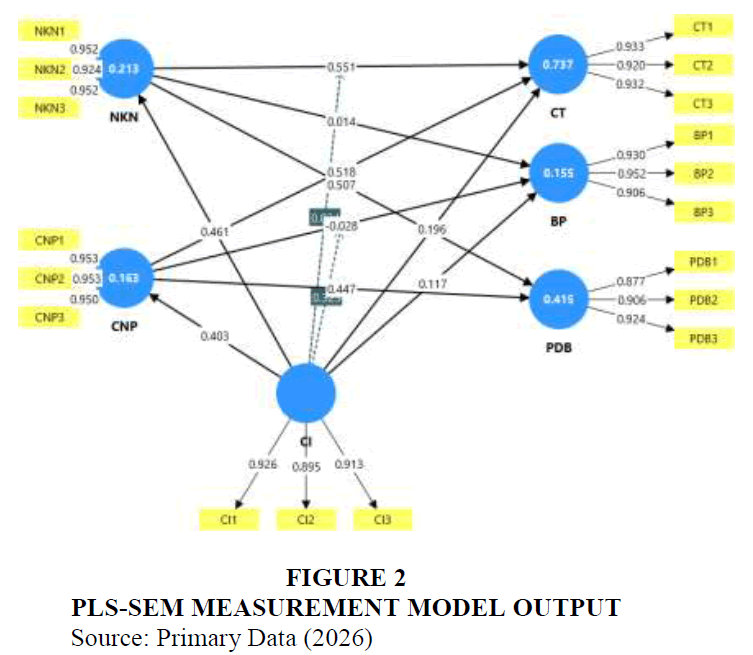
Figure 2 PLS-SEM Measurement Model Output
Source: Primary Data (2026)
Note(s): Nickname Impression (NKN), Consumers' Names Personalization (CNP), Consumer Trust(CT), Brand Perceptions (BP), Product Disposal Behaviors (PDB), Cultural Identity(CI)
Evaluation of the Structural Model
PLS-SEM with bootstrapping (5,000 resamples) was used to test the structural model and proposed links between cultural identity, naming strategies, trust, brand perceptions, and product disposal behaviors. VIF values were below 3.3, indicating no multicollinearity issues and stable parameter estimates. Cultural identity (CI) significantly influenced name methods and customer reactions. CI strongly impacted consumer name personalization (CNP) (β = 0.403, t = 7.558, p < 0.001) and nickname impression (NKN) (β = 0.461, t = 9.635, p < 0.001) (Table 5). Brands connecting with Ghanaian cultural values likely use personalized and nickname-based naming strategies. CI positively impacted consumer trust (CT) (β = 0.196, t = 4.676, p < 0.001), supporting culturally rooted branding improves authenticity and dependability (Chintagunta et al., 2006).
| Table 5 Test of Hypothesis | ||||||
| Original sample (O) | Sample mean (M) | Standard deviation (STDEV) | T statistics (|O/STDEV|) | P values | Status | |
| H1: NKN -> CT | 0.551 | 0.549 | 0.035 | 15.659 | 0 | Supported |
| H2: NKN -> PDB | 0.507 | 0.506 | 0.047 | 10.823 | 0 | Supported |
| H3: CNP -> CT | 0.518 | 0.517 | 0.038 | 13.653 | 0 | Supported |
| H4: CNP -> PDB | 0.447 | 0.447 | 0.046 | 9.804 | 0 | Supported |
| H5: CI -> CNP | 0.403 | 0.404 | 0.053 | 7.558 | 0 | Supported |
| H6: CI -> NKN | 0.461 | 0.462 | 0.048 | 9.635 | 0 | Supported |
| H7: CI -> CT | 0.196 | 0.197 | 0.042 | 4.676 | 0 | Supported |
| H8: CI x CNP -> BP | 0.323 | 0.319 | 0.056 | 5.797 | 0 | Supported |
The direct effect of cultural identification on brand perceptions (BP) was positive but not statistically significant (β = 0.117, t = 1.189, p > 0.05) (Table 5), suggesting cultural signals alone may not change brand perceptions without specific naming mechanisms. Both naming choices had significant effects. Consumer name personalization (CNP) impacted consumer trust (CT) (β = 0.518, t = 13.653, p < 0.001) and product disposal behaviors (PDB) (β = 0.447, t = 9.804, p < 0.001) (Table 5), creating emotional connections beyond purchase. Nickname impression (NKN) also impacted consumer trust (CT) (β = 0.551, t = 15.659, p < 0.001) and product disposal behaviors (PDB) (β = 0.507, t = 10.823, p < 0.001) (Table 5), highlighting culturally familiar nicknames' power. Both naming strategies' direct impact on brand perceptions was minimal, indicating trust is the principal mechanism via which nicknames exercise effect (Geoffrion, 1987).
Note(s): Nickname Impression (NKN), Consumers' Names Personalization (CNP), Consumer Trust (CT), Brand Perceptions (BP), Product Disposal Behaviors (PDB), Cultural Identity (CI)
Predictive Diagonistics of Constructs
R2 values indicated the model's explanatory power (Table 6). Consumer trust (CT) had a high R2 value (0.737), showing cultural identification and naming strategies explain much of the trust variance. Product disposal behavior (PDB) also had a strong R2 (0.415), highlighting trust-based naming connections' impact on behavior. Brand perceptions (BP) had a lower R2 (0.155), suggesting other factors influence perceptions. Effect sizes (f2) clarified predictor impacts: NKN (f2 = 0.800) and CNP (f2 = 0.753) strongly affected consumer trust (CT), while CI (f2 = 0.085) had a small-to-medium influence. NKN (f2 = 0.435) and CNP (f2 = 0.338) significantly impacted product disposal behaviors (PDB). CI's moderating effect on CNP→BP had a medium-to-large effect size (f2 = 0.178), affirming its relevance. The structural output is shown in Figure 3 (Park, Xing & Lee, 2018).
| Table 6 Predictive Diagonistics of Constructs | ||||||
| VIF | F2 | R2 | Adjusted R2 | T statistics (|O/STDEV|) | P values | |
| CI -> BP | 1.714 | 0.009 | 0.155(BP) | 0.144 | 3.629 | 0 |
| CI -> CNP | 1 | 0.194 | 0.163(CNP) | 0.16 | 3.787 | 0 |
| CI -> CT | 1.714 | 0.085 | 0.737(CT) | 0.733 | 29.352 | 0 |
| CI -> NKN | 1 | 0.27 | 0.213(NKN) | 0.21 | 4.843 | 0 |
| CI x CNP -> BP | 1.012 | 0.178 | 0.415(PDB) | 0.411 | 8.611 | 0 |
| CI x NKN -> CT | 1.012 | 0.003 | ||||
| CNP -> BP | 1.354 | 0.001 | ||||
| CNP -> CT | 1.355 | 0.753 | ||||
| CNP -> PDB | 1.009 | 0.338 | ||||
| NKN -> BP | 1.44 | 0 | ||||
| NKN -> CT | 1.442 | 0.8 | ||||
| NKN -> PDB | 1.009 | 0.435 | ||||
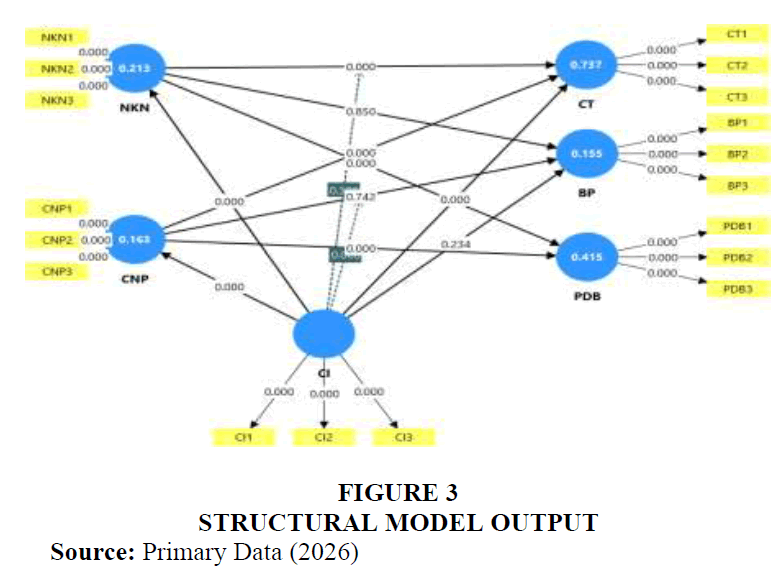
Figure 3 Structural Model Output
Source: Primary Data (2026)
Note(s): Nickname Impression (NKN), Consumers' Names Personalization (CNP), Consumer Trust (CT), Brand Perceptions (BP), Product Disposal Behaviors (PDB), Cultural Identity (CI)
Moderation Analysis
The analysis reveals cultural identity (CI) strengthens the link between consumers' names personalization (CNP) and brand perceptions (BP) (β = 0.323, long t = 5.797, p < 0.001) (Table 5). The interaction term (CI x CNP → BP) shows cultural identity's strength moderates customized communication's impact on brand perceptions. A simple slope analysis clarified this: at high (+1 SD) cultural identification, CNP's positive link with BP was stronger than at low (-1 SD) cultural identification (Figure 4). Tailored marketing works better in culturally relevant contexts.
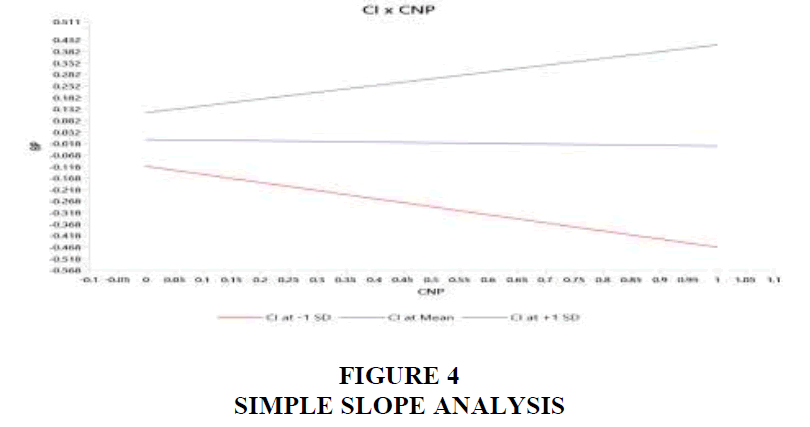
Figure 4 Simple Slope Analysis
Discussion
A significant positive correlation exists between Nickname Impression and Consumer Trust (β = 0.551, p < 0.001), supporting hypothesis (H). This aligns with Social Identity Theory (Tajfel & Turner, 1979), suggesting nickname impression activates cultural identity, enhancing in-group trust. The finding parallels research showing brand personality influences trust (Adha & Utami, 2021; Villagra, Monfort & Sanchez Herrera, 2021). Notably, this extends Social Identity Theory's applicability to Ghana's context, emphasizing cultural relevance in branding. A potential limitation is nickname meanings' context-dependence (Eckert, 2016), impacting cross-cultural generalizability. Ghanaian brands can leverage nickname strategies to foster trust. Alternative explanations like brand reputation may influence trust, underscoring cultural identity's importance in shaping consumer behavior. Future research could explore this effect's boundaries and other cultural contexts.
A positive association exists between Nickname Impression and Product Disposal Behaviors (β = 0.507, p < 0.001), supporting hypothesis (H2). This aligns with Social Identity Theory (Tajfel & Turner, 1979) and research on brand attachment influencing disposal decisions (Dommer & Winterich, 2021; Zhang, 2025). Nickname-driven cultural connections may promote responsible disposal practices. The relationship may be bounded by cultural norms and brand attachment. Competing explanations like economic factors may influence disposal behaviors, but cultural identity plays a significant role. The finding confirms literature on cultural identity shaping consumer behavior (Kushwah et al., 2020).
Besides the aforementioned findings, a significant positive correlation exists between Consumers' Names Personalization and Consumer Trust (β = 0.518, p < 0.001), thereby supporting the hypothesis (H3). This outcome resonates with Social Identity Theory (Tajfel & Turner, 1979), implying personalized interactions via name usage foster trust by signaling attentiveness and cultural alignment. The result parallels research on personalization enhancing brand relationships and trust-building strategies (Chougala, 2024; Madhuri et al., 2024; Prem, 2025). A potential concern is over-personalization, risking intrusiveness (Barlas et al., 2020). Ghanaian brands can leverage personalized naming strategies to build trust. Future research could explore optimal personalization levels in different cultural contexts.
A positive association exists between Consumers' Names Personalization and Product Disposal Behaviors (β = 0.447, p < 0.001), supporting hypothesis (H4). This aligns with Social Identity Theory (Tajfel & Turner, 1979) and research on personalization enhancing brand loyalty (Ahmed et al., 2025; Maghembe & Magasi, 2024). Personalized interactions can foster brand attachment, influencing disposal decisions. The relationship may be bounded by cultural norms and brand attachment. The finding confirms literature on personalization shaping consumer behavior (Kushwah et al., 2020).
A significant positive correlation exists between Cultural Identity and Consumers' Names Personalization (β = 0.403, p < 0.001), supporting hypothesis (H5). This aligns with Social Identity Theory (Tajfel & Turner, 1979), implying cultural identity influences personalized naming strategies' effectiveness. The result parallels research on cultural identity shaping brand connections (Lapinski et al., 2025; Liu, 2023). Ghanaian brands should consider cultural identity when developing personalized naming strategies. Alternative explanations like brand reputation may influence personalization, but cultural identity plays a significant role in shaping consumer behavior (Quick & Hall, 2015).
Further, a positive association exists between Cultural Identity and Nickname Impression (β = 0.461, p < 0.001), supporting hypothesis (H6). This outcome resonates with Social Identity Theory (Tajfel & Turner, 1979), implying cultural identity shapes perceptions of brands' nickname usage. The result parallels research on cultural identity influencing brand preference (Jadhav, 2024; Kushwah et al., 2020). Ghanaian brands can leverage cultural identity to create effective nickname strategies, fostering stronger connections with consumers.
Moreover, a significant positive correlation exists between Cultural Identity and Consumer Trust (β = 0.196, p < 0.001), supporting hypothesis (H7). This outcome resonates with Social Identity Theory (Tajfel & Turner, 1979), implying cultural identity substantially shapes trust in brands. The result parallels research on cultural similarity in trust-building (Brown, 2024; Hankimaa, 2021). The finding implies Ghanaian brands can leverage cultural identity to build trust with consumers, fostering long-term relationships and loyalty.
Finally, a significant moderation effect of Cultural Identity exists on the relationship between Consumers' Names Personalization and Brand Perceptions (β = 0.323, p < 0.001), supporting hypothesis (H8). This outcome aligns with Social Identity Theory (Tajfel & Turner, 1979), implying cultural alignment amplifies personalization-driven brand perceptions. The result parallels research on cultural identity shaping brand evaluations (Kushwah et al., 2020; Sharma, Patro & Chaudhry, 2022). Ghanaian brands should consider cultural identity when developing personalized naming strategies to enhance brand perceptions.
Theoretical Implication
The study's findings have substantial theoretical implications, elucidating the complex relationships between cultural identity, nickname impression, and consumers' names personalization in shaping consumer trust and product disposal behaviors. The results corroborate and extend Social Identity Theory (Tajfel & Turner, 1979), highlighting cultural identity's pivotal role in influencing Ghanaian consumer behavior. Incorporating cultural identity into branding strategies is crucial for augmenting trust, brand perceptions, and sustainable disposal practices. Personalized naming strategies can foster trust and promote responsible disposal behaviors. These results may stimulate further research, exploring these effects' boundaries and investigating other cultural contexts, contributing to a nuanced understanding of cultural identity's role in shaping consumer behavior.
Practical and Managerial Implication
The study's findings have profound practical and managerial implications, offering valuable insights for managers and marketers navigating the Ghanaian market. Incorporating cultural identity into branding strategies can substantially augment consumer trust and brand perceptions. Managers would be well-advised to prioritize the development of culturally sensitive branding initiatives, harnessing the power of nickname impression and personalized naming strategies to cultivate robust brand-consumer relationships. The results also suggest that managers can effectively promote sustainable disposal practices by emphasizing cultural identity and personalized interactions. To achieve this, organizations may need to invest in market research to gain a deeper understanding of the cultural nuances of their target audience, enabling the development of tailored strategies that resonate with local values and norms. The judicious integration of cultural identity into branding and marketing efforts is likely to yield significant benefits for organizations operating in Ghana and potentially other similar cultural contexts.
Limitation and Further Studies
The study has several limitations. Its cross-sectional design precludes causal inferences, necessitating longitudinal studies to examine the dynamics of cultural identity, nickname impression, and personalized naming strategies over time. The focus on Ghanaian online consumers may limit the applicability of findings to other contexts, underscoring the importance of replicating this study in diverse cultural settings. The reliance on self-reported data may also introduce biases, indicating that future research should incorporate objective measures or mixed-methods approaches to mitigate these limitations.
The context-dependence of nickname meanings and the risks of over-personalization are additional limitations warranting consideration. The former may impact the applicability of findings across cultures, while the latter suggests that optimal personalization levels may vary across cultures and contexts. Notwithstanding these limitations, this study highlights several avenues for future research. Examining the boundaries of cultural identity's influence on consumer behavior, exploring potential moderators such as age, education, or socioeconomic status, would provide valuable insights. Investigating the impact of cultural identity on other marketing outcomes, such as brand loyalty or word-of-mouth, would be a fruitful pursuit. Exploring the role of digital technologies in shaping cultural identity and consumer behavior would be a timely and relevant endeavor. Further research could also elucidate the interplay between cultural identity and other branding strategies, such as storytelling or influencer marketing, to provide a more comprehensive understanding of cultural identity's role in shaping consumer behavior.
Conclusion
In conclusion, this study makes a significant contribution to the literature on cultural identity and consumer behavior, shedding light on the dynamics between nickname impression, consumers' names personalization, and cultural identity in shaping consumer trust and product disposal behaviors in Ghana. It addresses a geographical and population gap in existing scholarship, focusing on Ghanaian brands and consumers. By exploring how Ghanaian brands' use of nicknames and consumer names influences trust, perceptions, and disposal behaviors, this study extends Social Identity Theory (Tajfel & Turner, 1979) to a new context, filling a critical gap. The findings highlight cultural identity's significance in shaping consumer behavior, emphasizing the importance of incorporating cultural identity into branding strategies to enhance trust, brand perceptions, and sustainable disposal practices. This study serves as a foundation for future research and offers insights for managers and marketers developing culturally tailored marketing strategies in Ghana and similar regions.
References
Aaker, J. L. (1997). Dimensions of brand personality. Journal of marketing research, 34(3), 347-356.
Indexed at, Google Scholar, Cross Ref
Acar, Y. (2020). Post Consumption. Current Researches in Humanities and Social Sciences, Montenegro, Ivpe Cetinje, 310-325.
Adha, H. V., & Utami, W. (2021). The effect of brand experience, brand personality and brand trust on brand loyalty. Journal of Business and Management Review, 2(12), 861-871.
Indexed at, Google Scholar, Cross Ref
Ahmed, K., & Ben Rached, K. S. (2023). The Determinants of Consumer Trust During Retailer Brand Name Substitution. International Journal of Entrepreneurship, 27, 1-19
Ahmed, S. M. M., Owais, M., Raza, M., Nadeem, Q., & Ahmed, B. (2025). The impact of AI-driven personalization on consumer engagement and brand loyalty. Qlantic Journal of Social Sciences, 6(1), 311-323.
Indexed at, Google Scholar, Cross Ref
Aleksandrova, A. (2020). EXPRESSING NEGATIVE ATTITUDE BY THE USE OF NICKNAMES. Knowledge: International Journal, 42(6).
Ampa-Korsah, H. A. G. A. R. (2021). Symbolic values of Ghanaian fabric names and their impact on consumer purchase intentions (Doctoral dissertation, University of Education, Winneba).
Ampa-Korsah, H., Aboagyewaa-Ntiri, J., Adu-Gyamfi, V., & Yeboah, A. (2022). Consumers Knowledge of Symbolic Names and Meanings of Ghanaian Fabrics. International Journal of African Society, Cultures and Traditions.
Indexed at, Google Scholar, Cross Ref
Arora, S. V., Kalro, A. D., & Sharma, D. (2023). Positioning products through names: effect of sound symbolism on perception of products with blended brand names. Journal of Product & Brand Management, 32(3), 361-378.
Indexed at, Google Scholar, Cross Ref
Barlas, P., Kyriakou, K., Chrysanthou, A., Kleanthous, S., & Otterbacher, J. (2020, July). OPIAS: Over-Personalization in Information Access Systems. In Adjunct Publication of the 28th ACM Conference on User Modeling, Adaptation and Personalization (pp. 103-104).
Indexed at, Google Scholar, Cross Ref
Bendell, B. L., & Kristal, E. K. (2023). Five naming strategies to help tell your organization’s story. Business Horizons, 66(3), 387-404.
Indexed at, Google Scholar, Cross Ref
Brown, M. (2024). Bridging the Trust Gap: Unraveling the Dynamics of Trust in Africa. Available at SSRN 4993648.
Burke, P. J., & Reitzes, D. C. (1981). The link between identity and role performance. Social psychology quarterly, 83-92.
Indexed at, Google Scholar, Cross Ref
Chintagunta, P., Erdem, T., Rossi, P. E., & Wedel, M. (2006). Structural modeling in marketing: review and assessment. Marketing Science, 25(6), 604-616.
Indexed at, Google Scholar, Cross Ref
Chougala, M. K. (2024). The Role of Digital Marketing in Driving Customer Acquisition, Personalization, and Brand Trust in Fintech Services. Journal of Computational Analysis & Applications, 33(6).
Cochran, W. G. (1977). Sampling techniques (3rd ed.). New York: Wiley.
Cook, D. A., & Skrupky, L. P. (2023). Measuring personalization, embodiment, and congruence in online learning: a validation study. Academic Medicine, 98(3), 357-366.
Indexed at, Google Scholar, Cross Ref
Cummings, C. L. (2018). Cross-sectional design. The SAGE Encyclopedia of Communication Research Methods. Thousand Oaks: SAGE Publications Inc. Retrieved.
Dommer, S. L., & Winterich, K. P. (2021). Disposing of the self: The role of attachment in the disposition process. Current Opinion in Psychology, 39, 43-47.
Indexed at, Google Scholar, Cross Ref
Eckert, P. (2016). Variation, meaning and social change. Sociolinguistics: theoretical debates, 68-85
Indexed at, Google Scholar, Cross Ref
Erdem, T., & Swait, J. (1998). Brand equity as a signaling phenomenon. Journal of consumer Psychology, 7(2), 131-157
Indexed at, Google Scholar, Cross Ref
Fang, D., Zhang, G., Yang, X., & Liu, Y. (2024). Should I believe this review? The impact of nicknames on perceived authenticity of online reviews in peer-to-peer accommodation. Journal of Travel & Tourism Marketing, 41(8), 1107-1123.
Indexed at, Google Scholar, Cross Ref
Geoffrion, A. M. (1987). An introduction to structured modeling. Management Science, 33(5), 547-588.
Indexed at, Google Scholar, Cross Ref
Hankimaa, A. (2021). Building trust in cross-cultural relationships: Active trust through culture mobilisation in Finnish-Indian project teams (Doctoral dissertation, University of Westminster).
Harter, R., Eckman, S., English, N., & O’Muircheartaigh, C. (2010). Applied sampling for large-scale multi-stage area probability designs. Handbook of survey research, 2, 169-199.
Henseler, J., Müller, T., & Schuberth, F. (2018). New guidelines for the use of PLS path modeling in hospitality, travel, and tourism research.
Indexed at, Google Scholar, Cross Ref
Hornsey, M. J. (2008). Social identity theory and self‐categorization theory: A historical review. Social and personality psychology compass, 2(1), 204-222.
Indexed at, Google Scholar, Cross Ref
Ileri, Y. Y., & Arik, O. (2018). Investigation of resistance, perception and attitudes of employees against change in information systems using change management approach: A study in a University Hospital. Journal of Information & Knowledge Management, 17(04), 1850038.
Indexed at, Google Scholar, Cross Ref
Jadhav, R. (2024). Examine How Cultural Differences Impact Marketing Strategies and Consumer Preferences. International Journal For Multidisciplinary Research, 6(6).
Indexed at, Google Scholar, Cross Ref
Jawad, M., Talreja, K., Bhutto, S. A., & Faizan, K. (2024). Investigating how AI personalization algorithms influence self-perception, group identity, and social interactions online. Review of Applied Management and Social Sciences, 7(4), 533-550
Indexed at, Google Scholar, Cross Ref
Kannou, A., Rached, K. B., & Abdelkader, S. (2024). The impact of retailer brand name substitution on consumer trust. International Journal of Professional Business Review: Int. J. Prof. Bus. Rev., 9(1), 11.
Indexed at, Google Scholar, Cross Ref
Keller, K. L. (1993). Conceptualizing, measuring, and managing customer-based brand equity. Journal of marketing, 57(1), 1-22.
Indexed at, Google Scholar, Cross Ref
Kotha, S. (1994). Mass customization: the new frontier in business competition.
Indexed at, Google Scholar, Cross Ref
Kou, Y., Shuai, Z., & Powpaka, S. (2021). The name effect in customization service: the role of psychological ownership and self-threat. Journal of Service Theory and Practice, 31(4), 493-511.
Indexed at, Google Scholar, Cross Ref
Kushwah, S., Shree, D., Rezaei, S., & Sagar, M. (2020). The impact of culture on consumer’s perception of brand identity: Evidences from Gulf countries. Journal of Islamic Marketing, 11(2), 479-496.
Kwarteng-Amaniampong, E., Potgieter, A., & Tait, M. (2025). My heritage matters: Building a strong brand, awareness and image. South African Journal of Business Management, 56(1), 4771.
Indexed at, Google Scholar, Cross Ref
Laghi, F., Pallini, S., D’Alessio, M., & Baiocco, R. (2011). Development and validation of the efficacious self-presentation scale. The Journal of genetic psychology, 172(2), 209-219.
Indexed at, Google Scholar, Cross Ref
Lapinski, M. K., Oetzel, J. G., Park, S., & Williamson, A. J. (2025). Cultural tailoring and targeting of messages: A systematic literature review. Health Communication, 40(5), 808-821.
Indexed at, Google Scholar, Cross Ref
Liu, H. (2023). Cultural influence on consumer behavior: Strategies for adapting marketing campaigns in a globalized world. International Journal of Education, Humanities and Social Sciences, 1(1), 10-70088.
Indexed at, Google Scholar, Cross Ref
Liu, Y., & Liu, M. (2024). The interactive effect of affectionate nicknames and streamer type on streamer attitude in E-commerce live streaming: the mediating role of psychological closeness. Frontiers in Psychology, 15, 1498235.
Indexed at, Google Scholar, Cross Ref
Mackenzie, C. (2020). Vulnerability, insecurity and the pathologies of trust and distrust. International Journal of Philosophical Studies, 28(5), 624-643.
Indexed at, Google Scholar, Cross Ref
Madhuri, A., Reddy, S. M., Kumar, B. R., & Manchem, S. (2024). Exploring the role of personalization in e-commerce: Impacts on consumer trust and purchase intentions. Eur. Econ. Lett, 14(3), 907-919.
Indexed at, Google Scholar, Cross Ref
Madieva, M. (2024). NATIONAL AND CULTURAL FEATURES OF BRAND NAMES. Scientific journal of the Fergana State University, (3), 119-119.
Maghembe, M., & Magasi, C. (2024). The Role of Customer Perceived Value, Brand Trust and Service Personalization in Shaping Customer Loyalty. International Journal of Management, Accounting & Economics, 11(9).
Memon, M. A., Cheah, J. H., Ramayah, T., Ting, H., Chuah, F., & Cham, T. H. (2019). Moderation analysis: issues and guidelines. Journal of Applied Structural Equation Modeling, 3(1), 1-11.
Indexed at, Google Scholar, Cross Ref
Mickiene, I., & Baranauskiene, R. (2023). Nicknames as a socio-cultural phenomenon among Lithuanian youth. Personal Names and Naming from an Anthropological-Linguistic Perspective, 4, 73.
Munuera-Aleman, J. L., Delgado-Ballester, E., & Yague-Guillen, M. J. (2003). Development and validation of a brand trust scale. International journal of market research, 45(1), 1-18.
Indexed at, Google Scholar, Cross Ref
Musonda, N., & Siame, P. (2025). The impact of language on branding: A comprehensive analysis. Linguistic Exploration, 2(1), 37-46.
O'Rourke, A. M., Lin, J., Sung, B., & Septianto, F. (2025). Social dynamics of luxury customization: The unique impact of name personalization. Psychology & Marketing, 42(2), 493-513.
Indexed at, Google Scholar, Cross Ref
Pan, X., Hao, A., Guan, C., & Hsieh, T. J. (2020). Affective and cognitive dimensions in cultural identity: scale development and validation. Asia Pacific Journal of Marketing and Logistics, 32(6), 1362-1375.
Indexed at, Google Scholar, Cross Ref
Park, Y. S., Xing, K., & Lee, Y. S. (2018). Explanatory cognitive diagnostic models: Incorporating latent and observed predictors. Applied psychological measurement, 42(5), 376-392.
Indexed at, Google Scholar, Cross Ref
Prem, R. (2025). Hyper-Personalization in Digital Marketing: Evaluating Consumer Trust and Brand Loyalty in the Age of AI-Driven Campaigns.
Indexed at, Google Scholar, Cross Ref
Quick, J., & Hall, S. (2015). Part three: The quantitative approach. Journal of perioperative Practice, 25(10), 192-196.
Indexed at, Google Scholar, Cross Ref
Rachwal-Mueller, A., & Fedotova, I. (2024). The impact of cultural factors on consumer behavior: a holistic model for adaptive marketing approaches. Економіка транспортного комплексу, (44), 165-184.
Indexed at, Google Scholar, Cross Ref
Saracevic, S., & Schlegelmilch, B. B. (2024). Activist brand perception: Conceptualization, scale development and validation. Journal of Business Research, 180, 114732.
Indexed at, Google Scholar, Cross Ref
Sarigöllü, E., Hou, C., & Ertz, M. (2021). Sustainable product disposal: Consumer redistributing behaviors versus hoarding and throwing away. Business Strategy and the Environment, 30(1), 340-356.
Indexed at, Google Scholar, Cross Ref
Sarstedt, M., Ringle, C. M., Henseler, J., & Hair, J. F. (2014). On the emancipation of PLS-SEM: A commentary on Rigdon (2012). Long range planning, 47(3), 154-160.
Indexed at, Google Scholar, Cross Ref
Sharma, A., Patro, S., & Chaudhry, H. (2022). Brand identity and culture interaction in the Indian context: a grounded approach. Journal of Advances in Management Research, 19(1), 31-54.
Indexed at, Google Scholar, Cross Ref
Sikorski, M. T., & Albrecht, A. (2025). Trust in the context of intercultural negotiations: A systematic review. Negotiation and Conflict Management Research, 18(1), 1-41.Google Scholar
Stone, P. (2009). The logic of random selection. Political theory, 37(3), 375-397.
Indexed at, Google Scholar, Cross Ref
Sutrisno, S. (2023). Changes in media consumption patterns and their implications for people's cultural identity. Technology and Society Perspectives (TACIT), 1(1), 18-25.
Indexed at, Google Scholar, Cross Ref
Tajfel, H., Turner, J., Austin, W. G., & Worchel, S. (2001). An integrative theory of intergroup conflict. Intergroup relations: Essential readings, 94-109.
Takyi, S. A., Owusu, J., Korsah, L. A., Issaka, A., Boateng, P. A., & Owusu-Yeboah, E. (2025). Investigating the effect of cultural influences and consumer behaviour on product branding in the manufacturing sector in Ghana. IOSR Journal of Business and Management, 27(1-3), 1-8.
Indexed at, Google Scholar, Cross Ref
Trzcielinski, S., Mongiat-Leveque, I., & Besson, D. (2024). The Impact of the Perception of Relational Loyalty on Purchasing Sustainable Products–Pilot Study. European Research Studies Journal, 27(1), 519-540.
Indexed at, Google Scholar, Cross Ref
Van Stekelenburg, J., Van Leeuwen, A., & van Troost, D. M. M. (2013). Politized Identity. In The Wiley-Blackwell encyclopedia of social and political movements (pp. 974-977). Wiley‐Blackwell.Google Scholar
Villagra, N., Monfort, A., & Sanchez Herrera, J. (2021). The mediating role of brand trust in the relationship between brand personality and brand loyalty. Journal of Consumer Behaviour, 20(5), 1153-1163.
Indexed at, Google Scholar, Cross Ref
Wan, C., Shen, G. Q., & Choi, S. (2021). The place-based approach to recycling intention: Integrating place attachment into the extended theory of planned behavior. Resources, Conservation and Recycling, 169, 105549
Indexed at, Google Scholar, Cross Ref
Wang, F., Liu, Q., & Yin, X. (2023). Exploring influencing factors of consumers’ wasted household appliances disposal behavior considering product heterogeneity in China. Journal of Cleaner Production, 418, 138065.
Indexed at, Google Scholar, Cross Ref
Yamagishi, T., Jin, N., & Miller, A. S. (1998). In‐group bias and culture of collectivism. Asian Journal of Social Psychology, 1(3), 315-328.
Indexed at, Google Scholar, Cross Ref
Yeboah-Banin, A. A., & Quaye, E. S. (2021). Pathways to global versus local brand preferences: The roles of cultural identity and brand perceptions in emerging African markets. Journal of Global Marketing, 34(5), 372-391.
Indexed at, Google Scholar, Cross Ref
Zhang, M., & Ma, X. (2025). The subtle balance of trust: how employees’ expected and perceived trust influence impression management. Frontiers in Psychology, 16, 1526860.
Indexed at, Google Scholar, Cross Reff
Zhang, Y. (2025). The influence of perceived brand social responsibility on consumers' green purchasing behaviour: the mediating role of brand attachment. International Journal of Sustainable Development, 28(1), 58-72.
Indexed at, Google Scholar, Cross Ref
Zhang, Z., & Patrick, V. M. (2021). Mickey D’s has more street cred than McDonald’s: Consumer brand nickname use signals information authenticity. Journal of Marketing, 85(5), 58-73.
Indexed at, Google Scholar, Cross Ref
Zhang, Z., Ye, N., & Thomson, M. (2025). BMW is powerful, beemer is not: nickname branding impairs brand performance. Journal of Marketing, 89(1), 135-152.
Indexed at, Google Scholar, Cross Ref
Received: 31-Mar-2026, Manuscript No. AMSJ-26-17067; Editor assigned: 01-Apr-2026, PreQC No. AMSJ-26-17067(PQ); Reviewed: 15-Apr-2026, QC No. AMSJ-26-17067; Revised: 22-Apr-2026, Manuscript No. AMSJ-26-17067(R); Published: 28-Apr-2026