Research Article: 2026 Vol: 30 Issue: 2
Plagiarism, Sharing Knowledge, and the True Purpose of Research: A Comprehensive Exploration
B. Haribalakrishnan, Mepco School of Management Studies, Mepco Schlenk Engineering College, India
N.M. Gnanaprakash, Mepco School of Management Studies, Mepco Schlenk Engineering College, India
M.J. Vishnu Prasad, Mepco School of Management Studies, Mepco Schlenk Engineering College, India
Citation Information: Haribalakrishnan., B, Gnanaprakash., N.M & Prasad., M.J.V. (2026) Plagiarism, Sharing Knowledge, and the True Purpose of Research: A Comprehensive Exploration. Academy of Marketing Studies Journal, 30(2), 1-09.
Abstract
Plagiarism is often narrowly defined as the unacknowledged use of another’s work, but such a view overlooks the ethical complexity surrounding intent and impact. This paper reexamines plagiarism through a broader lens, emphasizing that the purpose and consequences of knowledge use matter as much as the act itself. Drawing on the principles of integrity, openness, and societal benefit, the discussion highlights how sharing ideas for collective advancement fosters innovation, while appropriation for personal gain undermines trust and progress. Anchored in the philosophy that the true purpose of research is to create meaningful change before seeking recognition or financial reward—paralleling Maslow’s hierarchy of needs—the paper underscores the role of open access in democratizing knowledge, especially for underserved communities. Historical and contemporary examples illustrate how reframing plagiarism, coupled with responsible knowledge sharing, can transform research culture, promote collaboration, and accelerate societal development.
Plagiarism, Knowledge Sharing, Research Integrity, Open Access, Ethics in Research.
Introduction
Plagiarism is often defined simply as copying another’s work without proper acknowledgment, a practice widely condemned in academia and research. But such a narrow definition misses the deeper nuances behind plagiarism and the complex ethics involved. What truly matters is not just the act of copying, but the intent behind it. When ideas are shared generously for noble causes such as advancing knowledge, educating others, or solving societal problems, this openness fuels progress and innovation. In contrast, copying for selfish gain, deception, or harm obstructs growth and betrays ethical principles.
This article explores the broader context of plagiarism, rethinking it through the lens of intention and impact. It discusses the true purpose of researchto create meaningful changebefore seeking honor or financial reward, mirroring Maslow’s hierarchy of needs. It examines the critical role of open access in democratizing knowledge and accelerating innovation worldwide, especially in underserved communities. Additionally, it reflects on the responsibility of educators and researchers to uphold integrity, generosity, and collaboration, ensuring that knowledge flows freely without compromising respect and credit.
Through this lens, plagiarism is not a black-and-white issue but one that requires understanding, balance, and a commitment to the common good. We will draw on historical and contemporary examples to illustrate how redefining plagiarism and embracing open sharing can transform research culture and accelerate societal progress.
The Ethics of Plagiarism: Intent Matters
Plagiarism, as traditionally understood, is defined as the unauthorized use of someone else’s language, ideas, or work without proper acknowledgment. It is universally condemned across academic institutions, scholarly journals, and professional ethics codes. This strict definition serves an important functionprotecting the integrity of intellectual contributions and discouraging dishonesty. However, the problem arises when this definition is applied uniformly, without considering context, purpose, or intent. Not all acts of copying are malicious, and not all sharing of ideas is unethical. The deeper ethical question is not what was copied, but why.
If copying is done to claim false credit, gain unfair academic or professional advantage, or deceive others into believing that someone else’s work is original, it constitutes a clear ethical violation. Such behavior erodes the trust on which academic and scientific communities are built. It disrespects the effort, time, and creativity of the original author and often undermines collaboration. In a world increasingly driven by recognition and metricscitations, impact factors, grant winsthe temptation to misuse someone’s ideas for personal benefit has grown, making safeguards against plagiarism necessary.
However, not all instances of idea reuse are dishonest. In fact, ethical knowledge sharing, done with proper credit or in service of the public good, is central to how human progress happens. The COVID-19 pandemic is a powerful real-world example. When the virus emerged, scientists across the globe began freely sharing genome sequences, case data, and early findings. Governments, universities, and pharmaceutical companies set aside profit concerns to collaborate. This radical openness, often bypassing traditional publication gates, allowed vaccines like those from Pfizer-BioNTech and Moderna to be developed within a yearan unprecedented feat in medical history (Callaway, 2020). In this case, openness saved lives Table 1.
| Table 1 Ethical Status of Copying and Sharing Practices | ||
| Type of copying / sharing | Estimated Frequency (%) | Ethical Status (Score out of 10) |
| Copying with our acknowledgment | 25 | 1 |
| Copying with our acknowledgment | 45 | 9 |
| Collaborative open –Source reuse | 30 | 10 |
The table shows estimated frequency (%) and ethical score (out of 10) for different types of copying and collaborative knowledge-sharing behaviors.
Another example is the open-source software movement, which thrives on the principle of collaborative innovation. Platforms like GitHub enable developers worldwide to share code openly, inviting others to build upon, improve, and repurpose it. Linux, the world’s most-used server operating system, is a product of this model. Here, copying is not condemnedit is celebrated, as long as the original contributors are acknowledged and the improvements serve the larger community (Feller & Fitzgerald, 2002). These environments show that when intent is aligned with collective growth, copying becomes a form of tribute and expansion, not theft.
This reoriented ethical lens suggests that plagiarism should be understood not as the mere act of copying, but as the misuse of copying with wrongful intentintent to deceive, to misappropriate credit, or to delay or obstruct positive change. Ethical use of knowledge, on the other hand, requires transparency, acknowledgment, and a commitment to the common good. This shift calls for a nuanced approach in education: instead of teaching students only how to avoid penalties, educators must also teach when and how sharing can be powerful, ethical, and even necessary Figure 1.
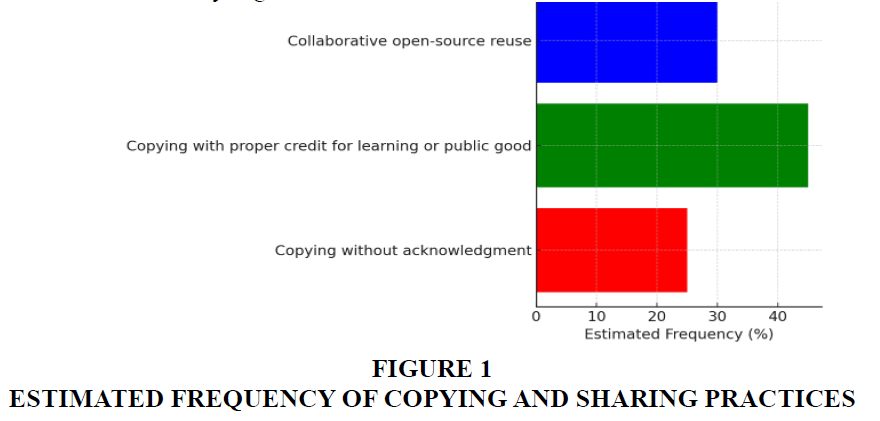
Figure 1 Estimated Frequency of Copying and Sharing Practices
The chart compares the percentage distribution of different copying behaviors, highlighting ethical collaboration and proper credit practices versus unethical copying without acknowledgement.
In today’s interconnected, high-stakes world, clinging to rigid, mechanical definitions of plagiarism can ironically limit innovation and discourage bold, collaborative thinking. Recognizing the ethical context of copying opens space for productive discourse, smarter knowledge dissemination, and a deeper commitment to the core values of research: integrity, openness, and impact.
The True Purpose of Research: Change as the Highest Goal
Research, by its nature, is a multidimensional endeavour. It is fuelled by curiosity, driven by questions, and sustained by ambition and support. However, amidst these motivations, the true and highest goal of research must remain clear: to bring about meaningful change. This change might appear as a breakthrough technology, a reformed educational method, a new philosophical insight, or a scientific solution to a longstanding problem. Regardless of the form it takes, research becomes truly valuable only when it touches lives, transforms communities, or elevates understanding in a way that endures beyond personal recognition Table 2.
| Table 2 Research Focus and Relative Importance Distribution | |
| Research Focus | Relative Importance (%) |
| Change/Impact (Self- Actualization) | 60 |
| Honor/ Recognition(Esteem Needs) | 25 |
| Money / Resources (Safety Needs) | 15 |
This philosophy resonates deeply with Maslow’s hierarchy of needs (Maslow, 1943), a psychological framework describing human motivation. When applied to the outcomes of research, the hierarchy takes on a profound significance:
• Change = Self-Actualization: The peak of the pyramid, where researchers fulfil their potential by solving real-world challenges and contributing to humanity.
• Honor = Esteem Needs: Recognition, prestige, and respect come as a result of valuable contributions but they are not the primary goal.
• Money = Safety Needs: Financial rewards provide security and enable further research, but should support, not drive, the process.
The table presents the percentage importance of different research motivations, highlighting self-actualization, esteem needs, and safety-related resource factors.
When researchers aim first for self-actualization through impact, honor and resources follow organically. If the hierarchy is reversedwhere money or recognition is the main pursuitresearch risks becoming performative, transactional, or even exploitative. In such cases, knowledge may be hoarded, delayed, or manipulated to serve personal gain rather than public good Figure 2.
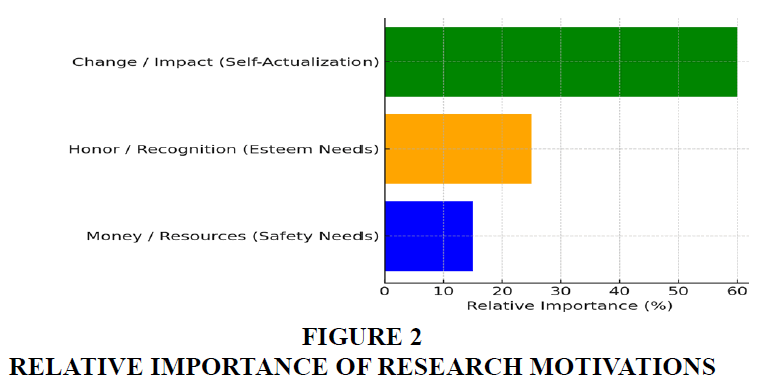
Figure 2 Relative Importance of Research Motivations
The bar chart compares the percentage importance of change/impact, recognition, and financial/resource motivations in research focus.
History offers compelling examples of this principle in action. Nikola Tesla, a brilliant inventor, prioritized innovation over commercial success. His visionary work in electricity, radio, and wireless communication laid the foundation for much of modern technology. Yet Tesla died in relative obscurity, unrecognized by the mainstream in his time, while Thomas Edison, who often sought patents and commercial rights, became the household name. Tesla's enduring legacy reminds us that impact outlives fame (Cheney, 2011).
In the realm of education, Dr. A.P.J. Abdul Kalam exemplified a life devoted to service through knowledge. As a scientist, educator, and former President of India, Kalam repeatedly emphasized that true education empowers people to serve others. He often spoke about combining scientific knowledge with moral vision encouraging students not to chase degrees for status or salaries, but to become instruments of national and human development (Kalam, 2003). His values-based approach inspired countless young minds to pursue research not for publication counts or awards, but for real-world contribution.
The metaphor of the kuthuvilaku, or traditional oil lamp, versus the modern tubelight, offers a cultural lens on this idea. The kuthuvilaku shares its flame to light many other lamps, illuminating the entire space while retaining its original fire. It symbolizes the researcher who shares openly, enabling others to grow, learn, and innovate. The tubelight, though powerful, is self-contained bright but isolated, unable to spread its light further. In academic terms, the kuthuvilaku represents the spirit of collaborative and open research, while the tubelight reflects knowledge kept behind barriers of ego, fear, or competition.
In today’s academic climate, where researchers often face pressure to produce measurable outputs publications, citations, grants the original spirit of inquiry can become diluted. Quantity may overtake quality, and the impact factor may overshadow actual human impact. To preserve the soul of research, scholars must constantly return to the central question: Does my work lead to change? Does it improve understanding, systems, lives? If the answer is yes, then even without external recognition, the research is deeply meaningful.
To cultivate this mindset, institutions and mentors must help students shift from a product-based to a purpose-based research orientation. Rather than measuring success solely through journals or conference presentations, we must also recognize the silent victories: when a rural teacher uses a new pedagogy learned from a study, or a community adopts a sustainable farming method based on a published idea, or a student applies a concept to solve a local issue.
In this light, the true purpose of research is not just to discover but to distribute. Not just to achieve but to activate. Not to withhold but to ignite. As more researchers embrace this principle, the landscape of knowledge creation will transform no longer a race for prestige, but a shared journey toward progress.
Open Access and the Democratization of Knowledge
In the 21st century, the ability to share, access, and apply knowledge is no longer just a matter of intellectual privilege it is a matter of global equity. The Open Access (OA) movement represents a shift in academic philosophy: from knowledge as a commodity to knowledge as a public good. At its core, open access seeks to remove the barriers especially financial and institutional that prevent individuals and communities from engaging with cutting-edge research. This democratization of knowledge is not just desirable it is essential for solving global problems in real time.
Traditionally, much of academic publishing has been locked behind paywalls, accessible only to those affiliated with well-funded universities or organizations. This creates a stark divide: while researchers in elite institutions enjoy near-unlimited access to journals and databases, countless students, educators, policy-makers, and grassroots innovators in developing countries or underserved regions are excluded. The result is a tragic paradox life-saving knowledge and socially critical research often sit behind digital walls, unreachable to those who could apply them most effectively.
Open access disrupts this system. It calls for research, especially when publicly funded, to be made freely available to everyone online, without subscription fees. Movements like Plan S, championed by a coalition of European research funders, require that scientific publications resulting from publicly funded research be published in compliant open-access journals or platforms. Their philosophy is simple yet powerful: if taxpayers fund research, the results should be accessible to all (cOAlition , 2018).
The benefits of OA are far-reaching. A health worker in a remote part of Africa can access the latest research on malaria treatment without waiting for an NGO to translate findings. A rural educator in India can adopt innovative teaching methods shared in pedagogical journals. A policy-maker in a small island nation can draft climate-resilient strategies using global environmental research. These are not abstract examples they represent real, urgent needs that open access empowers us to meet Table 3.
| Table 3 Key Aspects of Open Access and their Estimated Contributions | |
| Key Aspect of OA | Estimated Contribution (%) |
| Accessibility (Free access to research) | 40 |
| Interdisciplinary Innovation | 25 |
| Speed Of Problem- Solving | 20 |
| Equity in Education and Knowledge Co- Creation | 15 |
The table shows the percentage contribution of major open-access benefits, including accessibility, innovation, problem-solving speed, and educational equity.
Importantly, open access also strengthens interdisciplinary innovation. When data and findings are freely available, researchers across domains can combine insights in unexpected, transformative ways. For instance, the convergence of AI technology and genetics has accelerated medical diagnostics, and much of this has relied on openly available datasets. The Human Genome Project, one of the largest public science initiatives in history, made its data freely accessible from the beginning, catalysing a wave of scientific and medical breakthroughs.
However, the open access movement is not without its challenges and criticisms. Some argue that OA shifts the financial burden from readers to authors, through Article Processing Charges (APCs), creating a new form of inequality where only well-funded researchers can publish. Others question whether OA journals maintain the same editorial rigor as traditional ones. Still, these issues are being actively addressed through institutional subsidies, non-profit publishing platforms, and innovative peer review models. The core ethical foundation of open access remains unshaken: knowledge should not be a luxury good Figure 3.
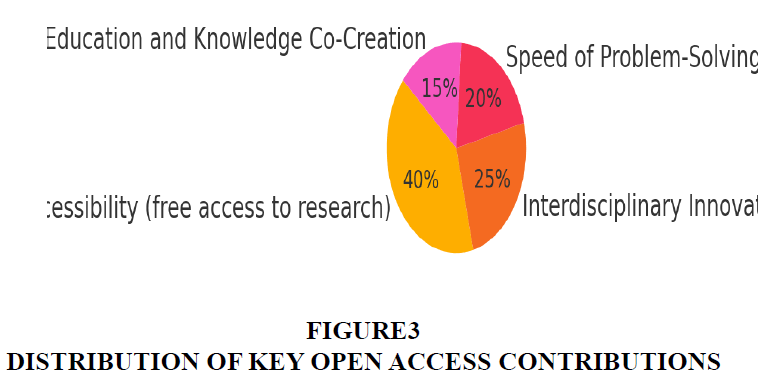
Figure 3 Distribution of Key Open Access Contributions
The pie chart illustrates the proportional contribution of accessibility, interdisciplinary innovation, problem-solving speed, and equity in education within open-access practices
Beyond journals, the principles of open access extend to open educational resources (OERs), open data repositories, and open-source tools building an ecosystem where learning and discovery are not gated by institutional affiliation or economic status. Platforms like arXiv, PubMed Central, and DOAJ have become vital hubs for researchers and students around the globe, proving that a different, more inclusive model is possible.
In the classroom, open access changes the power dynamic. It allows teachers and learners to co-create knowledge rather than passively consume it. It levels the playing field between institutions with large endowments and those with minimal resources. It reinforces the idea that learning is a right, not a privilege and that the world benefits most when the smartest ideas are freely shared, regardless of origin.
Perhaps most importantly, open access embodies the spirit of the kuthuvilaku the lamp that lights others without diminishing itself. In the same way, knowledge shared openly continues to illuminate minds far beyond its creator’s immediate reach. It inspires new thoughts, fuels new research, and most critically, enables change where it is needed most.
In a world facing urgent challenges climate change, global pandemics, social in equality the pace of progress depends on how quickly and freely ideas can travel. The gatekeeping of knowledge, especially when motivated by commercial interest or institutional ego, is not just ethically questionable it is dangerously inefficient. By embracing open access as a global standard, the academic and research community moves closer to fulfilling its highest responsibility: serving society through knowledge that uplifts all.
Ownership, Credit, and Respect in Research
In the realm of academic and scientific research, openness and collaboration are vital for collective progress. However, these ideals must be balanced with an equally important principle: giving proper credit. Acknowledging the intellectual contributions of others is not only a matter of academic integrity but also a fundamental expression of respect. Credit serves as recognition for the time, effort, and creativity invested by individuals and teams in generating new knowledge. It helps establish the intellectual lineage of ideas, allowing future researchers to trace the development of concepts and build upon them responsibly.
Respecting ownership through proper attribution also fosters trust within the scholarly community. It reinforces a culture where original work is valued, and contributors feel secure in the knowledge that their efforts will be recognized. This trust is essential to encourage openness, as researchers are more likely to share their findings when they know their contributions will not be overlooked or misappropriated.
However, there is a delicate balance to be maintained. When claims of ownership become too rigid or are used to delay the sharing of knowledge for the sake of personal gain such as seeking prestige, awards, or financial profit the broader advancement of science and scholarship can suffer. Excessive gatekeeping or withholding of data, tools, or findings slows down the pace of innovation and undermines the collaborative spirit that research depends upon.
Therefore, ethical research practices call for a nuanced approach: one that values transparency, fair citation, and inclusive collaboration over self-interest and exclusivity. Systems of credit should support and motivate sharing rather than discourage it. By fostering an environment where contributors are both acknowledged and encouraged to share openly, the academic community can promote a more dynamic, equitable, and effective model of knowledge production.
Sharing for the Common Good vs. Protectionism
In the modern research landscape, a tension often arises between two competing philosophies: one of open sharing for the common good and the other of protectionism aimed at preserving competitive advantage or securing personal recognition. While some researchers may feel justified in withholding their discoveries to maintain a lead in their field, secure funding, or pursue commercial benefits, this approach though understandable can inadvertently impede the pace of progress. Protectionism in research can delay the dissemination of potentially transformative insights, limit access to valuable resources, and discourage collaboration among peers.
On the other hand, sharing knowledge, data, and tools openly can multiply the value of a single discovery many times over. When research outputs such as datasets, methodologies, software, and educational resources are made freely accessible, they become the foundation upon which others can innovate, test new hypotheses, and develop practical applications. This collective approach accelerates scientific progress, encourages diverse perspectives, and enhances the relevance and reach of research outcomes. Open sharing also fosters inclusivity, enabling scholars from less-resourced institutions or countries to participate fully in the global research enterprise.
In this light, the growing movement toward open access and open science is not merely a utopian ideal but a strategic and necessary response to the complex, interconnected challenges of our time such as climate change, public health crises, and technological ethics. These are issues that cannot be addressed in silos or behind paywalls; they demand transparency, speed, and the combined intellect of the global scientific community.
Therefore, while appropriate protections such as intellectual property rights or ethical safeguards may still play a role, they should not come at the cost of broader societal benefit. Striking a balance between responsible stewardship and open dissemination is key. The more widely knowledge is shared, the more rapidly it can evolve and serve humanity at large
Education and Values: The Foundation of Ethical Research
At the heart of ethical research lies not just skill or intellect, but character. Dr. A.P.J. Abdul Kalam renowned scientist, former President of India, and a deeply respected educator emphasized the critical role of value-based education in shaping both competent and conscientious individuals. According to (Kalam, 2003), true education must go beyond technical proficiency; it must cultivate virtues such as integrity, humility, and a sense of responsibility toward society. Without this moral foundation, even the most advanced knowledge can become dangerous in the wrong hands. As he warned, education devoid of values risks producing highly capable individuals who might misuse their expertise becoming “terrorists” in a metaphorical sense harming society rather than advancing it.
This underscores the need for ethical training to be woven into the fabric of academic and scientific instruction. It is not enough to teach students how to conduct research; they must also be taught why it matters, who it serves, and how to pursue it responsibly. In this context, professors, supervisors, and mentors bear immense responsibility. Their actions often speak louder than their lectures. By modelling ethical conduct such as giving credit generously, sharing knowledge openly, and prioritizing societal impact over personal gain educators in still values that shape the next generation of researchers.
Mentorship rooted in ethics also helps build a research culture where collaboration, transparency, and accountability are the norm. It nurtures a scholarly community where excellence is not measured solely by publications or patents, but also by the real-world good that research brings about. In this way, value-based education becomes not just a personal ideal but a societal imperative forming the foundation upon which trustworthy and transformative research can be built.
Practical Recommendations for Students and Researchers
Navigating the ethical landscape of research requires more than just awareness of rules it demands conscious, values-driven decision-making. In a world where access to information is unprecedented, students and researchers must develop a thoughtful approach to both using and sharing knowledge. The following recommendations offer a practical framework for maintaining ethical integrity while contributing meaningfully to the academic community and society at large:
• Understand the intent behind copying and sharing: The act of using someone else’s work must be guided by purpose. Sharing ideas and building on others' contributions for noble causes such as education, social impact, or innovation is a cornerstone of collaborative progress. In contrast, copying without acknowledgment for the sake of convenience, recognition, or personal gain distorts the spirit of academic inquiry. Intent matters: ethical engagement begins with honest self-reflection.
• Always credit original sources: Citing and acknowledging the work of others is not merely a technical requirement it is a mark of respect. It honors the intellectual labor behind ideas and helps maintain a transparent, trustworthy scholarly environment. Proper citation also strengthens your own credibility, showing that your work is informed, responsible, and part of a larger academic dialogue.
• Engage with and contribute to open access (OA) resources: Open access platforms democratize knowledge, enabling researchers world-wide regardless of institutional privilege or funding to benefit from and contribute to ongoing discoveries. Students and scholars should make use of freely available OA journals, repositories, and educational materials. More importantly, whenever possible, they should share their own work openly, adding to a collective pool that can spark innovation on a global scale.
• Collaborate with openness and generosity: A generous mindset in research is one that prioritizes impact over ego. Rather than guarding ideas out of fear of being outdone, ethical researchers invite collaboration, recognizing that great advancements are rarely the product of a single mind. Valuing shared success over individual fame creates a healthier, more inclusive academic culture.
• Reflect on the ultimate goal of your research: At its core, research should strive to contribute to meaningful change be it in science, society, technology, education, or policy. This higher purpose should inform daily decisions, from the choice of topic to the way findings are communicated and used. When researchers keep the broader human impact in focus, ethical choices become clearer and more natural.
In sum, ethical research is not just about avoiding wrong doing it is about actively choosing to do right. By integrating these practices into their academic journey, students and researchers can help build a culture of integrity, inclusivity, and purpose-driven scholarship.
Conclusion
Plagiarism is a complex ethical issue that requires a nuanced understanding beyond “copying equals wrongdoing.” When done with ethical intent, sharing knowledge is the engine of progress. Research should prioritize real-world change, followed by honour and financial security, echoing Maslow’s hierarchy. Open access and generosity accelerate innovation and democratize knowledge globally. Proper credit honours creators without hindering the flow of ideas. By embracing these principles, researchers and educators can foster a culture of integrity, impact, and shared growth lighting many lamps and sparking lasting positive change. Even if someone forgets to formally get permission to access or share knowledge, we must never forget to express gratitude when that knowledge brings positive change. Saying “thank you” is our duty, for it shows respect to those who made the change possible.
References
Callaway, E. (2020). Details about COVID-19 research collaboration exact article details not provided in the document.
Cheney, M. (2011). Tesla: Man out of time. Simon & Schuster.
cOAlition S. (2018). Plan S: Making full and immediate open access a reality.
Feller, J., & Fitzgerald, B. (2002). Understanding open source software development. Addison-Wesley.
Kalam, A. P. J. (2003). Ignited minds: Unleashing the power within India. Penguin Books.
Maslow, A. H. (1943). A theory of human motivation. Psychological Review, 50(4), 370–396.
Indexed at, Google Scholar, Cross Ref
Received: 20-Jan-2026, Manuscript No. AMSJ-26-16138; Editor assigned: 21-Jan-2026, PreQC No. AMSJ-26-16138(PQ); Reviewed: 28- Jan-2026, QC No. AMSJ-26-16138; Revised: 04-Feb-2026, Manuscript No. AMSJ-26-16138(R); Published: 11-Feb-2026