Research Article: 2026 Vol: 30 Issue: 3S
Rule Of Three And Industry Concentration Level: A Study Of Generalist Firms In Indian Markets
Pallav Bose, Indian Institute of Management Ranchi, K.J. Somaiya Institute of Management, Mumbai
Swarup Kumar Dutta, Indian Institute of Management Ranchi
Amit Kumar, Abu Dhabi University, Abu Dhabi
Citation Information: Bose., P, Dutta., S.K & Kumar., A. (2026). Rule of three and industry concentration level: a study of generalist firms in indian markets. Academy of Marketing Studies Journal, 30(S3), 1-17.
Abstract
This study investigates the strategic challenges faced by managers of generalist firms in Indian industries. Specifically, the 'Rule of Three' framework is used to analyse industry concentration levels and their role in industry evolution. By starting with a sample of 20 industries and later expanding to 95, the study identifies key insights for firms with a generalist positioning. We found that in low-concentration industries, small generalist firms with smaller market shares may coexist, maintaining healthy competition. However, for large generalist firms with more than 40% market share, we observed a significant contrast in financial performance between high-concentration and medium-concentration industries. More precisely, large generalist firms in highly concentrated industries performed poorly compared to those in moderately concentrated industries. Based on these insights, further analysis was conducted by synthesizing previous literature to develop evidence-based recommendations for managers.
Keywords
Industry Evolution, Rule of Three, Generalists, Industry Concentration, Market Structure.
Introduction
Managers often rely on traditional market research for strategic decisions, facing challenges in accurately assessing their strategic focus and market orientation (Ding et al., 2016; Otache, 2019; Peli & Nooteboom, (1999); Peppard & Rylander, (2006); Beer, 2020). Identifying firms, including competitors, as generalists with small market shares is common struggle. For example, in the dynamic landscape of the Indian smartphone industry, numerous smaller generalist companies have grappled with the task of identifying and defining their strategic focus while competing in a market that is constantly changing. This challenge is notably exemplified in the experiences of Android powered device manufacturers like Lava, Nokia, Intex, and Micromax. These companies have encountered difficulties in establishing a distinct market positioning as generalist players when compared to dominant industry leaders such as Samsung and BBK Electronics (Oppo, Vivo, etc.) with similar positioning. This lack of precise strategic focus leads to less effective decision-making, undermining firm's true objectives and untapped potential. Generalist firms, especially industry leaders, grapple with unforeseen challenges due to the dynamic nature of their industries (Giones et al., 2019), facing diseconomies of scale (Sheth & Sisodia, 2002). Over the years, market-leading generalist players in prominent Indian industries such as domestic airlines, medium and heavy commercial vehicles, soft drinks, cigarettes, zinc and zinc products, and wired telecom have demonstrated a decline in their financial performance (Arogyaswamy, (2017); Arora & Siddiqui, (2022)).
The challenges highlighted stem from dynamic changes in the industrial landscape, a consequence of continuous industry evolution (Johnson & Kim, 2009; Tao, 2016). Research on industry evolution, exploring shifts in market structure, technology, and environmental factors, has gained global attention, notably at the 82nd Academy of Management Conference in a special session on industry evolution titled “Novel perspectives on industry evolution: Firm strategies across the industry stages”. Seth and Sisodia's 'Rule of Three,' an intriguing industry evolution theory originally focused on developed nations, extensively explores generalist and specialist firm behaviors. In 'The Global Rule of Three' (Sheth et al., 2020), they emphasize stark differences in "infrastructure, regulatory, socio-economic, socio-political, technological, and cultural systems" between developed and developing markets.
This prompts a need to understand the industry structure in emerging markets (Enderwick, 2017) and decode practitioner-oriented strategies, echoing recent studies advocating for broader insights from diverse country contexts (Garavaglia, 2022). Building on Sheth and Sisodia's work, Uslay et al. (2010) stress considering firms' actual strategic focus (Miles & Van Clieaf, 2017; Theodoraki, 2020) when categorizing them as generalists or specialists in the 'Rule of Three' framework. While (Sheth et al., 2020) primarily focused on strategies for the top three generalist players, this paper aims to delve deeper into characterizing other "generalist players" down the line particularly those with small market share. Arguing for the presence of more than three generalists in emerging markets, with minimal market share but meeting criteria for generalist categorization, is supported by fragmented market structures and economic opportunities in these markets. Progressive institutional reforms supporting SMEs further encourage the thriving of small generalist players in emerging markets like India.
Observing varying concentration levels in different industries indicates the degree of consolidation within specific industries. Previous research establishes that firms associated with industries characterized by different concentration levels maintain different strategic orientations (Turner et al., 2010). In response to address the challenges posed by the dynamic industrial environment faced by practitioners, this paper explores how generalist firms, defined by their strategic focus, navigate emerging economies like India. To achieve this, a connection is established between the 'Rule of Three' theory and industry concentration levels, aiming to identify novel insights that will guide the formulation of evidence-based prescriptive advice for practitioners.
This article analyzes 75 Indian industries, deriving three key insights to illuminate generalist firms' behavior. The subsequent section delves into the rationales behind these insights, emphasizing emerging markets from an Indian context. It offers practical recommendations for generalist firm managers, bridging theoretical insights and actionable strategies. In the final section, a comprehensive examination explores industry alignment with 'Rule of Three' principles based on distinctive market concentration levels. Using a thorough analysis of each concentration category – low, medium, and high – we shed light on the extent to which industries conform to or deviate from these guiding principles in emerging markets.
Understanding industry market dynamics
Rule of Three’: An Industry Evolution Framework
The 'Rule of Three,' formulated by Sheth & Sisodia (2002), offers a compelling framework for understanding industry evolution and consolidation. Initially applied to matured US industries, their research broadened globally in their latest book, encompassing various industries (Sheth et al., 2020). Uslay et al.'s (2010) empirical validation found substantial support for the foundational principle of The 'Rule of Three,' emphasizing a competitive structure with three dominant generalist players in matured US industries. These industries showcased superior performance under such a structure. Sheth and Sisodia defined generalists with over 10% market share and a diverse product portfolio for the broad middle market, while specialists had less than 5% market share, focusing on a single, highly differentiated product or niche. Market structure composition depends on factors like “industry cost structures, shared infrastructures, government regulations, globalization trends, consolidation, and the establishment of technological standards” (Sheth & Sisodia, 2002). The propensity for precisely three generalists within a market creates a tripod-like support system, ensuring stability while curbing collusion and hypercompetition (Jayachandran et al., 1999; Kaplan & Haenlein, (2009); Miller, 1967). Resource partitioning theory supports this, indicating that fewer than three generalists are inefficient for resource utilization, leading to wasted efforts against new competitors (Mainkar et al., 2006; Sorenson et al., 2006). Game theory aligns with three generalists as the optimal condition, resulting in a Nash equilibrium (Huck et al., 2004). While extensive studies have explored the 'Rule of Three' in developed markets, it's crucial to conduct a comprehensive examination in other markets, especially emerging economies with very few studies on industry evolution and market structures (Kumaraswamy et al., 2012; Ndlovu & Alagidede, 2018). Limited research has classified firms into generalists and specialists, considering their actual strategic focus across multiple industries, highlighting a promising avenue for future exploration (Uslay et al., 2010). Similarly, a conspicuous gap exists in understanding the characteristics of generalists, especially those with very low market share in emerging markets.
Industry Concentration Dynamics
Industry concentration, a crucial element in market analysis, gauges how firms are distributed within an industry as per their market share and is indicative of the market structure (Elango, 2011). The Herfindahl-Hirschman Index (HHI), a widely embraced metric, quantifies this concentration by summing squares of market shares of all firms within the industry (Hannan, 1997); Haruvy & Stahl, (2004). Higher HHI values indicate greater concentration. Understanding industry concentration is pivotal for unravelling market dynamics (Lien & Foss, 2009). Levy (1985) stresses its significance in comprehending market functioning, while Scherer & Ross (1990); Sexton & Xia, (2018) and Anderson et al., (2018) highlight its role in studying competition dynamics and shaping regulatory policies. Research on industry concentration has predominantly focused on single industries in developed markets, leaving a gap in understanding this concept globally (Giorgis Sahile et al., 2015; Greco, 2000; Peters, 2000).
From a scholarly perspective, two fundamental paradigms offer insights into the relationship between market concentration and performance. The Structure-Conduct- Performance (SCP) paradigm, by Bain (1951), suggests higher concentration stifles competition, leading to elevated prices and reduced innovation. In contrast, the Resource- Based View (RBV), by Barney (1991) and Wernerfelt (1984), explores how firms with unique resources and competitive advantages achieve higher market shares through differentiation. The relationship's ongoing debate yields mixed study outcomes; some imply positive associations, suggesting more concentration yields higher profits (Trujillo-Ponce, 2013), while others suggest negative impacts on innovation and product quality (Scherer & Ross, 1990). The Herfindahl-Hirschman Index (HHI), though widely adopted, has limitations, focusing predominantly on market shares overlooking other dimensions of competition and market dynamics (Rhoades, 1995). The interpretation of HHI values, especially concerning the defining thresholds for high or low concentration, is subject to ongoing debate (Farrell & Shapiro, 2021).
In practice, industry concentration, measured by the HHI, typically falls into three tiers according to the Department of Justice (DoJ) and further analysed by Farrell & Shapiro (2021). In low concentration industries (HHI < 0.15), market shares are widely dispersed, fostering a competitive and fragmented market. Moderately concentrated industries (0.15 < HHI < 0.25) exhibit few firms (more than the low concentration industries) with significant market shares, forming an oligopolistic structure with substantial competition. While less fragmented than low concentration industries, these markets feature multiple players with meaningful market shares. High concentration industries (HHI > 0.25) feature a small number of dominant firms (less than moderately concentrated industries) controlling the market, potentially leading to near- monopolistic scenarios (Dewenter, 2003; Trubnikov, 2020); Trujillo-Ponce, (2013). In such highly concentrated markets, competitive pressures are reduced, granting significant market power to dominant firms for independent price-setting and industry level strategic decision making (Baumol & Blinder, 2015).
Linking Industry Concentration and the 'Rule of Three'
The ecological resource partitioning theory, as outlined by Carroll (1997), provides valuable insights into the competitive dynamics between generalist and specialist firms vying for industry resources. When resources abound, generalist firms excel by efficiently utilizing a wide array of resources. However, as resources become scarcer, generalists engage in fierce competition for these limited resources, resulting in reduced survival rates and increased mortality among them. Studies by Carroll (1997) and Carroll et al. (2002) validate this phenomenon, highlighting that heightened competition for scarce resources tends to favor larger generalist firms, leveraging economies of scale as a competitive advantage. The competitive advantage, however, tends to put smaller generalists at a disadvantage, contributing to the overall intensification of market concentration due to consolidations (Mangematin & Belkhouja, 2015). This perspective gains further support from Dobrev & Carroll (2003); Dokko & Rosenkopf, (2010) and Péli & Nooteboom (1999), emphasizing the pivotal role of economies of scale in shaping market concentration. Furthermore, the ‘Rule of Three’ theory, introduced by Sheth & Sisodia (2002), complements the resource partitioning theory by suggesting that markets tend to evolve toward dominance by a few key players. The combined impact of resource partitioning and the ‘Rule of Three’ theory underscores that competition among generalists, coupled with resource scarcity and economies of scale, collectively drive the concentration of market power among a limited number of dominant firms. This viewpoint is reinforced by Uslay et al. (2010), affirming that market evolution, guided by resource availability, competition dynamics, and economies of scale, paves the way for the emergence of a select group of dominant players within highly concentrated markets.
Methodology
We began our analysis with 20 diverse Indian industries (Tables 1, 2, and 3), selected based on the availability of easily accessible and reliable data on market concentration and market share. We identified firms with generalist positioning using the characteristics listed by Sheth & Sisodia (2002), which include high volume (economies of scale), extensive manufacturing systems, broad product offerings, and wide market positioning. Industry concentration was measured using the Herfindahl-Hirschman Index (HHI), a widely accepted measure of market concentration (Bikker & Haaf, 2002; Brezina et al., 2016). HHI data were sourced from the Centre for Monitoring Indian Economy (CMIE) through its Industry Outlook database, while market share data were collected from both CMIE and Euromonitor Passport databases. These sources, having been utilized in prior studies on emerging markets, ensure the reliability of our data. We calculated the three-year average HHI from 2018 to 2020 to capture pre-COVID-19 market concentration trends and maintain consistency with prior research (Lu et al., 2017; Saiyed et al., 2021).
Our initial focus on these 20 industries was to conduct an in-depth analysis and derive critical insights into generalist positioning and industry concentration dynamics in the Indian market. This targeted approach enabled us to fully understand these dynamics, ensuring that the data, sourced from reputable platforms such as CMIE and Euromonitor, was reliable and of high quality. These evidence-based insights, supported by the literature, allowed us to craft well-substantiated, practical recommendations for managers. Recognizing the need to confirm these insights across a broader range of industries, we expanded our analysis to include a total of 95 industries. This expansion was aimed at triangulating our findings and confirming their broader applicability. While the initial 20 industries provided crucial insights, the diversity in the 95 industries helped generalize these observations. This step was essential to ensure that our findings were not confined to a small sample but rather reflected broader patterns in the Indian market. Importantly, our study was exploratory and did not test specific hypotheses but focused on deriving actionable insights from the data. The larger-scale analysis helped reinforce and validate our findings across a more comprehensive dataset.
For the expanded analysis, we identified generalist firms across all 95 industries using the Sheth & Sisodia (2002) framework. This consistent classification ensured that generalist firms across both the original and expanded sets shared common strategic characteristics. We also calculated the mode of the number of generalist firms in each industry to better understand the typical number of generalists in industries with varying levels of concentration. To investigate the relationship between industry concentration and financial performance, we analysed industry-level return on assets (ROA), a widely accepted performance indicator (Fosu, 2013). ROA data were sourced from the CMIE Industry Outlook database, and we examined year-on- year changes from 2015 to 2020. A Welch t-test was conducted to test whether financial performance differed significantly across industries with varying levels of concentration. Additionally, a second Welch t-test was conducted to assess whether the number of generalist firms differed significantly between industries with low, medium, and high levels of concentration. This multi-stage process, incorporating industry-level concentration metrics and financial performance indicators, provided a comprehensive understanding of the strategic positioning of generalist firms in Indian markets. The integration of both the initial and expanded datasets, combined with rigorous statistical testing, ensures that our findings are robust and that the managerial recommendations can be generalized for industry practitioners.
Navigating emerging markets: strategic insights and recommendations
Generalist Abundance in Low Concentration Industries:
When we analyzed the initial set of 20 industries, as shown in Table 1a, we observed that industries with low concentration have more than three generalists.
| Table 1a Low Concentration Industries with More than 3 Generalists | ||||||
| S. No. |
Product category | Generalist Players | Generalists Count | HHI | % of Market share (Top three) |
Market share of top player (%) |
| 1 | Television | 1. Samsung Corp; 2. LG Corp; 3. Xiaomi Corp; 4. Sony Corp; 5. TCL Corp; 6. Panasonic Corp |
3+3 | 0.09 | 44.76 | 17.76 |
| 2 | Mobile Phones | 1. BBK Electronics Corp Ltd; |
3+5 | 0.11 | 49 | 17.57 |
| 3 | IT Services & Consulting |
1. Tata Consultancy Services Ltd.; 2. Infosys Ltd. 3. Wipro Ltd.; 4. H C L Technologies Ltd. 5. Tech Mahindra Ltd. 6. Cognizant Technology Solutions India Pvt. Ltd. 7. Capgemini Technology Services India Ltd. 8. Larsen & Toubro Infotech Ltd.; 9. Accenture 10. I B M India Pvt. Ltd. |
3+7 | 0.12 | 54.50 | 24.50 |
| 4 | Ice Creams | 1. Gujarat Co-operative Milk Marketing Federation Ltd 2. Unilever Group; 3. Devyani Food Industries 4. Hatsun Agro Products Ltd; 5. Vadilal Industries Ltd 6. National Dairy Development Board (Mother Dairy) |
3+3 | 0.05 | 37 | 16.83 |
| 5 | Computers | 1. HP Inc; 2. Lenovo Group Ltd; 3. Dell Technologies Inc; 4. Samsung Corp; 5. Acer Inc; 6. LG Corp; 7. AsusTek Computer Inc |
3+4 | 0.09 | 40.5 | 20.23 |
| 6 | Edible Oil | 1. Adani Group; 2. Patanjali Ayurved Ltd; 3. Emami Ltd; 4. Cargill Inc; 5. National Dairy Development Board (Dhara) 6. Marico Ltd (Saffola) |
3+3 | 0.05 | 30.16 | 18.90 |
To test the generalizability of this observation, we conducted Welch two-sample t-tests for 95 industries, comparing the mean number of generalist firms in low-concentration industries with that in high- and medium-concentration industries. As seen in Table 1b, the result from the analysis showed a statistically significant difference between the count of generalist firms in low concentration industries compared to those in high-concentration industries (t = 4.77, p < 0.001). The average number of generalist firms for low-concentration industries was 6.32, whereas for high-concentration industries it was 3.82, indicating that low- concentration industries have significantly more generalist firms than high-concentration industries. This finding suggests that less concentrated markets would, in fact, be able to support more generalist firms due to munificent and healthy competitive environment allowing such firms to prosper (Castrogiovanni, 1991; Mithas et al., 2013). Similarly, the comparison between the low and medium concentration industries showed a significant difference between the count of generalist firms (t = 3.54, p < 0.001). Industries with low concentration had an average of 6.32 generalist firms, whereas industries with medium concentration had an average number of 4.62 generalist firms thus supporting the fact that on average, an industry in low concentration may have more generalist firms than one in medium concentration. The above observations lead us to the following key insight –
| Table 1b Welch two Sample T-Test for Comparing the Number of Generalist Players Across Industry Levels | |||
| Comparison (Industry concentration levels) | Mean (Low Concentration) | Mean (Comparison Group) | Difference (t -Statistic) |
| Low vs High Concentration | 6.32 | 3.82 | 2.50 (t = 4.77) *** |
| Low vs Medium Concentration | 6.32 | 4.62 | 1.70 (t = 3.54) *** |
**p < .05.
***p < .01.
Insight 1: Industries in emerging markets like India, especially with an industry concentration below 0.15 can accommodate quite a higher number of generalist firms (vastly exceeding 3) with a small market share (Table 1).
Gottardi & Serrano (2005) emphasized that industries with lower concentration caters to a diverse customer base with varying preferences. This diversity provides an opportunity of choice for generalist firms to tailor their offerings to any specific market segments, expanding their customer base and reducing direct competition (Kowo et al., 2018). In such industries, companies prioritize differentiation over price wars, allowing generalists to offer unique products or services, gaining a competitive edge and fostering customer loyalty. The lower direct rivalry among generalist firms encourages coexistence and the growth of multiple firms (Porter, 1985). Low industry concentration indicates a dynamic, competitive landscape with relatively low entry and exit barriers, facilitating the entry of new generalist firms and adapting to market changes (Caves, 1998).
Practitioners heavily rely on conventional market research for strategic decision-making. However, accurately assessing the competitive focus of generalist firms with minimal market share presents a considerable challenge (Otache, 2019; Beer, 2020). Small generalist firms, operating in niche markets or employing disruptive strategies, may not be immediately apparent. Recognizing the strategic focus of these generalist firms is crucial for effective competition analysis, exploring collaboration opportunities, and refining market positioning (Miles & Van Clieaf, 2017). Underestimating them risks overlooking emerging threats and partnership opportunities. Misjudging their strategic focus can lead to misinformed market positioning, potentially resulting in pricing strategies misaligned with the true competitive environment. In industries, particularly those with low concentration levels, numerous players beyond the top three often position themselves as generalists, even with limited market share. Hence, we propose that,
Managerial recommendation 1 (Strategic Focus): Managers of firms, especially those operating within low-concentration industries need to identify and take into account the true strategic focus of generalist firms, even if they have a small market share, when making decisions related to collaboration opportunities, market positioning, and competitive threats.
In some instances, the recommendation may not yield expected results. Generalist firms with small market shares can appear cooperative but harbour hidden competitive intent (Hwang, 2017). Misinterpreting their intentions may lead to unfavourable collaboration or positioning decisions. Ensuring success from the recommendation requires managers to remain vigilant, continually reassess the strategic focus of generalist firms, and adapt decisions to the evolving business landscape. Considering the broader industry context, competitive dynamics, and potential shifts in market conditions is essential for informed decision-making.
Market Leadership and Financial Performance:
In industries with high concentration, where dominant leaders hold substantial market shares, diseconomies of scale can emerge (Rakshit, 2023). As a firm expands, per-unit costs may rise due to operational complexities, bureaucracy, communication challenges, and market fluctuations (Baumol & Klevorick, 1970). This growth-induced inefficiency harms the cost structure and financial performance. High concentration may reduce competitive pressure, stifling innovation and efficiency. Diminished competition leads to complacency and suboptimal operations, impacting financial performance (Porter, 1980). Market leaders with significant power influence pricing, potentially alienating customers and reducing demand, causing declining sales and revenue, adversely affecting financial performance (Tirole, 1988). When we analyzed the initial set of 20 industries, we observed that this trend holds across various highly concentrated industries (HHI > 0.25), such as wireless telecom, commercial vehicles, soft drinks, and cigarettes, where dominant leaders with over 40% market share experience performance decline, as measured by the average change in return on assets (ROA) from 2015 to 2020 (See Table 2a).
| Table 2a Market Leaders from High Concentration Industries with Declining Financial Performance | ||||||||
| S. No. |
Product category | Generalist Players | Market Leader | Generalists count | HHI | % of Market share (Top three) | Market leader % of Market share |
Average % change in ROA for 5 years (from 2015-16 to 2019-20) |
| 1 | Wired Telecom | 1. BSNL; 2. Bharti Airtel Ltd.; 3. MTNL |
BSNL | 3 | 0.32 | 80.17 | 49.47 | -8.98 |
| 2 | Domestic Airlines | 1. IndiGo; 2. SpiceJet 3. AirIndia + Alliance Air; 4. Go Air |
IndiGo | 3+1 | 0.29 | 74.37 | 50 | -67.07 |
| 3 | Medium and Heavy Commercial Vehicles | 1. Tata Motors 2. Mahindra & Mahindra Ltd. 3. Ashok Leyland Ltd |
Tata Motors | 3 | 0.34 | 82.38 | 53.24 | -243.46 |
| 4 | Soft drinks | 1. Coca-Cola Co; 2. PepsiCo Inc |
Coca-Cola | 2 | 0.42 | 89.1 | 55.56 | -7.53 |
| 5 | Cigarettes | 1. I T C Ltd. 2. Godfrey Phillips India Ltd. 3. V S T Industries Ltd. |
I T C Ltd. | 3 | 0.73 | 97.04 | 85.05 | -1.30 |
In industries with moderate concentration, where barriers to entry are lower than highly concentrated ones, effective competition from new entrants is possible, fostering innovation and healthy competition, enhancing financial performance (Porter, 1980). Large players in moderately concentrated industries (market share >40%) benefit from economies of scale and scope, achieving cost efficiencies through bulk purchasing, streamlined production, and diversified offerings, ultimately improving financial performance (Rumelt, 1982). These firms possess greater resources, enhanced R&D capabilities, and extensive distribution networks, investing in innovation, market expansion, and outperforming competitors for improved financial performance (Barney, 1991). In moderate concentration industries (0.15<HHI<0.25), like passenger vehicles, paints, and primary aluminium an intriguing trend emerges. Generalist market leaders with over 40% market share exhibit distinct enhancement in performance, measured by the average change in ROA from 2015 to 2020 (Table 2b).
| Table 2b Market Leaders from Moderate Concentration Industries with Rising Financial Performance | ||||||||
| S. No. |
Product category | Generalist Players | Market Leader | eneralists ount | HI | o arket hare Top 3) | Marke t leader % of Marke t share |
Average % change in ROA for 5 years (from 2015-16 to 2019-20) |
| 1 | Refrigerator s | 1. Samsung India Electronics Pvt Ltd; 2. LG Electronics India Pvt Ltd; 3. Whirlpool of India Ltd; 4. Haier Appliances India Pvt Ltd; 5. Godrej & Boyce Mfg Co Ltd |
Samsung India Electronic s Pvt Ltd | 3+2 | 0.16 | 62.1 | 24.9 | 15.25 |
| 2 | Passenger Vehicles | 1. Maruti Suzuki; 2. Hyunda; 3. Mahindra; 4. Tata Motors |
Maruti Suzuki | 3+1 | 0.24 | 69.3 | 46 | 2.52 |
| 3 | Paints | 1. Asian Paints Ltd.; 2. Berger Paints India Ltd.; 3. Kansai Nerolac Paints Ltd.; 4. Indigo Paints Ltd.; 5. Shalimar Paints Ltd. 6. Akzo Nobel India Ltd. 7. J S W Paints Pvt. Ltd. |
Asian Paints Ltd | 3+4 | 0.18 | 89.85 | 38.25 | 1.46 |
| 4 | Primary Aluminium | 1. Vedanta Ltd.; 2. Bharat Aluminium Co. Ltd.; 3. National Aluminium Co. Ltd. 4. Hindalco Industries Ltd. |
Vedanta Ltd. | 3+1 | 0.23 | 73.74 | 42.14 | 70.73 |
| 5 | Packaged Tea | 1. Tata Consumer Products Ltd; 2. Unilever Group 3. Gujarat Tea Processors & Packers Ltd 4. Associated British Foods Plc |
Tata Consumer Products Ltd | 3+1 | 0.17 | 64.13 | 28.63 | 16.62 |
To generalize the observations, we used the Welch two-sample t-test on a broader set of 95 industries to compare the five-year average change in return on assets (ROA) between industries with medium and high levels of concentration. This test was conducted to determine whether there is any statistically significant difference in financial performance (measured by ROA) between the two groups of industries. As can be seen in Table 2c, the analysis revealed the existence of a significant difference in the five-year average change in ROA between medium and high concentration industries (t = 2.13, p = 0.043). The mean change in ROA for medium-concentration industries was 0.6684, whereas high-concentration industries showed a negative mean change in ROA of -0.3068. This suggests that medium concentrated industries have had, on average, a positive growth in ROA within the five-year period, while high- concentration industries have seen a decline in it. The findings suggest at diversified market outcomes, where the medium level of market concentration possibly does better in terms of financial performance, as measured by ROA, against the high concentration industries. It therefore supports the results of previous studies that moderately competitive markets ensure higher efficiency and more profitable operations, while highly concentrated markets hinder innovation and operational efficiencies, leading to lower financial performance (Aghion et al., 2021; Mateevet al., 2023). These observations bring us to this key insight -
| Table 2c Welch two Sample T-Test for Comparing the ROA of Large Generalist Players (Market Share >40%) Across Industry Levels | |||
| Comparison | Mean (Medium Concentration) | Mean (High Concentration) | Difference (t- Statistic) |
| Medium vs High Concentration | 0.6684 | -0.3068 | 0.975 (t = 2.13) |
**p < .05.
***p < .01.
Insight 2: In industries characterized by a high concentration (HHI>0.25), wherein the major player (market leader) hold market shares exceeding 40%, diseconomies of scale become apparent, leading to a decline in financial performance (ROA) (see Table 2). Conversely, in industries with a moderate to high concentration range (0.15<HHI<0.25), large player possessing similar market shares experience an enhanced financial performance (Table 3).
| Table 3 Moderate and High Concentration Industries with Declining Number of Generalists | ||||||
| S. No. |
Product category | Generalist Players | Generalists Count | HHI | % of Market share (Top 3) | Market leader % of Market share |
| 1 | Two Wheeler (motorcycles) | 1. Bajaj Auto Ltd.; 2. Hero Motocorp Ltd.; 3. T V S Motor Co. Ltd. |
3 | 0.26 | 75.97 | 35.96 |
| 2 | Passenger Vehicles | 1. Maruti Suzuki; 2. Hyunda; 3. Mahindra; 4. Tata Motors |
3+1 | 0.24 | 69.3 | 46 |
| 3 | Wireless Telecom | 1. Reliance Jio; 2. Bharti Airtel; 3. Vodafone-Idea; 4. BSNL |
3+1 | 0.25 | 89.14 | 28.50 |
| 4 | Domestic Airlines | 1. IndiGo; 2. SpiceJet; 3. AirIndia + Alliance Air; 4. Go Air |
3+1 | 0.29 | 74.37 | 50 |
| 5 | Soft drinks | 1. Coca-Cola Co; 2. PepsiCo Inc |
2 | 0.42 | 89.1 | 55.56 |
| 6 | Cigarettes | 1. I T C Ltd.; 2. Godfrey Phillips India Ltd.; 3. V S T Industries Ltd. |
3 | 0.73 | 97.04 | 85.05 |
| 7 | Natural gas | 1. ONGC; 2. Oil India Ltd.; 3. GAIL (India) Ltd.; 4. Hindustan Oil Exploration Co. Ltd. |
3+1 | 0.44 | 80.34 | 65.64 |
| 8 | Paints | 1. Asian Paints Ltd.; 2. Berger Paints India Ltd.; 3. Kansai Nerolac Paints Ltd.; 4. Indigo Paints Ltd.; 5. Shalimar Paints Ltd. |
3+4 | 0.18 | 89.85 | 38.25 |
| 9 | Oral Care | 1. Colgate-Palmolive Co; 2. Unilever Group; 3. Dabur India Ltd |
3 | 0.24 | 70 | 42.63 |
| 10 | Life Insurance | 1. Life Insurance Corporation of India 2. HDFC Life Insurance Company Limited 3. ICICI Prudential Life Insurance Company Limited 4. SBI Life Insurance Company Limited 5. Bajaj Allianz Life Insurance Company Limited |
3+2 | 0.43 | 78.78 | 65.4 |
In high concentration industries (HHI>0.25), where major players hold over 40% market share, managers must avoid overextending their dominance due to diseconomies of scale, which may lead to financial decline. To counter this, diversification, exploration of adjacent markets, and innovation are crucial (Baldwin et al., 2000; Choudhary, 2020). Collaborative efforts, like partnerships, distributing risks, enhancing competitiveness, prioritizing innovation, operational efficiency, and customer loyalty is key (De Man & Luvison, 2019; Simon & Tellier, 2020). In moderately concentrated industries (0.15<HHI<0.25), where large players exceed 40% market share and experience improved financial performance, managers should leverage this advantage. Investment in customer experiences, expanded product lines, and strategic acquisitions can solidify market leadership and capitalize on economies of scale. Hence we propose that,
Managerial recommendation 2 (Balancing Market Dominance): In high- concentration industries (HHI>0.25) where market leaders hold more than 40% market share, the managers need to strategize to guard against overextension and diseconomies of scale. Also the focus should be on prioritizing innovation, differentiation, and customer loyalty over aggressive growth. Whereas, in moderately concentrated markets (0.15<HHI<0.25) where market leaders have control over similar market share, the managers need to leverage financial strength for enhancing customer experience, product expansion, and strategic acquisitions.
Despite the proposed recommendations, challenges may arise. In both high and moderately concentrated markets, resource constraints may hinder strategy implementation. Aggressive competitor responses can trigger price wars or disruptions (Liozu, 2019). Managers may misjudge market conditions, concentration levels, or the competitive landscape, leading to inappropriate decisions. A profound understanding of the industry context is essential to align strategies with the market's true dynamics.
Evolution of Generalist Firms with Changing Concentration Levels
In industries with low concentration (HHI < 0.15), multiple generalist firms coexist due to healthy competition, low entry barriers and market fragmentation (Sannajust et al., 2015). These firms thrive by catering to diverse customer needs, given the absence of dominant players. To excel in this scenario, managers need to focus on differentiation, customer targeting, and innovation to gain a competitive edge (Cordeiro & Vieira, 2012); Coughlin, (1985). However, as industry concentration moderately increases (0.15 < HHI < 0.25), the market tends to shift towards an oligopoly or fewer dominant players (Bengtsson & Johansson, 2011); Blomström, (1986). Larger firms with economies of scale and brand recognition pose challenges for smaller generalists, leading to a decline in their number. Furthermore, rising entry barriers in the higher side of industry concentration hinder new entrants, including generalists (Tirole, 1988; Elango, 2011).
In industries with high concentration levels (HHI > 0.25), the landscape typically tilts towards monopolistic or oligopolistic structures. A select few dominant firms hold substantial market shares, and formidable entry barriers deter new competitors. The market power consolidation in these larger firms' hands poses challenges for smaller generalists, making it tough for them to gain a foothold (Demsetz, 1973).
However, in industries featuring lower concentration levels, with HHI values below 0.15 (refer to Table 1), a different scenario unfolds. Here, multiple generalist companies coexist, each with a relatively equal market presence. For managers, it is essential to recognize this competitive diversity. They need to focus on differentiation, precise customer targeting, and innovation to establish a competitive edge.
Conversely, industries characterized by higher levels of concentration (HHI>0.15) tell a contrasting story (Table 3).
Data from 95 diverse industries brings out interesting findings on the relationship between industry concentration and the number of generalist firms. On calculating the mode of the number of generalist firms across industries, we came across 4 generalist firms to be the most frequently occurring value, suggesting that many industries stabilize around this number (Figure 1). With increasing industry concentration, the number of generalist players gradually declines (Figure 2). We also observe that in industries with low concentration, that is, HHI < 0.15, there are at least six generalist firms, whereas in the case of high-concentration industries, HHI > 0.15, the number of generalist firms stabilizes at around four firms. This indicates that some shakeout seems to be happening in the industry structure and that the 'Rule of Three' does appear to be unfolding as markets get concentrated. This finding confirms what had also been implied earlier-that industry concentration is the driving force behind market structure and, with competition consolidating, there are fewer generalists. These observations bring us to this key insight-
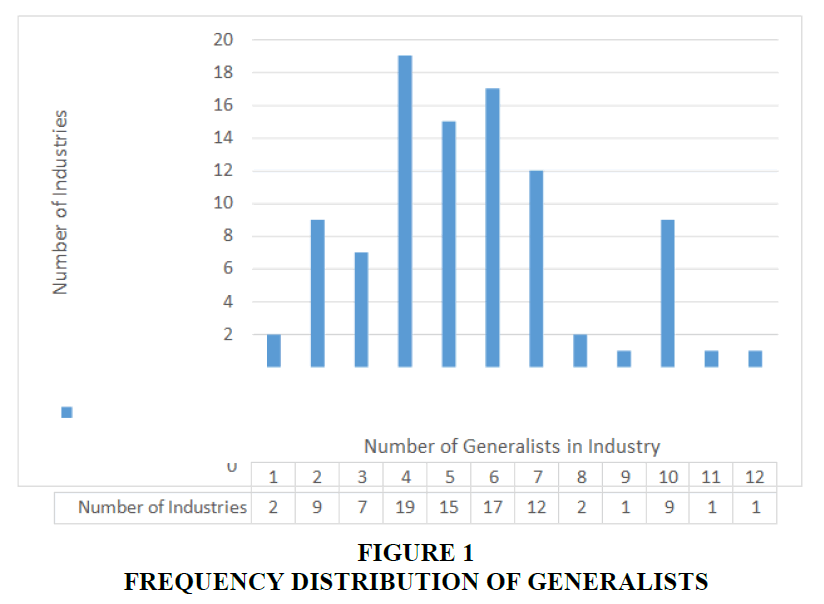
Figure 1 Frequency Distribution of Generalists

Figure 2 Gradual Decrease in the Count of Generalist Players with the Increasing Levels of Industry Concentration.
Insight 3: As industry concentration shifts from lower (HHI < 0.15) to higher (HHI > 0.15) levels, the number of generalist players undergoes a gradual decreases from more than 6 generalists and stabilizes at approximately around 4 generalists, thus evolving towards the ‘Rule of Three' (Figure 1, Table 4)
| Table 4 Industry Concentration and the ‘Rule of Three’ | |||||
| Market Structure and Market Share Dynamics | Survival and Growth | ||||
| Low concentration | Market has three generalists. | Increasing market share benefits large players up to a point (40%) | If the leader commands between 50 and 70 percent of the market, there is no room for a third full-line generalist. | If a generalist sinks below a 10 percent share, must either find a way to win back market share or become a specialist. | Companies with low market share have poor performance and need unique advantages to recover. |
| ☐ These industries have 6-10 generalists, thus contradicting the ‘Rule of Three’ generalization. |
☐ In these industries no player has more than 40% market share hence this generalization is not valid for low concentration industries |
☐ For these industries market leaders don't command more than 50% market share and due to fragmented nature of the industries there is always room for more number of generalists. | ☐ In contrary to the ‘Rule of Three’, it is possible that in Indian markets, companies even with less than 10% market share compete as generalist players and have good financial performance in case of low concentration industries due to the fragmented nature of the industries and abundance of resources for all the players. |
||
| Moderate concentration | Market has three generalists and numerous specialists | Increasing market share benefits large players up to a point (40%) | If the leader commands between 50 and 70 percent of the market, there is no room for a third full-line generalist. | If a generalist sinks below a 10 percent share, must either find a way to win back market share or become a specialist. | Companies with low market share have poor performance and need unique advantages to recover. |
| ☯ These industries have 3-7 generalists, thus following the ‘Rule of Three’ generalization in some cases and contradicting in some cases. |
☐ In these industries even after exceeding 40% market share large players exhibit better performance contradicting the ‘Rule of Three’ generalization | ☐ These industries even when the market leader exceeds 50% market share there is room for 3rd and more generalists as can be seen in the Life Insurance and Paints industries | ☯ In contrary to the ‘Rule of Three’, it is possible that in Indian markets, companies even with less than 10% market share compete as generalist players in moderately concentrated industries, but due to rising competition for resources and market, the performance and survival chance of the players decreases and the generalist players after the #3 player keeps on changing. | ||
| High concentration | Market has three generalists and numerous specialists | Increasing market share benefits large players up to a point (40%) | If the leader commands between 50 and 70 percent of the market, there is no room for a third full-line generalist. | If a generalist sinks below a 10 percent share, must either find a way to win back market share or become a specialist. | Companies with low market share have poor performance and need unique advantages to recover. |
| ☯ These industries have 2-5 generalists, thus following the ‘Rule of Three’ generalization in some cases and contradicting in some cases. |
✓ In these industries after exceeding 40% market share large players exhibit declining performance supporting the ‘Rule of Three’ generalization | ☯ This generalization is partially true. As observed in soft drink industry there are 2 generalists and there is no room for a third generalist. Whereas in the Domestic Airlines industry there are more than three generalist players present. |
✓ As the industry becomes highly concentrated the chances of survival of low market share holding generalist players decrease due to intense competition for resources and market in case of highly concentrated industries. The survival chance and performance of the generalist player starting with #3 player is very poor reflected by the decreasing count of generalist players and their interchanging positions. | ||
As industry concentration levels increase, a trend toward consolidation emerges (Varadarajan, 2009). Generalist firms might merge, be acquired, or exit the market. In this shifting industry landscape, it is crucial for managers to monitor the competitive field, tracking changes in the number and strength of competitors. This assessment should encompass factors such as shifts in competitors' market share, evolving customer preferences, emerging technologies, and regulatory developments. Additionally, managers need to proactively explore strategies that account for potential consolidation opportunities. This could involve forging strategic partnerships, pursuing mergers, acquisitions, or other collaborative ventures to fortify the firm's market position (Table 4). Hence we propose that, Managerial recommendation 3 (Survival Strategies for Small Generalist Firms in Evolving Industries): Small generalist firms with little market share operating in industries which are moving from lower to higher levels of industry concentration, should anticipate lesser chances of survival due to increasing trends of consolidation. In such dynamically changing environment managers of small generalist firms need to monitor changes in competitor's market share, customer preferences, technology advancements, and regulations. Furthermore, the firms shall find it beneficial to consider proactive strategies like partnerships, mergers, or acquisitions to strengthen market position amid changing dynamics.
It's worth noting that not all consolidation efforts may yield the expected results. Small generalist players face challenges in finding suitable partners or encounter resistance from potential collaborators. In some cases, even in moderately consolidated markets, high fragmentation persists, making consolidation efforts less effective or unnecessary.
Mapping 'rule of three' across industry concentrations
In Table 4 we map the 'Rule of Three' across the various levels of industry concentrations providing valuable insights into market dynamics and competitive strategies for 'generalist' firms. We delve into the correlation between market structure, market share dynamics, survival, and growth strategies. In low-concentration markets, where there are 6-10 generalists, exceptions to the 'Rule of Three' emerge, challenging conventional wisdom. Moderate concentration markets, with 3-7 generalists, exhibit both conformity and contradiction to the rule. High concentration markets, with 2-5 generalists, showcase partial adherence to the rule.
This nuanced analysis sheds light on the intricate interplay between market concentration, competitive behavior, and the viability of the 'Rule of Three' in diverse industry landscapes.
Conclusion and Discussion
In this study, we established a significant connection between Sheth and Sisodia's 'Rule of Three' and industry concentration levels, deriving three key insights. Drawing upon these insights and existing literature, we present recommendations for managers of firms which operate under generalist positioning in various market conditions. Our analysis underscores industry concentration's role in shaping competitive dynamics and firm performance.
In highly concentrated markets, diseconomies of scale may hinder financial performance, while moderately concentrated markets can exhibit enhanced financial performance due to economies of scale. The intricate relationship between concentration, generalist strategies, and financial outcomes warrants careful consideration by managers. Our study sheds light on the evolution of generalist firms in different market contexts. Low concentration industries tend to support more generalists due to healthy competition and lower entry barriers, but as concentration rises, the number of generalists declines. Based on the findings and observations presented in the study, it is evident that the applicability of the ‘Rule of Three’ generalization varies across industries with different levels of market concentration. The study explored industries categorized by concentration, market structure and market share dynamics, shedding light on distinct patterns, semblance as well as deviations from the traditional Rule of Three principles.
In low concentration industries, the presence of 6-10 generalists contradicts the Rule of Three, challenging conventional notions (Table 4). Increasing market share doesn't necessarily benefit large players up to a 40% threshold, as no player surpasses 40% market share. The idea that a market leader with 50-70% market share eliminates room for a third generalist is challenged by constant space availability due to industry fragmentation. Contrasting the Rule of Three, companies with <10% market share in low concentration industries compete as generalists, maintaining satisfactory financial performance due to industry fragmentation and resource abundance.
In medium concentration industries, the study identifies instances where the Rule of Three is partially followed, with 3-5 generalists present (Table 4). Contrary to conventional wisdom, large players exhibit better performance after surpassing 40% market share, exemplified by industries like Life Insurance and Paints. Survival and growth in moderately concentrated industries reveal a dynamic pattern where companies with low market share initially engage as generalists. However, intensified competition for resources and market share leads to declining performance and survival prospects for these generalist players beyond the third-ranked position.
In high concentration industries, the Rule of Three is tested with 2-5 generalists observed (Table 4). The performance trend of large players surpassing 40% market share and experiencing a decline supports the Rule of Three. The notion that a market leader with 50- 70% market share eliminates space for a third full-line generalist is partially validated, exemplified by the Zinc industry, while the Cigarette industry defies this trend. Survival and growth in highly concentrated industries underscore the reduced likelihood of survival for generalist players with low market share, intensifying competition for resources and market share beyond the third position.
Our exploration of the 'Rule of Three' theory in conjunction with industry concentration levels provides insights into emerging economies like India. Managers should recognize the potential for generalist players with small market shares, especially in lowly concentrated industries. Incorporating their strategic focus can foster a competitive advantage. Managers must vigilantly assess the financial performance of market leader generalists in highly concentrated industries, especially when exceeding 40% market share. Conversely, leverage the favorable performance of market leader generalists in moderately concentrated industries. Our work contributes to industry evolution and concentration literature, extending the 'Rule of Three' to emerging economies. Linking this theory with industry concentration provides nuanced insights, offering practical guidance for managers. In conclusion, the study comprehensively addresses how generalist firms strategically position themselves in varying industry concentrations, bridging theoretical insights with actionable recommendations for managers navigating dynamic business environment.
References
Arogyaswamy, B. (2017). Social entrepreneurship performance measurement: A time-based organizing framework. Business Horizons, 60(5), 603-611.
Indexed at, Google Scholar, Cross Ref
Arora, K., & Siddiqui, A. A. (2022). Evidence from India's Sectoral Performance in Integrating Technological Exports with Global Value Chains. International Journal of Business & Economics, 21(1).
Bain, J. S. (1951). Relation of profit rate to industry concentration: American manufacturing, 1936–1940. The Quarterly Journal of Economics, 65(3), 293-324.
Indexed at, Google Scholar, Cross Ref
Baldwin, J. R., Beckstead, D., Gellatly, G., & Peters, A. (2000). Patterns of corporate diversification in Canada: An empirical analysis. Available at SSRN 244523.
Indexed at, Google Scholar, Cross Ref
Barney, J. (1991). Firm resources and sustained competitive advantage. Journal of management, 17(1), 99-120.
Indexed at, Google Scholar, Cross Ref
Baumol, W. (2015). Microeconomics: Principles and policy. Cengage Learning Canada Inc.
Baumol, W. J., & Klevorick, A. K. (1970). Input choices and rate-of-return regulation: An overview of the discussion. The Bell Journal of Economics and Management Science, 162-190.
Indexed at, Google Scholar, Cross Ref
Bengtsson, M., & Johansson, M. (2011). Clashes between contending market regimes: a challenge for firms in converging industries. European Business Review, 23(5), 454-475.
Indexed at, Google Scholar, Cross Ref
Blomström, M. (1986). Foreign investment and productive efficiency: the case of Mexico. The Journal of Industrial Economics, 97-110.
Indexed at, Google Scholar, Cross Ref
Carroll, G. R. (1997). Long-term evolutionary change in organizational populations: theory, models and empirical findings in industrial demography. Industrial and corporate change, 6(1), 119-143.
Indexed at, Google Scholar, Cross Ref
Carroll, G. R., Dobrev, S. D., & Swaminathan, A. (2002). Organizational processes of resource partitioning. Research in organizational behavior, 24, 1-40.
Indexed at, Google Scholar, Cross Ref
Caves, R. E. (1998). Industrial organization and new findings on the turnover and mobility of firms. Journal of economic literature, 36(4), 1947-1982.
Choudhary, A. (2020). Sustaining a first mover advantage in a fast-growing meat substitute market. Rutgers Business Review, 5(3), 405-415.
Cordeiro, A. S., & Vieira, F. M. D. (2012). Innovation, a strategy that leads to competitiveness in SMES. Iberoamerican Journal of Industrial Engineering, 4(8), 146-162.
Coughlin, R. M. (1985). The Transition from Capitalism to Socialism.
De Man, A. P., & Luvison, D. (2019). Collaborative business models: Aligning and operationalizing alliances. Business Horizons, 62(4), 473-482.
Indexed at, Google Scholar, Cross Ref
Demsetz, H. (1973). Industry structure, market rivalry, and public policy. The Journal of Law and Economics, 16(1), 1-9.
Indexed at, Google Scholar, Cross Ref
Dewenter, R. (2003). Media Markets with Habit Formation. University FAF Economics Discussion Paper, (5).
Indexed at, Google Scholar, Cross Ref
Ding, Y., Malleret, V., & Velamuri, S. R. (2016). Institutional complexity and the strategic behaviors of SMEs in transitional environments. International Journal of Emerging Markets, 11(4), 514-532.
Indexed at, Google Scholar, Cross Ref
Dobrev, S. D., & Carroll, G. R. (2003). Size (and competition) among organizations: modeling scale‐based selection among automobile producers in four major countries, 1885–1981. Strategic Management Journal, 24(6), 541-558.
Indexed at, Google Scholar, Cross Ref
Dokko, G., & Rosenkopf, L. (2010). Social capital for hire? Mobility of technical professionals and firm influence in wireless standards committees. Organization Science, 21(3), 677-695.
Indexed at, Google Scholar, Cross Ref
Elango, B. (2011). Does market context impact payoffs to internationalization?. European Business Review, 23(5), 434-453.
Indexed at, Google Scholar, Cross Ref
Enderwick, P. (2017). Viewpoint escape FDI from emerging markets: clarifying and extending the concept. International Journal of Emerging Markets, 12(3), 418-426.
Indexed at, Google Scholar, Cross Ref
Farrell, J., & Shapiro, C. (2021). The 2010 Horizontal Merger Guidelines After 10 Years: J. Farrell, C. Shapiro. Review of Industrial Organization, 58(1), 1-11.
Indexed at, Google Scholar, Cross Ref
Garavaglia, C. (2022). Industry evolution: Evidence from the Italian brewing industry. Competition & Change, 26(1), 75-95.
Indexed at, Google Scholar, Cross Ref
Giorgis Sahile, S. W., Tarus, D. K., & Cheruiyot, T. K. (2015). Market structure-performance hypothesis in Kenyan banking industry. International Journal of Emerging Markets, 10(4), 697-710.
Indexed at, Google Scholar, Cross Ref
Gottardi, P., & Serrano, R. (2005). Market power and information revelation in dynamic trading. Journal of the European Economic Association, 3(6), 1279-1317.
Indexed at, Google Scholar, Cross Ref
Greco, A. N. (2000). Market concentration levels in the US consumer book industry: 1995–1996. Journal of Cultural Economics, 24(4), 321-336.
Indexed at, Google Scholar, Cross Ref
Hannan, T. H. (1997). Market share inequality, the number of competitors, and the HHI: An examination of bank pricing. Review of Industrial Organization, 12(1), 23-35.
Indexed at, Google Scholar, Cross Ref
Haruvy, E., & Stahl, D. O. (2004). Deductive versus inductive equilibrium selection: experimental results. Journal of Economic Behavior & Organization, 53(3), 319-331.
Indexed at, Google Scholar, Cross Ref
Jayachandran, S., Gimeno, J., & Varadarajan, P. R. (1999). The theory of multimarket competition: A synthesis and implications for marketing strategy. Journal of Marketing, 63(3), 49-66.
Indexed at, Google Scholar, Cross Ref
Kaplan, A. M., & Haenlein, M. (2009). The fairyland of Second Life: Virtual social worlds and how to use them. Business horizons, 52(6), 563-572.
Indexed at, Google Scholar, Cross Ref
Kowo, S., Sabitu, O., & Adegbite, G. (2018). Influence of competitive strategies on corporate performance of small and medium enterprises: a case from Nigeria. Agricultural and Resource Economics: International Scientific E-Journal, (4,№ 3), 14-33.
Lien, L. B., & Foss, N. J. (2009). The determinants of industry concentration: two new empirical regularities. Managerial and Decision Economics, 30(8), 503-511.
Indexed at, Google Scholar, Cross Ref
Liozu, S. M. (2019). Make pricing power a strategic priority for your business. Business Horizons, 62(1), 117-128.
Indexed at, Google Scholar, Cross Ref
Mainkar, A. V., Lubatkin, M., & Schulze, W. S. (2006). Toward a product-proliferation theory of entry barriers. Academy of Management Review, 31(4), 1062-1075.
Indexed at, Google Scholar, Cross Ref
Mangematin, V., & Belkhouja, M. (2015). A note on the evolution of the French management scholarship, 1994-2014. M@ n@ gement, 18(3), 194-204.
Indexed at, Google Scholar, Cross Ref
Ndlovu, C., & Alagidede, P. (2018). Industry structure, macroeconomic fundamentals and return on equity: Evidence from emerging market economies. International Journal of Emerging Markets, 13(6), 2047-2066.
Indexed at, Google Scholar, Cross Ref
Otache, I. (2019). The mediating effect of teamwork on the relationship between strategic orientation and performance of Nigerian banks. European Business Review, 31(5), 744-760.
Indexed at, Google Scholar, Cross Ref
Peli, G., & Nooteboom, B. (1999). Market partitioning and the geometry of the resource space. American Journal of Sociology, 104(4), 1132-1153.
Indexed at, Google Scholar, Cross Ref
Peppard, J., & Rylander, A. (2006). From value chain to value network:: Insights for mobile operators. European management journal, 24(2-3), 128-141.
Indexed at, Google Scholar, Cross Ref
Peters, J. (2000). Buyer market power and innovative activities. Review of Industrial Organization, 16(1), 13-38.
Indexed at, Google Scholar, Cross Ref
Porter, M. E., & Advantage, C. (1985). Creating and sustaining superior performance. Competitive advantage, 167, 167-206.
Porter, M. E., & Strategy, C. (1980). Techniques for analyzing industries and competitors. Competitive Strategy. New York: Free, 1, 76.
Rakshit, B. (2023). Assessing the effects of cost, revenue and profit efficiency on bank performance: empirical evidence from Indian banking. International Journal of Organizational Analysis, 31(5), 1867-1898.
Indexed at, Google Scholar, Cross Ref
Rumelt, R. P. (1982). Diversification strategy and profitability. Strategic management journal, 3(4), 359-369.
Indexed at, Google Scholar, Cross Ref
Saiyed, A. A., Fernhaber, S. A., Basant, R., & Dhandapani, K. (2021). The internationalization of new ventures in an emerging economy: The shifting role of industry concentration. Asia Pacific Journal of Management, 38(4).
Indexed at, Google Scholar, Cross Ref
Sannajust, A., Arouri, M., & Chevalier, A. (2015). Drivers of LBO operating performance: an empirical investigation in Latin America. European Business Review, 27(2), 102-123.
Indexed at, Google Scholar, Cross Ref
Scherer, F. M., & Ross, D. (1990). Industrial market structure and economic performance. University of Illinois at Urbana-Champaign's Academy for entrepreneurial leadership historical research reference in entrepreneurship.
Sexton, R. J., & Xia, T. (2018). Increasing concentration in the agricultural supply chain: Implications for market power and sector performance. Annual Review of Resource Economics, 10(1), 229-251.
Indexed at, Google Scholar, Cross Ref
Simon, F., & Tellier, A. (2020). How coopetition influences the development of a dominant design: evidence from the pinball industry. M@ n@ gement, 23(2), 20-41.
Tao, R. (2016). A Computational Dynamic Model of Strategic Behavior in the US Retail Banking Market. Managerial and Decision Economics, 37(3), 182-194.
Indexed at, Google Scholar, Cross Ref
Theodoraki, C. (2020). A holistic approach to incubator strategies in the entrepreneurial support ecosystem. M@ n@ gement, 23(4), 13-27.
Trubnikov, D. (2020). The Russian telecommunications experience: A positive outcome of the competitive order in the industry. Journal of Industry, Competition and Trade, 20(1), 35-58.
Indexed at, Google Scholar, Cross Ref
Trujillo‐Ponce, A. (2013). What determines the profitability of banks? Evidence from Spain. Accounting & finance, 53(2), 561-586.
Indexed at, Google Scholar, Cross Ref
Uslay, C., Altintig, Z. A., & Winsor, R. D. (2010). An empirical examination of the “rule of three”: Strategy implications for top management, marketers, and investors. Journal of Marketing, 74(2), 20-39.
Indexed at, Google Scholar, Cross Ref
Varadarajan, R. (2009). Fortune at the bottom of the innovation pyramid: The strategic logic of incremental innovations. Business Horizons, 52(1), 21-29.
Indexed at, Google Scholar, Cross Ref
Wernerfelt, B. (1984). Consumers with differing reaction speeds, scale advantages and industry structure. European Economic Review, 24(2), 257-270.
Indexed at, Google Scholar, Cross Ref
Received: 24-Feb-2026, Manuscript No. AMSJ-26-17021; Editor assigned: 26-Feb-2026, PreQC No. AMSJ-26-17021(PQ); Reviewed: 06-Mar-2026, QC No. AMSJ-26-17021; Revised: 12-Mar-2026, Manuscript No. AMSJ-26-17021(R); Published: 24-Mar-2026