Research Article: 2026 Vol: 30 Issue: 1
Talent Acquisition: A Challenges & Innovative Practices on Productivity & Employee Performance in IT Sector
Laxmidhar Biswal, International Institute of Management Studies, Pune
Megha Upadhyay, International Institute of Management Studies, Pune
Suman Kalyan Chaudhury, Berhampur University, Bhanja Bihar, Odisha
Vinod Malap, NMIMS, Mumbai
Jasmine Bhuyan, Sri Sri University, Odisha
Apoorva Behera, Berhampur University, Bhanja Bihar, Odisha
Citation Information: Sharma, P., Kumar, A., Singh Thakur, S., Sharda, P., Malap, V., Bhuyan, J., & Behera, A. (2026) Leadership with a focus on people in the modern digital workplace: how to motivate employees and
maximize their potential. Academy of Marketing Studies Journal, 30(1), 1-14.
Abstract
Human resources play a pivotal role in driving organizational success by aligning the vision and mission of both employees and employers. In the contemporary competitive landscape, strategic talent acquisition has emerged as a critical determinant of institutional sustainability and growth. It involves not only recruitment but also comprehensive strategic workforce planning, robust retention strategies, and meticulous performance evaluation to ensure the optimal utilization of human capital. Traditional recruitment and performance evaluation methods, however, often fall short due to inherent subjectivity and inefficiency. Consequently, organizations, particularly in the dynamic IT sector, are increasingly integrating advanced technologies to fundamentally transform talent acquisition practices. Artificial Intelligence (AI) and its diverse applications— such as Machine Learning (ML), Natural Language Processing (NLP), Robotic Process Automation (RPA), and Predictive Analytics—are profoundly reshaping Human Resource Management (HRM). This technological shift enables data-driven decision-making, significantly enhances operational efficiency, and demonstrably improves overall workforce productivity. The paradigm shift from conventional staffing functions to strategic talent acquisition emphasizes cultivating a strong employer brand, implementing diversity-focused outreach, leveraging social media for targeted sourcing, and fostering internal mobility opportunities, alongside strategically utilizing referral networks to strengthen recruitment pipelines. Despite these significant innovations, organizations continue to face formidable challenges in acquiring highly skilled professionals, building strong employment brands, and sustaining competitive advantage in a rapidly evolving labor market. This study rigorously explores the innovative practices and technological advancements adopted by talent management in the IT sector. It specifically examines how AI-driven recruitment strategies, social media integration, and employee engagement mechanisms contribute to enhanced workforce optimization. Furthermore, it meticulously analyzes the measurable impact of these contemporary practices on both individual employee performance and overall organizational productivity. By thoroughly exploring emerging trends and directly addressing existing challenges, this study provides critical, actionable insights into how IT firms can strategically manage talent acquisition to achieve sustainable growth and maintain a decisive competitive edge in the global market.
Keywords
Talent Acquisition, Employee Engagement, AI in HRM, Employee Retention.
Introduction
In the global knowledge economy, human capital has become the cornerstone of organizational success and a crucial determinant of sustainable competitive advantage. The role of Human Resource Management (HRM) has shifted from being administrative to a strategic function, directly influencing an organization’s mission, vision, and overall performance. Within this framework, talent acquisition stands out as a critical driver, encompassing not only the identification and recruitment of skilled professionals but also workforce planning, retention, and performance optimization. Attracting, nurturing, and retaining top talent is increasingly recognized as a key differentiator in today’s highly competitive marketplace.
The Information Technology (IT) sector exemplifies the complex and rapidly changing environment of modern talent acquisition. Characterized by constant innovation, rapid technological evolution, and escalating global demand for specialized expertise, the sector is under immense pressure to secure a high-performing workforce. Persistent challenges—such as skill shortages, fierce competition for niche competencies, high employee turnover, and the risk of technological obsolescence—demand a strategic rethinking of recruitment approaches. Traditional recruitment models, often constrained by inefficiency, subjectivity, and limited reach, have proven insufficient in addressing the sector’s dynamic needs Ajayi & Udeh, (2024).
To overcome these challenges, IT organizations are increasingly leveraging advanced technologies and innovative strategies. Artificial Intelligence (AI) and its applications— including machine learning, natural language processing, robotic process automation, and predictive analytics—are transforming the recruitment landscape. These tools enable data-driven decision-making, reduce hiring biases, enhance efficiency, and ensure better alignment between candidates’ skills and organizational needs Dadariyam & Saraf, (2025). Alongside AI, organizations are also investing in employer branding, social media–driven talent sourcing, gamified assessments, virtual onboarding, and diversity and inclusion (D&I) initiatives. Collectively, these practices not only improve recruitment effectiveness but also foster employee engagement, strengthen organizational culture, and promote long-term retention.
Despite such innovations, the IT industry continues to face pressing challenges in attracting and retaining top talent while sustaining a competitive edge in a volatile labor market. While existing studies acknowledge the impact of technology on recruitment, there remains a significant gap in understanding how AI-driven tools, social media integration, and engagement-focused strategies directly influence employee performance and organizational productivity. Bridging this gap requires a holistic analysis of the measurable outcomes of contemporary talent acquisition practices.
This study seeks to address this research need by examining the challenges inherent in IT sector recruitment and analyzing the effectiveness of innovative talent acquisition approaches. Specifically, it investigates how these practices contribute to enhanced employee performance, increased productivity, and sustainable organizational growth. By integrating theoretical insights with empirical evidence, the research aims to generate actionable implications for HR practitioners, IT leaders, and policymakers. Ultimately, the findings will enrich academic discourse on human capital management while providing a strategic framework for IT organizations to optimize talent acquisition in the digital age.
This research will meticulously analyze the measurable impact of contemporary talent acquisition practices on individual employee performance and overall organizational productivity within the IT sector. By exploring emerging trends and directly addressing existing challenges, this study provides critical, actionable insights for IT firms. These insights aim to guide them in strategically managing talent acquisition, thereby fostering sustainable growth and securing a decisive competitive edge in the global market. The findings will contribute to both academic discourse and practical application, offering a roadmap for optimizing human capital in the digital age. This paper will delve into specific case studies and empirical data to substantiate claims and provide a robust framework for future research Tuttle, (2024).
Objectives
1. To examine the challenges and innovation practices in Talent Acquisition.
2 To study the impact of Talent Acquisition on Productivity and explore the Innovative practices adopted for overcoming the recruitment barriers
3. To examine the importance of Talent Acquisition in today’s scenario.
Research Methodology
This research paper is based on secondary data collected from diverse authentic sources, including published research papers, articles, books, e-journals, and credible websites. The methodology focuses on reviewing existing literature to analyze the challenges and innovative practices associated with talent acquisition, particularly within the IT sector. By synthesizing insights from prior studies and reports, the paper aims to explore how talent acquisition impacts
Productivity and employee performance. This approach provides a comprehensive understanding of current trends, strategies, and gaps, offering a strong foundation for recommendations to improve recruitment outcomes in a highly competitive business environment.
Limitation
The scope of this study is limited to examining the talent acquisition process and its innovative practices specifically within the IT sector. It does not extend to other industries, thereby restricting the generalizability of the findings. The research emphasizes strategies and skills that are applicable to IT organizations to enhance employee performance and support the achievement of organizational goals. External factors such as market fluctuations, global talent trends, or cultural variations are not considered in detail. Hence, the conclusions drawn are context-specific and primarily intended to guide IT sector organizations in strengthening their talent acquisition practices.
Scope for further studies
The IT industry offers broad opportunities for talent acquisition, supporting both new and existing employees in achieving organizational goals. This study explores key challenges in attracting and retaining talent while analyzing innovative recruitment strategies that enhance productivity and performance. It highlights the importance of advanced hiring methods and structured training, while also suggesting future research across other sectors to evaluate how innovative talent management practices drive organizational efficiency and sustainable growth.
Talent Acquisition Strategy
A talent acquisition strategy framework enables organizations to systematically source, attract, and retain individuals who align with organizational culture, contribute significant value, and support long-term business objectives. Developing such a framework involves careful planning, evaluation, analysis, and strategic marketing, often led by the talent acquisition team within the broader Human Resources function. The global workforce landscape has shifted dramatically, particularly after the pandemic, which saw record voluntary resignations in sectors like healthcare, retail, and hospitality. Projections suggest that by 2030, the global talent shortage may exceed 85 million workers, intensifying competition for skilled professionals. A reactive approach—hiring quickly to fill vacancies—often results in misaligned placements and higher attrition rates. In contrast, effective talent acquisition adopts a holistic perspective, ensuring alignment with organizational goals while building an engaged and high-performing workforce. Notably, 77% of talent leaders emphasize value creation over cost reduction, recognizing talent acquisition as a driver of sustained productivity and performance.
Using technology in talent acquisition
Engage with the talent acquisition (TA) team to identify technology gaps affecting candidate and employee experience. Equipping them with the right tools enhances their ability to attract top talent. With rapid technological advancements, embracing digital transformation is essential for remaining competitive in securing highly skilled professionals.
Implementing data-driven decision making
Organizations increasingly rely on data to enhance marketing outcomes, and a similar approach can significantly strengthen talent acquisition. Data-driven insights allow firms to identify the most effective candidate sources, enabling focused recruitment strategies. Analytics can also highlight inefficiencies in the application process, such as lengthy or irrelevant questions that discourage candidates, allowing organizations to refine and streamline recruitment. Additionally, showcasing organizational culture through images and videos can improve applicant engagement. Tools such as applicant tracking systems and recruitment software support the evaluation of talent pools, candidate assessment, and efficient hiring. Incorporating A/B testing and predictive analytics ensures continuous improvement. Adopting data-driven practices ultimately enhances decision-making, fosters better hiring outcomes, and contributes to employee performance and organizational productivity.
Retaining high-performing staff
Attracting new employees is essential for organizational growth, but retaining high-performing staff is equally critical to achieving long-term targets. Experienced employees already understand the organization’s vision, mission, and responsibilities, requiring minimal guidance to sustain productivity. Their reliability and familiarity with goals often result in superior performance compared to new hires. To strengthen retention, organizations can invest in initiatives such as training programs, mentoring, coaching, job shadowing, and internal promotions. These practices not only enhance engagement but also build loyalty among top- performing employees.
Building a positive candidate experience
An effective talent acquisition strategy ensures a positive candidate experience, whether applicants are hired or not. Organizations should evaluate their application and selection
processes from the candidate’s perspective, considering factors such as communication quality, clarity of job descriptions, response timelines, ease of application, and overall interaction. Enhancing these elements strengthens employer brand and attracts top talent Figure 1.
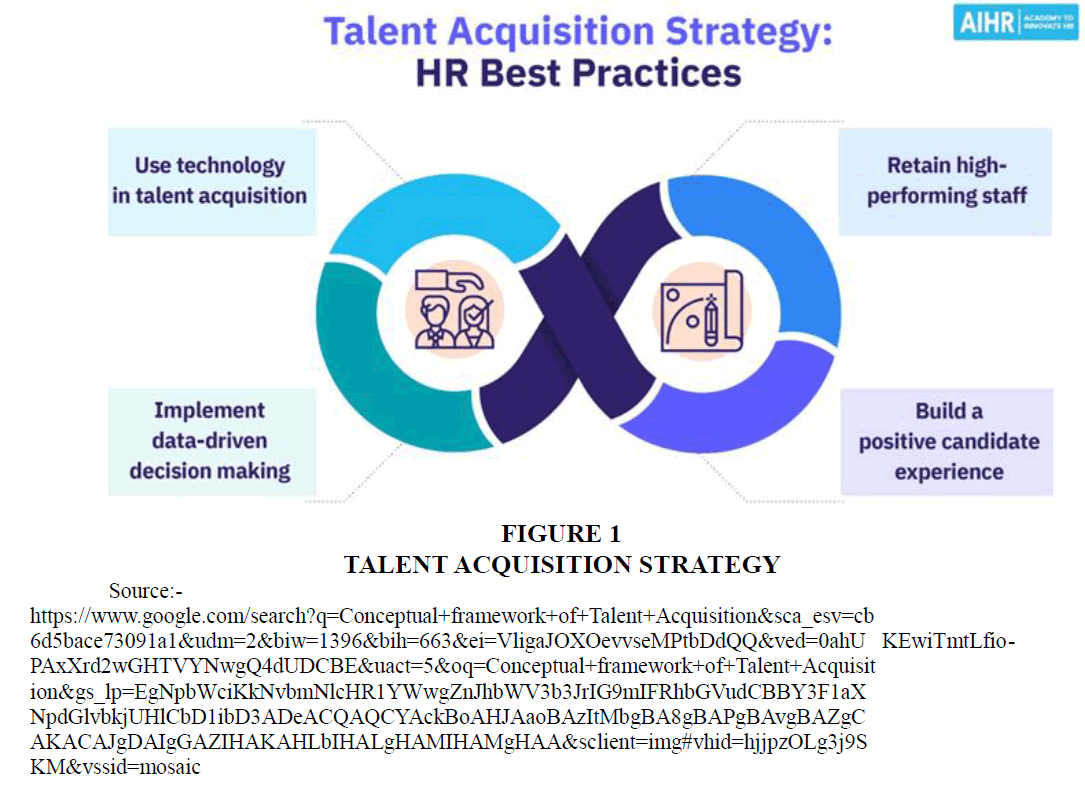
Figure 1 Talent Acquisition Strategy Source:- https://www.google.com/search?q=Conceptual+framework+of+Talent+Acquisition&sca_esv=cb 6d5bace73091a1&udm=2&biw=1396&bih=663&ei=VligaJOXOevvseMPtbDdQQ&ved=0ahU KEwiTmtLfio- PAxXrd2wGHTVYNwgQ4dUDCBE&uact=5&oq=Conceptual+framework+of+Talent+Acquisit ion&gs_lp=EgNpbWciKkNvbmNlcHR1YWwgZnJhbWV3b3JrIG9mIFRhbGVudCBBY3F1aX NpdGlvbkjUHlCbD1ibD3ADeACQAQCYAckBoAHJAaoBAzItMbgBA8gBAPgBAvgBAZgC AKACAJgDAIgGAZIHAKAHLbIHALgHAMIHAMgHAA&sclient=img#vhid=hjjpzOLg3j9S KM&vssid=mosaic
The 6 Elements of an Effective Talent Acquisition Strategy
Talent acquisition must always be taken from a strategic approach to select the right candidate at time place at right time which helps the organisation to achieve the goal of the organisation. Here the 6 major elements which effect the talent acquisition strategy
Workforce planning
Workforce planning forms the foundation of an effective talent acquisition strategy. It involves systematically analyzing the current workforce and determining future staffing requirements to align with organizational goals. This process includes assessing business objectives, evaluating
Existing workforce plans, and considering labor market conditions as well as global trends. A key component is workforce segmentation, which requires understanding various employee groups, job roles, and the skills, competencies, and experiences essential for each. By proactively addressing these factors, organizations can anticipate talent needs, close skill gaps, and ensure long-term preparedness in a competitive and dynamic business environment.
Build the Company Brand
Employee branding includes activities that help to articulate and define your company’s image, culture, key differentiators, reputation, and products and services. It also helps to advance the market position of your organisation, attract quality candidates, and depict what it is like for a candidate to work for you.
According to 2015 LinkedIn research, 62% of professionals across 26 countries ranked employer brand as the deciding factor when applying for a job. Recruiting and acquiring talent via social media has moved well past the tipping point, with 84% of organisations currently use social media to hire and acquire talent and 82% of organisations use social media to recruit passive job candidates.
Sourcing and recruiting
Internal sourcing offers significant advantages over external hiring, as replacing an employee can cost up to 150% of their salary (Bliss-Gately Tool). Promoting from within supports career development and retention, while succession planning ensures readiness for key roles. Additionally, employee referrals remain a leading source of hires, with many firms engaging staff as recruiters. Complementing this, career and leadership development programs strengthen skills, foster growth, and build a sustainable internal talent pipeline.
Using new technologies
According to a study, 86% of active candidates used their smartphones when searching for jobs. As a result, some of the more common mobile recruiting steps that organisations have taken include:
• Optimising their career websites
• Optimising job postings
• Optimising their application processes for mobile users
Offering candidates a clean, simple, and well-branded mobile presence allows your organisation to focus on ways to grab their attention and differentiate the job opportunities. Companies that maintain their branding, allow the ease of signing up and applying to jobs and integrate fast account creation and logins with social media have a better chance of attracting the right candidate. At the same time, applicant tracking systems are improving. More intuitive user interfaces and improved integration capability are providing better and more positive candidate experiences. After all, the goal is to predict whether a candidate is suitable for the job, the team, and the company.
Comprehensive onboarding
Onboarding is a structured process that integrates new employees into organizational culture, providing resources for productivity and retention. Beyond initial training, it transitions into continuous development during the first year. While technology enhances efficiency, personal engagement and clear career growth opportunities remain vital for retaining and motivating top talent.
Use of data analytics
Data analytics can improve the effectiveness of a talent acquisition strategy, determine job competencies for each role, and measure candidates’ potential performance before making a job offer. As the talent market moves towards performance analytics, the role of HR metrics has grown dramatically. Organisations should learn to embrace predictive analytics. You may not need to hire a full-time data analyst, but you should be able to measure the effectiveness of all aspects of their recruiting and acquiring efforts. A stellar talent acquisition strategy is not something organisations can build overnight. It needs the right amount of time and resources to kick it off. It’s important to understand where the company stands in the market, what the company goals are, and what needs to be improved in a company’s hiring process before creating a powerful strategy Figure 2.
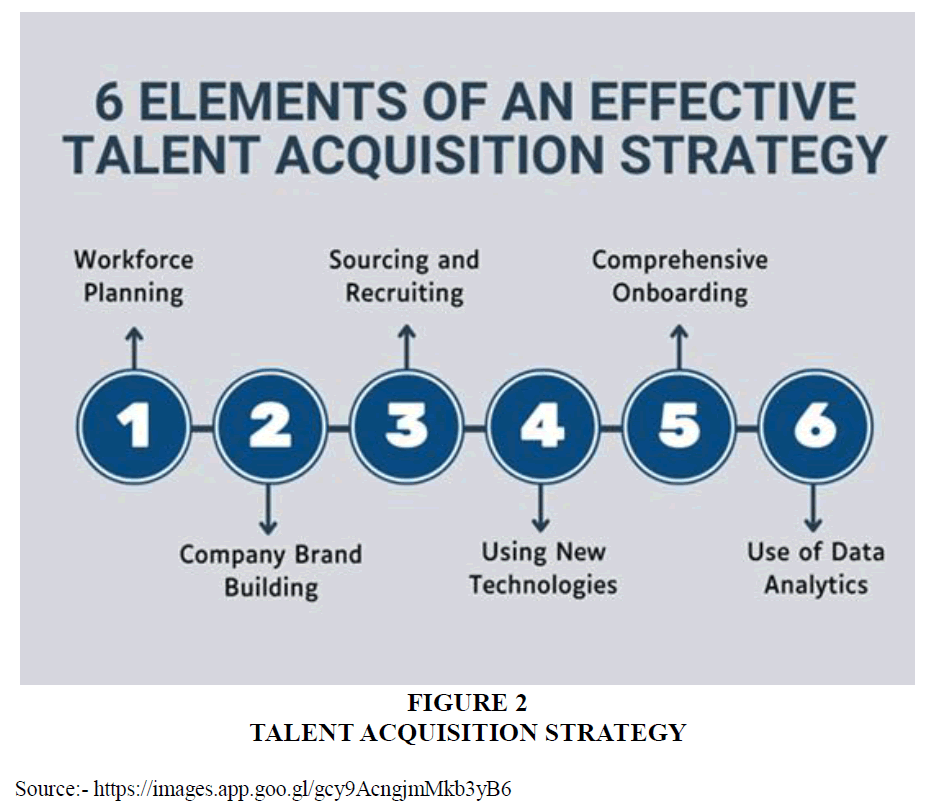
Figure 2 Talent Acquisition Strategy
Source:- https://images.app.goo.gl/gcy9AcngjmMkb3yB6
Talent Acquisition strategy in IT Industries
According to Syed Mansoor Pasha and Prof. Badiuddin Ahmed (2017), talent management strategies in the IT sector emphasize the alignment between employer objectives and employee retention practices, ensuring organizations can sustain a competitive advantage in the market. Talent management is viewed as a comprehensive process that integrates multiple dimensions of human resource practices to attract, develop, and retain skilled employees.
The process begins with workforce planning, which involves creating structured plans for staffing, compensation budgeting, and defining annual performance targets. This ensures organizations are well-prepared to address both immediate and long-term workforce requirements. Another critical component is recruitment, which functions as an integrative process that combines sourcing, selection, and candidate assessment to identify the best talent fit. Once recruited, onboarding plays a vital role, as it provides new employees with structured training and development opportunities. This step ensures that employees quickly adapt to organizational culture and become productive contributors in the long term.
Additionally, performance management serves as a mechanism to monitor, evaluate, and enhance employee contributions. It helps organizations establish performance standards, identify gaps, and support continuous improvement. Complementing this is employee training and performance support, which enable staff to acquire updated skills, adapt to technological changes, and operate efficiently at different organizational levels.
Another significant practice is succession planning, which facilitates internal mobility by preparing employees for higher roles and ensuring leadership continuity. This process enables managers to identify suitable candidates for critical positions and adjust organizational systems to evolving needs. Finally, compensation and benefits form an integral part of talent management, as they motivate employees and address skill gaps through competitive pay structures and incentives.
Together, these practices reflect a holistic talent management strategy in the IT sector, helping organizations close critical skill gaps, retain top talent, and sustain long-term productivity and growth.
The investigation into innovative recruitment strategies in the IT sector highlights both opportunities and challenges with significant strategic implications. Digital platforms and AI- driven tools have transformed recruitment by streamlining processes, improving efficiency, and enhancing candidate-job matching. However, over-reliance on algorithms risks reinforcing biases, necessitating a hybrid model that balances technology with human judgment. For IT
Companies, the strategic pathway lies in leveraging innovation to expand talent pools, improve candidate experiences, and strengthen employer branding, while safeguarding fairness and diversity. Prospective employees must adapt to digital recruitment environments, build strong online visibility, and align personal branding with organizational values to remain competitive. Meanwhile, policy-makers must establish frameworks that promote transparency, ethical AI use, and inclusivity in hiring. Ensuring responsible use of technology not only protects job seekers but also supports long-term industry growth through a diverse, equitable, and innovative workforce that sustains productivity and performance in the evolving IT ecosystem.
Literature Review
Syed Mansoor Pasha and Prof. Badiuddin Ahmed (2017) stated that, Talent Management strategies in the IT sector emphasize the alignment between employer objectives and employee retention practices, ensuring organizations can sustain a competitive advantage in the market. Talent management is viewed as a comprehensive process that integrates multiple dimensions of human resource practices to attract, develop, and retain skilled employees.
Dr. Madhavi Deshpande (2023) stated that, Business success today depends on strategic agility and timely execution, yet organizations face a shrinking pool of high-performing talent. Studies highlight that anticipating workforce needs, optimizing talent, and maintaining retention are vital for sustaining competitive advantage. The Price Waterhouse Coopers Global CEO Survey identifies “access to talent” as a critical concern, with many HR teams unprepared for the challenges. Globalization, workplace reforms, and workforce demographics have further reshaped talent management (Nankervis, Compton & Baird, 2005). Research shows firms with robust talent strategies achieve superior returns (Caudron, 2001). Moreover, leadership development across generations has become the foremost talent issue, positioning talent acquisition as a strategic driver for organizational growth, productivity, and long-term performance in the IT sector.
Tafti, Mahmoudsalehi, and Amiri (2017) stated that, success depends on several factors, including strong top management support, transparent communication, structured processes, and a positive organizational culture. However, it also identified common challenges such as limited resources, employee resistance to change, and difficulties in measuring the impact of talent management initiatives. The findings suggested that organizations should design talent management strategies aligned with business goals while ensuring continuous training, development, and employee engagement. The study concluded by highlighting the importance of regularly reviewing and adapting talent management practices to maintain effectiveness, foster growth, and enhance overall organizational performance in a competitive environment.
Mukhil V1 , Vanitha P2 (2023), stated that, the complexities and challenges of talent acquisition, particularly in highly competitive markets. Attracting and retaining skilled
Employees has become increasingly difficult due to rising competition, skills shortages, and changing workforce demographics. Effective talent acquisition requires strategic planning, alignment with industry trends, and responsiveness to organizational needs. Research highlights that organizations often struggle with optimizing recruitment processes, which directly impacts long-term performance. To address these issues, firms are adopting innovative recruitment practices, leveraging technology, and utilizing data-driven insights. Moreover, prioritizing diversity and inclusion is recognized as a critical factor in strengthening workforce capability. By proactively addressing these challenges, organizations can improve recruitment outcomes, build sustainable talent pipelines, and enhance their competitive advantage in dynamic business environments.
Important challenges in IT industries in Talent and Acquisition
There is no single biggest challenge in recruitment — several issues are closely connected and often overlap. The primary challenges include:
Talent Shortage:- The competition for skilled candidates is intense, with shortages in fields like cybersecurity and AI engineering creating pay gaps. Companies can address this by hiring candidates with transferable skills, investing in training programs, partnering with educational institutions, engaging passive talent, and offering global or remote work opportunities to expand the talent pool.
Changing Candidate Expectations: Recruiters face challenges as candidates now expect competitive pay, growth opportunities, work-life balance, flexibility, and positive culture. Organizations must update benefits, policies, and foster continuous feedback to attract and retain top talent effectively.
Diversity, Equity, and Inclusion (DEI): Organizations prioritize building diverse, equitable, and inclusive teams, requiring proactive recruitment efforts. Implementing unbiased hiring, seeking candidates from varied backgrounds, and providing regular DEI training ensures initiatives are embedded in company culture and reflect market diversity.
Digital Transformation: Technology is transforming recruitment, requiring companies to adopt digital tools like social media, AI platforms, and data analytics. Training teams and using mobile-first recruitment strategies are
Essential to effectively attract candidates and address talent acquisition challenges.
Employer Branding: A strong employer brand attracts top talent by highlighting a company’s mission, values, and culture. Showcasing achievements, employee testimonials, and involving staff as brand ambassadors on social media enhances authenticity, retention, and appeal to potential candidates.
Remote Work and Hybrid Models: The COVID-19 pandemic accelerated remote work, requiring recruiters to adapt strategies, refine virtual interviews and onboarding, ensure communication, and provide resources for productive home offices to attract and engage flexible talent.
Skills Gap: Rapid technological advancements create skills gaps, requiring upskilling, reskilling, and training. Collaborating with educational institutions or online learning platforms helps organizations prepare a skilled workforce and quickly address talent acquisition challenges.
Evolving Recruitment Techniques: Traditional recruitment often falls short, requiring companies to adopt innovative methods like gamification, virtual reality, and video interviews. Storytelling and creative approaches enhance engagement, modernize hiring, and position the organization as a talent acquisition leader.
Candidate Experience: Poor candidate experience can deter talent. Streamlining applications, ensuring timely communication, and using AI chatbots for personalized engagement enhance the recruitment process, improve candidate satisfaction, and give companies a competitive edge in hiring top talent.
Data-Driven Decision-Making: Leveraging data and analytics in talent acquisition enhances hiring strategies, outcomes, and candidate experience. By combining AI tools, DEI initiatives, and proactive approaches, organizations can address recruitment challenges, adapt to evolving needs, and attract high-quality talent effectively Figure 3.
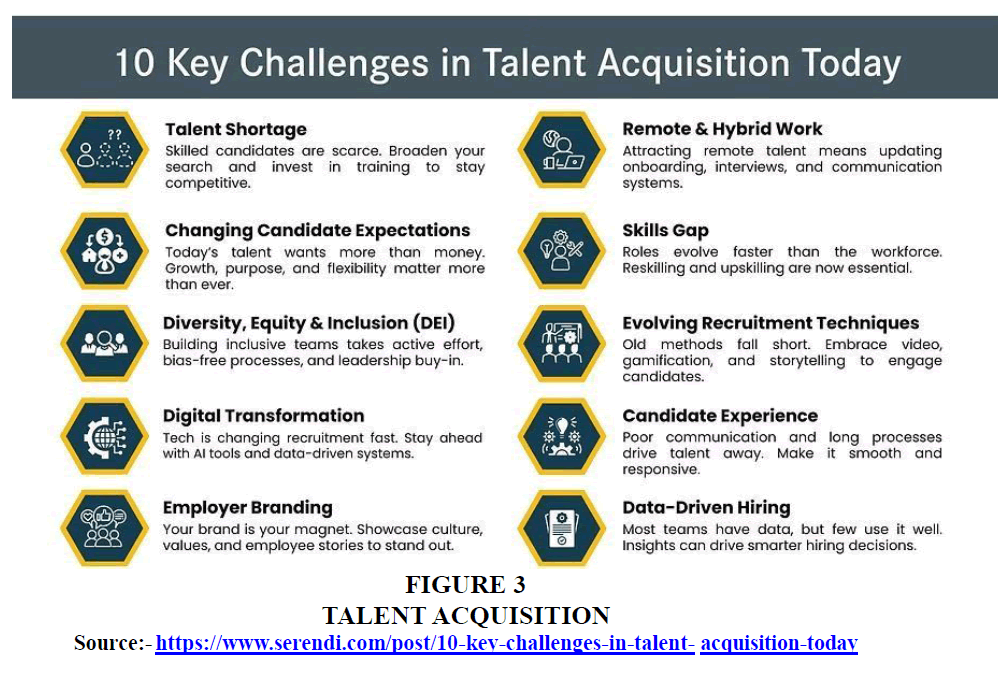
Figure 3 Talent Acquisition
Source:- https://www.serendi.com/post/10-key-challenges-in-talent-acquisition-today
Recruitment strategies must adapt to evolving candidate expectations, market changes, and technology. Partnering with a trusted RPO provider like Serendi streamlines hiring, offering faster cycles, reduced costs, better-fit candidates, and lower turnover, ensuring organizations remain competitive and future-ready.
11 Core Tips to Boost IT Recruitment Process
The tech industry is witnessing rapid growth, with employment opportunities for IT experts increasing each year. A larger developer base also increases the availability of rare specialists, yet recruiting skilled programmers remains a significant challenge. As the industry continues to evolve, the demand for specialized expertise intensifies. The following 11 tips are to enhance the selection process in talent acquisition.
1. Compose an IT recruitment strategy: Before IT recruitment, organizations need a clear talent acquisition strategy outlining team structure, required programmers, KPIs, budget, and hiring tools. The plan should remain flexible to adapt to changing staffing needs, hiring practices, and technologies, ensuring efficiency, effectiveness, and sustainability in acquiring top IT talent.
2. Thoroughly analyse the market: Market analysis and SWOT analysis are vital for any organization, especially in the talent acquisition process. These tools provide valuable insights into the tech market, highlight opportunities and challenges, and help organizations understand the competitive landscape, enabling smarter recruitment decisions and stronger workforce planning for sustainable growth.
3. Compare developer salaries using analytical compensation reports: Organizations must compare competitor salary and benefit offerings within the market and align their compensation packages accordingly, ensuring they remain attractive, competitive, and capable of meeting talent acquisition requirements.
4. Conduct a powerful employer branding campaign: Employer branding is an optional hiring tip, but it often benefits companies by boosting visibility, attracting in-house and remote IT talent, and creating a positive image. As a result, candidates accepted offers, enabling the company to successfully hire—and even exceed—the required developers.
5. Improve your employee value proposition: Companies should research competitors’ offerings and collaborate with HR or service providers to enhance bonus packages, staying attractive in recruitment.
6. Write eye-catching job descriptions: A common IT recruitment challenge is programmers ignoring messages due to repetitive offers. To engage top developers, recruiters must craft unique job descriptions and personalized dialogue scripts that capture attention effectively.
7. Pre-screen the most suitable candidates: Pre-screening is a recruitment method which lets you check the technical experience of the candidates via messaging, phone calls, or online meetings
8. Reduce the number of interviews: Senior developers dislike lengthy recruitment processes with over five interviews, viewing them as time-consuming. A best practice is minimizing stages; for instance, Google makes hiring decisions with just four interviews.
9. Prepare regular hiring progress reports: Tracking IT recruitment effectiveness requires regular progress reports, including resumes processed, interviews conducted, offers accepted/declined, and time per candidate. Hiring managers and recruiters can then analyse results and plan improvements to streamline recruitment.
10. Adopt employee referral programs: Employee referral programs reward staff with bonuses for recommending developers who join the company. This method speeds recruitment, delivers higher-quality candidates, and ensures stronger conversion rates, as referrals come with trust and personal responsibility from employees.
11. Partner up with a professional tech recruitment services vendor: IT companies often outsource hiring to reliable vendors who manage the recruitment process efficiently while charging a standard recruiter’s fee, ensuring effective talent acquisition and streamlined hiring support.
Best Practices of IT industries in Talent Acquisition
a. Shortening the Hiring Process: Talent acquisition in IT is highly competitive, as skilled developers receive multiple offers daily. Lengthy hiring processes often drive candidates away, especially when competitors act faster. To improve recruitment, avoid time- consuming tasks and use efficient methods like technical pre-screening, short coding sessions, and panel interviews, enhancing candidate experience and ensuring quicker, more effective position filling.
b. Building an Employer Brand: Building a strong employer brand is crucial in IT talent acquisition, as developers prefer companies with positive cultures and reputations. Such firms attract candidates organically, lowering hiring costs. To achieve this, craft a compelling Employer Value Proposition, set ambitious goals, foster culture, and update benefits with options like mental health days, workshops, and remote work.
c. Promoting Internal Mobility: Promoting existing employees to higher roles is an effective practice to reduce attrition and recruitment costs. Internal candidates are already aligned with company culture and processes. Introducing mentoring, learning opportunities, and internal job postings helps harness in-house talent, fostering growth while strengthening loyalty and long-term organizational commitment.
d. Paying Attention to DEI Metrics: DEI—diversity, equity, and inclusion—is essential in IT talent acquisition despite tough competition. It builds an ethical employer image, attracts Gen Z valuing diversity, and strengthens retention. Research shows diverse companies outperform peers, as varied backgrounds and shared missions foster innovation, creativity, and stronger organizational performance.
e. Developing a Talent Retention Strategy: Experts predict the Great Resignation will intensify in 2022, with 55% of IT recruiters expecting higher turnover and more unfilled roles. Entrepreneurs must prioritize talent retention by identifying developer motivations.
Latest technologies used by HR departments in IT industries for talent acquisition
In 2025, HR in IT is increasingly harnessing cutting-edge technologies to streamline talent acquisition and enhance candidate quality. AI and machine learning lead the transformation, powering smart Applicant Tracking Systems (ATS), resume parsing, candidate matching, and predictive hiring analytics to forecast candidate fit and retention likelihood. AI-powered recruitment automation extends to virtual recruiters and agents. Platforms like Optum Hire’s “Recruiter AI” and AI screening bots conduct initial interviews and rank candidates, delivering rapid shortlists to human recruiters. LinkedIn’s “hiring assistant” and systems within Workday and HiredScore further automate job description creation, messaging, and interview scheduling
.To improve engagement and assessment, gamification and VR/AR are becoming more prevalent. Gamified challenges and immersive job previews help assess real-world skills and enhance candidate attraction. Blockchain enables secure, verifiable credentialing and decentralized digital resumes, boosting trust and efficiency in vetting talent . HR teams also deploy predictive analytics and talent intelligence platforms to analyze sourcing channels, forecast hiring needs, and personalize recruitment strategies based on large-scale data from multiple sources. Enhancements in candidate experience are facilitated by chatbots, mobile- friendly platforms, and integrated digital workflows, delivering seamless interactions, real-time updates, and efficient scheduling . Lastly, diversity, equity, and inclusion (DEI) tools, including blind screening and bias-monitoring features, are vital for building fairer hiring systems
Finding
• Talent acquisition plays a vital role in selecting employees who contribute to achieving organizational goals.
• The IT industry faces continuous demand for new and evolving skills.
• Organizations must focus not only on hiring new talent but also on developing the skills of existing employees.
• Training programs help bridge knowledge and skill gaps essential for company growth.
• There is a high demand for experienced developers, cloud, AI, and cybersecurity professionals, exceeding supply.
• Firms must rethink sourcing and selection strategies beyond traditional job boards and agencies.
• Selecting the right candidate at the right time enhances productivity and organizational performance.
• Innovative talent acquisition practices enable firms to secure better candidates, driving higher performance and achievement of strategic goals.
Suggestions
a. Adopt hybrid recruitment strategies by combining AI-driven tools with human judgment to enhance efficiency, reduce bias, and improve the quality of hires.
b. Invest in employee upskilling and reskilling to bridge skill gaps through targeted training programs in emerging technologies such as AI, cloud computing, and cybersecurity.
c. Enhance employer branding to establish a strong Employer Value Proposition (EVP) and cultivate a positive organizational culture that attracts top IT talent organically and reduces cost-per-hire.
d. Streamline recruitment processes by minimizing interview stages and eliminating lengthy tasks to improve candidate experience and accelerate hiring decisions.
e. Promote diversity, equity, and inclusion (DEI) by leveraging diverse talent pools to foster innovation, increase employee engagement, and enhance overall organizational performance.
Conclusion
Talent acquisition (TA) is a holistic and forward-looking approach designed to identify, attract, and integrate professionals who meet the evolving demands of contemporary organizations. Unlike traditional recruitment, which primarily centres on filling vacancies through sourcing and screening, TA encompasses workforce planning, cultural alignment, and organizational continuity. An effective TA process not only secures individuals with the required expertise but also ensures alignment with organizational values and long-term goals. As observes, achieving this balance requires adherence to employment regulations, efficient
Onboarding, and optimized processes, since inefficiencies can adversely affect business performance. With the growing adoption of digital solutions and global outsourcing partnerships, organizations now have broader access to diverse and specialized talent pools. This positions TA as a key driver of competitiveness and sustainable growth in the IT industry, where rapid technological advancements demand agile HR practices. The study emphasizes the influence of innovation in shaping recruitment, particularly the role of artificial intelligence, predictive analytics, and automation in redefining how HR departments source, evaluate, and retain talent. Additionally, the research evaluates HR strategies employed by IT firms to strengthen talent management through technology-enabled and innovative practices. Findings demonstrate that these advancements not only optimize recruitment but also enhance organizational productivity, employee performance, and overall competitiveness. Thus, TA emerges as more than a hiring function—it is a strategic enabler of long-term success for IT enterprises.
References
Ajayi, F. A., & Udeh, C. A. (2024). Innovative recruitment strategies in the IT sector: A review of successes and failures. Magna Scientia Advanced Research and Reviews, 10(2), 150-164.
Indexed at, Google Scholar, Cross Ref
Dadariya, S., & Saraf, A. (2025). A Study On Key Aspects Of Talent Acquisition Practices In The IT Sector. Journal of Scientific Research and Technology, 334-340.
http://iaeme.com/Home/issue/IJMHRM?Volume=10&Issue=2
https://accendotechnologies.com/blog/6-elements-of-an-effective-talent-acquisition-strategy- 2/
https://alcor-bpo.com/quick-and-effective-recruitment-to-make-your-business-move/
https://alcor-bpo.com/software-development-team-structure-must-have-players-for-your- team/
https://alcor-bpo.com/talent-acquisition-in-it-sector-challenges-best-practices-for-hiring/
https://alcor-bpo.com/talent-acquisition-in-it-sector-challenges-best-practices-for- hiring/#Best_Practices_of_IT_Tech_Talent_Acquisition
https://doi.org/10.70315/uloap.ulmdi.2024.0101001
https://ieeexplore.ieee.org/document/10617231
https://ijrpr.com/uploads/V4ISSUE5/IJRPR13087.pdf
https://magnascientiapub.com/journals/msarr/content/innovative-recruitment-strategies-it- sector-review-successes-and-failures
https://magnascientiapub.com/journals/msarr/sites/default/files/MSARR-2024-0057.pdf
https://scholar.google.com/citations?view_op=view_citation&hl=en&user=CbyJSy4AAAAJ&citat ion_for_view=CbyJSy4AAAAJ:9yKSN-GCB0IC
https://scholarworks.waldenu.edu/dissertations/?utm_campaign=PDFCoverPages&utm_mediu m=PDF&utm_source=scholarworks.waldenu.edu%2Fdissertations%2F16413
https://www.google.com/search?q=Conceptual+framework+of+Talent+Acquisition&sca_esv=cb 6d5bace73091a1&udm=2&biw=1396&bih=663&ei=VligaJOXOevvseMPtbDdQQ&ved=0ahUKEwi TmtLfio- PAxXrd2wGHTVYNwgQ4dUDCBE&uact=5&oq=Conceptual+framework+of+Talent+Acquisition&g s_lp=EgNpbWciKkNvbmNlcHR1YWwgZnJhbWV3b3JrIG9mIFRhbGVudCBBY3F1aXNpdGlvbkjUHlC bD1ibD3ADeACQAQCYAckBoAHJAaoBAzItMbgBA8gBAPgBAvgBAZgCAKACAJgDAIgGAZIHAKAHLbI
https://www.researchgate.net/publication/375962274_A_Study_of_Talent_Acquisition_Practic es_in_IT_Industry_Innovations_in_HR_Strategies#fullTextFileContent
https://www.sciencedirect.com/science/article/pii/S0040162522008125?via%3Dihub
https://www.serendi.com/post/10-key-challenges-in-talent-acquisition-today
International Journal of Marketing and Human Resource Management (IJMHRM) , Volume 10, Issue 2, September-December 2019, pp. 1–8, Article ID: IJMHRM_10_02_001 on org performance.
Tafti, M. M., Mahmoudsalehi, M., & Amiri, M. (2017). Critical success factors, challenges and obstacles in talent management. Industrial and Commercial Training, 49(1), 15-21.
Indexed at, Google Scholar, Cross Ref
Tuttle, L. (2024). Successful Strategies Used by Information Technology Talent Acquisition Managers to Retain Niche Employees (Doctoral dissertation, Walden University).
Received: 16-Sep-2025, Manuscript No. AMSJ-25-16256; Editor assigned: 17-Sep-2025, PreQC No. AMSJ-25-16256(PQ); Reviewed: 11-Oct-2025, QC No. AMSJ-25-16256; Revised: 28-Oct-2025, Manuscript No. AMSJ-25-16256(R); Published: 02-Nov-2025