Research Article: 2025 Vol: 29 Issue: 6
The Role of Artificial Intelligence in Higher Education: Challenges and Applications
Balagouda S.Patil, Dayananda Sagar Business School, Bangalore
K.Vinaya Laxmi, Vardhaman College of Engineering, Hyderabad
Niti Saxena, Jagannath International Management School, New Delhi
Tamanna Jena, Fairleigh Dickinson University, Vancouver, Canada
Amit Prakash, Jai Prakash University, Chapra, Bihar
T.J. Arun, Government Arts and Science College, Avinashi , Tirupur, Tamilnadu
Citation Information: Patil, B.S., Laxmi, K.V., Saxena, N., Jena, T., Prakash, A., & Arun, T.J. (2025) The role of artificial intelligence in higher education: challenges and applications. Academy of Marketing Studies Journal, 29(6), 1-11.
Abstract
Artificial Intelligence (AI) provides new potentials for higher education: personalized learning, computerized assessment, adaptive teaching, administrative robotics & data-driven decision-making. Yet, implementation raises challenges including faculty enthusiasm, training requirements, ethical apprehensions (bias, privacy) & institutional dimensions. This study surveys the role of Artificial Intelligence (AI) in higher education by examining apparent applications, institutional willingness & challenges (ethical, technical & training) handled by faculty & academic staff. Using a cross-sectional examination of 151 academicians across Arts (social science), Science, Commerce as well as Engineering field, the research measured perceptions on manifold Likert scales & tested relations & predictive associations. Results discloses moderate perceptions of usefulness & in readiness, variable perceptions about institutional assistance & training & no tested significant associations between academic disciplines & awareness level. Regression based analysis even did not find a significant & strong predictive relationship between the compound predictor (perceived usefulness/easiness & training) & self-reported eagerness. Main suggestions include listing targeted trainings, stronger institutional rule & frameworks as well as clearer ethical strategies for AI adoption in higher education.
Keywords
AI, Artificial Intelligence, Higher Education, Challenges, Applications.
Introduction
Artificial Intelligence (AI) has swiftly become a innovative influence in the wide-reaching higher education sector, altering student knowledge, teaching methodologies, and institutional operations. As digital technologies and data-driven ecosystems gain importance in academic situations, institutions are experiencing a noteworthy transition from conformist educational approaches to more "intelligent, automated, and personalized systems. AI tools, including intelligent tutoring systems, predictive analytics, automated assessment devices, and adaptive learning platforms", can enhance informative experiences by offering real-time understandings into student presentation, improving instructional efficiency, and facilitating evidence-based decision-making. The integration of AI in higher education (Sardar, et.al., 2023) signifies not just a technical progression but a important transformation that challenges entrenched academic ethics and authority frameworks. Institutions are commencing the incorporation of analytics-driven systems for registration management, examination procedures, curriculum growth, and faculty performance assessment. Concurrently, beginners are progressively engaging with algorithmic arrangements that tailor educational trajectories according to their talents, inadequacies, and favorites. This transition enables a more inclusive, flexible, and student-focused educational framework, offering budding for modified learning on an extraordinary scale.
The swift growth of AI stimuluses substantial explorations regarding ethics, privacy, openness, and the potential function of instructors. The combination of automated technologies necessitates noteworthy investments, digital preparedness, proficient faculty, and strong legislative frameworks to guarantee that technology enhances—rather than challenges—the essential academic goal. Concerns around algorithmic bias, data authority, faculty edition, and budding job dislocation highlight the necessity for deliberate and intentional adoption. As universities advance in digital transformation, it is vital to comprehend the difficulties and real-world uses of AI to optimize its compensations while preserving academic integrity and societal confidence. Consequently, artificial intelligence in higher education occurs at a fundamental juncture of potential and intricacy (Bearman, et.al., 2023). The potential to enhance learning outcomes, streamline organizational processes, and facilitate new research is extensive; yet, the related hazards necessitate thorough control. An equitable inspection of its complications and applications is important for institutes seeking to utilize AI responsibly and efficiently Figure 1.
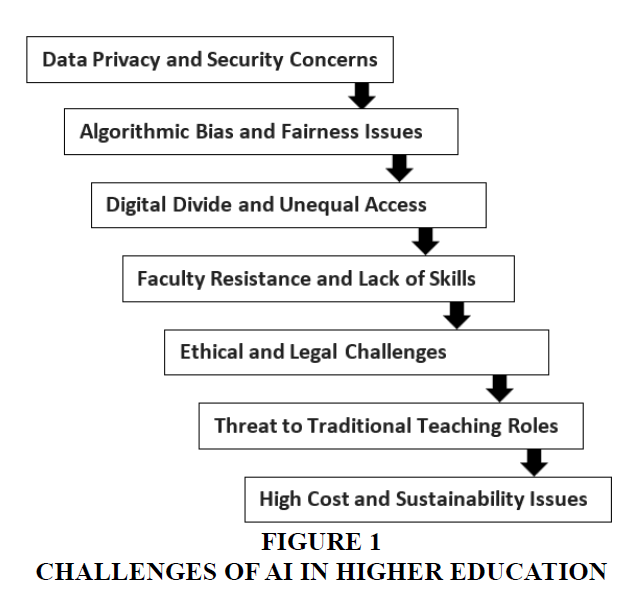
Figure 1 Challenges of AI in Higher Education
• AI systems depend significantly on extensive datasets comprising confidential student and teacher information. The gathering, storage, and analysis of such data subject organizations to dangers of data breaches, hacks, illegal access, and abuse. In the absence of stringent data governance standards and encryption procedures, personal information—including academic records, biometric data, and behavioral information—becomes susceptible, resulting in significant ethical and legal dilemmas.
• Artificial intelligence technologies frequently rely their choices on historical data, which may possess intrinsic social or demographic biases (Gulavani, et.al., 2022). This may result in inequitable predictions unjust domains such as entrance assessments, performance evaluations, or tailored learning suggestions. When AI systems replicate existing inequalities—such as those related to gender, caste, or socioeconomic status—they undermine educational equity and reliability.
• The implementation of AI necessitates digital infrastructure, including high-speed internet, sophisticated devices, and adequately equipped laboratories. Students from rural or economically disadvantaged backgrounds may lack access to these resources, exacerbating the learning gap. Likewise, financially disadvantaged colleges may find it challenging to invest in AI technologies, resulting in discrepancies between institutions with varying levels of digital preparedness.
• Numerous educators lack familiarity with AI-based tools and experience apprehension regarding the incorporation of technology into their pedagogical methods. The deficiency of digital skills results in opposition, sluggish acceptance, and suboptimal utilization of AI systems. Ongoing training, professional advancement, and motivation are essential to enable faculty members to proficiently utilize AI for instruction and evaluation.
• The use of AI in higher education prompts inquiries concerning ethics, openness, intellectual property, the trustworthiness of automated grading, and accountability. A universally accepted regulatory framework for governing AI deployment in educational contexts does not exist. Uncertainties persist around the ownership of AI-generated content, the validation of automated feedback, and the duties of institutions in the event of AI faults.
• The growing implementation of AI in functions like tutoring, grading, and student assistance raises apprehension among educators regarding job displacement and diminished classroom authority. Numerous educators express concern that automated systems could supplant human judgment, interpersonal engagement, and empathy—components vital to comprehensive learning and mentorship.
• Establishing AI infrastructure necessitates significant expenditure on technology, software licenses, maintenance, and training. For resource-limited institutions, maintaining these expenses over time proves difficult. In the absence of long-term financial planning, institutions jeopardize the adoption of AI tools that may subsequently become obsolete or inoperable due to insufficient support Figure 2.
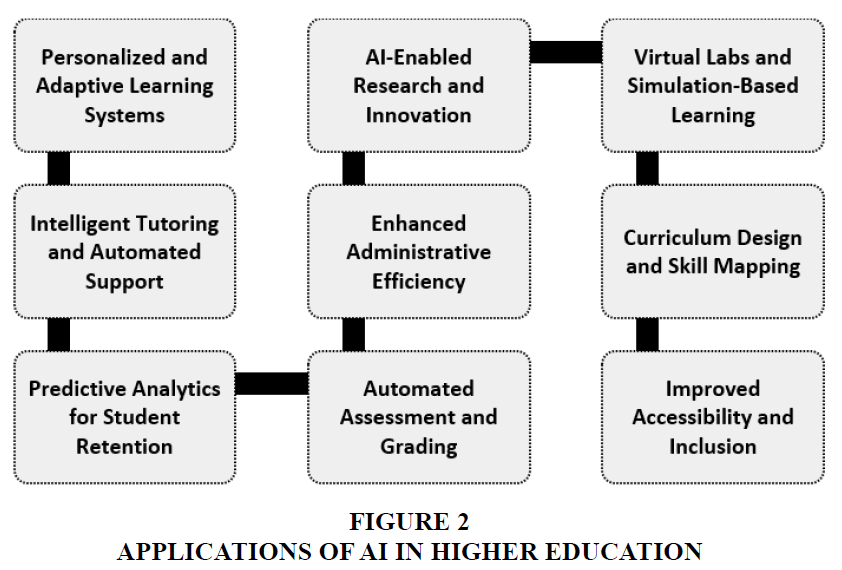
Figure 2 Applications of AI in Higher Education
• AI-driven adaptive learning platforms change material, tempo, and complexity based on specific students' strengths & shortcomings. They offer immediate feedback, tailored educational resources & personalized knowledge trajectories. This advances educational efficacy, declines attrition rates & accommodates wide-ranging learning modalities.
• AI-powered education solutions imitate individualized coaching through comprehensive explanations, engaging teachings & automatic support. Chatbots & computer-generated assistants address consistent academic explorations around the clock, improving administrative burdens & enhancing approachability for scholars requiring immediate statistics or academic assistance.
• AI tools measure academic achievement, turnout, behavioral inclinations, and engagement data to recognize students at hazard of failure or suspension of their studies. Institutions can thereafter interfere punctually via counseling, mentoring, or academic support ingenuities to enhance retaining & success rates (Siau, 2017).
• Artificial intelligence arrangements evaluate assignments, tests, essays & coding jobs with amazing speed & uniformity. Natural language meting out systems simplify the analysis of written answers, recognize plagiarism & produce complete feedback. This endorses enhanced impartiality in assessment & improves the problem on faculty members.
• Universities adopt AI for class arrangement, admissions management, resource distribution & enrollment trend predicting. Automated progressions enhance operational efficiency, minimize human errors & facilitate evidence-based executive through the examination of extensive datasets that are inspiring to process manually.
• Researchers gain rewards from AI systems that accomplish automated works, reviews, perceive research gaps, analyze complicated data & execute simulations as well as models. Artificial intelligence improves research rapidity & precision, chiefly in fields demanding substantial computational resources, like production, health sciences & data science.
• AI-driven simulation situations & virtual workshops enable students to conduct trials digitally, mainly in disciplines such as medicinal, engineering, chemistry as well as robotics. These platforms reduce dependance on physical workshops, lower expenditures, and offer secure, reproducible & scalable investigational environments.
• Artificial intelligence may evaluate labor marketplace changes, employ demand & student performance data to support universities in evolving reviewed curricula that line with trade standards. AI recognizes new skills, enabling the development of appropriate courses & micro-credentials that expand student employability.
• AI-driven assistive skill, including speech-to-text, instinctive captioning, analytical text, & educational aids, simplify support for students with enhancements. These approaches enhance accessibility for visually challenged, hard-of-hearing, or neurodiverse learners, nurturing a more inclusive informative environment.
Research Objectives
1. To assess academics’ perceptions of AI applications & challenges in higher education.
2. To examine the level of institutional support & training related to AI.
3. To test whether perceived_usefulness, ease of use & training predicts self-reported readiness to adopt AI.
4. To observe the association between academic discipline & level of AI awareness.
Hypothesis of the study
H1: Perceived usefulness of AI is positively associated with readiness to adopt AI in teaching & research.
H2: Greater training availability is positively associated with readiness to adopt AI.
H3: There is an association between academic discipline & level of AI awareness.
H4: Ethical concerns are negatively associated with readiness.
Review of Literature
(Akinwalere & Ivanov, 2022) emphasize that artificial intelligence has arisen as both a transformational possibility & a tangible challenge for global higher education institutions. Their research highlights that AI-driven solutions can improve personalization, optimize administrative processes, and facilitate data-informed decision-making. Nonetheless, they warn that insufficient digital preparedness, ethical issues & infrastructure deficiencies present significant challenges, particularly in underdeveloped areas. The authors contend that institutional leaders must tackle faculty training, technological integration, and policy alignment to optimize AI's potential. Their research presents a preliminary framework for comprehending the dual aspects of AI integration in higher education. (Bearman., et.al., 2023) provide a critical analysis of the various discourses influencing AI narratives in higher education. They contend that most conversations either depict AI as a transformative solution or as a disruptive menace, frequently overlooking the complex realities that exist in between. Their analysis demonstrates the interplay of institutional expectations, technological optimism, and pedagogical considerations in shaping AI acceptance. Through the analysis of these conflicting discourses, the authors demonstrate that the implementation of AI is influenced not alone by technological proficiency but also by social, cultural, and professional identities. Their research substantially enhances comprehension of how academic societies navigate the increasing integration of AI in education.
(Bates., 2015) offers a fundamental viewpoint on pedagogy in the digital era, meticulously examining the impact of technology on instructional design and student engagement. The book, while not only centered on AI, delineates principles of digital pedagogy that directly influence contemporary AI-mediated teaching techniques. Bates contends that technology should support pedagogical objectives rather than impose them, highlighting the significance of learner-centered approaches, accessibility, and adaptable learning environments. His directives on online education, multimedia application, and instructional design continue to be pertinent for the integration of intelligent systems. Thus, Bates' work remains a foundational notion for instructors traversing AI-enhanced educational environments. (Crompton., et.al. 2023) present a thorough analysis of the current status of AI in higher education, emphasizing developing trends, pedagogical consequences, and implementation obstacles. They note that AI applications, ranging from intelligent tutoring systems to predictive analytics, are swiftly increasing in complexity & breadth. Nonetheless, they observe that challenges such as academic opposition, data privacy issues, and unreliable technological infrastructure persist as significant obstacles. Their research emphasizes that for AI to be effective, organizations must adopt comprehensive strategies that integrate policy formulation, training, and ethical governance. Their work delineates the changing landscape of AI deployment and identifies areas necessitating urgent focus.
(Gulavani et al., 2022) examine the transformative impact of AI technology on higher education institutions, focusing on improvements in academic output, administrative efficiency, and student support services. They elucidate the integration of tools like automated grading systems, learning management analytics, and chatbots into academic workflows. Their work discloses the significance of AI in promoting creativity in curriculum development and research endeavors. However, they warn that disparities in access, insufficient faculty readiness & cybersecurity risks persistently hinder seamless implementation. The authors contend that strategic planning and capacity-building programs are crucial for organizations to fully leverage AI's potential. (Jain., et.al., 2019) provide an empirical analysis about the impact of AI in higher education, illustrating that the adoption of technology is significantly affected by faculty attitudes, institutional support & perceived utility. Their findings indicate that although educators recognize AI's capacity to improve teaching efficiency, many are apprehensive about its long-term effects on academic independence. The authors contend that adequate training, infrastructural support & explicit instructions are essential for fostering increased acceptance. Their research provides significant factual data to the discussion on AI preparedness & indicates that human factors are pivotal in the adoption process.
(Luckin et al., 2016) persuasively advocate for the incorporation of AI in education, illustrating how intelligent technology might facilitate enhanced learning, individualized trajectories, and superior evaluation methods. They characterize AI as a catalyst for transforming the functions of educators & students, framing technology as an ally rather than a substitute. Their analysis highlights the necessity for transparency, rigorous data models & ethical design to guarantee that AI interventions retain trustworthiness. The authors emphasize the significance of interdisciplinary collaboration in creating successful instructional AI. Their approach is a foundational contribution to conceptualizing AI-enhanced learning ecosystems. (Roumate., 2022) examines the transformative capacity of AI in higher education & scientific research, contending that AI-driven platforms may significantly expedite innovation and institutional advancement. He examines how intelligent algorithms improve research quality via automation, predictive modeling, and superior data processing. Simultaneously, he cautions that digital disparity & inadequate technological infrastructure may impede sustained AI implementation. His thesis emphasizes that higher education institutions must proactively invest in digital ecosystems & implement ethical frameworks to govern AI adoption. The report identifies AI as a vital catalyst for future academic distinction & research progress.
(Reitgruber., 2023) analyzes the effect of AI and automation on learning and development contexts, with specific emphasis on employee incentive to learn within organizational frameworks. The findings, while entrenched in corporate contexts, have significant similarities for higher education, where learner motivation is essential in AI-enhanced learning. The research indicates that automation can enhance student empowerment through individualized resources, although it may also induce fear around technological displacement. This contradiction shows the necessity for balanced implementation techniques. The author asserts that universities must foster supportive learning environments to guarantee that AI tools expand rather than impede student engagement.
(Siau, 2017) assesses the profound implications of AI, robots, and automation on higher education, contending that these technologies will profoundly transform academic frameworks, curriculum, and skill prerequisites. He recommends that educators should equip students for a future categorized by automation and intelligent systems by reformation curricula to prioritize critical thinking, creativity, and digital literacy. Siau emphasizes the necessity for institutions to modify their operational frameworks to maintain relevance in a swiftly budding technology environment. His study anticipates numerous issues that higher education institutions are presently confronting.
(Sardar., et.al., 2023) examine the growing significance of ranking and grading systems in influencing decisions within Indian higher education institutions. Their study, while not explicitly focused on AI, is pertinent due to the increasing use of AI-driven ranking analytics & data-based evaluation systems. They underline the impact of rankings on funding, student selection & institutional strategic planning. The authors contend that equitable, transparent & technologically robust evaluation systems are essential for upholding academic quality. Their research implicitly illustrates how AI-driven assessment tools can enhance institutional competitiveness. (Selwyn., 2019) presents a critical analysis about the possible replacement of instructors by robots and AI, highlighting significant ethical, pedagogical & societal concerns. He contends that although AI can enhance education by automation and personalization, it cannot emulate the emotional, moral, and relational aspects of human educators. Selwyn cautions against technologically determinist narratives that trivialize the future of education. His work emphasizes the necessity of reconciling innovation with human-centric ideals. By scrutinizing assumptions on AI, he offers a pragmatic counterargument to excessively optimistic perspectives on AI-enhanced education.
(Sharma et al., 2022) estimate the enduring effects of AI & robotics in higher education, concentrating on pedagogical methods, curriculum development & institutional strategy. They contend that AI will progressively influence the delivery and evaluation of instructional content, necessitating a reevaluation of pedagogical duties by educators. Their research highlights that automation can improve efficiency while simultaneously raising apprehensions over job loss and digital reliance. The writers emphasize the necessity for ongoing faculty development and technical proficiency. Their insights show the intricate relationship between innovation and human skill. (Singh., et.al., 2023) examine zero-based budgeting within the Indian higher education system, highlighting the potential of data-driven decision-making to enhance institutional resource allocation. The study, while not exclusively focused on AI, is pertinent since AI-driven analytics and financial modeling tools are more integral to budgeting decisions. The authors contend that implementing systematic, technology-assisted budgeting practices can improve transparency and efficiency. Their findings indicate that incorporating AI into financial planning may enhance process efficiency & facilitate evidence-based governance Kekahalekar et al., (2025).
(Vincent., et.al., 2020) examine the potential benefits & obstacles of developing reliable AI in education, emphasizing openness, equity & accountability. They contend that as AI systems become increasingly integrated into educational processes, the establishment of ethical governance is imperative. Their research notifies the dangers associated with algorithmic prejudice, privacy violations & non-transparent decision-making. The authors promote strong regulatory frameworks, stakeholder awareness & responsible innovation to foster trust in AI-driven educational systems Roumate, (2022). Their contribution offers a policy-focused viewpoint that enhances technological discourse. (Woolf et al., 2013) delineate significant big issues in AI for education, suggesting ambitious avenues for study, innovation & systemic transformation. They see the necessity for intelligent tutoring systems, multimodal learning analytics & socially cognizant AI agents capable of facilitating intricate learning interactions. The authors assert that AI research should be congruent with cognitive science, pedagogy & human–computer interaction to provide effective educational solutions. Their vision emphasizes the enduring potential of AI to transform the measurement, support & delivery of learning. Their initial blueprint continues to shape current AI research objectives Vincent-Lancrin & Van der Vlies, (2020).
Research Methodology
The study surveyed a cross-sectional survey strategy using a structured questionnaire comprising of demographic details & Likert-scale items (1 = SD to 5 = SA). The targeted population encompassed academics & teaching staff employed in higher education institutions, & a total of 151 respondents were selected through purposive & convenience sampling to confirm representation across multiple disciplines. The research instrument included several constructs measured through multiple items: Perceived_Usefulness (4 items), Perceived_Ease of Use (4 items), Training_Availability (3 items), Ethical_Concerns (4 items), Institutional_Support (3 items) & a single-item measure of Readiness towards AI adoption. Mean nicks for each multi-item scale were calculated & Cronbach’s alpha test was used to evaluate internal reliability. Data were gathered through an online questionnaire which was circulated via institutional mailing lists & faculty groups, ensuing in 151 valid replies after data transmission. For analysis, the research applied descriptive statistics, reliability testing via Cronbach alpha test, Pearson_correlations, a chi-square test to analyze associations between multiple discipline & AI awareness & simple linear regression test also applied to test the impact of combined predictors on readiness. Statistical significance value was set at α = 0.05 Table 1 & Table 2.
| Table 1 Demographical Statistics | |||
| Variable | Category | N | % |
| Gender_Wise | Male (M) | 82 | 54.31 |
| Female (F) | 67 | 44.40 | |
| Other/Prefer not to say | 2 | 1.32 | |
| Age group_Wise | < 25 yrs | 30 | 19.90 |
| 25 to 34 yrs | 60 | 39.70 | |
| 35 to 44 yrs | 35 | 23.23 | |
| 45+ yrs | 26 | 17.21 | |
| Discipline_Wise | Arts Stream | 39 | 25.80 |
| Science Stream | 48 | 31.80 | |
| Commerce Stream | 25 | 16.60 | |
| Engineering Stream | 39 | 25.80 | |
| Academic position_Wise | Professor (s) | 45 | 29.80 |
| Associate Professor | 38 | 25.24 | |
| Assistant-Professor | 40 | 26.50 | |
| Lecturer or Others | 28 | 18.50 | |
| Table 2 Reliability & Descriptive Statistics for Scales | ||||
| Scale | No. of items (k) | Mean Values | S.D. | Cronbach’s Alpha Value (α) |
| Perceived Usefulness (P_U) | 4 | 3.580 | 0.801 | 0.780 |
| Perceived Ease (P_E) | 4 | 3.250 | 0.810 | 0.690 |
| Training Availability (T_R) | 3 | 3.021 | 0.940 | 0.660 |
| Ethical Concerns (E_C) | 4 | 3.131 | 1.010 | 0.722 |
| Institutional Support (IS) | 3 | 3.310 | 0.721 | 0.641 |
| Readiness (RD) | 1 (single item) | 3.411 | 0.741 | — |
Data Analysis & Results
Perceived-usefulness shows the highest mean value (≈3.580) — a moderately positive perception. Training has the lowest mean value (≈3.021), indicating training is seen as insufficient to only modest. Reliability test (Cronbach’s α) for main scales ranging from acceptable (0.641) to good (0.780) Table 3 & Table 4.
| Table 3 Correlations | ||||||
| P_U | P_E | T_R | E_C | I_S | R_D | |
| Perceived Usefulness (P_U) | 1.0000 | 0.0531 | 0.0531 | 0.0280 | 0.1090 | -0.0511 |
| Perceived Ease (P_E) | 0.0531 | 1.0000 | -0.1070 | -0.0712 | -0.1650 | -0.0290 |
| Training (T_R) | 0.0531 | -0.1070 | 1.0000 | 0.1270 | -0.0321 | 0.0341 |
| Ethical Concerns (E_C) | 0.0280 | -0.0712 | 0.1270 | 1.000 | -0.0041 | -0.0241 |
| Institutional Support (I_S) | 0.1090 | -0.1650 | -0.0321 | -0.0041 | 1.0000 | 0.0680 |
| Readiness (R_D) | -0.0511 | -0.0290 | 0.0341 | -0.0241 | 0.0680 | 1.0000 |
| Table 4 Cross-Tabulation (Discipline × Awareness) | ||||
| Discipline | High | Moderate | Low | Row_Wise total |
| Association between discipline & awareness | ||||
| Arts Stream | 16 | 13 | 10 | 39 |
| Commerce Stream | 12 | 9 | 4 | 25 |
| Engineering Stream | 18 | 12 | 9 | 39 |
| Science Stream | 23 | 12 | 13 | 48 |
| Column_Wise Total | 69 | 46 | 36 | 151 |
Respondents were characterized into awareness levels (High / Moderate / Low) based on a three-item awareness guide. p > 0.050 → do not reject H03. There is no strong significant association between academic disciplines & level of awareness in this sample Table 5.
| Table 5 Regression Results | ||
| Statistic of Regression | Value | Predictor: Composite Mean (avg. of respondent’s PU mean, PE mean, TR mean). Dependent variables: Readiness (single-item scoring) |
| R2 | 0.0008 | |
| Adjusted R2 | ≈ 0.0001 | |
| Coefficient (β) | -0.0910 (unstandardized slope) | |
| Intercept value | 3.74 | |
| F(df.1, df.2) | F(1,1490) ≈ 0.1130 | |
| p-value (overall model) | p ≈ 0.7370 | |
A simple linear regression applied to check whether the mean value of key predictors (composite of Perceived_Usefulness, Perceived_Ease & Training — here operationalized as the mean value of these three scale mean value per respondent) predicts the Readiness. The model assessing virtually none of the variances in Readiness (R² ≈ 0.00080). The beta (β) coefficient is small & also not statistically significant (p > 0.050). Thus H01 & H02 (as particular for a simple predictive model) are not supporting in this model. More complex models like additional predictors (say- institutional policy / incentives), or different operationalization could produce different results.
Findings & Recommendations of the study
• Academics observe moderate usefulness of AI (mean ≈ 3.580) but perceive training to be only modest (mean ≈ 3.02).
• Institutional_support is apparent as moderate (≈3.311) while ethical concerns remain present (≈3.130).
• There is no statistically significant association between academic discipline & awareness level (χ² p = 0.9180).
• Regression analysis did not identify the composite predictor as a significant predictor of readiness (R² ≈ 0.00080); correlations were weak.
• Conduct needs-assessment workshops across branches to map training requirements.
• Grow an institutional AI strategy (privacy, data authority, permitted use).
• Generate short micro-credential developments (hands-on) with credits or acknowledgement.
• Start 3 to 5 pilot projects (one per major discipline) to establish value.
• Create an AI beliefs committee to vet applications that practice student data.
The moderate perceived_usefulness combined with short training accessibility recommends a situation where teachers identify potential benefits of AI but absence the skill development & organizational framework to translate observations into readiness. Weedy relationships between constructs specify the prospect that readiness is partial by other measureless factors: institutional_ incentives, workload, prior understanding with edtech, managerial mandates, or cultural attitudes toward technology.
Limitations of the study & Future Research
The study is restricted by the use of convenience & purposive sampling, which limits the generalizability of the major findings beyond the selected sampled group of respondents. Readiness for AI adoption was analyzed by using a single_item indicator, which reduces dimension accuracy; therefore, future research should engage multi_item validated readiness based scales. As the study adopted a cross-sectional method & design, it cannot be established a causal relationships & longitudinal studies are being recommended to observe the changes in AI adoption over the time. Additionally, multiple relevant factors such as organizational based incentives, prior technological experience & structured institutional policy frameworks were not even examined in depth. Future study models should incorporate all such variables to provide a quite comprehensive understanding of AI-related adaptational behavior in higher education.
Conclusion
Artificial Intelligence (AI) produces new opportunities & possibilities for higher educational institutions like personalized_learning, automated_assessment, adaptive_tutoring, administrative_automation & data-driven decision-making. Yet, adoption prompts challenges including faculty_readiness, training requirements, ethical concerns like bias, privacy & institutional capacity. This research found how academics uses AI applications as well as it’s challenges & also check whether perceived_usefulness, easy use & training predict self-reported readiness to emply AI. Academics in this targeted sample size highlights AI as moderately useful in higher education but reports inappropriate training & mixed institutional support. Ethical apprehensions are real but not the principal determinant of enthusiasm in this dataset. To move from awareness to adoption, institutions should capitalize in targeted training, policy expansion, & pilot implementations that validate clear learning & administrative benefits.
References
Akinwalere, S. N., & Ivanov, V. (2022). Artificial intelligence in higher education: Challenges and opportunities. Border Crossing, 12(1), 1.
Indexed at, Google Scholar, Cross Ref
Bates, A. W. (2015). Teaching in a digital age.
Bearman, M., Ryan, J., & Ajjawi, R. (2023). Discourses of artificial intelligence in higher education: A critical literature review. Higher Education, 86(2), 369-385.
Indexed at, Google Scholar, Cross Ref
Crompton, H., & Burke, D. (2023). Artificial intelligence in higher education: the state of the field. International journal of educational technology in higher education, 20(1), 22.
Indexed at, Google Scholar, Cross Ref
Gulavani, M. S. S., Kadam, M. M. A., Kadam, M. K. R., & Mhetre, D. D. (2022). Role of Artificial Intelligence in Higher Education. UGC Care Group I Journal, 82(23).
Jain, S., & Jain, R. (2019). Role of artificial intelligence in higher education—An empirical investigation. IJRAR-International Journal of Research and Analytical Reviews, 6(2), 144-150.
Kekahalekar, S., Pawar, U., & Hase, V. (2025). Impact of Rajarambapu Institute of Technology Central Library on Enhancing Institutional Rankings: A Case Study. Research Journey International E-Research Journal, 155-162.
Indexed at, Google Scholar, Cross Ref
Luckin, R., & Holmes, W. (2016). Intelligence unleashed: An argument for AI in education.
Reitgruber, T. (2023). Transforming Learning & Development: The Impact of Artificial Intelligence and Automation on Employee Motivation to Learn (Master's thesis, Universidade Catolica Portuguesa (Portugal)).
Roumate, F. (2022). Artificial Intelligence in Higher Education and Scientific Research Future Development. Artificial Intelligence.
Indexed at, Google Scholar, Cross Ref
Selwyn, N. (2019). Should robots replace teachers?: AI and the future of education. John Wiley & Sons.
Sharma, A. K., Pareta, A., Meena, J., & Sharma, R. (2022, January). A long term impact of artificial intelligence and robotics on higher education. In 2022 International Conference on Advances in Computing, Communication and Applied Informatics (ACCAI) (pp. 1-4). IEEE.
Indexed at, Google Scholar, Cross Ref
Siau, K. (2017). Impact of artificial intelligence, robotics, and automation on higher education. AMCIS.
Vincent-Lancrin, S., & Van der Vlies, R. (2020). Trustworthy artificial intelligence (AI) in education: Promises and challenges. OECD education working papers, (218), 0_1-17.
Indexed at, Google Scholar, Cross Ref
Woolf, B. P., Lane, H. C., Chaudhri, V. K., & Kolodner, J. L. (2013). AI grand challenges for education. AI magazine, 34(4), 66-84.
Indexed at, Google Scholar, Cross Ref
Received: 01-Sep-2025, Manuscript No. AMSJ-25-16389; Editor assigned: 02-Sep-2025, PreQC No. AMSJ-25-16389(PQ); Reviewed: 08-Sep-2025, QC No. AMSJ-25-16389; Revised: 18-Sep-2025, Manuscript No. AMSJ-25-16389(R); Published: 30-Sep-2025