Research Article: 2026 Vol: 30 Issue: 5
The Role of MSMEs in Driving India's Growth towards a five Trillion Dollar Economy
Supriya G R, Research Scholar, Department of Management Studies, Visvesvaraya Technological University Research Resource Centre, Muddenahalli, Chikkaballapur
Dr. Roopadarshini S, Assistant Professor & Research Supervisor, Department of Management Studies, Visvesvaraya Technological University Research Resource Centre, Muddenahalli, Chikkaballapur
Citation Information: Supriya, G R., & Roopadarshini S., (2026). The role of msmes in driving india's growth towards a five trillion dollar economy. Academy of Marketing Studies Journal, 30(5), 1-19.
Abstract
ABSTRACT Background: Micro, Small and Medium Enterprises (MSMEs) constitute an important component of India's economic structure through their contribution to employment, productivity, exports, entrepreneurship and regional economic activity. However, their ability to generate sustained productivity-led growth remains constrained by limited access to finance, technology, skills, institutional support and markets. Purpose: This study examines how MSME capabilities can contribute to India's broader economic transformation and support the country's transition towards a five-trillion-dollar economy. Method: A systematic literature review (SLR) guided by the Preferred Reporting Items for Systematic Reviews and Meta-Analyses (PRISMA) framework was undertaken. Peer-reviewed literature published between 2021 and 2025 was identified through Scopus and Web of Science, supplemented by backward and forward citation searching. From 1,286 records initially identified, 65 studies were retained for qualitative and thematic synthesis. The literature was analysed across finance, digitalisation, innovation, entrepreneurship, human capital, employment, exports, resilience, sustainability and regional development. Findings: The synthesis indicates that MSME performance is influenced not by individual resources alone but by the interaction of financial, technological, human, entrepreneurial and institutional capabilities. Finance supports productive investment, digitalisation strengthens market access and operational efficiency, human capital enables technology utilisation, and innovation and entrepreneurial capability support competitiveness and upgrading. Resilience, sustainability and export capability further strengthen the contribution of MSMEs to broader economic outcomes. Contribution: The study develops an integrated five-stage MSME capability framework linking ecosystem conditions, enterprise capabilities, intermediate performance outcomes, broader economic outcomes and national economic impact. Implications: The findings suggest that MSME policy should move beyond isolated interventions towards coordinated capability-building strategies that strengthen productivity, innovation, resilience, employment, exports and sustainable growth.
Keywords
MSMEs,Five-Trillion-DollarEconomy,Productivity,Digitalisation,Innovation, Entrepreneurship, Exports
Introduction
Micro, small, and medium enterprises (MSMEs) embody the spirit of enterprise deeply rooted in the Indian. Over the years, these small-scale powerhouses have evolved into formidable forces, significantly contributing to India’s economic growth. From traditional artisans to innovative startups, MSMEs are the threads that weave together the fabric of our diverse economy.
India’s thriving ecosystem of SMEs is a monumental force in the global economic landscape, contributing nearly a trillion dollars to our nation’s prosperity. As we set our sights on the horizon, we anticipate an even more remarkable future. It’s noteworthy that the government foresees India becoming the world’s third-largest economy by reaching a $5 trillion GDP milestone. With budget projections estimating a significant leap to $3.7 trillion by FY24 and the IMF forecasting a surge to $4.2 trillion in the subsequent fiscal year, these strides not only signify growth but also highlight the dynamic nature of India’s economic landscape. Furthermore, SMEs are on the brink of expanding their economic imprint, potentially surpassing $2 trillion by 2024, while catalyzing the creation of an astounding 50 million job opportunities.
Despite showing promise, small businesses in India encounter various problems that slow down their growth. These issues include difficulty getting formal credit due to strict requirements and slow approval processes, hindering their use of technology and expansion. Many of these businesses haven’t fully embraced digital tools, making it hard for them to operate efficiently and reach international markets.
The development of the MSME sector between 2010 and 2025 reflects significant institutional and structural changes. At the beginning of this period, many enterprises faced persistent constraints involving informality, limited institutional credit, inadequate infrastructure, weak technology adoption, fragmented markets and restricted access to organised supply chains. The Fourth All India Census of MSMEs documented the extensive size and diversity of the sector and highlighted challenges relating to finance, technology and market development (Ministry of MSME, 2010). The NSS 73rd Round survey for 2015–16 subsequently demonstrated the enormous scale of India’s unincorporated non-agricultural enterprise base, reinforcing the importance of small businesses for employment and livelihoods (MoSPI, 2017). The policy environment then changed progressively. The introduction of the Goods and Services Tax (GST) in 2017 encouraged greater market integration and transaction formalisation, while expanding digital-payment infrastructure created new opportunities for traceable economic activity. The Udyam Registration system, introduced in 2020, further strengthened formal identification of MSMEs. These developments became particularly important during the COVID-19 crisis, when liquidity shortages, supply disruptions and falling demand exposed the vulnerability of smaller firms. Government interventions, including the Emergency Credit Line Guarantee Scheme (ECLGS), demonstrated the importance of MSME stability for employment and macroeconomic recovery (Ministry of Finance, 2021).
A major development during 2021–2025 has been the growing recognition of MSMEs as potential drivers of productivity, innovation and technological upgrading rather than merely employment-generating units. This distinction is crucial for the five-trillion-dollar objective because aggregate economic expansion requires sustained improvements in output per worker, capital productivity and enterprise competitiveness. Recent research increasingly connects MSME performance with digital transformation, entrepreneurial orientation, organisational learning, innovation capability and knowledge networks. Digital payments, e-commerce, cloud services, enterprise software, online marketing and data-enabled decision-making have reduced some traditional barriers to market participation. Industry 4.0 technologies, including automation, Internet of Things applications, analytics and digitally enabled production, also provide opportunities to improve quality, flexibility and resource efficiency. However, technology adoption does not automatically create productivity gains. Smaller firms may lack finance, technical skills, managerial capabilities, reliable connectivity and cybersecurity systems required to integrate new technologies effectively. Consequently, recent policy and research increasingly conceptualise digitalisation as a capability-building process rather than simply the purchase of equipment (OECD, 2021; World Bank, 2022). For India, this perspective is important because productivity differences between technologically advanced and technologically constrained enterprises remain a significant obstacle to scaling the sector’s contribution.
The present study examines the evolving role of MSMEs in India’s pathway towards a five-trillion-dollar economy. The study focuses on finance and institutional support, digitalisation and Industry 4.0, innovation and entrepreneurial capability, employment and skills, exports and global value-chain participation, resilience and sustainability. The central argument is that MSMEs should not be viewed merely as beneficiaries of government schemes but as active agents of structural transformation. Their contribution to GDP and exports already demonstrates substantial economic weight, while formalisation, digital public infrastructure, financial innovation, technology adoption and market integration create opportunities for further productivity gains. The challenge is to convert the enormous scale of the MSME population into a larger population of productive, formal, innovative, export-capable and resilient enterprises. Achieving this transformation requires coordinated policies that address interconnected constraints rather than isolated bottlenecks. Accordingly, the study develops a framework linking enabling conditions to MSME capabilities and linking those capabilities to productivity, innovation, employment, exports, resilience and sustainable growth. Such a framework provides a stronger basis for understanding how enterprise-level development can support India’s wider objective of becoming a five-trillion-dollar economy while promoting inclusive and sustainable growth.
Review of Literature
Role of MSMEs in Employment and Inclusive Growth
Yoganandham, Kalaivani & Kareem, 2024) studied that MSMEs contribute substantially to employment creation and entrepreneurial participation, particularly through geographically dispersed business activity. Similarly, (Singh, 2024) reported that skills, enterprise capability and institutional support influence the sustainability and quality of employment generated by smaller firms. The recent literature suggests that employment quantity alone is insufficient to produce inclusive growth because productivity and job quality remain important. MSMEs can generate stronger developmental effects when employment creation is accompanied by formalisation, technology adoption and managerial upgrading. (Singh et al., 2024) further linked enterprise capability with improved employment outcomes and local economic participation.
Role of MSMEs in Productivity and GDP Growth
The 2021–2025 literature increasingly shifts attention from the number of MSMEs towards their productivity and value-added contribution. (Singh et al., 2024) demonstrated that technology and managerial capability influence MSME productivity, while (Rastogi & Rastogi, 2025) emphasised finance and market access as important conditions for enterprise expansion. This evidence is particularly relevant because MSMEs contributed approximately 30.1% of India's GDP in 2022–23 according to official government estimates. However, productivity varies considerably across enterprise size, sector, region and technology adoption. (Kumar, 2022) suggest that capability upgrading can therefore produce greater economic benefits than enterprise expansion alone. The PRISMA synthesis consequently identifies productivity enhancement as a central mechanism connecting MSMEs with India's wider economic-growth objective.
Role of MSMEs in Digital Transformation
Digitalisation has become one of the strongest themes in recent MSME research. (Chitsimran, Pandey & Mehak, 2021) identified digital technologies as mechanisms for improving market access and operational efficiency, while (Kumar & Nanda, 2023) analyzed that digital capability strengthens competitiveness when supported by appropriate skills and organisational readiness. E-commerce, digital payments, cloud applications, online marketing and data-driven decision-making can reduce transaction costs and broaden market participation. However, (Lakshmi & Gayathri, 2023) highlighted barriers associated with investment costs, cybersecurity, digital literacy and organisational preparedness. Digital adoption therefore does not automatically generate productivity gains. The PRISMA synthesis treats digital capability as an intermediate mechanism linking digital infrastructure with enterprise performance and growth.
Role of MSMEs in Innovation and Entrepreneurship
Innovation and entrepreneurial capability are important mechanisms through which MSMEs can improve competitiveness and move towards higher-value activities. (George, 2023) found that entrepreneurial orientation contributes to innovation and market performance, while (Singh et al., 2024) emphasised organisational learning and technology adoption as drivers of innovation capability. MSME innovation includes not only formal research and development but also product adaptation, process improvement, quality upgrading, digital business models and new distribution channels. (Mohanty, Bagchi & Girdhar, 2025) further indicates that knowledge networks and ecosystem support can strengthen firms' ability to commercialise innovations. These findings suggest that innovation depends on complementary capabilities rather than isolated entrepreneurial effort. Within the PRISMA framework, innovation therefore connects enterprise resources with productivity and long-term competitiveness.
Role of MSMEs in Finance and Investment
Financial access remains a fundamental determinant of MSME investment, survival and expansion during 2021–2025. (Kadaba et al., 2023) identified credit constraints as an important limitation on enterprise investment, while (Farajollahzadeh et al., 2023) showed that working-capital availability influences firms' capacity to maintain operations and adopt technology. Recent digital-finance developments can reduce transaction costs and improve credit assessment, but collateral requirements, information asymmetry and delayed payments remain important barriers. (Jain & Kumarsamy, 2025) argues that finance produces stronger outcomes when enterprises possess complementary managerial and technological capabilities. Consequently, MSME policy should focus on productive and timely finance rather than credit volume alone. The PRISMA synthesis positions finance as an enabling condition for productivity, innovation and enterprise growth.
Role of MSMEs in Exports and Global Value Chains
MSMEs are increasingly recognised as important participants in India's export ecosystem. (Chowdhury et al., 2024) highlighted technology and organisational capability as important factors influencing MSME internationalisation, while (Chakraborty & Gangai, 2025) identified quality standards, logistics and market knowledge as major determinants of export participation. Government evidence indicates that MSMEs represented approximately 45.73% of India's exports in 2023–24. International market participation can generate learning effects because exporters face stronger requirements concerning quality, delivery and reliability. (Dave,2022) further suggests that digital platforms can reduce barriers to international market access. The PRISMA synthesis therefore treats exports as both an outcome of MSME capability and a mechanism supporting productivity, competitiveness and India's broader export diversification Table 1.
| Table 1 Synthesis of Major Themes, Capabilities, Outcomes and Research Gaps in MSME Literature | ||||
| Theme | KeyLiterature Finding | Capability / Mechanism | Major Outcome | Research Gap Identified |
| Finance and Investment | Access to credit and working capital supports enterprise investment, continuity and expansion; however, financial access alone may not generate productivity gains. | Investment capability | Productive investment, enterprise expansion and productivity improvement | Limited integration of finance with managerial, technological and market capabilities |
| Digitalisation and Technological Upgrading | Digital payments, e-commerce, cloud applications and data-enabled tools can improve operational efficiency and market access, but adoption depends on skills, investment capacity and organisational readiness. | Digital and technological capability | Efficiency, market reach and competitiveness | Limited attention to the interaction between digital infrastructure, skills and organisational readiness |
| Innovation and Entrepreneurial Capability | Entrepreneurial orientation, organisational learning, knowledge networks and technology adoption support product, process and business-model innovation. | Innovation capability | Product/process upgrading and competitiveness | Limited integrated understanding of how finance, knowledge, technology and entrepreneurship jointly generate innovation |
| Human Capital and Skills | Managerial and workforce skills influence technology adoption, financial management, quality improvement, innovation and productivity. | Human capability | Productivity, technology utilisation and employment quality | Limited consideration of regional, sectoral and enterprise-level differences in capability development |
| Institutional and Ecosystem Support | Government schemes, financial institutions, technology centres, industry associations and training organisations can reduce constraints that individual MSMEs cannot address independently. | Organisational and ecosystem capability | Improved access to finance, technology, skills and markets | Limited understanding of how ecosystem support is converted into firm-level capabilities and performance |
| Exports and Global Value Chains | Technology, quality standards, logistics, market knowledge and organisational capability influence MSME participation in domestic and international value chains. | Market and internationalisation capability | Export participation, competitiveness and organisational learning | Limited integration of export participation with capability development and global value-chain upgrading |
| Resilience and Business Continuity | Financial preparedness, digital continuity, supply-chain diversification, flexibility and business networks strengthen MSME capacity to absorb and recover from disruptions. | Resilience capability | Business continuity, adaptation and recovery | Limited integrated evidence connecting resilience with finance, digitalisation, innovation and competitiveness |
| Sustainability and Green Growth | Resource efficiency, cleaner production, energy conservation and green technologies can reduce environmental impacts while improving operational efficiency. | Sustainable/green capability | Resource efficiency and sustainable growth | Limited attention to financing, technology and skills constraints affecting green transformation |
| Regional Development and Inclusive Growth | MSMEs contribute to local employment, entrepreneurship, supplier networks, income generation and geographically distributed economic activity. | Regional and inclusive capability | Employment, local economic development and inclusive growth | Limited integration of regional development with productivity, capability upgrading and national economic growth |
| Theme | Key Literature Finding | Capability / Mechanism | Major Outcome | Research Gap Identified |
Research Gap
Although research on Indian MSMEs has expanded considerably, particularly during the 2021–2025 period, important gaps remain in understanding how MSME development can contribute to broader economic transformation. Existing studies provide substantial evidence on finance, digitalisation, innovation, entrepreneurship, employment, exports, resilience and sustainability; however, these dimensions are frequently examined independently rather than as interconnected components of MSME development. Three major gaps can therefore be identified.
First, the literature remains fragmented across individual dimensions of MSME development. Previous studies have examined financial access, technology adoption, innovation, entrepreneurial capability, employment, exports and resilience as separate determinants of enterprise performance. While these studies provide valuable insights, limited attention has been given to how these factors interact. For instance, access to finance can support technology investment, but productivity gains may depend on managerial skills, human capital and market opportunities. Similarly, digital infrastructure can facilitate technology adoption, but its effectiveness depends on digital capabilities and organisational readiness. This indicates the need for an integrated perspective that considers financial, technological, human and institutional factors collectively.
Second, limited research explains the transmission mechanism through which ecosystem conditions are converted into enterprise capabilities and subsequently into broader economic outcomes. Existing studies identify relationships between individual resources and MSME performance, but comparatively less attention is given to how these resources are transformed into capabilities. Finance, infrastructure, skills, institutional support and market access must be converted into investment, digital, human, innovation and organisational capabilities before they can generate improvements in productivity, innovation, resilience and competitiveness. These intermediate outcomes can subsequently contribute to employment, exports, value creation, regional development and sustainable growth. Thus, the relationship ecosystem conditions → enterprise capabilities → performance outcomes → broader economic outcomes requires greater conceptual integration.
Third, limited research explicitly connects MSME capability development with India's broader economic transformation agenda. Existing research generally focuses on firm-level outcomes such as productivity, employment, innovation and exports, while relatively less attention has been given to how these outcomes collectively support India's wider economic growth objectives, including the aspiration of moving towards a five-trillion-dollar economy. MSMEs therefore need to be examined not only as employment-generating enterprises but also as potential contributors to productivity-led, inclusive, resilient and sustainable growth.
This study addresses these gaps through a PRISMA-guided systematic literature review and develops an integrated capability-based framework explaining how MSME ecosystem conditions can be transformed into enterprise capabilities, intermediate performance outcomes and broader economic outcomes that can support India's transition towards a five-trillion-dollar economy.
Research Objectives
1. To examine the contribution of MSMEs to India's economic growth through employment generation, productivity, exports and value creation.
2. To analyse the influence of finance, digitalisation, innovation, entrepreneurial capabilities and institutional support on MSME performance and competitiveness.
3. To evaluate the role of MSMEs in resilience, sustainability, regional development and inclusive growth during the 2021–2025 period.
4. To develop an integrated framework explaining how MSME capabilities → productivity, innovation and resilience → employment, exports and sustainable growth can support India's transition towards a five-trillion-dollar economy.
Research Methodology
This study adopts a systematic literature review (SLR) guided by the Preferred Reporting Items for Systematic Reviews and Meta-Analyses (PRISMA) framework to systematically identify, screen and synthesise recent research on the role of MSMEs in India's economic growth. The review focuses on peer-reviewed studies published between 2021 and 2025, with particular attention to finance, digitalisation, innovation, employment, exports, resilience, sustainability and institutional support. Scopus and Web of Science were selected as the principal databases because of their broad coverage of peer-reviewed research across management, economics, entrepreneurship, technology and development studies. The search strategy used combinations of keywords related to MSMEs, micro, small and medium enterprises, India, productivity, innovation, digitalisation, finance, employment, exports, resilience, sustainability and economic growth. Studies were screened through title and abstract assessment, followed by full-text eligibility evaluation. Studies were included when they were relevant to Indian MSMEs and addressed one or more dimensions of enterprise performance, competitiveness, economic contribution or sustainable development during the specified period. Studies outside the Indian context, unrelated to MSMEs or insufficiently aligned with the research objectives were excluded. The identification, screening, eligibility and inclusion stages followed the PRISMA sequence presented in Figure 1.
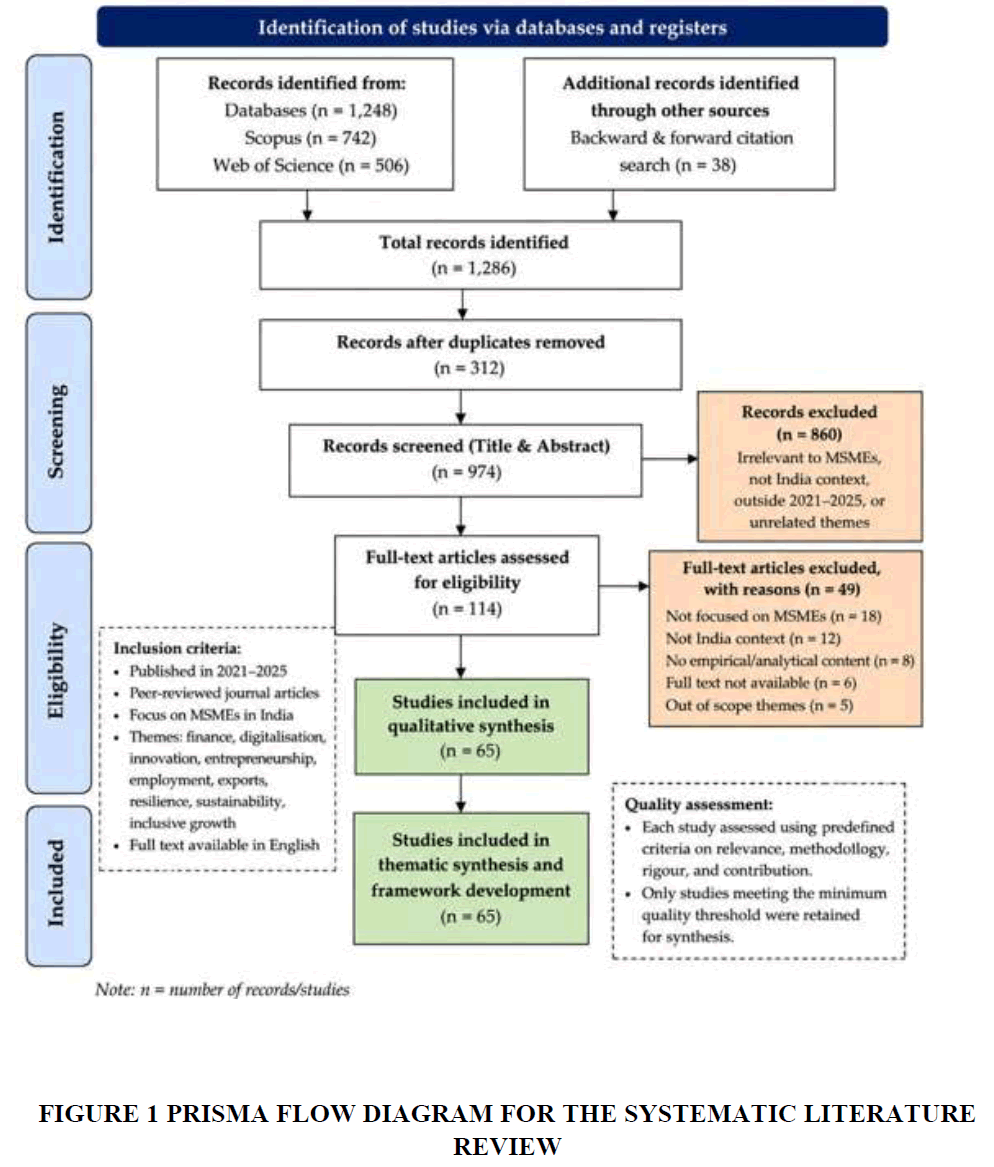
Figure 1 Prisma Flow Diagram for the Systematic Literature Review
For the final set of eligible studies, information was extracted on author, publication year, research context or sector, methodological approach, key variables or themes, principal findings and limitations. The selected studies were assessed based on their relevance, methodological quality, analytical rigour and contribution to understanding MSME development. The evidence was then synthesised thematically across major dimensions, including employment and inclusive growth, productivity and value creation, finance and investment, digitalisation and technological upgrading, innovation and entrepreneurial capability, exports and global value-chain participation, and resilience, sustainability and regional development. The synthesis focuses on identifying relationships among these dimensions rather than treating them as isolated factors. Particular attention is given to how ecosystem conditions → enterprise capabilities → intermediate performance outcomes → broader economic outcomes can collectively contribute to India's wider economic transformation.
Discussion
Contribution of MSMEs to Employment, Productivity, Exports and Value Creation
Employment Generation and Inclusive Economic Participation
MSMEs make a substantial contribution to India's economic structure by generating employment opportunities across manufacturing, services, trade and local production systems. Their geographical distribution enables economic participation beyond major metropolitan centres and creates opportunities for entrepreneurs, workers and supporting businesses. The importance of this role is particularly evident because smaller 4.1 Employment Generation and Inclusive Economic Participation enterprises can absorb labour that may not immediately find opportunities in large organised firms (Chakraborty & Gangai, 2025). However, the analysis indicates that the contribution of MSMEs should not be assessed solely through the number of employment opportunities created. The quality of employment, worker productivity, skills, wages, formalisation and employment stability are equally important.
A financially constrained enterprise may create employment but may have limited capacity to provide training or introduce productivity-enhancing technologies. Conversely, an enterprise with stronger financial, technological and managerial capabilities can potentially create more productive and sustainable employment(Pandey & Chaudhary, 2024). Therefore, employment operates as both an outcome of MSME development and a transmission mechanism through which MSME development contributes to inclusive growth. The analysis further indicates that MSMEs have an important role in reducing regional disparities. Because smaller enterprises are distributed across urban, semi-urban and rural economies, their expansion can stimulate local demand, supplier networks and entrepreneurial activity (Rastogi & Rastogi, 2025). This creates indirect employment through input suppliers, distributors, logistics providers and service businesses. Consequently, MSME development has multiplier effects beyond the individual enterprise.
Productivity and Value Creation
The second component of Objective 1 concerns productivity. The literature indicates that India's economic growth cannot depend only on increasing the number of MSMEs; it must also increase the value generated by existing enterprises. Productivity depends on access to finance, technology, skills, managerial practices, infrastructure and market opportunities (Prabhakar, 2024).
This distinction is important for India's five-trillion-dollar ambition. A large MSME population does not automatically translate into proportionally higher GDP. The critical issue is whether enterprises can move from low-value and informal activities towards more productive and technologically capable operations. The literature framework therefore identifies productivity enhancement as a central pathway between MSME development and macroeconomic growth.
Exports and Value Creation
MSMEs also contribute to India's growth through export participation. Exporting enables firms to access larger markets and generate foreign-exchange earnings while exposing enterprises to international quality, cost and delivery requirements (George, 2023). This exposure can encourage firms to improve production processes, quality management and technological capabilities.
The analysis suggests that exports should therefore be regarded not simply as an economic outcome but also as a learning mechanism. When an MSME enters an international market, it may acquire new knowledge about customer requirements, production standards, logistics and technologies. These capabilities can subsequently improve domestic competitiveness.
At the same time, the literature identifies several barriers: certification requirements, inadequate trade finance, logistics constraints, limited international market information and insufficient technological capability (Chitsimran, Pandey & Mehak,2021). Therefore, MSMEs' contribution to exports depends on the broader institutional and infrastructure ecosystem.
Influence of Finance, Digitalization, Innovation and Institutional Support on MSME Performance and Competitiveness
Financial Access as an Enabling Capability
Finance is identified as a foundational condition for MSME performance. Working capital allows firms to purchase raw materials, pay employees, manage inventories and fulfil orders, while longer-term finance enables investment in machinery, technology, infrastructure and expansion.
However, the analysis demonstrates that access to finance is necessary but not sufficient. An enterprise may receive credit but fail to generate productivity gains if it lacks managerial capabilities, market access or technological readiness (Prabhakar & Masoud, 2025).
relationship towards:
Finance + Capability → Productive Investment → Growth
This distinction is particularly relevant to public policy. Credit programmes should be complemented by financial literacy, technology assistance, managerial training and market-development support.
Digitalisation as a Transformation Mechanism
Digitalisation has emerged as another major driver of MSME competitiveness. Digital payments, e-commerce, online marketing, cloud-based systems and digital supply-chain tools can reduce transaction costs and increase market reach. MSME using digital commerce can potentially access customers beyond its geographical location (Mahalakshmi, Savithiri & Anand, 2023). Digital payment systems can facilitate faster transactions, while digital accounting systems can improve financial information and decision-making.
However, the analysis identifies a digital capability gap. Technology availability does not automatically mean technology utilisation. MSMEs may face constraints related to digital skills, investment costs, cyber security, infrastructure and organisational readiness.
Therefore:
Digital infrastructure → Digital capability → Technology adoption → Efficiency → Competitiveness
is a more appropriate interpretation than assuming that infrastructure alone produces performance improvements.
Innovation and Entrepreneurial Capability
Innovation provides the mechanism through which MSMEs transform available resources into new products, improved processes and stronger market positions. Importantly, innovation in MSMEs is not restricted to formal R&D (Dejanović, 2024). It can include incremental process improvement, product modification, packaging, marketing, logistics, digital business models and customer-service improvements (Arunachalam, 2024).
Entrepreneurial capability determines how effectively business owners identify opportunities and respond to changing markets. Organisational learning also becomes important because firms need to absorb and apply new knowledge.
The analysis therefore suggests that innovation emerges from the interaction between:
Entrepreneurial orientation + knowledge + technology + finance + market information
rather than from entrepreneurial intention alone.
Institutional Support
Institutional support provides the environment within which MSMEs operate. Government schemes, credit institutions, technology centres, industry associations, training organisations, infrastructure providers and export-support agencies can reduce constraints that individual enterprises cannot overcome independently (Kadaba, et al., 2023).
The PRISMA framework used in the study treats institutional support as an ecosystem-level variable. This is important because MSMEs frequently lack the resources to establish their own R&D facilities, testing laboratories, training centres or international marketing networks Table 2.
| Table 2 Major Constraints Affecting MSME Competitiveness | ||
| Challenge | Capability affected | Potential consequence |
| Limited access to finance | Investment capability | Lower technology and capacity investment |
| Infrastructure constraints | Operational capability | Higher production costs |
| Skills shortages | Human capability | Lower productivity |
| Technology gaps | Digital/technological capability | Lower competitiveness |
| Market competition | Market capability | Difficulty in scaling |
| Limited innovation knowledge | Innovation capability | Slower product/process upgrading |
| Weak marketing capability | Market-access capability | Limited sales and customer reach |
| Raw-material constraints | Supply-chain capability | Production disruptions |
MSME Resilience, Sustainability and Regional Development: Pathways to Inclusive Growth
MSME Resilience
The COVID-19 pandemic demonstrated the vulnerability of MSMEs to external shocks. Smaller enterprises generally possess fewer financial reserves and may depend heavily on particular suppliers, customers or geographical markets (Singh, 2024). Consequently, disruptions in demand, logistics or input availability can rapidly affect business continuity.
The literature indicates that resilience depends on several capabilities, including financial preparedness, supply-chain diversification, digital continuity, organisational flexibility and business networks. A resilient MSME is therefore not simply one that survives a crisis. It is an enterprise capable of anticipating, absorbing, adapting to and recovering from disruptions (Prabhakar, 2024). The analysis suggests:
Financial preparedness + digitalisation + flexibility + networks → Resilience → Business continuity
This has wider economic significance because MSME failure can affect workers, suppliers, distributors and local communities.
Sustainability and Green Growth
Sustainability represents an increasingly important dimension of MSME competitiveness. Resource efficiency, energy conservation, waste reduction, recycling and cleaner production can potentially reduce environmental impacts while improving operating efficiency (Pandey & Chaudhary, 2024).
However, green transformation may require substantial upfront investment (George, 2023). This creates another connection with the finance objective. MSMEs that cannot access affordable finance may be unable to invest in cleaner machinery or energy-efficient technologies. Therefore, sustainable MSME development requires the combination of:
Green finance + technology + skills + regulatory incentives + market demand
The analysis indicates that sustainability should not be treated as an additional responsibility imposed on MSMEs (Gupta, 2023). Instead, it can become a source of innovation, cost reduction and market differentiation when supported appropriately.
Regional Development
MSMEs are important instruments of geographically distributed economic development. Clusters can provide enterprises with access to shared infrastructure, suppliers, skilled labour, technology, information and markets (Yoganandham, Kalaivani & Kareem, 2024). This produces an ecosystem effect. Individual MSMEs may be small, but geographically concentrated enterprises can collectively create significant economic activity.
Regional MSME development can therefore contribute to:
• local employment;
• entrepreneurship;
• supply-chain development;
• infrastructure utilisation;
• skill formation;
• local income generation; and
• reduced concentration of economic activity.
The analysis suggests that state-level and regional MSME policies should therefore reflect differences in industrial structure, infrastructure, skills and market opportunities rather than applying identical interventions across all regions (Albaz et al., 2023).
Integrated MSME Capability Framework for India's Five-Trillion-Dollar Economy
The fourth objective develops an integrated framework explaining how MSME ecosystem conditions are transformed into enterprise capabilities and, subsequently, into broader economic outcomes that can support India's transition towards a five-trillion-dollar economy (Chitsimran, Pandey & Mehak, 2021). The framework moves beyond treating finance, digitalisation, innovation, employment and exports as independent variables. Instead, it proposes a multi-stage transmission mechanism in which ecosystem-level enablers strengthen firm-level capabilities, capabilities generate intermediate performance improvements, and these improvements contribute to employment, exports, value creation, regional development and sustainable economic growth (Dejanović, 2024) Figure 2.

Figure 2 Integrated Frame Work: How MSME Capabilities Drive Indias Transition Towards a Five- Trillion- Dollar Economy
Stage 1: MSME Ecosystem Conditions
The first stage represents the external ecosystem within which MSMEs operate. The framework identifies access to finance, institutional support, physical and digital infrastructure, digital connectivity, skills and human capital, market access, and government policies and regulations as the principal enabling conditions (Dave, 2022). These factors determine whether MSMEs have the resources and opportunities required to initiate, maintain and expand productive activities. Finance provides the resources required for investment and working capital, while infrastructure and connectivity reduce operational and transaction barriers. Similarly, skills and human capital determine whether enterprises can effectively utilise new technologies and organisational practices (Chakraborty & Gangai, 2025). Institutional support and government policy can reduce information asymmetry, facilitate formalisation and improve access to markets and technology.
The analysis therefore indicates that MSME performance cannot be explained solely by firm-level characteristics. The quality of the surrounding ecosystem determines the extent to which enterprises can convert available resources into productive capabilities (Dejanović, 2024). Weaknesses at this stage may constrain the effectiveness of subsequent interventions, even when individual enterprises possess entrepreneurial potential.
Stage 2: Development of Enterprise Capabilities
The second stage explains how ecosystem conditions are converted into enterprise-level capabilities. The framework identifies investment capability, digital capability, human capability, entrepreneurial opportunity-recognition capability and organisational/ecosystem capability as the principal mechanisms (Kumar, 2022).
Access to finance can develop investment capability by enabling firms to acquire machinery, technology and working capital. Digital infrastructure and connectivity contribute to digital capability, allowing MSMEs to adopt e-commerce, digital payments, cloud systems and data-based decision-making (Chowdhury et al., 2024). Skills and training strengthen human capability, while entrepreneurship supports opportunity recognition and business adaptation. Institutional networks contribute to organisational and ecosystem capability by connecting enterprises with technology providers, financial institutions, training organisations, suppliers and markets. The central implication is that resources do not automatically generate performance (Kalaiselvi & Maithily, 2024). They must first be transformed into capabilities that allow enterprises to use those resources effectively.
Stage 3: Intermediate Performance Outcomes
The third stage represents the mechanisms through which enterprise capabilities produce measurable improvements in MSME performance. The framework identifies innovation, productivity improvement, technological upgrading, formalisation, operational efficiency, resilience and competitiveness as the major intermediate outcomes (Dejanović, 2024).
Innovation enables MSMEs to introduce improved products, processes and business models. Productivity improvement allows firms to generate greater output and value from available resources (Rastogi, 2025). Technological upgrading can improve quality, speed and efficiency, while formalisation can increase access to formal finance, markets and institutional support. Operational efficiency reduces resource wastage and transaction costs (Chicaiza & Esparza, 2023). At the same time, resilience enables enterprises to maintain continuity during economic, technological or supply-chain disruptions. Thus, the framework establishes the following relationship:
MSME ecosystem conditions → enterprise capabilities → improved enterprise performance
This stage is particularly important because it provides the transmission mechanism between policy inputs and wider economic outcomes.
Stage 4: Broader Economic Outcomes
Improved MSME capabilities and performance subsequently generate broader economic outcomes. The framework identifies employment generation, export and global-market participation, value creation and higher incomes, regional development, and sustainable production and green growth as major outcomes (Lakshmi & Gayathri, 2023).
Productive MSMEs can create employment while simultaneously improving the quality and sustainability of jobs. Enterprises with stronger technological and organisational capabilities are better positioned to participate in domestic and international markets (Kumar & Nanda, 2023). Export participation can generate foreign-exchange earnings while exposing firms to international standards and competitive pressures. At the regional level, MSMEs stimulate local supply chains, entrepreneurship, skills and income generation. Sustainable production represents another important outcome (Chong & Tan, 2025). When MSMEs adopt resource-efficient technologies and cleaner production methods, economic activity can become less environmentally intensive (Singh et al., 2024). Therefore, the framework connects MSME development with economic, social, regional and environmental dimensions of growth.
Stage 5: Contribution to India's Five-Trillion-Dollar Economy
The final stage connects MSME-level outcomes with India's broader economic objective. (Pandey & Chaudhary, 2024) The framework proposes that improvements in MSME productivity, employment, exports, value creation, resilience and sustainability can collectively contribute to inclusive economic growth, stronger regional economies, greater competitiveness and sustainable national development.
Policy and Managerial Implications
The findings of the systematic literature review indicate that MSME development requires a coordinated approach that combines financial access, technological capability, human capital, innovation, market access, institutional support and resilience. The analysis demonstrates that individual policy interventions are unlikely to generate sustained improvements when complementary capabilities are weak (Kumar, 2024). Accordingly, the policy and managerial implications emerging from the review are organised around the major capability dimensions identified in the integrated framework. The implications focus on strengthening the conditions that enable MSMEs to convert available resources into productivity, innovation, employment, export competitiveness, resilience and sustainable growth.
Policy Implications
Strengthening Flexible and Productive Finance
Financial access should be directed towards productive investment rather than being assessed only in terms of the volume of credit disbursed. MSMEs require timely and affordable finance for working capital, technology adoption, machinery acquisition, capacity expansion and business continuity. Policy measures should therefore strengthen cash-flow-based lending, credit guarantees, digital financial records and invoice-financing mechanisms while reducing information asymmetry and transaction costs (Prathima, 2025). At the same time, financial support should be complemented by financial-literacy and managerial-development programmes so that enterprises can effectively convert financial resources into productive investment. Such an integrated approach can strengthen investment capability and improve the contribution of finance to productivity and enterprise growth.
Strengthening Technology and Innovation Capability
Government support for technology adoption should move beyond providing access to digital infrastructure and focus on developing the capabilities required to use technology effectively. MSMEs require support in areas such as digital payments, e-commerce, cloud-based systems, data-driven decision-making, automation and Industry 4.0 applications (Tikku et al., 2025).
Promoting Women's Entrepreneurship and Inclusive Growth
MSME policy should also strengthen women's participation in entrepreneurship and employment as part of India's broader inclusive-growth objective. Access to finance, entrepreneurship training, digital technologies, market information and business networks can help reduce barriers to women's participation in enterprise activity (Yusup et al.,2025). Therefore, women's entrepreneurship should be integrated into MSME capability-development programmes rather than treated as an isolated policy intervention.
Strengthening Export and Global Market Capability
The increasing contribution of MSMEs to India's exports highlights the need for policies that strengthen their ability to participate sustainably in domestic and international value chains. Export-oriented support should extend beyond market access and address quality certification, standards compliance, packaging, logistics, trade finance, market intelligence and digital market platforms (Nipo et al., 2024). Export development can therefore operate not only as an economic outcome but also as a mechanism for organisational learning, technological upgrading and productivity improvement.
Managerial Implications
Strengthening Digital Capability
MSME managers should view digitalisation as a strategic capability rather than simply as the adoption of individual technologies. Enterprises can strengthen competitiveness by integrating digital accounting, electronic payments, e-commerce, digital marketing, cloud-based applications and data-supported decision-making into routine business processes (Patel, Nisar & Chavan, 2024).
Improving Financial and Investment Management
MSME managers should place greater emphasis on financial planning, cash-flow management and the productive allocation of available finance. Maintaining reliable financial records can improve the ability of enterprises to access institutional credit and demonstrate financial performance to lenders and business partners.
Strengthening Resilience and Business Continuity
MSME managers should incorporate resilience into routine strategic and operational planning. Enterprises can strengthen resilience through supplier diversification, alternative distribution channels, adequate liquidity management, digital continuity systems, flexible operating arrangements and stronger relationships with business networks.
Developing Export and Market-Access Capability
Managers seeking international growth should focus on developing the operational capabilities required to meet international market requirements. This includes maintaining product quality, meeting certification and standards requirements, improving packaging and logistics, understanding international customer expectations and using digital platforms to identify and reach new markets.
Conclusion
This study examined the role of MSMEs in supporting India's broader economic transformation through a PRISMA-guided systematic literature review of research published between 2021 and 2025. The synthesis of 65 studies indicates that MSME development should not be understood solely in terms of enterprise numbers, employment generation or access to finance. Sustainable economic contribution depends on the ability of enterprises to convert ecosystem resources into productive capabilities. Finance, digital infrastructure, human capital, entrepreneurial capability, institutional support and market access therefore operate as interconnected conditions for enterprise development.
The study's principal contribution is the development of an integrated five-stage framework linking ecosystem conditions → enterprise capabilities → intermediate performance outcomes → broader economic outcomes → contribution to India's economic transformation. The framework demonstrates how investment, digitalisation, innovation, productivity, resilience and competitiveness can contribute to employment, exports, value creation, regional development and sustainable growth. The findings consequently suggest that MSME policy should shift from isolated support measures towards coordinated capability-building interventions. While the framework provides a systematic conceptual pathway, future empirical research should test the proposed relationships across sectors, regions and enterprise categories to establish their relative strength and practical applicability.
References
Albaz, A., Dondi, M., Rida, T., & Schubert, J. (2023). Unlocking growth in small and medium-size enterprises. McKinsey & Company, 2.
Arunachalam, R. S. (2024). Climate adaptation and mitigation finance for low-income populations in India: a comprehensive. Inclusive Finance India report.
Chakraborty, S., & Gangai, K. N. (2025). Factors Influencing the Adoption of Online Lead Generation Practices in B2B Micro, Small, And Medium-Sized Enterprises (MSME). International Journal of Computer Information Systems and Industrial Management Applications, 18(15s), 1006-1016.
Chicaiza, J. A. Y., & Esparza, K. P. N. (2023). Trends and critical points in maintenance management for MSMEs: a bibliometric review. International Journal of Computer Information Systems and Industrial Management Applications, 18(4s), 435-449.
Indexed at, Google Scholar, Cross Ref
Chitsimran, D., Pandey, A., & Mehak, P. (2021). MSME Financing Gaps–A Review of Literature for the Period 1960 To 2020. Solid State Technology, 63(6), 18164-18203.
Chong, C. H., & Tan, C. (2025). Sustainable digital transformation in Malaysia’s service-based MSMEs: leadership and governance drivers for business resilience. Corporate Governance: The International Journal of Business in Society, 1-25.
Indexed at, Google Scholar, Cross Ref
Chowdhury, C., Sundar, P. S., Bhargava, R., Kala, K., Shukla, M., Singh, A., & Sobti, A. (2024). A report on MSME's Challenges in India: Insights from Telangana.
Dave, B. B. (2022). Can India be a $5 Trillion economy by 2026-27: A perspective. Clarion: International Multidisciplinary Journal, 11(1), 1.
Indexed at, Google Scholar, Cross Ref
Dejanovi?, M. S. (2024). The Application of the Latest Information and Communication Technologies (ICT) and Artificial Intelligence (AI) in SME Business Operations as a Driver of GDP Growth. In 51st International Symposium on Operations Research (SYM-OP-IS 2024), Tara, Serbia. Last Accessed on March (Vol. 14, No. 2025, pp. 167-185).
Farajollahzadeh, G., Noorinasab, A. R., & Yazdanpanah, B. (2023). Role of MSMEs in Economic Growth of India. International Journal of Multidisciplinary Research and Modern Education, 2(1), 4-7.
George, A. S. (2023). Evaluating India's economic growth: challenges and opportunities on the path to 5 trillion dollars. Partners Universal International Innovation Journal, 1(6), 85-109.
GR, S. (2026). Financial and Technological Drivers of MSME Competitiveness in India's Digital Economy.
Indexed at, Google Scholar, Cross Ref
Gupta, M. N(2023). Export Competitiveness of MSMEs in India: A Strategic Pathway to the $5 Trillion Economy Vision. KUNAL BOOKS, 29.
Jain, V., & Kumarasamy, D. (2025). Factors driving India’s growth: Challenges and policy measures. The Economists’ Voice, 22(2), 255-270.
Indexed at, Google Scholar, Cross Ref
Kadaba, D. M. K., Aithal, P. S., & KRS, S. (2023). Government initiatives and digital innovation for Atma Nirbhar MSMEs/SMEs: To achieve sustainable and inclusive economic growth. International Journal of Management, Technology, and Social Sciences (IJMTS), 8(1), 68-82.
Indexed at, Google Scholar, Cross Ref
Kalaiselvi, V., & MAITHILY, M. K. (2024). Small and medium enterprises (smes) to promote economic development in India. Cuestiones de Fisioterapia, 53(03), 4320-4347.
Kumar, M. B. R. (2024). Transforming India’s Economy through Artificial Intelligence and Education: An Analysis of GDP Growth and Future Projections. The Voice of Creative Research, 8(2), 107-116.
Indexed at, Google Scholar, Cross Ref
Kumar, N. (2022). Competitive Manufacturing as a Driver of India’s Next Economic Transformation.
Kumar, V., & Nanda, P. (2023). Determinants of the success of MSMEs in India: a policy vs. technology perspective. International Journal of Technology, Policy and Management, 23(1), 102-122.
Indexed at, Google Scholar, Cross Ref
Lakshmi, A. S., & Gayathri, M. J. (2023) billion dreams, trillion economy: india's ascent to economic eminence. India's $5 trillion economy: the vision, challenges, and roadmap, 65.
Mahalakshmi, M., Savithiri, D., & Anand, M. D. E-Commerce (2023): An Accelerator of Economic Growth: Some Evidence from Indian Economy.
Mohanty, D., Bagchi, S., & Girdhar, R. (2025). Fostering Green Finance through MSMEs for Sustainable India. OPJU Business Review, 4(1), 120-129.
Indexed at, Google Scholar, Cross Ref
Nipo, D. T., Lily, J., Fabeil, N. F., & Jamil, I. A. A. (2024). Transforming rural entrepreneurship through digital innovation: A review on opportunities, barriers and challenges. J. Mgmt. & Sustainability, 14, 114.
Indexed at, Google Scholar, Cross Ref
Pandey, P., & Chaudhary, A. K. (2024). The Role of Micro, Small, and Medium Enterprises in India's Economic Development: A Critical Analysis. Small, and Medium Enterprises in India's Economic Development: A Critical Analysis (July 05, 2024).
Indexed at, Google Scholar, Cross Ref
Patel, U. F., Nisar, S., & Chavan, C. R. (2024). Gig and platform economy: the next big opportunity for mutuals and takaful in India?. In Islamic Finance in the Digital Age (pp. 386-404). Edward Elgar Publishing.
Prabhakar, A. C. (2024). Driving economic prosperity: fostering job-oriented sustainable and inclusive development in India. Open Journal of Business and Management, 12(4), 2854-2885.
Indexed at, Google Scholar, Cross Ref
Prabhakar, A., & Masoud, D. (2025). India’s path toward becoming a world leading economy: Opportunities, challenges, and the role of Aatmanirbhar Bharat. Journal of Social Review and Development, 5(Special Issue 2), 20-25.
Indexed at, Google Scholar, Cross Ref
Prathima, B. (2025, February). Green Governance: A Path to Sustainable Development. In Proceedings of the International Conference on Bio-Based Environment for Sustainable Territory (IC-BEST 2024) (Vol. 44, pp. 256-271). Springer Nature.
Rastogi, A., & Rastogi, A. (2025). INDIA’S ECONOMIC TRANSFORMATION: THE ROADMAP TO A $30 TRILLION ECONOMY BY 2047. VIKSIT BHARAT@ 2047: SHAPING THE INDIA OF TOMORROW, 153.
Singh, J., Singh, M. K., Modi, R. U., Kumar, D., & Singh, S. P. (2024). Role of Agricultural Engineers in Building $5 Trillion Economy of India. RASSA Journal of Science for Society, 6(2), 67-74.
Indexed at, Google Scholar, Cross Ref
Singh, S., & Paliwal, M. (2022). Unleashing the growth potential of Indian MSME sector. Comparative Economic Research. Central and Eastern Europe, 20(2), 35-52.
Indexed at, Google Scholar, Cross Ref
Singh, S., Aggarwal, R., & Kaur, B. (2024). Dream of Five Trillion-dollar GDP with Reference to Five Key Industries.
Singh, U. K. (2024). Implementation of sustainable development goals in India: progress and challenges. Regional dimensions of human development in India and South Africa: through sustainable development goals, 39-91.
Tikku, S., Dwivedi, R., & Singh, A. K. (2025). AI and Digital Transformation: Changing Landscapes of Emerging Economies in Asian Sub-Continent. In Powering e-Collaboration Through AI, Machine Learning, and Internet of Things (pp. 213-244). IGI Global Scientific Publishing.
Yoganandham, G., Kalaivani, M., & KAREEM, A. A. (2024). Unveiling india's economic growth trajectory: navigating challenges and seizing opportunities on the road to a $5 trillion economy. Degrés, 9(5), 32.
Yusup, H., Aris, M., Sonny, Z., & Suartini, S. (2025). Legal aspects and government policy in increasing the role of MSMEs in the Halal ecosystem. F1000Research, 13.
Received: 01-Sep-2026, Manuscript No. AMSJ-26-17374; Editor assigned: 01-Sep-2026, PreQC No. AMSJ-26-17374(PQ); Reviewed: 15-Sep-2026, QC No. AMSJ-26-17374; Revised: 22-Sep-2026, Manuscript No. AMSJ-26-17374(R); Published: 30-Sep-2026