Research Article: 2026 Vol: 30 Issue: 2
When Hedonism Overrides Sustainability: Luxury Consumption In India
Shruti Gill, IILM Institute for Higher Education
Gurpreet Singh Bhatia, IILM Institute for Higher Education
Citation Information: Gill., S & Bhatia., G.S. (2026) When hedonism overrides sustainability: luxury consumption in india. Academy of Marketing Studies Journal, 30(2), 1-13.
Abstract
This paper analyzes the impact of hedonic, individual, social, and functional perceptions on luxury purchase in India. A total of 208 valid responses were analyzed using Partial Least Squares Structural Equation (PLS-SEM) modelling. The constructs of bandwagon effect and product quality & craftsmanship were significant predictors of purchase intention, while hedonic and social values were insignificant. The sustainability orientation construct did not moderate key relationships and displayeds only a marginal direct effect. The findings suggest that social conformity and perceived quality dominanate in luxury consumption in India, and sustainability awareness does not affect the purchase intentions of luxury products. This study implies that in emerging markets like India, hedonism outweigh sustainable aspects of luxury purchase intention.
Keywords
Luxury Consumption, Hedonic Value, Sustainability Orientation, Product Quality And Craftsmanship, Bandwagon Effect, Purchase Intention, India, PLS-SEM.
JEL Classification
M31, D12, D91, C38
Introduction
Luxury products are characterized by premium pricing, higher quality, and symbolic value rather than pure functionality (Ko et al., 2019). The perception of luxury has evolved from being an indicator of material possession to an experiential and emotional phenomenon, reflecting personal enjoyment and aesthetic pleasure (Kapferer & Bastien, 2017). According to Keller, (2013) consumers associate luxury brands with heritage, craftsmanship, emotional appeal, and superior quality. Consumers indulge in luxury purchases for self-esteem, prestige, and ego needs, seeking social validation. In the context of India, Jain & Mishra (2018) found that conspicuous consumption is an important concept for consumers of Indian luxury products, followed by hedonic and social aspects. Jain et al. (2015) observed that dynamic socio-economic profiles have made consumer value central to luxury brand strategies. As per Jhamb et al. (2020), hedonistic drivers in the luxury market refer to self-gratification, desire and immersive experiences. People buy luxury goods to express affluence, sophistication, and cultural capital to satisfy their psychological needs of recognition and belonging (Shaikh et al., 2017). While extensive literature referring to social, individual, and functional values related to luxury goods exists, the empirical testing of sustainability orientation has been limited. Understanding how traditional characteristics such as product quality and hedonic value interact with sustainability values provides an opportunity to extend the analysis of luxury purchase intention in India. Thus, this study extends the understanding of luxury consumption in India by empirically investigating the key value dimensions, namely hedonic, social, individual, and functional perceptions that determine purchase intention among Indian luxury consumers.
In this study, sustainability was used both as an independent predictor and moderating variable. The author applied the PLS-SEM framework to the primary data collated from the respondents and determined the drivers of luxury purchase intentions. Through this research work the researcher established how sustainability, both as an independent and moderating variable impacts the relationships among the key variants. This finding is an extension of the work of Jain & Mishra (2019), who recognized luxury perceptual frameworks based on hedonistic appeals and responsible consumption. Based on the findings of Shaikh et al. (2017), consumers buy luxury more for social affluence and emotional appeal thereby satisfying their ego and esteem needs. Although prior research has extensively explored the functional, social, and individual values of luxury purchases, luxury now being associated with sustainability or conscious consumption is a less explored topic reflecting a classic value–action gap in ethical consumption. Understanding how traditional characteristics such as product quality and hedonic value interact with values such as sustainability offers an opportunity to analyze the model of luxury purchase intention in India through this research work.
Literature Review
According to Keller (2013), the key drivers of perceived luxury are superior quality, craftsmanship and heritage. Atwal & Bryson (2014) highlighted that ethical consumption is also the key indicator of luxury purchases signifying the authenticity and integrity of the brand. Amatulli et al. (2020) have determined that hedonism, emotional fulfillment, self-pleasure, and social aspects affect luxury purchase intentions. Emmanuel-Stephen & Gbadamosi, (2022) mentioned through their research work that luxury purchases further enhance luxury consumer’s social standing and belongingness. Shaikh et al. (2017) studied the bandwagon effect. It was found that consumer’s psychological needs to adopt the buying behavior of their peers. Through the planned behavior theory, Amatulli et al. (2020) indicated key variables such as cognitive, emotional, and social variables that drive luxury purchases. Holmqvist et al. (2020) shared “moments of luxury” that illustrated the correlation between desire and ethics, stating that principles and sustainability are also key drivers of conspicuous consumption.
Jain and Mishra (2019) proved through their work the sustainability, hedonistic, and social dimensions of luxury purchases through a single analytical framework. Furthermore, Atwal & Bryson (2014) and Rodrigues et al. (2023) stated that there is a significant focus on the sustainability dimension towards buyer intentions in luxury purchases, but there is very little evidence whether it can be taken as a moderating variable in understanding luxury consumption. There is also a scarcity of empirical studies linking the bandwagon effect and sustainability orientation to luxury purchase intention in economies like India. Keeping in mind the research gaps, the researcher worked on a framework to establish a relationship between pleasure and principles.
Table 1 provided a brief summary of literature review conducted in the field of luxury purchase. The predominant factors that influenced the luxury purchase were social, hedonic and functional values. However, sustainability aspect was not the focus of these studies. This paper tried to fill this research gap by considering the sustainability aspect as a moderator.
| Table 1 Review of Main Constructs of Luxury Value Perception | |
| Citation | Luxury Value Aspect |
| Kapferer (2014) | Heritage; Storytelling; Brand Authenticity; Craftsmanship; Cultural Symbolism |
| Keller (2016) | Experiential Marketing; Emotional Engagement; Brand Resonance; Perceived Quality |
| Atwal and Bryson (2017) | Ethical Luxury; Corporate Social Responsibility (CSR); sustainability orientation; Brand Integrity |
| Emmanuel et al. (2021) | Cultural Identity; Self-Affirmation; Social Belonging; Hedonic Enjoyment |
| Amatulli et al. (2019) | Hedonic Appeals; Emotional Gratification; Luxury Message Framing; purchase intention |
| Caruana et al. (2020) | Alternative Hedonism; Ethical Pleasure; Moral Consumption; Virtue Markets |
| Jain and Mishra (2018) | Social Value; Conspicuous Value; hedonic value; Uniqueness Value; Quality Value |
The main goals of this study were to create and analyze a working diagram that establishes the relationship between social, individual, hedonic, and functional value perceptions of luxury purchases; to determine whether the researcher could include sustainability as a direct predictor and moderator to study the correlations above; and to recognize the dimensions of luxury purchase that significantly impacts the buyers’ intentions. This study aimed to prove the reconciliation between pleasure and the principles of luxury purchases. The study will aid brands in understanding their consumer mindset and designing their marketing and business strategies accordingly.
Hypotheses Development
Product Quality & Craftsmanship
Kapferer (2017) and Keller (2016) stated through their research work that product quality which refers to the superior raw materials used, artisanal craftmanship and attention to detail are the core elements of luxury brands. This brings together talks about the rarity and exclusivity of the product. (Jain et al., 2014) also confirmed that quality is one of the main significant factors that define luxury and includes heritage, artisanship, and craftmanship, which makes the brand rare and exclusive.
H1: Product quality & craftsmanship are expected to positively influence consumers’ intention to purchase luxury products.
Hedonic Value
Hedonism refers to emotional and experiential feelings towards luxury brands. Hennigs et al. (2012) found that consumers seek self-fulfillment, pleasure, and visual satisfaction from luxury consumption, which goes beyond the functionality of the brand. Choo et al., 2012, mentioned that hedonic aspects, such as sensory appeal, rarity, exclusivity, and immersive retail experience, impact luxury buying behavior. Schultz and Jain (2013) further added that these elements contribute to luxury consumers’ emotional well-being and personal gratification.
H2: Hedonic value is expected to significantly impact consumers’ intention to purchase luxury products.
Individual Value
Kapferer & Michaut-Denizeau, 2017 defined individual value as one related to self-identity and personal pleasure. (Jain & Khan, 2023) stated that individual value also defines the social status of luxury consumers, as it fulfills their esteem needs.
H3: Individual value is expected to exert a weak positive influence on consumers’ intention to purchase luxury products.
Social Value
Shukla (2012) revealed that luxury purchases emphasized status and are strongly shaped by peer influence. (Kapferer & Michaut-Denizeau, 2014) highlighted that luxury consumers were moving more towards subtle expression of their status than the overt display of their wealth.
H4: Social value is expected to significantly influence consumers’ intentions to purchase luxury products.
Bandwagon Effect
Han, Nunes, et al. (2010) stated that luxury consumers want a feeling of belonging and being a part of community or social groups. Jain and Mishra (2019) highlighted that the bandwagon effect remains a dominant driver of psychological motivation.
H5: Bandwagon effect is expected to positively impact consumers’ intention to purchase luxury products.
Sustainability Orientation
Kapferer and Michaut-Denizeau (2014), mentioned that sustainability orientations that reflect ethics, principles, social awareness and responsible consumption are a pivotal driver of luxury purchases among young consumers. Jain and Khan (2023) stated that the young generation relates luxury buying to ethical sourcing, eco-friendly practices and transparency in brand communication.
H6: Sustainability orientation is expected to influence consumers’ intention to purchase luxury products.
Sustainability Orientation as a Moderator
Kapferer & Michaut-Denizeau (2017) proved through their work that luxury consumers are now being more environmentally conscious and demanding environmentally friendly luxury brands. However, Burmann, and Schade (2025) mentioned that even if sustainability orientation is gaining significance, hedonic value and social value still takes precedence in luxury purchases. This was further proved by Brandão and Miranda (2022) who observed through their research work that sustainability orientation does not lead to purchase intentions or influence buyer behavior. Caruana et al. (2020) examined hedonic value through moral lenses, and thus sustainability has a moderating effect.
H7: Sustainability orientation is expected to significantly influence the relationship between luxury value perceptions and purchase intention.
Figure 1 illustrates the hypothesized framework, incorporating moderating aspects of sustainability orientation. This path diagram shows the relationship between the constructs and the dependent variable of luxury purchase intention. The diagram shows sustainability orientation as a moderator.
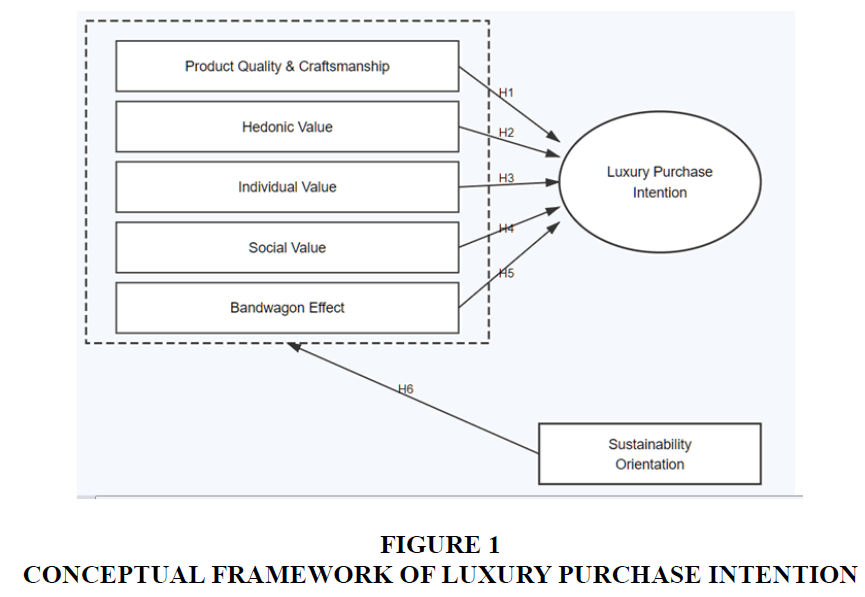
Figure 1 Conceptual Framework of Luxury Purchase Intention
Research Design and Methodology
Ethical Considerations
The authors conducted the research work in accordance with the academic ethical standards. The survey form was duly filled in by the respondents voluntarily and prior verbal consent was also taken. To ensure the wellbeing of the respondents, the authors well informed them about the objective of conducting this study and the nature of the study.
Data Collection and Sample
This study adopted a quantitative-based research design to analyze the effect of value-based factors on consumers’ luxury purchase intentions in the Delhi National Capital Region (NCR), India. The Delhi NCR is an appropriate market for luxury retail in India. This study utilized an online survey to collect data from consumers. An informed verbal consent for participation was taken from the respondents before data collection. Among the 208 valid responses, 49.5% were from females and 50.5% were from males. 72% of the respondents fell within the 18–24 years age group. This study employed purposive and snowball sampling techniques. The survey incorporated questions to ensure that the respondents had prior experience purchasing luxury brands. After cleaning outliers and missing values, 208 valid responses were obtained. This test was also performed for normality. This ensured its suitability for structural equation modelling.
Instrumentation
The authors conducted a literature review of luxury consumption to prepare a structured questionnaire. The questionnaire included items that measured seven constructs. These are hedonic value, social value, individual value, product quality and craftsmanship, sustainability orientation, the bandwagon effect, and purchase intention. Except for construct of sustainability orientation, all constructs were adopted from established scales in prior studies (Kapferer, 2014; and Jain & Mishra, 2019). The construct of sustainability orientation was derived from the literature on sustainable consumption.
Data Analysis and Tools Used
The data were analyzed using SmartPLS4 software (Ringle et al, 2015); (Sarstedt et al., 2021). This was used for predictive and exploratory research. This was implemented to predict the drivers of luxury purchase intentions.
This study employed a two-step approach to the analysis. First, we assessed the validity and reliability of the constructs. This was done through by measuring Cronbach’s alpha (CA), Composite Reliability (CR), Average Variance Extracted (AVE), and discriminant validity, using the Fornell–Larcker (FL), and HTMT criteria. The second step involved the Structural Model Evaluation. As part of the process, this study tested the relationships among constructs. This was performed through bootstrapping, which included 5,000 resamples. This result included the values of the path coefficients, t-statistics, and p-values. The process also includes moderation analysis. Hedonic value was hypothesized as a moderator between the constructs of product quality & craftsmanship and purchase intention. The suitability of sustainability orientation as a moderator between hedonic characteristics and purchase intention was also tested. This study followed the guidelines of Hair et al. (2022). This was performed to ensure methodological rigor and statistical robustness.
Construct Development
This study considered each construct to include reflective items. This scale was adapted from the scales validated in previous studies. Each item was rated on a five-point Likert scale. It ranged from strongly disagree, with a value of 1, to strongly agree, with a value of 5. CA is considered a measure of the reliability of the constructs. This study found that most of the values exceeded 0.70 (the threshold value). Thus, the model is internally consistent. The literature by Shukla (2012) was utilised to create questions. The following constructs were considered in this study:
Bandwagon Effect
This study analyzed the bandwagon effect, which represents how consumers imitate the luxury consumption of their peers. Leibenstein (1950) developed this construct. Jain and Mishra (2019), and Shukla & Purani (2012) used this construct to confirm social imitation. Authors, such as Shaikh et al. (2017), also showed similar conformity.
Hedonic Value
Hedonic value represents emotional fulfillment and sensory pleasure derived from luxury purchases. Empirical studies by Amatulli et al. (2020), and Holmqvist et al. (2020) also analyzed this factor. These studies show that it enhances consumer’s purchase intention. Jain and Mishra (2019) and Jain (2021) studied this in the context of Indian consumers. This was a significant driver of luxury demand among millennials.
Individual Value
In this study, individual value mirrors self-expression, achievement, and personal identity. Kapferer (2014), and Jain (2021) found that consumers’ purchase of luxury goods represents a trait of individuality.
Product Quality and Craftsmanship
This construct is associated with excellent quality, great workmanship and brand heritage. This has also been considered in studies by Keller (2013), and Jain and Mishra (2018). The authors found that this construct was a strong predictor of purchase intention for luxury goods.
Social Value
This construct represents the prestige and recognition of luxury product ownership. Emmanuel-Stephen & Gbadamosi, (2022) concluded that consumers derive feelings of belongingness from luxury consumption. Jain (2021) concluded that collective display behavior is more prevalent amongst the consumers.
Sustainability Orientation
This construct assess consumer’s preferences for ethical and environmentally responsible luxury products. This study follow Atwal & Bryson (2014), Brandão and Miranda (2022), and Caruana et al. (2020). Jain (2022) show that Indian consumers are aware of the symbolic importance of sustainability. However, this does not affect the purchase of luxury products.
Purchase Intention
Purchase intention conceptualized consumer’s willingness to buy luxury products in the future. The items were drawn from Jain & Mishra (2019) and Amatulli et al. (2019) who explored the effect of hedonic and social values on purchase intention for luxury goods. All constructs are reflective, which is consistent with luxury perception frameworks. Kapferer, (2014). By integrating hedonic, social, and sustainability dimensions, this study extends prior Indian research (Jain & Mishra, 2019; Jain, 2021, 2022) by examining pleasure-driven and principle-driven luxury consumption.
The Measurement Model
Standardized Root Mean Square Residual (SRMR), geodesic (d_G), and unweighted least squares (d_ULS) discrepancy values were used to measure the model fit. The SRMR for both the saturated and estimated models was 0.083. This is an acceptable model fit (Hair et al., 2022). The stability of the factor structure was tested by using d_ULS (3.832) and d_G (1.148). These values were nearly identical across the models. The Normed Fit Index (NFI = 0.660) further confirmed the moderate incremental fit. These results validated the reflective measurement model.
Results and Discussion
The measurement model was assessed following the guidelines of Hair et al. (2022) and Fornell & Larcker (1981). Most of the constructs displayed satisfactory internal consistency, with CR values ranging from 0.850 to 0.910. The CA values ranged from 0.656 to 0.884, meeting the acceptable limits. The bandwagon effect (α = 0.698) and purchase intention (α = 0.656) constructs fell marginally below the conventional threshold of 0.70. However, both achieved high CR values (CR = 0.867 and 0.850, respectively). Following the suggestions of Hair et al. (2022), these results were considered acceptable for the two-item reflective constructs. The AVE values varied between 0.505 and 0.766. It exceeded the 0.50 threshold for all constructs except Social Value (AVE = 0.476). This confirms convergent validity. The Composite reliability (CR = 0.877) surpassed 0.70, and convergent validity was retained in accordance with the FL criteria. For each construct, the square root of AVE exceeded the corresponding inter-construct correlations. All the HTMT values were below 0.85, except for the Hedonic–individual value pair (HTMT = 0.852). AVE values were more than both Average Shared Variance (henceforth, ASV) and Maximum Shared Variance (henceforth, MSV). These further supports discriminant validity.
Table 2 shows the results of the measurement model assessment. It indicates satisfactory reliability and validity of the constructs used in the study. Two items of product quality & (craftsmanship (PQC) were removed due to low factor loadings, while other retained indicators across constructs demonstrated standardized loadings above the recommended threshold of 0.60. This supports indicator reliability. Internal consistency was confirmed through Cronbach’s alpha (CA) and composite reliability (CR), and these values exceeded acceptable limits for all constructs. Average variance extracted (AVE) values were largely above 0.50, thereby establishing convergent validity. Discriminant validity was supported by MSV and ASV values being lower than AVE for each construct. Overall model fit was acceptable, as reflected by SRMR, d_ULS, and d_G values within permissible ranges, despite NFI being modest. Model fit indices were: SRMR = 0.083; d_ULS = 3.832; d_G = 1.148; χ² = 1297.099; NFI = 0.660. These results suggest that the measurement model is robust and suitable for subsequent structural model analysis, in line with recommended guidelines (Hair et al., 2022).
| Table 2 Measurement Model Values | |||||||
| Construct | Item | Standard loading | CA | CR | AVE | MSV | ASV |
| Product Quality & Craftsmanship (PQC) | PQC3: I value luxury items created by skilled artisans. | 0.668 | 0.807 | 0.859 | 0.505 | 0.346 | 0.256 |
| PQC4: Heritage and tradition enhance the appeal of luxury goods. | 0.783 | ||||||
| PQC5: Cultural elements in a product make it feel more luxurious. | 0.796 | ||||||
| PQC6: The country of origin influences my perception of a luxury brand’s quality. | 0.693 | ||||||
| PQC7: I consider luxury goods to be of superior quality. | 0.665 | ||||||
| PQC9: (Item retained post-refinement) | 0.644 | ||||||
| Hedonic Value (HV) | HV1: I value the unique experiences that come with owning luxury products. | 0.711 | 0.844 | 0.885 | 0.563 | 0.514 | 0.331 |
| HV2: Luxury products contribute to how others perceive my social status. | 0.767 | ||||||
| HV3: Owning luxury products gives me a sense of belonging to an exclusive group. | 0.794 | ||||||
| HV4: I am drawn to the visual aesthetics of luxury products. | 0.823 | ||||||
| HV5: I appreciate luxury products that offer a personalized experience. | 0.701 | ||||||
| HV6: The sensory appeal of luxury items enhances my enjoyment of them. | 0.698 | ||||||
| Individual Value (IV) | IV1: I feel a sense of personal satisfaction when I buy luxury products. | 0.849 | 0.836 | 0.902 | 0.753 | 0.514 | 0.340 |
| IV2: Buying luxury items makes me feel happy. | 0.902 | ||||||
| IV3: Owning luxury goods gives me great pleasure. | 0.852 | ||||||
| Social Value (SV) | SV1: I am interested in knowing which luxury brands create a good impression on others. | 0.514 | 0.841 | 0.877 | 0.476 | 0.359 | 0.270 |
| SV2: My friends' opinions about luxury brands matter to me. | 0.773 | ||||||
| SV3: I notice the kinds of people who purchase specific luxury brands. | 0.645 | ||||||
| SV4: I care about how people perceive those who use particular luxury brands. | 0.743 | ||||||
| SV5: I want to know which luxury brands will help me make a good impression on others. | 0.692 | ||||||
| SV6: If I buy an expensive item, I think about how others might judge that choice. | 0.764 | ||||||
| SV7: (Retained indicator; statement omitted) | 0.736 | ||||||
| SV8: (Retained indicator; statement omitted) | 0.610 | ||||||
| Bandwagon Effect (BE) | BE1: I encourage friends and family to buy luxury products. | 0.842 | 0.698 | 0.867 | 0.766 | 0.259 | 0.170 |
| BE2: I speak positively about luxury products. | 0.907 | ||||||
| Sustainability Orientation (SO) | SO1: I prefer luxury brands that follow eco-friendly practices. | 0.778 | 0.884 | 0.910 | 0.628 | 0.163 | 0.120 |
| SO2: A luxury brand's commitment to sustainability positively influences my purchase decisions. | 0.628 | ||||||
| SO3: I am more likely to buy luxury products made from sustainable materials. | 0.834 | ||||||
| SO4: I believe luxury and environmental responsibility can go hand-in-hand. | 0.800 | ||||||
| SO5: I trust luxury brands that are transparent about their sustainability efforts. | 0.856 | ||||||
| SO6: (Retained indicator; statement omitted) | 0.838 | ||||||
| Purchase Intention (PI) | PI1: I plan to purchase luxury products. | 0.905 | 0.656 | 0.850 | 0.740 | 0.231 | 0.200 |
| PI2: I consider luxury products as an option when making purchase decisions. | 0.813 | ||||||
Normed χ² = 2.270, CFI = 0.925, AGFI = 0.853, GFI = 0.903, IFI = 0.926, and RMSEA = 0.070.
**Significant at p < 0.01 and * at p < 0.05. as shown in Table 3 titled, the bandwagon effect and product quality & craftsmanship are positively and significantly related to purchase intention (β = 0.238, p < 0.05; β = 0.196, p < 0.01). Individual value (β = 0.159, p < 0.10) and sustainability orientation (β = 0.104, p < 0.10) exhibit marginally significant relationships, suggesting weaker but positive effects. However, hedonic value (β = 0.103, p > 0.05) and social value (β = −0.009, p > 0.05) showed no significant relationship with purchase intention. It fully supports H1 and H5, marginally supports H3 and H6, and does not support H2 or H4.
| Table 3 Summary of the Structural Model | |||
| Path description | Hypothesis | Standardized path estimates | Result |
| Product quality & craftsmanship→ purchase intention | H1 | 0.196** | Supported |
| Hedonic value→ purchase intention | H2 | 0.103 | Not supported |
| Individual value → purchase intention | H3 | 0.159* | Marginal |
| Social value→ purchase intention | H4 | -0.009 | Not supported |
| Bandwagon effect →purchase intention | H5 | 0.238** | Supported |
| Sustainability orientation→ purchase intention | H6 | 0.104* | Marginal |
Moderation
The moderating effect of sustainability orientation on hedonic value and purchase intention were also tested. The interaction term (HV × SO → PI) is not significant (β = –0.066, t = 1.359, p = 0.174). This suggests that there is no moderation of sustainability orientation in this relationship.
The strength of the link between environmental orientation, hedonic motivation and purchase intention toward luxury products was tested. This was not found to be significant Brandão and Cupertino de Miranda (2022) also found that sustainability enhances overall luxury purchase intention. Its influence on hedonism-driven luxury motives was indirect. Thus, sustainability orientation and hedonic motivations operate independently of each other. Kapferer and Michaut-Denizeau (2014) also found that sustainability factors often appeal at a moral level rather than altering hedonistic motivations. Luxury consumers with sustainability orientation may appreciate these practices. However, they may not change their purchase intentions.
Conclusion
This study analyzed the role of hedonism and sustainability orientation in shaping luxury purchase intentions, especially in an emerging market like India. The findings indicate that luxury consumption in India is driven primarily by product quality, and bandwagon effect. Individual values and sustainability play a limited role Hedonic and social values do not affect purchase intentions.
These results suggest that in an emerging market like India, sustainability in luxury consumption operates more as an attitudinal consideration than as a decisive criterion. This suggests a value-action gap. Luxury purchases represent social status and symbolic success, particularly in emerging markets. It also offers insights for brands seeking to balance conspicuous consumption with responsible positioning.
Directions for Further Research
Respondents from the Delhi-NCR comprised the focus group. Future studies should consider different geographical and cultural contexts. Longitudinal research can be used to analyze the evolution of luxury consumers’ values and sustainability awareness over time. Additional moderating factors such as income, cultural orientation, and digital engagement can be considered.
Authors' Contribution
Shruti Gill: Idea Conception, Questionnaire Development, Data Collection, Literature Review, Proofreading, Editing, Revising the paper as per reviewer comments.
Gurpreet Singh Bhatia: Research Methodology and Design, Data Analysis and Interpretation, Proofreading, Editing, Formatting and Submission, Revising the paper as per reviewer comments
References
Amatulli, C., De Angelis, M., & Donato, C. (2020). An investigation on the effectiveness of hedonic versus utilitarian message appeals in luxury product communication. Psychology & Marketing, 37(4), 523-534.
Indexed at, Google Scholar, Cross Ref
Atwal, G., & Bryson, D. (Eds.). (2014). Luxury brands in emerging markets. Springer.
Caruana, R., Glozer, S., & Eckhardt, G. M. (2020). ‘Alternative hedonism’: exploring the role of pleasure in moral markets. Journal of Business Ethics, 166(1), 143-158.
Indexed at, Google Scholar, Cross Ref
Emmanuel-Stephen, C. M., & Gbadamosi, A. (2022). Hedonism and luxury fashion consumption among Black African women in the UK: an empirical study. Journal of Fashion Marketing and Management: An International Journal, 26(1), 126-140.
Indexed at, Google Scholar, Cross Ref
Fornell, C., & Larcker, D. F. (1981). Evaluating structural equation models with unobservable variables and measurement error. Journal of marketing research, 18(1), 39-50.
Indexed at, Google Scholar, Cross Ref
Hennigs, N., Wiedmann, K. P., Klarmann, C., Strehlau, S., Godey, B., Pederzoli, D., ... & Oh, H. (2012). What is the value of luxury? A cross-cultural consumer perspective. Psychology & Marketing, 29(12), 1018-1034.
Indexed at, Google Scholar, Cross Ref
Holmqvist, J., Ruiz, C. D., & Peñaloza, L. (2020). Moments of luxury: Hedonic escapism as a luxury experience. Journal of Business Research, 116, 503-513.
Indexed at, Google Scholar, Cross Ref
Jain, S., & Mishra, S. (2018). Effect of value perceptions on luxury purchase intentions: an Indian market perspective. The International Review of Retail, Distribution and Consumer Research, 28(4), 414-435.
Kapferer, J. N., & Michaut-Denizeau, A. (2017). Is luxury compatible with sustainability? Luxury consumers’ viewpoint. In Advances in luxury brand management (pp. 123-156). Cham: Springer International Publishing.
Indexed at, Google Scholar, Cross Ref
Keller, K. L. (2013). Building, Measuring, and Managing Brand Equity.
Leibenstein, H. (1950). Bandwagon, snob, and Veblen effects in the theory of consumers' demand. The quarterly journal of economics, 64(2), 183-207.
Indexed at, Google Scholar, Cross Ref
Ringle, C. M., Wende, S., & Becker, J. M. (2015). SmartPLS 3 [computer software]. SmartPLS GmbH.
Sarstedt, M., Ringle, C. M., & Hair, J. F. (2021). Partial least squares structural equation modeling. In Handbook of market research (pp. 587-632). Cham: Springer International Publishing.
Indexed at, Google Scholar, Cross Ref
Shaikh, S., Malik, A., Akram, M. S., & Chakrabarti, R. (2017). Do luxury brands successfully entice consumers? The role of bandwagon effect. International Marketing Review, 34(4), 498-513.
Indexed at, Google Scholar, Cross Ref
Shukla, P. (2012). The influence of value perceptions on luxury purchase intentions in developed and emerging markets. International Marketing Review, 29(6), 574-596.
Shukla, P., & Purani, K. (2012). Comparing the importance of luxury value perceptions in cross-national contexts. Journal of Business Research, 65(10), 1417-1424.
Indexed at, Google Scholar, Cross Ref
Received: 20-Jan-2026, Manuscript No. AMSJ-26-16869; Editor assigned: 21-Jan-2026, PreQC No. AMSJ-26-16869(PQ); Reviewed: 28- Jan-2026, QC No. AMSJ-26-16869; Revised: 04-Feb-2026, Manuscript No. AMSJ-26-16869(R); Published: 11-Feb-2026